
A groundbreaking investigation, published on February 10th in the esteemed open-access journal PLOS Biology, has illuminated a direct link between the synchronized electrical activity of specific brain regions and an individual’s propensity for altruistic actions. This collaborative effort, spearheaded by Jie Hu from East China Normal University in China and involving researchers from the University of Zurich in Switzerland, demonstrates that by orchestrating neural firing patterns between the frontal and parietal lobes, a discernible enhancement in selfless decision-making can be achieved. The study’s findings contribute significantly to our understanding of the complex neurobiological underpinnings of social behavior, moving beyond correlational observations to establish a clearer causal relationship.
The innate human capacity for empathy and cooperation is fundamental to the functioning of any society, facilitating mutual support and collective progress. Parents universally endeavor to instill these prosocial values in their children, recognizing their importance for harmonious social integration. However, the extent to which individuals exhibit selflessness varies considerably, presenting a long-standing puzzle for behavioral scientists. Some individuals consistently prioritize the welfare of others, even at personal expense, while others appear more inclined to pursue self-interest. This variability in altruistic tendencies has spurred extensive research into the cognitive and neural mechanisms that differentiate these behavioral patterns.
To empirically explore these mechanisms, the research team enlisted 44 adult participants who engaged in a modified version of the classic Dictator Game. This experimental paradigm required individuals to make a total of 540 decisions concerning the allocation of monetary endowments. In each trial, participants were presented with an opportunity to divide a sum of money with an anonymous recipient, with the option of retaining the entire amount themselves. The payouts were dynamically adjusted throughout the game, meaning that decisions to share could result in a lesser gain for the participant compared to their counterpart, or vice versa. This setup effectively mirrored real-world scenarios where self-sacrifice can lead to personal disadvantage.
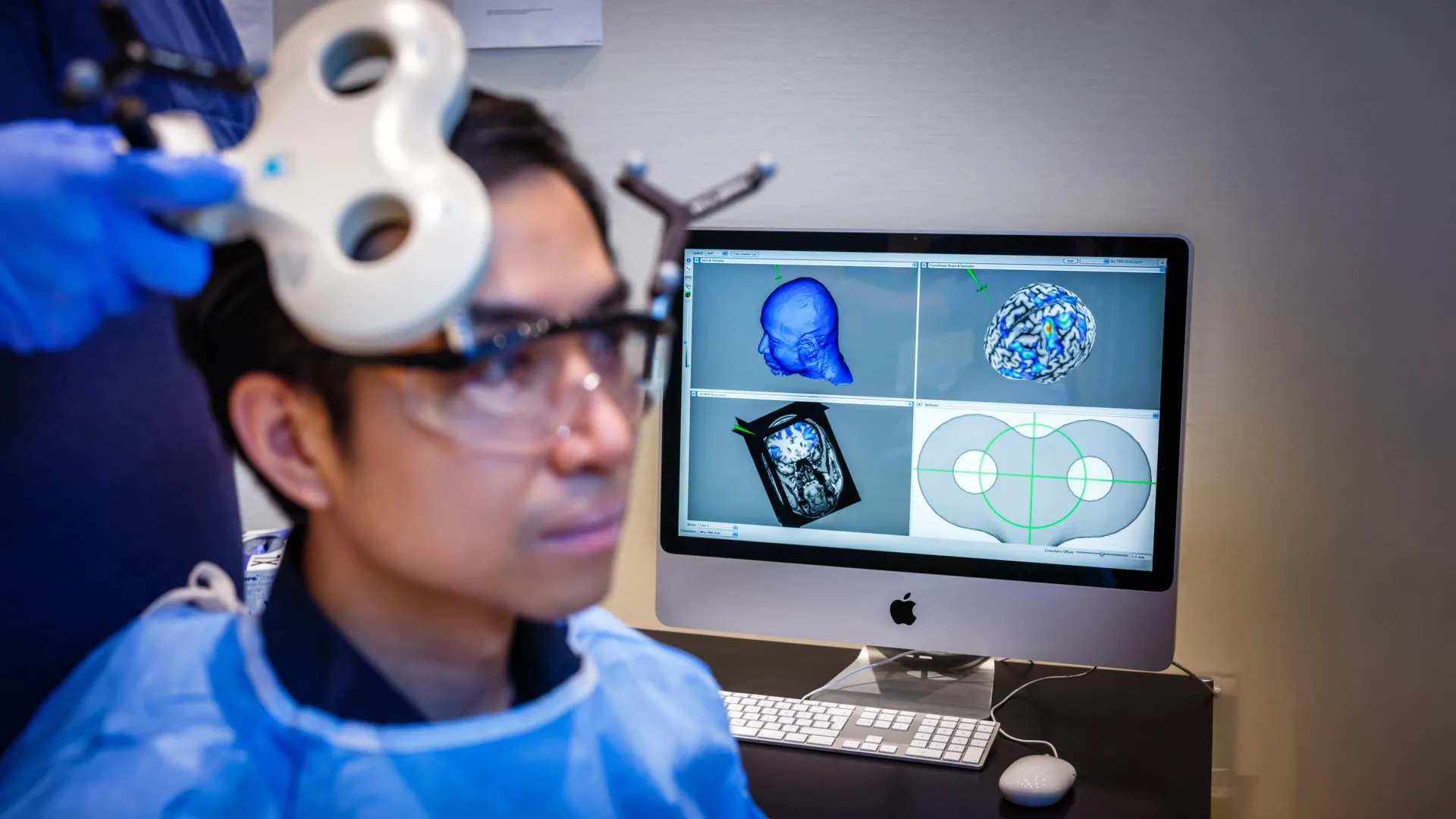
Central to the experimental design was the application of transcranial alternating current stimulation (tACS), a non-invasive neuromodulation technique. This method delivers weak electrical currents to targeted areas of the scalp, influencing the underlying neural networks. In this study, tACS was employed to synchronize the oscillatory patterns of neuronal ensembles within the frontal and parietal lobes, two brain areas recognized for their involvement in executive functions, decision-making, and social cognition. The stimulation was specifically calibrated to enhance either gamma or alpha brainwave frequencies, aiming to foster rhythmic coordination within these interconnected regions.
The results revealed a compelling pattern: when the tACS intervention successfully amplified gamma-band synchrony between the frontal and parietal cortices, participants exhibited a measurable uptick in altruistic choices. This enhancement manifested as a greater willingness to allocate larger portions of the available money to the anonymous recipient. Critically, these more generous decisions were made even when such sharing led to a reduction in the participant’s own immediate financial gain relative to the other person. This observation suggests that the synchronized neural activity modulated by the stimulation had a direct impact on the decision-making process, tipping the balance towards greater consideration for the welfare of others.
Further analysis, incorporating a computational model, provided deeper insight into how the tACS intervention influenced participants’ evaluations. The model indicated that the synchronized neural oscillations altered the perceived value of each allocation offer. Following the stimulation, individuals appeared to assign greater weight to the potential outcome for the recipient when formulating their decisions. While the researchers did not directly measure neural activity during the game itself, they noted that future studies could integrate electroencephalography (EEG) with brain stimulation techniques to provide a more direct correlation between the observed behavioral changes and specific neural signal alterations. Nevertheless, the current findings strongly implicate the synchronized communication between the frontal and parietal lobes as a key factor in supporting altruistic behavior.
Coauthor Christian Ruff highlighted the study’s contribution to understanding the neurobiological basis of social decision-making, stating, "We identified a pattern of communication between brain regions that is tied to altruistic choices. This improves our basic understanding of how the brain supports social decisions, and it sets the stage for future research on cooperation — especially in situations where success depends on people working together." This sentiment underscores the broader implications of the research, extending beyond individual generosity to the dynamics of collaborative efforts.
Jie Hu elaborated on the study’s novel contribution, emphasizing the establishment of a causal link. "What’s new here is evidence of cause and effect," Hu remarked, "when we altered communication in a specific brain network using targeted, non-invasive stimulation, people’s sharing decisions changed in a consistent way — shifting how they balanced their own interests against others’." This direct demonstration of causality is a significant advancement in the field, allowing for more precise inferences about the neural mechanisms driving social behaviors.
Marius Moisa further underscored the striking effect of coordinated neural activity. "We were struck by how boosting coordination between two brain areas led to more altruistic choices," Moisa stated. "When we increased synchrony between frontal and parietal regions, participants were more likely to help others, even when it came at a personal cost." The observation that even a non-invasive intervention could elicit such a change, particularly when it involved a personal sacrifice, speaks to the potent role of neural synchrony in shaping our ethical compass and social interactions. The research opens avenues for exploring how targeted interventions might foster prosocial behavior in various contexts, from interpersonal relationships to broader societal challenges requiring cooperation.
About the Author












