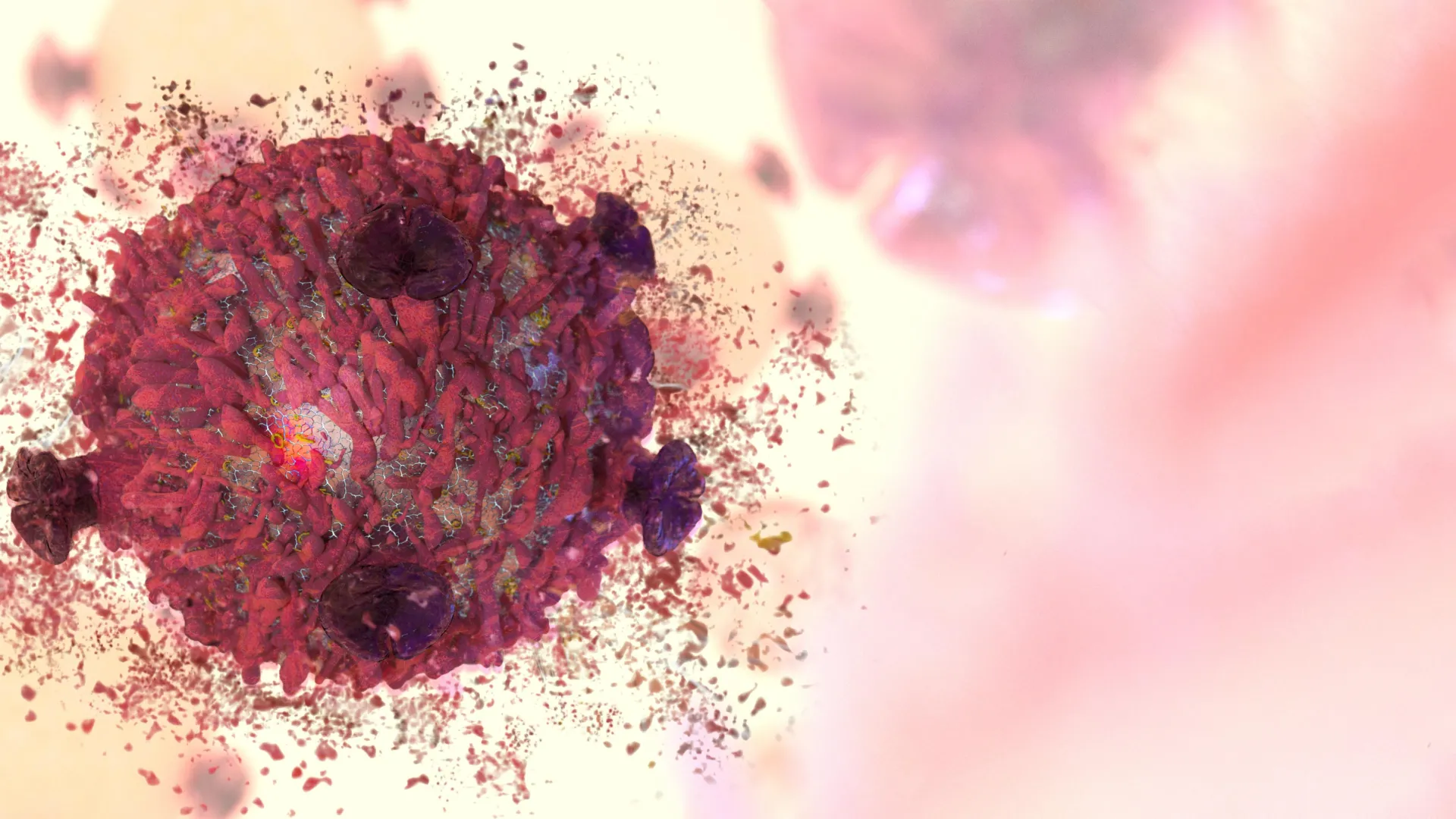
Scientists at Oregon State University have engineered a groundbreaking nanodevice that targets and annihilates malignant cells from within, presenting a significant leap forward in cancer therapeutics. This innovative material operates by initiating two distinct chemical cascades once it penetrates a tumor cell, creating an overwhelming internal environment of oxidative stress that proves lethal to the cancerous entity while meticulously sparing adjacent healthy tissues. The research, spearheaded by Oleh Taratula, Olena Taratula, and Chao Wang within the OSU College of Pharmacy, has been formally documented in the esteemed scientific journal Advanced Functional Materials.
This development substantially bolsters the burgeoning discipline of chemodynamic therapy (CDT), an avant-garde strategy for combating cancer that strategically leverages the aberrant biochemical milieu characteristic of tumorous environments. In stark contrast to normal physiological conditions, cancerous cells typically exhibit a more acidic pH and accumulate elevated concentrations of hydrogen peroxide.
Conventional CDT methodologies capitalize on these intrinsic tumor attributes to catalyze the generation of hydroxyl radicals. These are exceptionally reactive molecular species, composed of oxygen and hydrogen, distinguished by an unpaired electron. Such reactive oxygen species (ROS) inflict cellular damage through oxidation, a process involving the appropriation of electrons from vital cellular components, including lipids, proteins, and DNA. More sophisticated CDT approaches have also achieved success in generating singlet oxygen within tumors. Singlet oxygen represents another class of ROS, so named due to its unpaired electron existing in a single spin state, a departure from the triplet spin states inherent in the more stable oxygen molecules prevalent in atmospheric air.
However, the efficacy of existing CDT agents faces inherent limitations, as noted by Oleh Taratula. Current agents are proficient at generating either hydroxyl radicals or singlet oxygen, but rarely both, and often possess insufficient catalytic prowess to sustain a robust and continuous production of ROS. Consequently, preclinical investigations frequently report only partial tumor regression, falling short of delivering a durable therapeutic benefit.
To surmount these deficiencies, the research team has conceptualized and constructed a novel CDT nanoagent, built upon an iron-based metal-organic framework (MOF). This intricate nanostructure possesses the remarkable capability to concurrently produce both hydroxyl radicals and singlet oxygen, thereby amplifying its cancer-annihilating potential. In rigorous laboratory evaluations, this MOF demonstrated potent cytotoxic activity across a spectrum of cancer cell lines, while exhibiting negligible harm to non-cancerous cellular counterparts.
The practical implications of this discovery were vividly illustrated in preclinical trials conducted on laboratory mice. When this nanoagent was administered systemically to mice bearing human breast cancer xenografts, it exhibited remarkable efficiency in accumulating within the tumor sites. There, it robustly generated reactive oxygen species, leading to the complete eradication of the cancerous growths without inducing any discernible adverse effects in the animal subjects, as reported by Olena Taratula. The observations included total tumor regression and a prolonged period of protection against recurrence, all achieved without any evidence of systemic toxicity. In these experimental settings, the tumors vanished entirely and did not reemerge, and the treated animals displayed no indications of detrimental side effects, underscoring the agent’s targeted and safe mechanism of action.
Looking ahead, the researchers are charting a course toward broader clinical application. Before embarking on human trials, the team intends to subject their innovative treatment to further scrutiny across an expanded range of cancer types. This includes investigations into highly aggressive malignancies such as pancreatic cancer, with the objective of ascertaining the approach’s universal efficacy against a diverse array of tumor morphologies. The collaborative effort behind this significant study also involved contributions from Oregon State researchers Kongbrailatpam Shitaljit Sharma, Yoon Tae Goo, Vladislav Grigoriev, Constanze Raitmayr, Ana Paula Mesquita Souza, and Manali Parag Phawde. Financial backing for this pioneering research was generously provided by the National Cancer Institute of the National Institutes of Health and the Eunice Kennedy Shriver National Child Health and Human Development. This collaborative endeavor, supported by significant federal funding, highlights the commitment to advancing cancer treatment through interdisciplinary scientific innovation. The development of such targeted nanomaterials represents a paradigm shift in how we conceive of and execute cancer therapy, moving towards treatments that are not only more effective but also profoundly safer for patients. The dual-action mechanism of this iron-based MOF not only enhances its killing power but also signifies a more sophisticated understanding of the tumor microenvironment and how to exploit its vulnerabilities. The potential for complete tumor eradication and sustained remission without systemic toxicity marks a critical milestone in the long-standing quest for a universal cancer cure. The rigorous scientific validation and the promising preclinical results lay a strong foundation for future clinical translation and offer renewed hope for patients facing challenging diagnoses.
About the Author