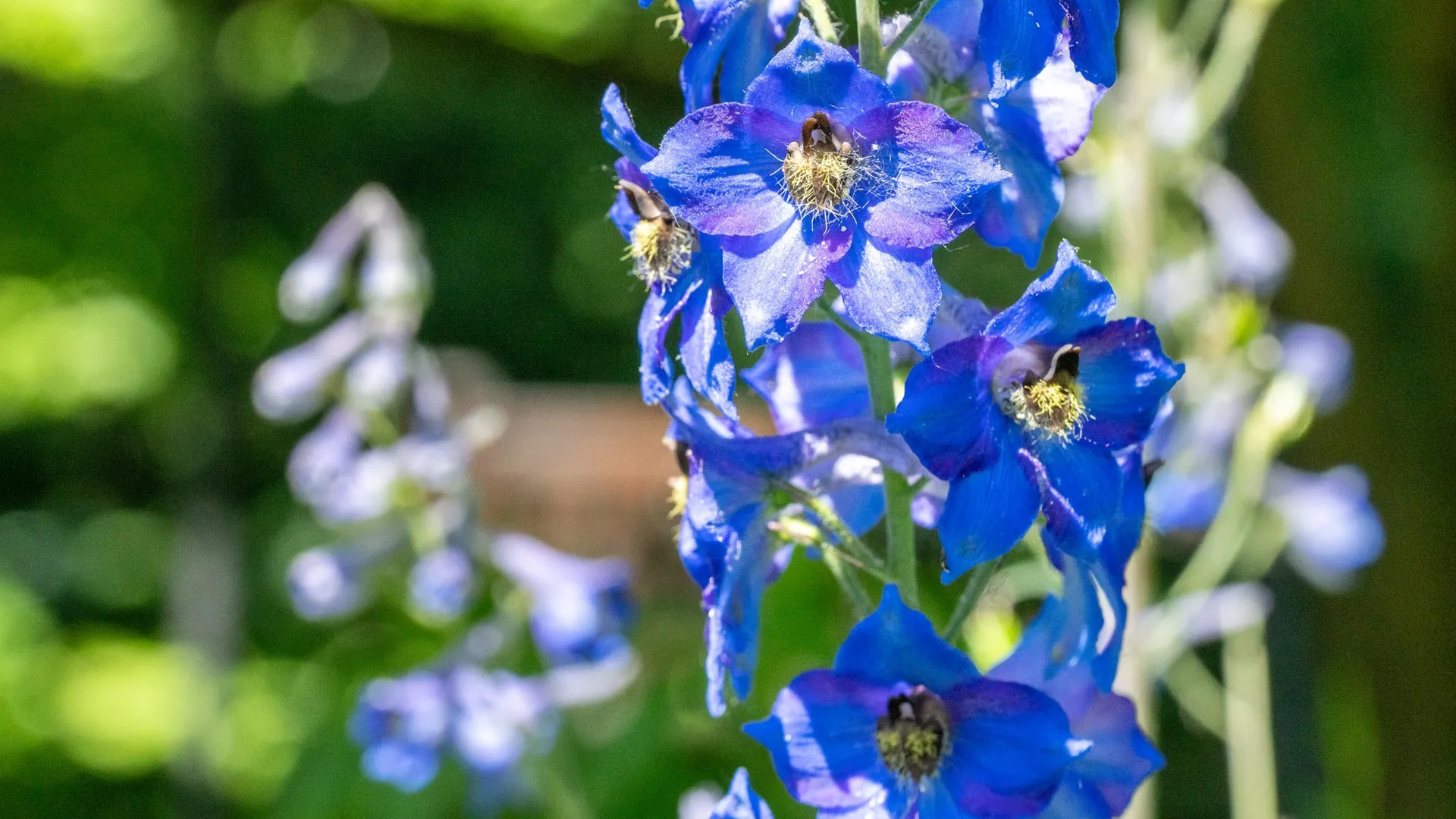
The intricate molecular architecture of certain toxic flora, long recognized for their dangerous potential, is now yielding promising insights for the development of novel therapeutic agents, according to a groundbreaking study published in the journal Molecular Plant. Researchers from Michigan State University and the Czech Academy of Sciences have successfully elucidated a key aspect of the biochemical pathways responsible for synthesizing potent compounds in plants such as wolfsbane (Aconitum) and larkspur (Delphinium). This advancement opens a potential avenue for the sustainable and scalable production of natural product-inspired medicines aimed at combating a range of ailments, including chronic pain, infectious diseases like malaria, various forms of cancer, and even agricultural pests.
For millennia, human societies across the globe have harnessed the medicinal properties of plants, integrating them into traditional healing practices. These botanical sources have provided a rich lexicon of chemical compounds that interact with biological systems in profound ways. As Garret Miller, a co-first author of the study and now an assistant professor of biotechnology at the University of Michigan-Flint, explained, understanding the intricate mechanisms by which plants produce these molecules is crucial for unlocking entirely new avenues for drug discovery and testing. The current research represents a significant leap forward in deciphering these complex natural synthesis processes, particularly for a class of compounds known as diterpenoid alkaloids.
Plants stand as unparalleled artisans of molecular complexity, having evolved an astonishing array of natural chemicals over millions of years as a sophisticated defense and survival strategy. Björn Hamberger, a study author and the James K. Billman Endowed Professor in MSU’s Department of Biochemistry and Molecular Biology, emphasized this point, stating that plants are essentially the preeminent chemists in the natural world, continuously refining their chemical arsenals. These plant-derived molecules have permeated numerous facets of human life, from widely consumed stimulants like caffeine and flavorings such as menthol and vanillin, to the very foundations of modern pharmacology, where many essential medicines either originate directly from plant sources or are inspired by their unique chemical structures.
The Hamberger Lab at MSU has dedicated its efforts to the study of these specialized metabolites, focusing on their potential for practical application. In recent years, their attention turned to the captivating delphinium, commonly known as larkspur, a plant distinguished by its dolphin-shaped blossoms. The scientific objective was to unravel the precise mechanisms by which this plant synthesizes diterpenoid alkaloids, a group of chemicals that, despite their formidable toxicity even in minuscule quantities, also possess considerable therapeutic promise.
The endeavor to map out the biosynthesis of these diterpenoid alkaloids presented a formidable scientific hurdle. These compounds represent a fusion of characteristics from two of the most ancient and expansive families of plant-derived chemicals. Their structural intricacies are so profound that scientists have grappled for decades to fully comprehend the intricate molecular assembly lines plants employ to construct them. Aconitine, a prominent member of this alkaloid family, was first isolated nearly two centuries ago, yet its complete synthesis in a laboratory setting has remained an elusive goal for researchers.
The pivotal moment for this research arrived through an unexpected scientific collaboration. During a conference in Barcelona, Professor Hamberger encountered researchers from the laboratory of Tomáš Pluskal at the Czech Academy of Sciences. This group, which included Lana Mutabdžija, a graduate student and co-first author of the current paper, was independently investigating the same challenging class of diterpenoid alkaloids, specifically within wolfsbane, a notoriously poisonous relative of larkspur, also recognized by its common name, monkshood. Recognizing the synergistic potential, Hamberger remarked that such interdisciplinary convergence is precisely where the most impactful scientific advancements are made, rather than pursuing separate paths.
Following the formation of this international partnership, the combined team embarked on a meticulous quest to identify the precise sequence of biochemical transformations that both wolfsbane and larkspur utilize to produce their diterpenoid alkaloids. This investigation was akin to a molecular detective story, involving the examination of multiple plant species and the screening of thousands of genes to pinpoint those that were actively expressed in the appropriate plant tissues at the critical stages of chemical synthesis. Miller likened this process to understanding an assembly line: if any one of the ten sequential steps required to produce a final product malfunctions, the entire operation halts.
Given that plants typically produce specialized metabolites in exceedingly small quantities and at a slow rate, the identification of their biosynthetic pathways is fundamentally important for enabling larger-scale production and facilitating their exploration for real-world applications. Once a biosynthetic pathway is fully understood, the genetic blueprint for constructing a particular compound can be transferred into a genetically engineered host organism, such as yeast. This process, often referred to as biohacking, effectively transforms the host into a biological factory, capable of manufacturing significant quantities of the desired chemical for further research and development. Mutabdžija highlighted the ultimate aspiration of this work: to pave the way for the creation of novel pharmaceutical agents inspired by these remarkable natural products.
To validate their findings and explore the practical implications, the researchers ingeniously employed tobacco plants as living biofactories. After successfully identifying a promising set of genes from wolfsbane and larkspur involved in diterpenoid alkaloid synthesis, these genetic instructions were introduced into tobacco. The tobacco plants served as a convenient experimental platform to ascertain whether these transferred genes could indeed reconstitute the plants’ natural chemical production process. Subsequent analysis confirmed that the genetically modified tobacco plants had successfully assembled the intended biosynthetic pathway, orchestrating the action of six distinct enzymes. These enzymes collaboratively facilitated the synthesis of atisinium, a diterpenoid alkaloid, precisely shaping the molecule into its complex final structure. Notably, this enzymatic cascade also enabled the incorporation of a crucial nitrogen source, an element whose presence in the final compound had not been anticipated by the researchers.
By successfully delineating the initial biochemical steps leading to the formation of atisinium, the research team has established a critical foundation for investigating the broader family of diterpenoid alkaloids and their potential medicinal applications. Professor Hamberger articulated the overarching vision for this research: to develop environmentally friendly and sustainable biotechnological tools that will enable humanity to harness the inherent power of these remarkable plants for therapeutic benefit. This study not only deepens our understanding of plant biochemistry but also offers a tangible pathway toward developing new medicines derived from nature’s complex chemical repertoire.
About the Author