
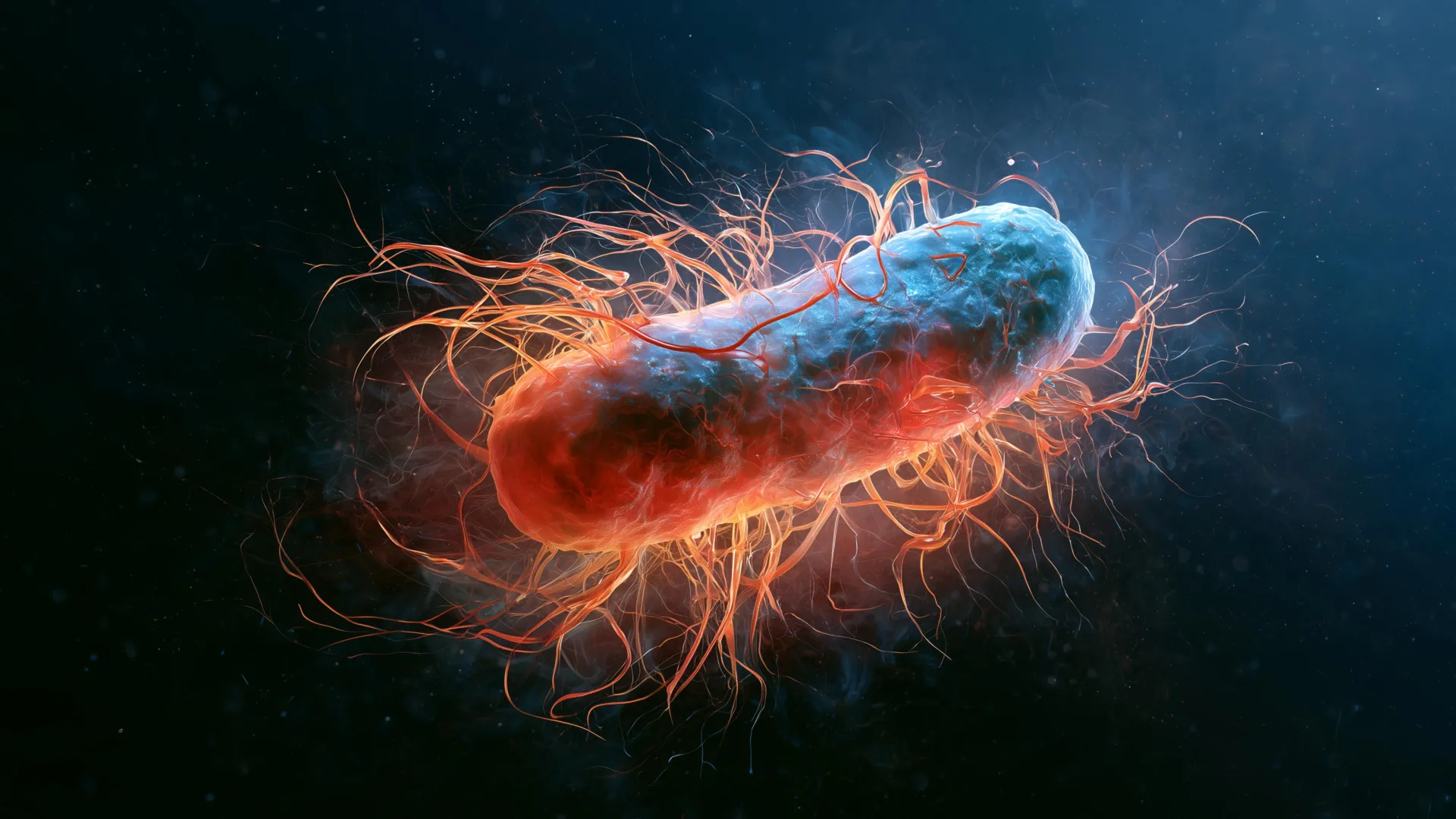
A groundbreaking study spearheaded by Professor An Xu at the Hefei Institutes of Physical Science, affiliated with the Chinese Academy of Sciences, has unveiled a remarkable property of a specific magnetotactic bacterium (MTB) in promoting longevity and enhancing healthspan within a model organism. The research focused on Magnetospirillum magneticum AMB-1, demonstrating its significant capacity to extend the healthy lifespan of the nematode Caenorhabditis elegans, a widely utilized invertebrate in aging research due to its genetic tractability and relatively short life cycle. Beyond merely prolonging existence, the study meticulously pinpointed the underlying molecular mechanism responsible for this observed effect: the effective suppression of a distinct form of programmed cell death known as ferroptosis, a process intricately linked to cellular aging and disease.
The scientific community has long grappled with the multifaceted challenges of aging, a biological process characterized by the progressive deterioration of physiological functions, culminating in an increased susceptibility to a myriad of chronic ailments. Traditional approaches to combatting aging have predominantly centered on pharmacological interventions and genetic modifications, yet these avenues are often encumbered by persistent concerns regarding safety profiles and the feasibility of widespread clinical application. This new research introduces a paradigm shift by exploring the potential of microorganisms, specifically MTB, as a novel class of anti-aging agents. These unique bacteria are distinguished by their intrinsic ability to synthesize intracellular structures called magnetosomes, which are membrane-bound organelles containing magnetic iron minerals. Their inherent biocompatibility has already garnered considerable attention, paving the way for potential applications in areas as diverse as targeted drug delivery systems and innovative cancer therapies. However, their impact on the intricate processes of aging remained largely uncharted territory until this recent investigation.
In their pursuit of understanding this unexplored facet of MTB biology, the research team meticulously subjected the MTB strain AMB-1 to rigorous testing using C. elegans as their experimental model. The results were nothing short of compelling. Nematodes that were administered the AMB-1 treatment exhibited a statistically significant increase in their average lifespan, an enhancement that clocked in at an impressive 43.39%. Crucially, this extension of life was not merely a quantitative gain; it was accompanied by a qualitative improvement in the worms’ physiological condition. The treated individuals demonstrated a notable preservation of neurological function, a critical indicator of healthy aging, and maintained greater intestinal integrity, a vital organ system often compromised by the ravages of time. This dual benefit of extended life and preserved function underscores the profound implications of this discovery for gerontology and the pursuit of healthy aging.
Delving deeper into the specifics of the observed longevity effect, the researchers conducted a series of targeted experiments to ascertain the role of magnetosome production in mediating this phenomenon. Their findings strongly indicated that the bacteria’s capacity to assemble these specialized magnetic structures was a pivotal factor in their ability to confer extended lifespan. To investigate this hypothesis, they compared the efficacy of the wild-type AMB-1 strain, which possesses the ability to produce magnetosomes, with genetically modified variants. One such variant, RNM-AMB-1, was engineered to be reversibly non-magnetotactic, meaning it could lose its magnetotactic capability under certain conditions. Another variant, NM-AMB-1, was rendered permanently non-magnetotactic. The comparative analysis revealed that the wild-type AMB-1, with its intact magnetosome production machinery, elicited a significantly more robust longevity effect than the reversibly non-magnetotactic RNM-AMB-1. In stark contrast, the permanently non-magnetotactic NM-AMB-1 strain failed to demonstrate any discernible impact on the lifespan of the nematodes, providing compelling evidence that the presence and function of magnetosomes are directly correlated with the observed anti-aging benefits.
Further detailed investigations were undertaken to elucidate the intricate molecular pathways through which AMB-1 exerts its beneficial effects. These experiments provided crucial insights into how the bacteria’s presence influences cellular processes within the host organism. It was observed that AMB-1 treatment led to a discernible reduction in iron accumulation within the nematode’s tissues. Concurrently, the levels of lipid peroxidation, a detrimental process involving the oxidative degradation of fats and a hallmark of cellular damage and aging, were also significantly lowered. These coordinated changes in iron metabolism and oxidative stress played a critical role in suppressing ferroptosis, a specific type of regulated cell death characterized by the accumulation of iron and the subsequent lipid peroxidation within cells.
Ferroptosis, the central focus of this mechanistic inquiry, is an iron-dependent form of cell death that has been increasingly implicated in the pathogenesis of numerous age-related diseases, including neurodegenerative disorders, cardiovascular disease, and cancer. Its occurrence is tightly linked to imbalances in cellular iron homeostasis and the excessive generation of reactive oxygen species, leading to irreversible damage to cell membranes. The genetic analysis performed by the research team provided further substantiation for the role of ferroptosis suppression in AMB-1’s anti-aging mechanism. They identified several key ferroptosis-related pathways that were demonstrably involved in the regulation of lifespan by AMB-1. Specifically, genes such as ftn-1 (which encodes ferritin, a protein that stores iron), bli-3 (involved in cuticle formation and potentially oxidative stress response), and ads-1 (an acyl-CoA synthetase involved in lipid metabolism) were found to be significantly modulated by the bacterial treatment, highlighting the complex interplay between MTB and host cellular machinery.
In summation, the findings presented in this seminal study establish a novel microbial strategy for intervening in the aging process. The research not only demonstrates the potential of magnetotactic bacteria as a promising avenue for promoting longevity and healthspan but also provides critical foundational evidence that could pave the way for their broader integration into the field of geriatric medicine. By uncovering the specific mechanism of ferroptosis suppression, the study offers a tangible target for future therapeutic development and opens up exciting new possibilities for combating age-related cellular decline and its associated pathologies. This work represents a significant leap forward in our understanding of how symbiotic relationships between humans and microorganisms can be leveraged to enhance well-being and extend healthy life.
About the Author












