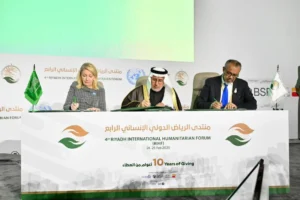
The Grand Duchy of Luxembourg has significantly deepened its commitment to global public health, formalizing an unprecedented financial pledge exceeding €47.5 million to the World Health Organization (WHO) through two distinct, multi-year strategic agreements. Signed on December 20, 2024, these pacts mark a pivotal moment in the nation’s long-standing support for international health initiatives, aiming to accelerate progress toward the Sustainable Development Goals (SDGs) during the critical 2025-2028 period. The scale and structure of this funding underscore Luxembourg’s evolving role as a key proponent of multilateralism and global health security.
Central to this enhanced partnership is a Strategic Partnership Framework (SPF) between Luxembourg’s Ministry of Development Cooperation and Humanitarian Affairs and the WHO, committing a substantial €46.5 million. This represents the most significant financial agreement the WHO has ever concluded with Luxembourg, reflecting a marked increase in the Grand Duchy’s direct contributions to global health development. A crucial aspect of this framework is its allocation of both flexible and thematic funding. Flexible funding empowers the WHO with the agility to direct resources where they are most critically needed, enabling swift responses to emergent health crises and supporting underfunded priority areas. This operational flexibility is highly valued by international organizations, as it reduces administrative burdens and allows for more efficient resource deployment compared to narrowly earmarked contributions.
Within this €46.5 million framework, specific thematic areas have been designated to address some of the world’s most pressing health challenges. A significant portion is dedicated to the Universal Health Coverage (UHC) Partnership, a flagship WHO initiative aimed at ensuring all people have access to the health services they need, when and where they need them, without financial hardship. Achieving UHC is a cornerstone of SDG 3, "Good Health and Well-being," and involves strengthening health systems, improving access to essential medicines and vaccines, and protecting populations from catastrophic health expenditures. Luxembourg’s support will bolster WHO’s efforts in assisting countries to develop robust primary healthcare systems, improve health financing mechanisms, and expand the coverage of essential health services, particularly for vulnerable populations.
Further allocations from the SPF will bolster research into tropical diseases. These diseases, often neglected and disproportionately affecting impoverished communities in tropical and subtropical regions, include conditions such as malaria, dengue, neglected tropical diseases (NTDs), and tuberculosis. The WHO plays a vital role in coordinating global research efforts, developing diagnostic tools, treatments, and vaccines, and implementing control and elimination strategies. Luxembourg’s contribution will fuel innovation and ensure that scientific advancements translate into tangible health improvements for millions worldwide who suffer from these debilitating conditions. This investment is critical given the climate crisis and increased global travel, which continually shift the geographical distribution of many tropical pathogens.

Another key focus of the SPF is the ongoing global campaign for polio eradication. Decades of concerted international effort have brought the world to the brink of eradicating poliomyelitis, a crippling and potentially fatal infectious disease. However, the final stages of eradication are often the most challenging, requiring sustained surveillance, robust immunization campaigns in hard-to-reach areas, and rapid response to any outbreaks. Funds from Luxembourg will help close critical funding gaps in this historic public health endeavor, ensuring that the virus is eliminated from its last remaining strongholds and that future generations can live free from the threat of polio. The complete eradication of polio would represent an unparalleled achievement in public health, similar to the eradication of smallpox.
Beyond the substantial development cooperation framework, a second, equally significant agreement was forged with Luxembourg’s Ministry of Health and Social Security, amounting to €1 million. This multi-year pact represents the country’s inaugural direct voluntary contribution from its domestic health ministry to the WHO, signaling a broadening of Luxembourg’s engagement beyond traditional foreign aid to include more direct collaboration on health policy and operational support. This shift reflects an understanding that national health ministries have a direct stake in global health outcomes, given the interconnectedness of health challenges in an increasingly globalized world.
The funds from the Ministry of Health and Social Security will specifically target two critical areas: enhancing sanitary crisis preparedness and response, and combating health inequalities with a particular emphasis on gender. The COVID-19 pandemic served as a stark global reminder of the imperative for robust health security frameworks, capable of detecting, preventing, and responding to infectious disease outbreaks swiftly and effectively. Luxembourg’s contribution will support WHO’s efforts to strengthen national and international capacities for pandemic preparedness, including early warning systems, rapid diagnostic capabilities, and equitable access to countermeasures. This includes fostering resilient health systems that can withstand shocks and continue delivering essential services during emergencies.
Furthermore, the focus on health inequalities, particularly through a gender lens, addresses a fundamental challenge to equitable health outcomes globally. Women, girls, and gender-diverse individuals often face unique barriers to accessing healthcare, experience different health burdens, and encounter specific forms of discrimination within health systems. Luxembourg’s support will enable WHO programs aimed at understanding and dismantling these systemic barriers, promoting gender-responsive health policies, and ensuring that health interventions are designed to meet the diverse needs of all populations. This includes addressing maternal mortality, reproductive health rights, gender-based violence, and equitable access to health education and services.
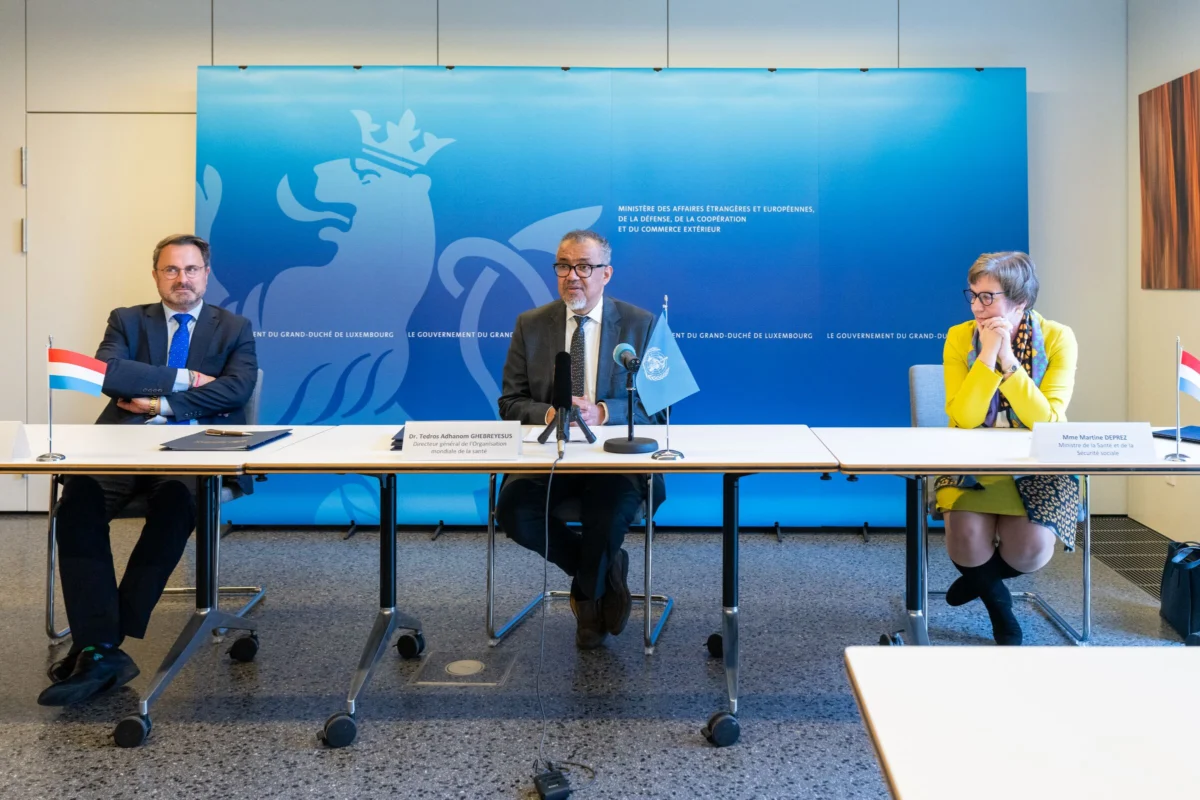
The signing ceremony, held on the International Day of Human Solidarity, lent symbolic weight to these agreements. Dr. Tedros Adhanom Ghebreyesus, the Director-General of the WHO, remarked on this auspicious timing, characterizing the pledges as "a powerful declaration of solidarity by Luxembourg, not merely with the World Health Organization, but with all people across the globe." This sentiment underscored the agreements’ broader significance as an act of global responsibility and shared commitment to collective well-being.

Martine Deprez, Luxembourg’s Minister of Health and Social Security, emphasized during the bilateral meeting that the allocated funds would directly finance "priority areas in Luxembourg’s collaboration with WHO," specifically highlighting the critical need for bolstering preparedness and response mechanisms against health crises, alongside intensified efforts to reduce health disparities, with an explicit focus on gender equality. Her statement reflects a strategic alignment of national and global health priorities, acknowledging that domestic health security is intrinsically linked to global health stability.
Xavier Bettel, Deputy Prime Minister and Minister of Foreign and European Affairs, Cooperation and Foreign Trade, reiterated Luxembourg’s unwavering dedication to the WHO’s mandate and the principles of multilateralism. He articulated the nation’s perspective that proactive investment in global health represents the most effective defense against future health threats. "By forging these two new partnership agreements, we have reaffirmed Luxembourg’s steadfast backing for the WHO and its vital mission," Bettel stated. "This decision reflects our profound commitment to advancing global health and upholding multilateral cooperation. We initiate these agreements with the WHO because we firmly believe that the most effective strategy is to prevent rather than merely react." This statement encapsulates Luxembourg’s foreign policy approach, which champions collaborative international solutions to shared global challenges.
Luxembourg’s renewed and expanded support extends to the WHO’s foundational work: the development, dissemination, and implementation of high-quality technical products. These encompass the crucial guidelines, norms, and standards that serve as the bedrock for health policy and practice in countless countries worldwide. Such technical products include essential medicines lists, disease classification systems, vaccination schedules, diagnostic criteria, and ethical frameworks for health research. By providing this support, Luxembourg is effectively investing in the global health architecture itself, enabling the WHO to continue its role as the leading authority in global health guidance and evidence-based policy formulation. This foundational work is often unseen but is indispensable for national health systems to function effectively and for global health initiatives to succeed.
The historical strategic partnership between the WHO and Luxembourg continues to evolve, grounded in a shared vision to promote, provide, and protect health for all. These new agreements, particularly their multi-year and flexible nature, ensure predictable and sustained funding, which is vital for the WHO’s long-term planning and operational effectiveness. As the world navigates complex health landscapes, marked by climate change, antimicrobial resistance, and persistent inequalities, such robust and strategic collaborations are more critical than ever. Luxembourg’s enhanced financial commitment serves as a powerful example of how smaller nations can exert significant positive influence on the global stage, contributing substantially to a healthier, more equitable, and resilient future for humanity.
About the Author