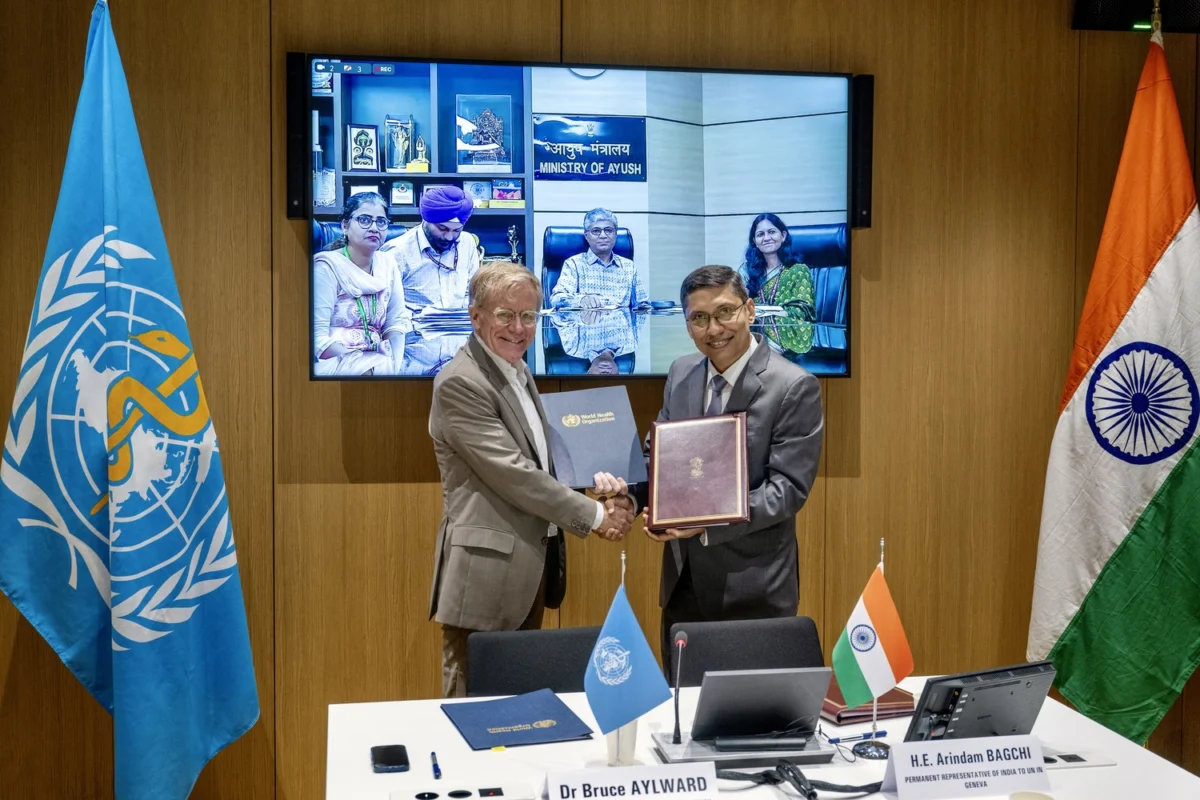
The global landscape of healthcare is increasingly acknowledging the profound and widespread reliance on traditional medicine systems, with billions worldwide seeking these practices for their health and well-being. In a significant move set to redefine the global engagement with ancient healing arts, the Government of India has formally committed US$ 85 million over a decade, spanning from 2022 to 2032, to bolster the programmatic activities of the World Health Organization’s Global Centre for Traditional Medicine (GCTM). This substantial financial pledge, formalized at a signing ceremony in Geneva, underscores India’s steadfast commitment to advancing the scientific understanding and responsible integration of traditional medicine into mainstream healthcare systems across the globe.
This particular allocation of US$ 85 million represents a crucial component of a much broader US$ 250 million investment from India, dedicated to the establishment and operationalization of the WHO Global Centre of Traditional Medicine, inaugurated in 2022. The overarching Indian contribution encompasses not only the funding for the Centre’s critical workplan but also crucial support for its interim premises and the development of a dedicated new facility in Jamnagar, Gujarat, India. This comprehensive backing is designed to significantly augment WHO’s capacity to engage with traditional medicine, fostering greater technical collaboration across its diverse divisions and regional offices, embodying a spirit of international cooperation and solidarity in public health. A portion of this monumental contribution from India is also slated for inclusion in WHO’s Investment Round, which aims to secure resources for the organization’s core work during the 2025-2028 strategic period, further cementing India’s role as a key philanthropic partner in global health.
The primary objective of the US$ 85 million decade-long funding is to rigorously strengthen the evidence base underpinning traditional medicine. This ambitious agenda will manifest through the systematic collection and analysis of data and empirical evidence related to traditional medicine policies, clinical practices, product development and regulation, and patterns of public utilization. By fostering a deeper, scientifically validated understanding, the initiative aims to provide national health authorities with the tools and insights necessary to make informed decisions about integrating traditional medicine safely and effectively into their national health systems, ultimately contributing to the global pursuit of universal health coverage (UHC).
The establishment of the WHO Global Centre for Traditional Medicine in Jamnagar, India, marks a pivotal moment in this global endeavor. Conceived as a premier knowledge hub, the GCTM is designed to operate across five interconnected pillars of work. These include: dedicated research and evidence generation to validate traditional practices; their integration into primary health care and universal health coverage frameworks; the recognition and preservation of Indigenous Knowledges and biodiversity associated with traditional medicine; the innovative application of digital health technologies to support these practices; and the organization of biennial WHO Global Traditional Medicine Summits, fostering international collaborations and dialogue. Leading this critical global initiative is Dr. Shyama Kuruvilla, serving as the Director ad interim.
The vision for the GCTM and its associated global strategy is deeply rooted in the shared leadership and commitment articulated by the Honourable Prime Minister of India, Shri Narendra Modi, and the Director-General of WHO, Dr. Tedros Adhanom Ghebreyesus. Vice Minister Vaidya Rajesh Kotecha, Secretary of the Ministry of Ayush, Government of India, emphasized this foundational synergy, stating, "The signing of this donor agreement is a major milestone towards achieving the shared vision of Honourable Prime Minister of India Shri Narendra Modi and WHO Director-General Tedros for the development of the WHO Global Traditional Medicine Centre at Jamnagar in India." This statement highlights the strategic alignment between India’s national health agenda and WHO’s global health priorities.

The integration of traditional medicine into national health systems holds particular promise for reaching populations that have historically been underserved by conventional healthcare models. Dr. Bruce Aylward, Assistant Director-General of the Universal Health Coverage and Life Course division of WHO, articulated this critical perspective, noting, "India’s commitment and leadership in expanding the evidence-based contribution of traditional medicine to the health and well-being of all people and the planet, comes at an opportune moment. Traditional medicine, supported within national health systems, can allow us to reach those most often left behind. Integration of traditional practice and knowledge is critical to achieving health for all." This perspective underscores the equity dimension of traditional medicine, positioning it as a potentially powerful tool in addressing health disparities and ensuring comprehensive care for all segments of society.
Echoing India’s long-term dedication to this cause, Ambassador Arindam Bagchi, Permanent Representative of India to the UN and other International Organizations in Geneva, reaffirmed the nation’s commitment. He stated, "India remains committed to supporting WHO in its work to strengthen traditional medicine systems globally for achieving universal health coverage and serving the entire humanity, especially through this Global Centre in Jamnagar, which would help focus these efforts to benefit all Member States." This highlights India’s aspiration for the GCTM to serve as a global resource, benefiting all WHO Member States in their efforts to leverage traditional medicine.
India’s support for traditional medicine is not a nascent endeavor but rather the continuation of a long-standing, multi-faceted partnership with the WHO. In 2023, preceding this recent commitment, India entered into a five-year agreement to provide technical assistance to WHO’s Traditional, Complementary and Integrative Medicine (TCI) unit. This unit plays a crucial role within the WHO framework, specifically tasked with supporting the development of a new WHO traditional medicine global strategy for the period 2025-2034, a strategy specifically requested by Member States. Furthermore, the TCI unit is responsible for publishing key benchmark documents, establishing standardized terminologies, and developing other evidence-informed technical products. These outputs are indispensable for facilitating the safe, effective, and ethical integration of traditional medicine into national health systems worldwide.
The collaborative synergy between the newly established GCTM and the existing TCI unit is central to WHO’s overarching strategy. Both entities work in close coordination with various teams across the WHO, collectively advancing the organization’s multisectoral agenda on traditional medicine. This collaborative approach is further strengthened through regular meetings of the WHO Technical Expert Network, jointly coordinated by the GCTM and TCI unit. This integrated framework promotes a "One WHO" approach, ensuring harmonized efforts and consistent messaging on traditional medicine across WHO headquarters, regional offices, and country offices, thereby maximizing global impact and coherence.
Momentum for this global movement is rapidly building, marked by significant milestones. The inaugural WHO Traditional Medicine Global Summit was successfully convened in August 2023 in Gandhinagar, Gujarat, India. This landmark event culminated in the adoption of the Gujarat Declaration, a comprehensive multistakeholder action agenda designed to guide future efforts in traditional medicine. Building on this success, the next WHO Global Summit is strategically planned for November 2025. This future summit will closely follow the anticipated launch of the ambitious 2025–2034 Global Strategy for Traditional Medicine, which is scheduled to be unveiled at the 78th World Health Assembly in May 2025.
The strategic financial commitment from India, coupled with the robust framework of the WHO Global Centre for Traditional Medicine and the ongoing work of the TCI unit, signals a profound shift in global healthcare. It represents a collective determination to bridge the divide between ancient healing wisdom and modern scientific scrutiny, ensuring that traditional medicine’s vast potential is harnessed responsibly and effectively for the betterment of global public health. This visionary investment by India is poised to catalyze a new era of evidence-based traditional medicine, making holistic, culturally relevant healthcare accessible and beneficial for communities across the planet.
About the Author