Illuminating Insight: Unveiling the Protective Power of Indigo Light Against Childhood Nearsightedness.
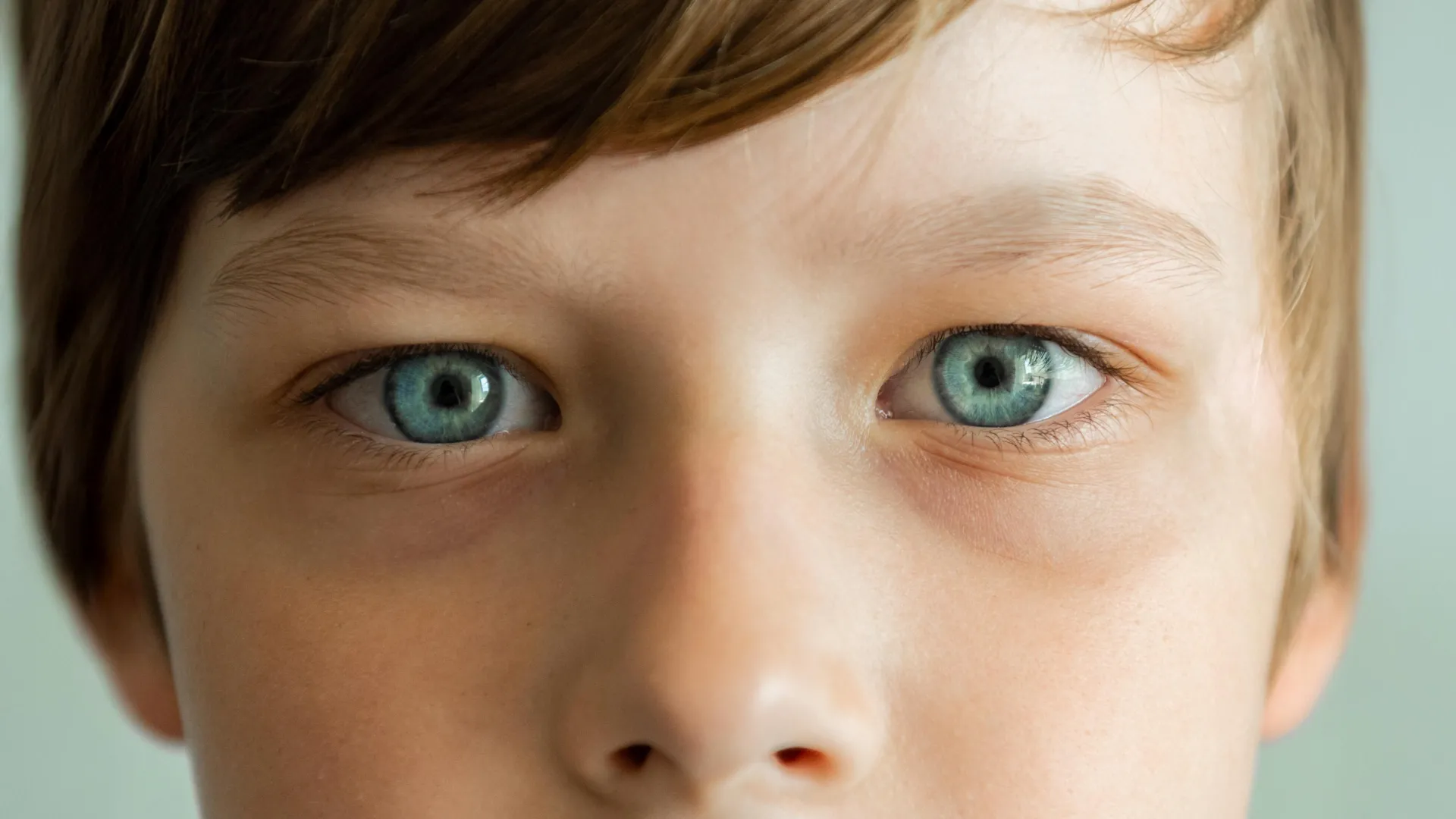
A burgeoning global health concern, myopia, or nearsightedness, is increasingly affecting children, with projections suggesting that by the year 2050, a staggering half of the world’s population could be impacted. This escalating trend is closely linked to modern lifestyles, characterized by prolonged indoor periods spent engaged with digital screens and a corresponding reduction in time spent outdoors under natural sunlight. Amidst this growing challenge, pioneering research is shedding light on a potential, yet previously overlooked, factor within our artificial indoor environments: the specific spectrum of light we are exposed to.
New scientific investigations, spearheaded by collaborative efforts between Cincinnati Children’s and the University of Alabama at Birmingham, have identified a critical component of natural light that appears to play a vital role in mitigating the development of myopia. Their findings, disseminated in the esteemed scientific journal Cell Reports Medicine on August 18, 2026, pinpoint a particular wavelength within the visible light spectrum—indigo light—as a significant protective agent. This segment of light, while abundant in the sun’s rays, is notably deficient in the standard white light-emitting diode (LED) systems commonly found in homes and educational settings.
The research team delved into the effects of indigo light through meticulous experiments conducted on tree shrews, animals chosen for their remarkably similar visual system architecture and optical properties to those of humans. In these controlled studies, exposure to light within the indigo spectrum, specifically wavelengths ranging from 419 to 446 nanometers, demonstrated a profound ability to completely halt the onset of myopia in the subjects. This outcome carries significant implications, suggesting that a similar protective mechanism might be at play for human eyes.
Richard Lang, PhD, the corresponding author and director of research in the Division of Ophthalmology at Cincinnati Children’s, expressed optimism regarding the applicability of these findings to human health. He noted the aggressive nature of the myopia model employed in tree shrews, indicating that if indigo light can effectively prevent the condition in these subjects, its efficacy in humans is likely to be substantial. This suggests a potential intervention that could be integrated into our daily lives with relative ease.
Understanding the mechanism of myopia is crucial to appreciating the significance of these findings. Myopia manifests when the eyeball elongates excessively from front to back, causing light to converge at a focal point anterior to the retina, rather than precisely on its light-sensitive surface. This misalignment results in distant objects appearing blurred. While this condition often emerges during childhood and can progress through adolescence, corrective lenses such as glasses and contact lenses offer a means to restore clear vision. However, the long-term consequences of severe myopia extend beyond visual acuity, increasing the predisposition to more serious ocular conditions later in life, including retinal detachment, glaucoma, and macular degeneration.
The selection of tree shrews as the experimental model was a deliberate choice, driven by the scientific community’s recognition of their ocular congruence with human eyes. First author Rafael Grytz, PhD, a specialist in visual sciences affiliated with the University of Alabama at Birmingham (UAB), ingeniously developed miniature spectacles tailored for tree shrews. These specialized lenses were designed to induce a strong myopic response in one eye, while the contralateral eye served as a vital control, allowing for direct comparison and accurate measurement of the light’s impact.
"Despite their outward resemblance to squirrels, tree shrews are evolutionarily positioned as near-primates," Dr. Grytz elaborated, highlighting their suitability as a proxy for studying human myopia. "Their ocular structure and function closely mirror those of humans, making them an excellent model for investigating the underlying causes of myopia in our population."
During the experiments, the animals were subjected to various light wavelengths, with their ocular development meticulously monitored. Sophisticated instruments, including a biometer to precisely measure axial length and eye shape, and an autorefractor to track refractive changes over time, provided objective data on the progression or prevention of myopia.
The quest for the optimal light wavelength built upon prior research involving mice, which had indicated that violet light, specifically around 380 nanometers, could confer a protective effect against myopia. These earlier studies also identified Opsin 5 (OPN5), a light-sensitive receptor, as a key mediator of this protective mechanism. However, the tree shrew model presented a unique challenge. Light at the 380-nanometer wavelength, while effective in mice, failed to elicit the same response in tree shrews. This discrepancy was attributed to the optical properties of their eye lenses, which, akin to human lenses, exhibit a significant filtering effect on wavelengths below approximately 400 nanometers.
"Human lenses, and as we have now discovered, tree shrew lenses, do not transmit a substantial amount of light within the ultraviolet spectrum," Dr. Lang explained. "They effectively block most wavelengths below about 400 nanometers. This observation prompted us to investigate slightly longer wavelengths that could still effectively stimulate OPN5. Our research ultimately pinpointed indigo light, falling within the 419 to 446 nanometer range, as the most potent in preventing myopia." This breakthrough was pivotal, guiding the researchers toward indigo light, a wavelength capable of penetrating the ocular lens while simultaneously activating the crucial biological pathways involved in refractive development.
These findings lend considerable weight to the hypothesis that contemporary indoor environments may be inadvertently exposing developing eyes to a light spectrum that deviates significantly from the conditions under which human vision evolved. Standard white LED lighting, while efficient and widely adopted, typically exhibits peak emissions around 450 nanometers, providing ample longer-wavelength light essential for visual acuity. However, these systems are notably deficient in indigo light, a wavelength that appears to engage nonvisual opsins involved in a range of biological processes beyond image formation, including developmental pathways within the eye.
"Our evolutionary history is deeply intertwined with exposure to the full spectrum of light provided by the sun," Dr. Lang emphasized, articulating the core message of their research. "When we spend the majority of our time indoors, our eyes are deprived of essential wavelengths necessary for optimal refractive development, leading to the increased prevalence of myopia. This is the fundamental takeaway from our study."
While encouraging children to spend more time outdoors, thereby exposing them to natural sunlight and promoting dynamic visual focusing between near and far objects, remains a valuable strategy, researchers acknowledge the societal inertia towards indoor, technology-centric lifestyles. Reversing this trend presents a significant challenge. Consequently, the researchers are exploring an alternative, potentially more achievable solution: the redesign of indoor lighting systems to more accurately replicate the spectral composition of natural light.
Building on earlier explorations into light’s influence on ocular development, Cincinnati Children’s took a proactive step in 2021 by implementing a programmable, full-spectrum lighting system within its neonatal intensive care unit (NICU). This initiative, a first for a pediatric hospital, is currently undergoing ongoing study to assess its effects. While specialized lighting solutions exist for other biological purposes, such as regulating circadian rhythms to combat jet lag, lighting products specifically engineered to address myopia prevention are not yet widely available on the market.
The next critical phase of this research involves translating these promising findings from animal models to human subjects. The Science of Light Center at Cincinnati Children’s is actively investigating how varied lighting environments might influence children’s overall health, with a specific focus on myopia. The intention is to install advanced lighting systems in select daycare facilities, enabling researchers to longitudinally track myopia rates among children in these environments and compare them with control groups using conventional lighting.
Dr. Lang clarified that the objective is not merely to enhance the brightness of indoor spaces but rather to imbue artificial light with greater biological completeness, bringing its spectral output closer to the natural light experienced by humans throughout their evolutionary past. "What is our most viable path forward?" he posited. "It lies in modifying our indoor lighting environments. If future clinical trials corroborate these findings, lighting enriched with indigo wavelengths could emerge as a safe, passive, and scalable intervention for reducing the risk of childhood myopia."
This groundbreaking research was a testament to the power of interdisciplinary collaboration, involving Dr. Lang’s team at Cincinnati Children’s and Dr. Grytz’s group at UAB. Significant contributions were also made by Takahiro Yamashita from Kyoto University and Mehlika Inanici from the University of Washington. The study received robust financial backing from a consortium of esteemed organizations, including the National Eye Institute of the National Institutes of Health, the National Institute of General Medical Science, the Japan Agency for Medical Research and Development, the EyeSight Foundation of Alabama, Research to Prevent Blindness, the Henry M. Hollis Fund, the Emma and Irving Goldman Scholar Endowed Chair, and the Cincinnati Children’s Hospital Research Foundation.
Both Dr. Grytz and Dr. Lang have disclosed their roles as inventors on pending patent applications pertaining to lighting devices related to this research. Furthermore, Dr. Grytz is the founder and Chief Scientific Officer of Electric Indigo, a startup company affiliated with UAB, in which UAB holds an ownership stake, underscoring the commercial potential and ongoing development of these innovative lighting solutions.

Related News