
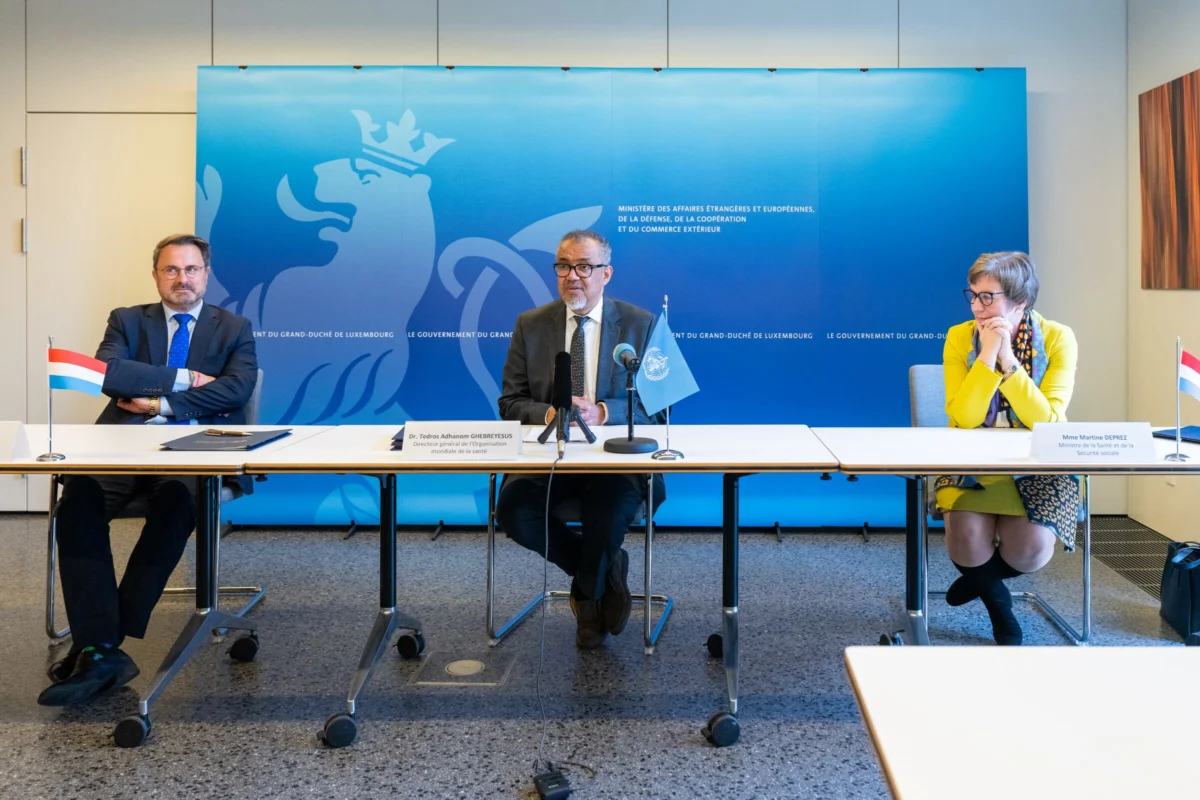
In a significant stride towards fortifying international public health frameworks, Luxembourg solidified its commitment to global well-being on December 20, 2024, through the signing of two landmark agreements with the World Health Organization (WHO). These partnerships, heralded as a crucial moment for both entities, are designed to channel substantial financial resources and strategic support into critical health initiatives worldwide, aiming to accelerate progress towards the United Nations Sustainable Development Goals (SDGs) between 2025 and 2028. The comprehensive nature of these commitments underscores Luxembourg’s evolving role as a key contributor to multilateral health efforts, moving beyond traditional aid models to embrace a more integrated and impactful approach to global health challenges.
Central to this renewed collaboration is a Strategic Partnership Framework (SPF) forged with Luxembourg’s Ministry of Development Cooperation and Humanitarian Affairs. This framework represents an unprecedented financial pledge of €46.5 million, marking it as the single largest agreement ever concluded between the WHO and the Grand Duchy. The magnitude of this investment signals a profound deepening of Luxembourg’s dedication to global health equity and resilience. The SPF is structured to provide both fully flexible and thematically earmarked funding, a crucial dual approach that empowers the WHO to address both immediate, unforeseen needs and long-term strategic priorities with agility and precision.
A significant portion of this €46.5 million commitment is designated as fully flexible funding. This operational flexibility is highly valued by the WHO, as it enables the organization to allocate resources to areas of highest need, respond effectively to emerging health crises, and support underfunded programs that are vital for global health security. In an unpredictable world grappling with a spectrum of health threats—from infectious disease outbreaks to the escalating impacts of climate change on health—the ability to deploy resources rapidly and strategically is paramount. This type of funding minimizes bureaucratic hurdles and allows for a more dynamic response to global health priorities identified by the WHO’s expert leadership.
Beyond its flexible component, the Strategic Partnership Framework also includes specific thematic allocations, reflecting Luxembourg’s strategic vision for global health impact. These targeted investments are directed towards three critical areas: the Universal Health Coverage (UHC) Partnership, tropical disease research, and the global polio eradication effort. The commitment to UHC is particularly pertinent in an era where equitable access to quality health services remains a formidable challenge for billions. Universal Health Coverage is not merely about providing medical care; it encompasses a robust health system that prevents financial hardship, promotes health, prevents illness, and ensures that everyone, everywhere, can access the health services they need without facing financial ruin. Luxembourg’s support for the UHC Partnership will help countries strengthen their primary healthcare systems, expand service coverage, and improve financial protection for their populations, ultimately contributing to more resilient and equitable societies.

Furthermore, the allocation for tropical disease research addresses a critical gap in global health equity. Neglected tropical diseases (NTDs) disproportionately affect the world’s poorest and most vulnerable populations, often thriving in conditions of poverty and inadequate sanitation. These diseases cause immense suffering, disability, and economic burden, yet research into their prevention, diagnosis, and treatment often receives insufficient funding compared to diseases prevalent in wealthier nations. By investing in tropical disease research, Luxembourg is directly contributing to the development of new tools and interventions that can alleviate the burden of these debilitating conditions, fostering healthier communities and unlocking human potential in regions historically marginalized by global health priorities.
The continued support for polio eradication also highlights Luxembourg’s long-term vision. The global effort to eradicate polio is one of the most ambitious and successful public health campaigns in history, having brought the world to the brink of eliminating a devastating disease. However, the final stages of eradication are often the most challenging, requiring sustained political will and financial investment to reach every child, even in the most remote and conflict-affected areas. Luxembourg’s contribution ensures that critical vaccination campaigns, surveillance efforts, and outbreak responses can continue, safeguarding the progress made and preventing a resurgence of this crippling disease. This commitment underscores the principle that global health initiatives are interconnected, and a collective effort is necessary to achieve lasting victories.
Complementing the substantial SPF, a second, equally significant agreement was signed with Luxembourg’s Ministry of Health and Social Safety. This €1 million multiyear agreement marks a historic milestone as the country’s inaugural voluntary contribution to the WHO from its national health ministry. This distinct partnership signals a deepening of direct engagement from Luxembourg’s domestic health sector with the global health agenda, moving beyond traditional development cooperation to integrate national health priorities into international efforts. Martine Deprez, Luxembourg’s Minister of Health and Social Safety, emphasized during a bilateral meeting that this contribution would strategically finance priority areas in the collaboration, notably focusing on strengthening sanitary crisis preparedness and response mechanisms, and actively combating health inequalities with a specific emphasis on gender-related disparities.
The focus on sanitary crisis preparedness and response is particularly timely in the aftermath of recent global pandemics, which exposed vulnerabilities in health systems worldwide. This funding will bolster the WHO’s capacity to assist member states in developing robust surveillance systems, enhancing rapid response capabilities, stockpiling essential medical supplies, and training health workers to effectively manage future public health emergencies. Such investments are critical for global health security, ensuring that nations are better equipped to detect, prevent, and respond to infectious disease outbreaks before they escalate into global crises.
Furthermore, addressing health inequalities and integrating a gender-sensitive approach are paramount for achieving equitable health outcomes. Health inequalities manifest in various forms, from disparities in access to care and treatment to variations in disease prevalence and mortality rates across different socio-economic groups, ethnicities, and geographic locations. The emphasis on gender recognizes that biological sex, gender roles, and societal norms profoundly influence health risks, access to services, and health-seeking behaviors. By supporting initiatives that specifically target gender-related health disparities, Luxembourg and the WHO aim to dismantle systemic barriers, empower women and girls, and ensure that health programs are designed to meet the diverse needs of all individuals, promoting fairness and equity in health.

Xavier Bettel, Luxembourg’s Deputy Prime Minister and Minister of Foreign and European Affairs, Cooperation and Foreign Trade, underscored the strategic importance of these agreements. He stated that the dual partnership reaffirmed Luxembourg’s unwavering support for the WHO and its overarching mission, reflecting a strong commitment to advancing global health and upholding the principles of multilateralism. His sentiment, "we believe the best way to avoid is to prevent," encapsulates a proactive philosophy towards global health challenges. This perspective emphasizes investing in preventative measures, strengthening primary healthcare, and building resilient health systems rather than merely reacting to crises. It aligns with the idea that strategic, sustained investment in public health infrastructure and preventative programs offers a more sustainable and cost-effective approach to safeguarding human health worldwide.
Dr. Tedros Adhanom Ghebreyesus, the WHO Director-General, highlighted the symbolic timing of the signing ceremony, which coincided with the International Day of Solidarity. He characterized the agreements as "a strong statement of solidarity by Luxembourg, not just with WHO, but with the people of the world." This statement resonates deeply with the spirit of international cooperation and shared responsibility that defines global health efforts. Solidarity, in this context, means recognizing that health challenges transcend national borders and require collective action, mutual support, and a commitment to ensuring health for all, particularly the most vulnerable populations.
The Strategic Partnership Framework further includes robust support for the WHO’s core mandate: to develop, deliver, and implement high-quality technical products. This encompasses the creation of evidence-based guidelines, norms, and standards that serve as foundational blueprints for health policies and practices across member states. These technical products are indispensable for harmonizing global health efforts, ensuring best practices in disease surveillance, treatment protocols, vaccine development, and public health interventions. From establishing criteria for essential medicines to setting benchmarks for health worker training, the WHO’s normative work provides crucial guidance upon which many countries rely to strengthen their health systems and improve population health outcomes. Luxembourg’s support directly bolsters the WHO’s capacity to continue this vital, foundational work.
These agreements build upon a historical strategic partnership between the WHO and Luxembourg, characterized by a shared vision and a common mission to promote, provide, and protect health globally. This enduring collaboration has seen Luxembourg consistently contribute to various WHO initiatives, reflecting a deep-seated belief in the power of collective action to address complex health challenges. The latest financial and strategic commitments represent an escalation of this partnership, adapting it to the evolving landscape of global health in the 21st century.
In conclusion, Luxembourg’s multi-million euro investment through these two strategic agreements with the World Health Organization signifies more than just financial contributions; it represents a comprehensive, forward-looking commitment to global health security and equity. By providing both flexible and thematic funding, focusing on critical areas such as Universal Health Coverage, tropical disease research, polio eradication, crisis preparedness, and gender-sensitive health interventions, Luxembourg is actively shaping a more resilient and equitable global health future. This enhanced partnership reinforces the Grand Duchy’s standing as a proactive force in multilateralism, demonstrating a profound belief that investing in global health is an investment in shared prosperity, stability, and human dignity for all.
About the Author












