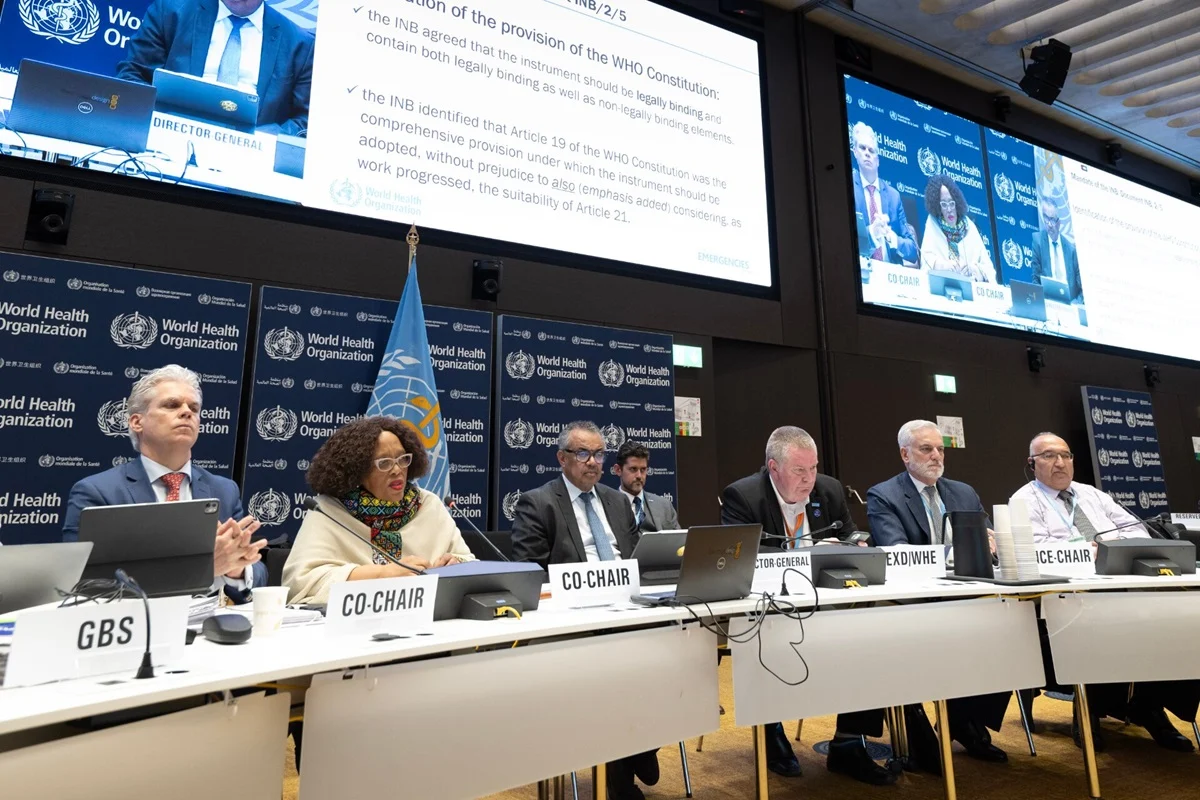
In a pivotal moment for international public health, governments worldwide have committed to accelerating negotiations on a proposed global accord for pandemic prevention, preparedness, and response. This renewed impetus comes as the seventy-seventh World Health Assembly (WHA) approaches on May 27, 2024, where the progress of this landmark agreement will be a central topic for deliberation. The ongoing discussions, held under the auspices of the World Health Organization (WHO) in Geneva, underscore a collective determination to fortify global defenses against future health crises, drawing profound lessons from the devastating impact of the COVID-19 pandemic.
The impetus for a comprehensive international instrument emerged from the unprecedented global disruption wrought by COVID-19, which exposed critical fragilities in national and global health systems. The pandemic laid bare stark inequities in access to life-saving medical countermeasures, fragmented response mechanisms, and insufficient investment in core public health infrastructure. Recognizing that no single nation can effectively combat a global biological threat, leaders from two dozen countries issued a joint statement in March 2021, advocating for enhanced international collaboration. This call swiftly led to a decision by WHO Member States in December 2021 to initiate a formal process for drafting and negotiating a legally binding convention, agreement, or other international instrument. The aim was clear: to establish a robust framework that would transcend political boundaries and ensure a more equitable and coordinated global response when the next pandemic inevitably strikes.
At the heart of this intricate process is the Intergovernmental Negotiating Body (INB), a Member State-led forum established over two years ago with the explicit mandate to shepherd the development of this accord. Comprising representatives from all 194 WHO Member States, the INB has been engaged in a series of intensive, often challenging, negotiation rounds. Its Bureau, a smaller leadership group, is tasked with guiding these discussions and synthesizing the outcomes for presentation to the WHA. The complexity of crafting an agreement that respects national sovereignty while simultaneously fostering unprecedented levels of international cooperation cannot be overstated. Diverse national interests, varying economic capacities, and differing philosophical approaches to global health governance have all contributed to a challenging but ultimately progressive dialogue.
Among the most critical and intricate issues under discussion is the establishment of a novel global system for pathogen access and benefit-sharing. This proposed mechanism seeks to address the profound disparities witnessed during the COVID-19 pandemic, where high-income countries often secured disproportionate access to vaccines, treatments, and diagnostics, leaving many developing nations at a severe disadvantage. The envisioned system would facilitate rapid and equitable access to pathogen samples for research and development purposes, while concurrently ensuring that the benefits derived from these pathogens – such as new medical products – are shared fairly across all nations. This involves thorny debates around intellectual property rights, technology transfer, manufacturing capacities, and mechanisms for fair distribution. Advocates argue that without such a system, the cycle of inequity will persist, undermining any future global response.
Another foundational pillar of the proposed accord centers on pandemic prevention and the "One Health" approach. The "One Health" concept recognizes the intrinsic interconnectedness of human health, animal health, and environmental health. A vast majority of emerging infectious diseases, including COVID-19, are zoonotic in origin, meaning they jump from animals to humans. Effective prevention, therefore, necessitates integrated surveillance systems that monitor pathogens in wildlife, livestock, and humans, alongside robust early warning systems capable of detecting novel threats quickly. This also includes strengthening laboratory capacities, improving epidemiological intelligence, and implementing measures to reduce the risk of spillover events, such as regulating wildlife markets and addressing deforestation. Investing in these preventive measures is widely regarded as the most cost-effective strategy for mitigating pandemic risks, far outweighing the enormous costs of responding to a full-blown crisis.
The financial coordination required to scale up countries’ capacities for pandemic preparedness and response forms the third crucial component of the negotiations. The COVID-19 pandemic highlighted significant gaps in global health security financing, with many low- and middle-income countries lacking the resources to build resilient health systems, train healthcare workers, and procure essential medical supplies. The proposed agreement aims to establish mechanisms for sustainable and equitable funding, potentially through dedicated financial instruments, improved burden-sharing models, and technical assistance programs. The goal is to ensure that all nations, regardless of their economic status, possess the foundational capabilities to detect, assess, report, and respond to potential pandemic threats, thereby creating a stronger collective defense against global health emergencies.
Dr. Precious Matsoso, Co-Chair of the INB Bureau from South Africa, emphasized the historical weight of these proceedings. "We are witnessing history play out before our eyes during this process, with the coming together of all countries to decide a binding pact to protect all citizens of the world," she stated. Matsoso acknowledged the inherent difficulties, noting, "This is not a simple exercise. This is the first ever process to develop a proposed agreement on pandemic prevention, preparedness and response. Getting this done means getting it right, and the INB Bureau is committed to help finalize a meaningful, lasting agreement." Her remarks underscore the profound responsibility felt by negotiators to craft an instrument that will genuinely safeguard future generations from the kind of suffering experienced during the recent pandemic.
Echoing this sentiment, Mr. Roland Driece, the fellow INB Bureau Co-Chair from the Netherlands, reflected on the ambitious nature of the endeavor. "This unprecedented effort by all WHO Member States was launched in response to an unprecedented global emergency – the COVID-19 pandemic," Driece commented. He highlighted the recognition among sovereign states that "great collaboration and coordination were needed in the face of pandemics." While conceding that "negotiations have been challenging at times," Driece articulated a universal consensus: "all countries agree that the world must be better prepared for the next pandemic. It is not a matter of if a pandemic will happen again; it is a matter of when. We cannot afford to miss this historic opportunity to make the world safer from the next pandemic threat." His words serve as a stark reminder of the urgency driving these complex discussions.
Dr. Tedros Adhanom Ghebreyesus, WHO Director-General, has been a steadfast advocate for this accord, consistently emphasizing its transformative potential. He welcomed the continued commitment from Member States, stating, "During more than two years of intensive negotiations, WHO’s Member States have shown unwavering commitment to forging a generational agreement to protect the world from a repeat of the horrors caused by the COVID-19 pandemic." Dr. Tedros further lauded "the determination that all countries have shown to continue their work and fulfill the mission on which they embarked," underscoring the high-level political will sustaining the process despite its inherent complexities. The WHO, as the leading global health authority, plays a crucial facilitative role, providing technical expertise, coordinating discussions, and advocating for a robust, equitable outcome.
As the WHA approaches, the INB Bureau is preparing to submit its consolidated outcome for consideration by Member States. This marks a crucial stage, as the global health community will closely examine the proposed framework and determine the next steps towards its formal adoption. While the path to a fully ratified, legally binding instrument remains challenging, the renewed commitment to intensive, focused discussions in the weeks leading up to the Assembly signals a strong resolve to bridge remaining differences. The stakes could not be higher: the ability of the international community to collectively mitigate the impact of future pandemics hinges on the success of these negotiations, offering a rare opportunity to forge a truly resilient and equitable global health security architecture for generations to come.
About the Author