As the global population ages, the discourse surrounding senior health has shifted from merely extending lifespan to enhancing "healthspan" – the period of life spent in good health, free from chronic disease and disability. A cornerstone of achieving this extended vitality, particularly for individuals over the age of 55, lies in maintaining robust physical function. While comprehensive fitness regimens are undeniably beneficial, an increasing body of evidence and expert opinion suggests that targeted, efficient morning exercise routines can deliver profound advantages in preserving strength, mobility, and overall independence, potentially yielding significant anti-aging benefits without necessitating extensive, hour-long gym sessions.
The human body undergoes a natural process of physiological change with age, a key aspect of which is sarcopenia – the progressive and generalized loss of skeletal muscle mass and strength. This phenomenon typically begins around the fourth decade of life and accelerates after 60, impacting not only physical capacity but also metabolic health. Reduced muscle mass can lead to decreased mobility, a higher risk of falls, slower metabolism, and an overall decline in the ability to perform daily tasks. Counteracting sarcopenia is therefore not merely about aesthetics; it is a fundamental strategy for sustaining quality of life and autonomy throughout the later years.
Prioritizing physical activity at the start of the day has emerged as a favored approach for many, with research indicating a significant preference for morning workouts among adults. This inclination is rooted in practical as well as psychological benefits. Engaging in exercise early ensures that daily commitments, unexpected events, or waning energy levels later in the day do not derail fitness goals. Beyond consistency, a morning routine can invigorate the body and mind, enhance mental clarity, and establish a positive, proactive tone for the hours ahead. Physiologically, an early workout can kickstart metabolism, improve blood circulation, and contribute to better sleep patterns, further reinforcing overall well-being. The emphasis here is on efficiency and purposeful movement, rather than simply the duration of exercise. For older adults, selecting movements that offer maximum functional benefit in minimal time can be a game-changer.
Jacob Siwicki, an accomplished fitness expert and founder of Siwicki Fitness, holding NCSF and AFAA certifications, underscores the critical importance of muscle preservation in the aging process. His extensive background, including recognition as a top personal trainer and a former collegiate athlete, lends significant weight to his perspective on functional fitness. Siwicki articulates that muscle is the ultimate guarantor of independence. It is the engine that facilitates fundamental actions such as rising from a chair, carrying groceries, ascending stairs, and maintaining balance to prevent falls. Stronger muscles provide essential support to joints, stimulate bone density, enhance coordination, and help mitigate the age-related slowdown of metabolism.
Siwicki emphasizes that the true measure of muscle utility is its functional capacity – what it enables an individual to do, rather than its appearance in a mirror. When routine activities begin to feel burdensome, individuals often reduce their physical activity, initiating a detrimental cycle of accelerated strength loss. Consistent muscle maintenance actively breaks this cycle, significantly improving the likelihood of remaining active and self-sufficient. This philosophy underpins the selection of specific exercises that are not only effective but also highly transferable to real-world movements, ensuring that the effort expended translates directly into enhanced daily function.
For individuals over 55, focusing on compound, multi-joint movements that mimic everyday activities is particularly effective. These exercises engage multiple muscle groups simultaneously, providing a comprehensive workout in a condensed timeframe, which aligns perfectly with the goal of efficient morning routines. Here are five such foundational movements that can be incorporated to foster functional longevity:
-
Goblet Squats: This exercise is a cornerstone for lower body strength and core stability, directly mimicking the action of sitting down and standing up. Holding a dumbbell or kettlebell against the chest encourages an upright posture and helps counterbalance the movement, making it accessible even for those with limited mobility. The goblet squat strengthens the quadriceps, hamstrings, glutes, and engages the core muscles, promoting hip mobility and overall balance. Consistent practice improves the ease and safety of everyday movements like getting out of a chair or walking up a ramp, significantly bolstering independence.
-
Counter Pushups (Incline Pushups): An excellent modification of the traditional pushup, counter pushups build upper body pushing strength, chest, shoulder, and triceps musculature, while also engaging the core. By performing the pushup against a sturdy counter, wall, or elevated surface, the intensity can be easily adjusted to suit individual strength levels, reducing strain on joints and allowing for a greater range of motion initially. This exercise enhances the ability to push open heavy doors, steady oneself against an object, or even recover from a fall by pushing up from the ground, offering vital functional strength for daily life.
-
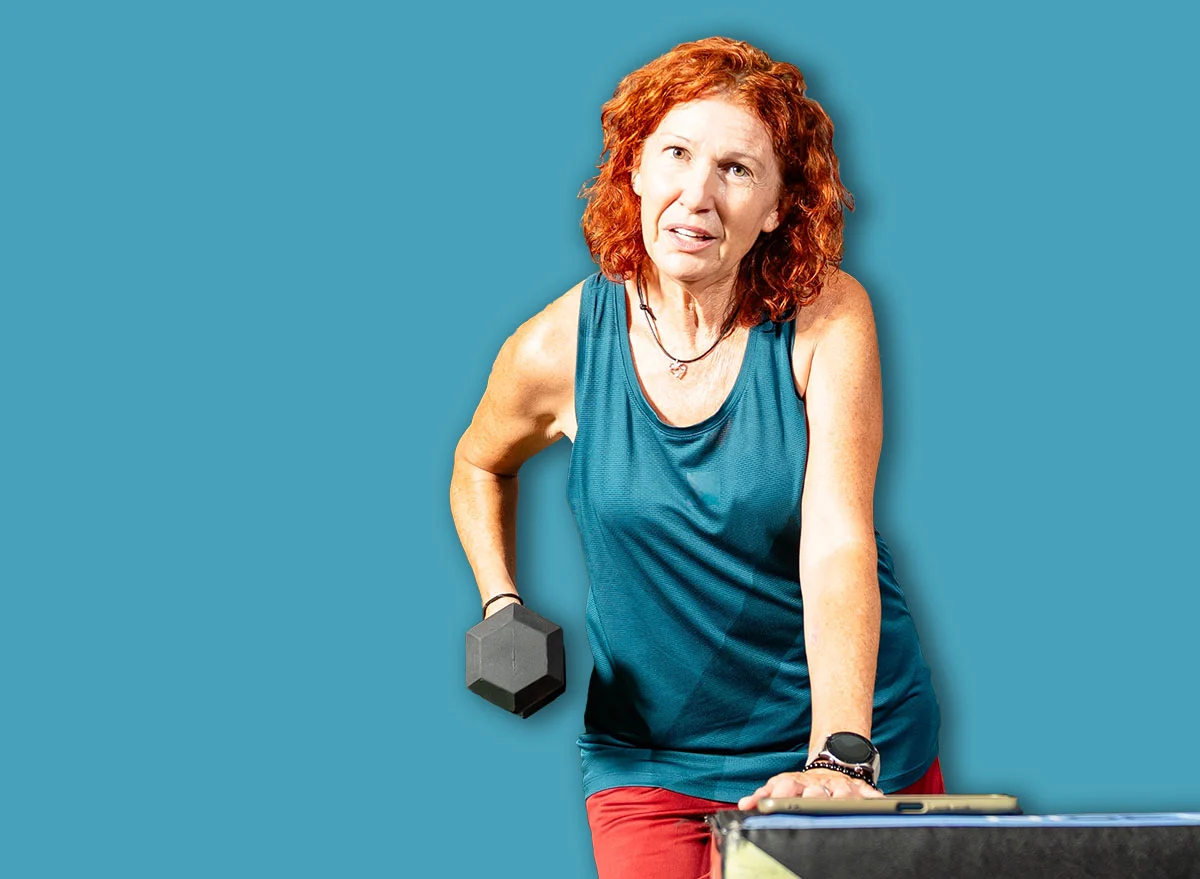
Single-Arm Dumbbell Rows: This movement targets the muscles of the back, shoulders, and biceps, while simultaneously challenging core stability. Performed by leaning over a bench or stable surface with one hand for support and rowing a dumbbell with the other arm, it addresses muscular imbalances that can arise from repetitive daily actions. Strengthening the pulling muscles of the back is crucial for maintaining good posture, preventing shoulder injuries, and performing tasks such as lifting objects, pulling open drawers, or carrying bags with greater ease and reduced risk of strain.
-
Romanian Deadlifts (RDLs): RDLs are instrumental for developing strength in the posterior chain – the hamstrings, glutes, and lower back. This exercise teaches the critical hip hinge movement pattern, which is fundamental for safely bending over to pick up objects from the floor without straining the lower back. Unlike traditional deadlifts, RDLs focus on the eccentric (lowering) phase and maintain tension on the hamstrings, promoting flexibility and strength simultaneously. Mastering the hip hinge is a vital skill for preventing injuries during everyday lifting and maintaining spinal health as one ages.
-
Farmer’s Carry: Perhaps one of the most functionally relevant exercises, the Farmer’s Carry involves holding heavy dumbbells or kettlebells in each hand and walking a specified distance. This deceptively simple movement is a powerful full-body exercise that significantly improves grip strength, core stability, shoulder stability, and overall muscular endurance. It directly translates to real-world activities such as carrying groceries, luggage, or grandchildren, enhancing one’s capacity for independence and reducing the effort required for such tasks. The isometric strength developed through this exercise is invaluable for maintaining posture and balance.
Integrating these exercises into a consistent morning routine requires commitment, but not necessarily a large time investment. A brief warm-up, followed by 2-3 sets of each exercise with appropriate repetitions, and a cool-down stretch, can be completed in under 30 minutes. It is crucial for individuals, especially those over 55, to listen to their bodies, begin with manageable weights or resistance, and gradually increase the challenge as strength improves. Consulting with a healthcare professional or a certified fitness expert before starting any new exercise program is always recommended to ensure safety and tailor the routine to individual needs and health conditions.
Beyond the physical movements, a holistic approach to longevity also encompasses adequate nutrition, particularly protein intake to support muscle synthesis, sufficient hydration, and restorative sleep. These elements work synergistically with exercise to maximize the benefits of any fitness regimen. By proactively embracing a lifestyle that prioritizes targeted physical activity, individuals beyond 55 can not only mitigate the effects of aging but actively cultivate a future characterized by sustained vitality, robust independence, and an enduring quality of life. The power to shape a healthier, more active senior life often begins with a few intentional movements each morning.
About the Author