As men approach and surpass their fifth decade, the landscape of physical capability often undergoes significant shifts. While the pursuit of peak athletic performance might naturally evolve, the imperative to maintain robust functional strength and mobility becomes paramount for sustaining independence, enhancing quality of life, and extending what is increasingly known as "healthspan" – the duration of life spent in good health. This era is not merely about enduring the passage of time, but about thriving within it, necessitating a shift in focus from maximal lifts to mastering the everyday movements that define self-sufficiency. For many, the perception of strength remains rooted in gym-centric metrics like a one-rep bench press maximum; however, a more pragmatic measure of well-being after 50 lies in the ability to perform common activities with ease, confidence, and resilience.
The physiological changes associated with aging, notably sarcopenia (the progressive loss of muscle mass and strength), can profoundly impact daily function. This natural decline, if unchecked, contributes to reduced metabolic rate, decreased bone density, impaired balance, and an increased risk of falls, all of which can severely diminish autonomy. Consequently, fitness professionals and health experts are increasingly advocating for assessment protocols that evaluate how well the body operates as an integrated system in real-world scenarios, rather than focusing solely on isolated muscle groups or arbitrary weightlifting targets. These functional assessments provide a clearer picture of an individual’s readiness to navigate life’s physical demands, from carrying groceries to simply rising from a chair without assistance. They serve not as a final judgment, but as a diagnostic tool, offering insights into areas of strength and identifying potential weaknesses that, with targeted effort, can be improved. By embracing a proactive approach to physical conditioning, men over 50 can significantly mitigate the adverse effects of aging, ensuring that their strongest, most capable years are still very much within reach.
A comprehensive assessment of physical readiness for men in their later years transcends mere muscle bulk or cardiovascular endurance. It delves into the intricate interplay of strength, balance, coordination, and stamina that underpins every movement. Rather than prescribing heavy resistance exercises from the outset, a thoughtful evaluation often begins with fundamental movement patterns that mirror daily life. These foundational tests illuminate the body’s holistic performance, highlighting the efficacy of the lower body as a primary mover, the stability provided by a robust core, the practical utility of upper-body pushing power, and the critical importance of unilateral strength and equilibrium. Successfully navigating these challenges indicates a well-developed physiological foundation, positioning an individual significantly ahead in the journey toward healthy, active aging. The following four key assessments offer an insightful snapshot into these crucial aspects of functional fitness.
1. The Chair Stand Test: Lower Body Power and Endurance
The ability to stand up from a seated position, particularly without using one’s hands, is arguably one of the most fundamental indicators of lower body strength and muscular endurance, with profound implications for daily independence. This seemingly simple act engages a complex synergy of major muscle groups: the quadriceps at the front of the thigh, the powerful glutes in the buttocks, the hamstrings at the back of the thigh, and the intrinsic core stabilizers. Each repetition challenges these muscles concentrically as the body rises and eccentrically as it controls the descent, simultaneously testing their capacity for sustained effort.
Beyond its direct utility, performance on the chair stand test correlates strongly with broader mobility metrics. Individuals who execute this movement with ease often demonstrate faster walking speeds, ascend and descend stairs more comfortably, and exhibit a significantly lower risk of falls, a leading cause of injury and disability among older adults. In clinical settings, the 30-second chair stand test is frequently employed as a reliable measure of lower body strength and functional capacity, serving as a powerful predictor of future mobility limitations and overall vitality. Proficiency here signifies robust support for the skeletal system and effective neuromuscular control, cornerstones of an active lifestyle. To enhance performance, one might focus on strengthening exercises like squats, lunges, and glute bridges, gradually increasing repetitions or reducing reliance on armrests.
2. The Push-Up Assessment: Upper Body Pushing Strength and Core Stability
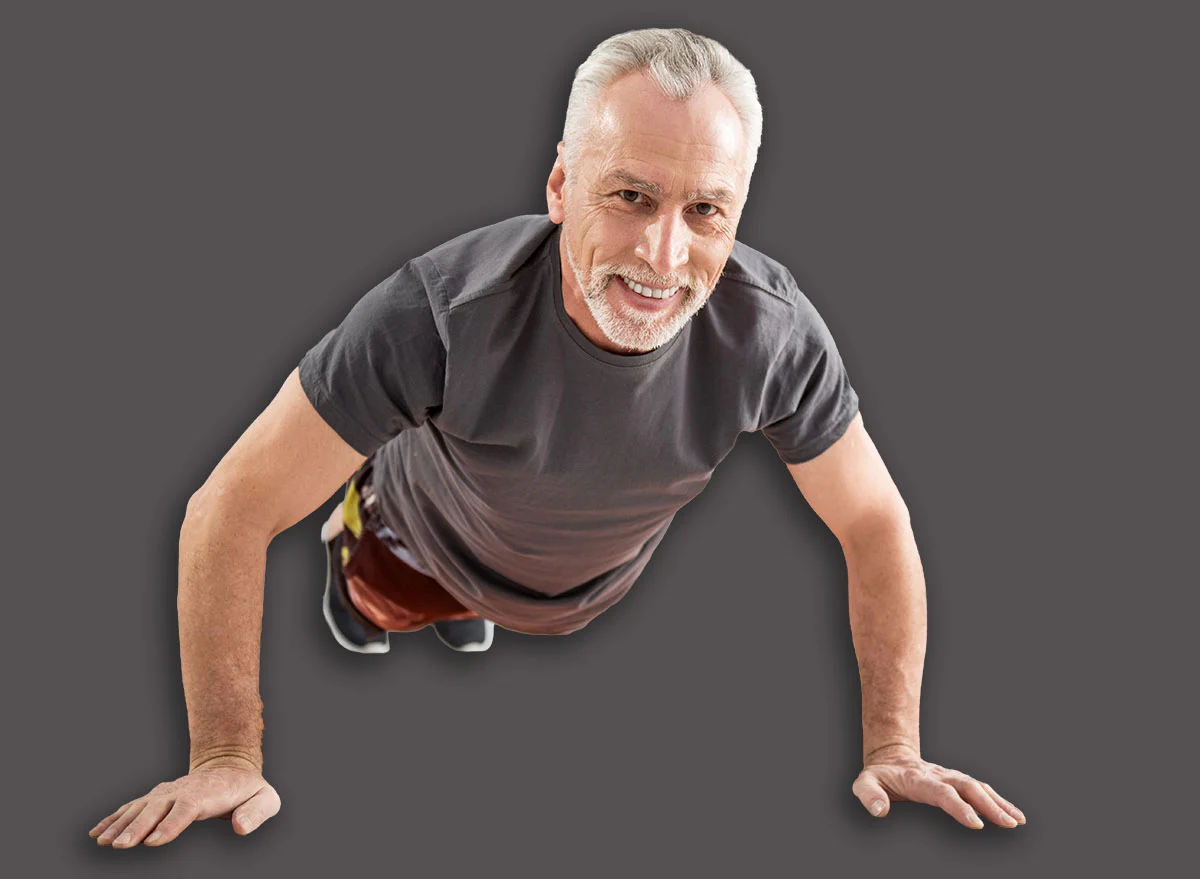
The capacity to generate pushing force with the upper body is indispensable for a myriad of everyday tasks, extending far beyond the gym environment. From effortlessly pushing open a heavy door or repositioning furniture to the critical ability to push oneself up from the floor after a fall, robust upper body pushing strength is a cornerstone of functional autonomy. The push-up, in its various forms, serves as an excellent compound exercise and assessment tool, simultaneously engaging the pectoralis major and minor in the chest, the anterior deltoids in the shoulders, the triceps brachii in the back of the arms, and a significant array of core musculature for spinal stability.
Crucially, the effectiveness of a push-up lies not in the sheer number of repetitions, but in the precision of its execution. Proper technique emphasizes controlled movement through a full range of motion, maintaining a rigid torso, and ensuring adequate scapular stability to protect the shoulder joint. A sloppy, rushed push-up compromises muscle engagement and increases injury risk. For those for whom a standard floor push-up presents too great a challenge, modifications such as performing the exercise from an elevated surface (e.g., a sturdy bench or wall) still provide valuable insight into current strength levels and offer a progressive pathway toward greater strength. Consistent practice of push-ups and their variations can significantly improve shoulder health, posture, and the practical strength needed for daily living.
3. The Loaded Carry (Farmer’s Carry): Full-Body Stability and Grip Endurance
In the real world, strength is rarely about lifting an object once; more often, it involves transporting items over a distance while maintaining posture and control. This reality is precisely why the loaded carry, exemplified by the farmer’s carry, is an invaluable assessment and exercise. This deceptively simple movement — walking while holding heavy objects in each hand — challenges a vast network of muscles simultaneously. It places immense demands on grip strength, which is not only crucial for carrying but has also been identified as a powerful biomarker for overall health and longevity, correlating with reduced risks of cardiovascular disease and all-cause mortality.
Beyond the hands, the farmer’s carry intensely engages the shoulders to stabilize the load, the core musculature (including the deep intrinsic stabilizers) to resist lateral flexion and rotation, and the hips and legs to propel the body forward while maintaining balance. It’s an anti-rotational and anti-lateral flexion exercise that fortifies the entire kinetic chain, teaching the body to operate as a cohesive unit under stress. Men who demonstrate proficiency in this test typically excel at practical tasks such as hauling groceries, managing luggage, carrying tools, or transporting children, all while preserving good spinal alignment. Varying the load, distance, or implement (e.g., dumbbells, kettlebells, sandbags) can further diversify the challenge, fostering robust, real-world applicable strength.
4. The Single-Leg Sit-to-Stand: Unilateral Strength, Balance, and Coordination
Concluding with an exercise that integrates strength, balance, coordination, and precise motor control, the single-leg sit-to-stand represents a pinnacle of functional fitness. This challenging assessment requires an individual to rise from a seated position using primarily one leg, effectively removing the capacity for the stronger limb to compensate for any weakness in the other. It demands tremendous unilateral strength from the hip extensors, quadriceps, and core, while simultaneously calling upon the intricate proprioceptive system and ankle stabilizers to maintain equilibrium throughout the movement.
The ability to perform a single-leg sit-to-stand successfully is a strong indicator of robust hip and knee health, balanced muscular development between the left and right sides of the body, and superior neuromuscular control. These qualities are indispensable for a myriad of daily activities that involve single-leg support, such as navigating stairs, stepping over obstacles, walking on uneven terrain, recovering from a stumble, or even simply dressing oneself. Many individuals find this exercise more challenging than traditional bilateral strength movements precisely because it exposes and targets muscular imbalances. Consistent practice of unilateral exercises not only builds specific strength but also significantly enhances balance, reduces fall risk, and fosters a profound sense of confidence in one’s physical capabilities, contributing immensely to sustained independence and quality of life. Progressions can include lowering the chair height or adding a pause at the top, while regressions might involve fingertip assistance or partial range of motion.
In conclusion, for men navigating the journey beyond 50, the pursuit of functional fitness transcends superficial aesthetics or maximal weightlifting prowess. It is a proactive investment in one’s healthspan, an intentional commitment to preserving independence, mobility, and vitality for decades to come. The four assessments outlined—the chair stand, push-up, loaded carry, and single-leg sit-to-stand—offer practical, revealing benchmarks of real-world strength and physical readiness. By regularly evaluating and working to improve these core capabilities, individuals can cultivate a resilient body that not only stands strong against the tides of aging but also actively embraces the full spectrum of life’s experiences with confidence and vigor. It is never too late to begin this transformative journey, and with consistent effort and informed guidance, a future defined by sustained well-being and capability is entirely attainable.
About the Author