Maintaining robust physical capabilities is a critical component of healthy aging, directly influencing an individual’s independence, quality of life, and overall well-being. As the human body naturally undergoes physiological changes with age, the emphasis shifts from merely existing to actively thriving. A recent assessment framework, championed by exercise scientist Domenic Angelino, MS, MPH, CSCS, CPT, and Chief Exercise Scientist at FitCraft, proposes that mastering a specific set of five standing exercises at 65 years old can signify a level of functional fitness often exceeding that of individuals a decade or more younger. This perspective challenges conventional age-related fitness expectations, highlighting the profound impact of targeted strength and mobility training.
The journey through adulthood brings a gradual decline in various physiological parameters, a process often accelerated by sedentary lifestyles. Sarcopenia, the age-related loss of muscle mass and strength, typically begins in the third decade of life and can progress significantly by one’s 60s. Alongside this, bone density can decrease, joint flexibility diminishes, and balance mechanisms may become less efficient. These changes collectively increase the risk of falls, reduce mobility, and make everyday tasks more challenging. However, scientific consensus strongly supports the notion that regular physical activity, particularly exercises that engage multiple muscle groups and demand bodily stabilization, can effectively mitigate many of these age-associated declines.
Functional fitness stands at the forefront of this preventative approach. Unlike isolated movements performed on gym machines, which often support the body and target single muscles, functional exercises mimic real-world activities. They demand coordination, balance, and the synergistic action of various muscle groups, preparing the body for the dynamic challenges of daily life. As Angelino explains, "In the real world, nearly all physical activity requires you to heavily stabilize your body as you do it. For example, when walking around, you need to use your lower back muscles to hold your torso upright so your body doesn’t collapse forward. If you’re sitting on a machine at the gym, those same muscles will still be at work to help you hold your torso upright, but they won’t have to work nearly as hard because the supports of the seat remove a lot of the demand that keeping your torso upright places on your body." This distinction underscores why standing exercises are paramount for building genuine, transferable strength and stability.
The proposed "benchmark" is not intended as a competitive race against a younger demographic but rather as a motivational metric and a practical assessment tool. Research suggests that elements of competition, even self-competition, can enhance cognitive functions such as attention and memory. By striving to achieve proficiency in these five movements, individuals are not only building physical capacity but also engaging their minds in a goal-oriented endeavor. The exercises selected by Angelino are comprehensive, targeting different facets of functional strength, power, and flexibility, ensuring a holistic measure of physical competence.
Let’s delve into the five pivotal standing exercises that constitute this fitness benchmark:
1. The Goblet Squat: Foundation of Lower Body and Core Integration
The goblet squat is a cornerstone of functional movement, demanding simultaneous engagement of the lower body, core, and upper body. It involves holding a weight (like a dumbbell or kettlebell) close to the chest while squatting down, keeping the torso upright. This exercise powerfully recruits the quadriceps, hamstrings, glutes, and core muscles, simulating the natural movement patterns involved in sitting down, standing up, or lifting objects from the floor. Angelino notes, "Squatting like this is a great way to build functional fitness because you’re doing something with your lower body, core, and upper body at the same time." Its utility extends beyond the gym, translating directly into improved ease with everyday actions, enhanced balance, and increased lower body strength, all crucial for maintaining mobility as years progress.
2. The Push Press: Cultivating Explosive Power and Coordination
Muscular power, defined as the ability to exert maximum force in a short period, is another critical component that tends to diminish with age. The push press specifically addresses this by integrating a powerful leg drive with an overhead press. Starting with a weight at shoulder height, the movement involves a slight dip of the knees followed by an explosive upward extension of the legs and arms to press the weight overhead. This dynamic, full-body exercise is a test of strength, speed, and intricate coordination between the upper and lower body. "The push press is an explosive exercise, meaning that it’s something that has to be done quickly. Explosive exercises help you build muscular power. And, the push press involves being explosive in both your upper and lower body. You also have to coordinate your upper and lower body muscles so that they work together to lift the weight both quickly and safely," Angelino explains. Developing this power can be instrumental in preventing falls, reacting quickly to environmental changes, and performing activities requiring bursts of energy.
3. The Bent-Over Row: Strengthening the Posterior Chain and Postural Integrity
While not explicitly detailed in the original excerpt, the bent-over row is an invaluable standing exercise for developing a strong and resilient posterior chain, which includes the muscles of the back, glutes, and hamstrings. Performed by hinging at the hips with a slight bend in the knees, maintaining a flat back, and pulling a weight towards the torso, this exercise directly strengthens the lats, rhomboids, and trapezius. A strong back is fundamental for maintaining good posture, preventing back pain—a common complaint among older adults—and facilitating pulling movements essential in daily life, such as opening doors or carrying groceries. Its standing nature demands continuous core engagement to stabilize the spine, making it superior to seated row variations for functional strength.
4. The Sumo Deadlift: The Ultimate Test of Full-Body Strength and Stability
The sumo deadlift, a variation of the traditional deadlift, is an exercise that epitomizes functional strength. It involves lifting a weight from the floor to a standing position, utilizing a wide stance and externally rotated feet. This broad stance can often make it more accessible for individuals with hip mobility limitations compared to conventional deadlifts, while still engaging nearly every major muscle group. The quads and glutes are heavily recruited for the lift, while muscles like the transverse abdominis and trapezius work tirelessly to maintain spinal stability and prevent injury. Angelino underscores its significance: "Deadlifts are highly functional because they involve many muscles in your body working together in a complicated way to produce a large amount of force. Some muscles are working to lift the weight, like your quads and glutes. Other muscles are working to keep your body stable while you lift, like your transverse abdominis and trapezius." The ability to perform deadlifts safely and effectively is a strong indicator of overall bodily strength, resilience, and the capacity to handle heavy loads encountered in everyday scenarios.
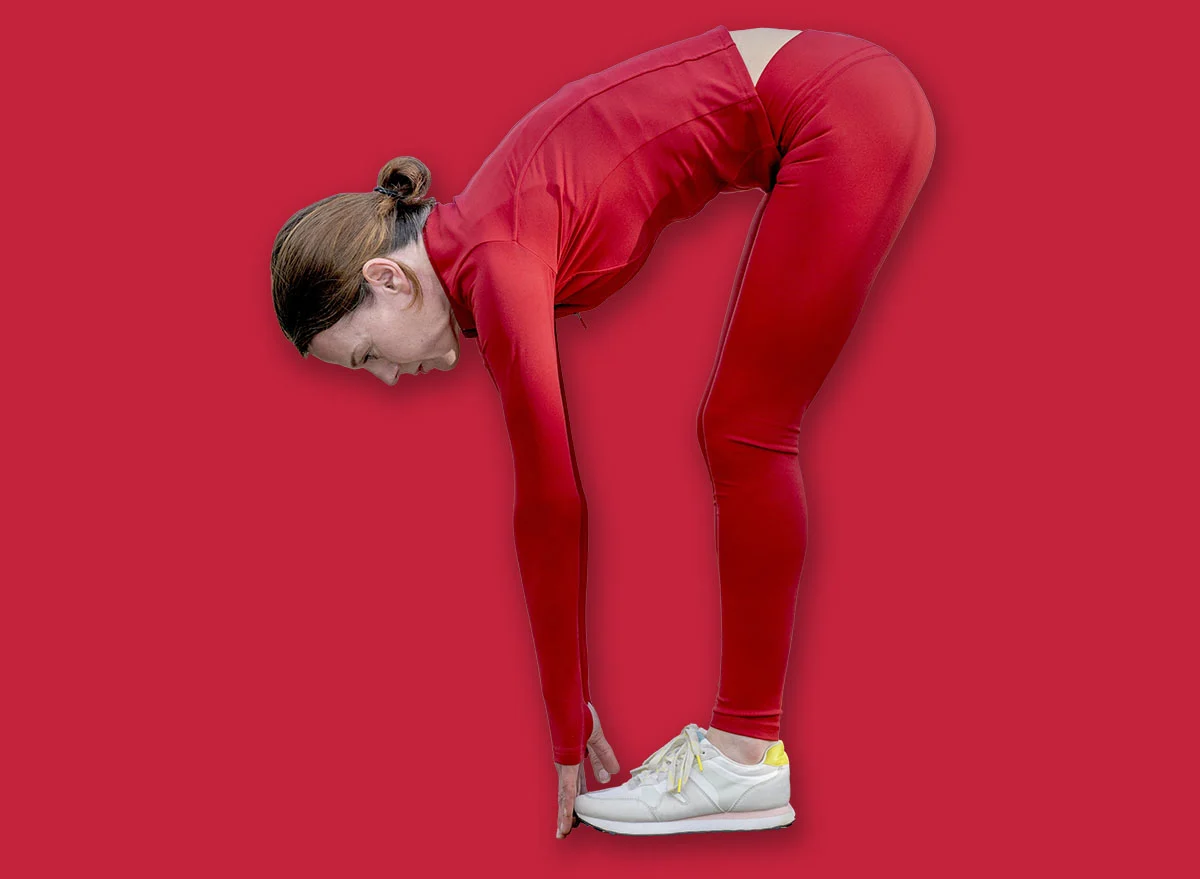
5. Standing Toe Touches: Assessing Hamstring Flexibility and Injury Prevention
Flexibility, particularly in the hamstrings, is often overlooked but profoundly impacts posture, mobility, and injury risk. The standing toe touch, performed by bending at the hips with straight legs to touch the toes or reach towards the floor, is a straightforward yet revealing assessment of hamstring extensibility. Tight hamstrings are a prevalent issue that can contribute to lower back pain, alter gait mechanics, and increase susceptibility to strains and other musculoskeletal injuries. Angelino emphasizes the importance of this seemingly simple movement: "Standing toe touches are useful to build into your training because they largely test your hamstring flexibility. Tight hamstrings are common causes of a variety of different types of injuries. They’re also associated with persistent daily discomfort in some cases." Maintaining good hamstring flexibility can alleviate discomfort, improve range of motion, and reduce the likelihood of falls or other injuries that can severely impact an older adult’s independence.
In conclusion, the ability to competently perform these five standing exercises at 65 years of age is more than just an impressive feat; it is a testament to sustained physical resilience and a proactive approach to healthy longevity. It signifies a body that has retained or even enhanced its functional strength, power, flexibility, and stability—attributes essential for navigating the demands of daily life with ease and confidence. This benchmark offers a clear, actionable goal for individuals seeking to defy typical age-related declines and maintain a vibrant, active lifestyle for decades to come, proving that chronological age is merely a number when it comes to true physical capability. Adopting a fitness regimen that incorporates these foundational movements, ideally under the guidance of a qualified fitness professional, can empower individuals to not just live longer, but to live better.
About the Author