The fiercely competitive landscape of the quick-service restaurant industry continually demands innovation and strategic repositioning from its leading players. In a recent high-profile culinary showdown, two giants of the burger world, McDonald’s and Burger King, introduced or revitalized key offerings, igniting a fresh wave of public discourse and comparison. McDonald’s unveiled its "Big Arch," a novel sandwich aiming to expand its premium burger portfolio, while Burger King concurrently promoted significant enhancements to its iconic Whopper. This dual development, amplified by a viral social media narrative, has focused consumer attention squarely on which brand delivers a superior experience in an evolving market.
The genesis of this renewed rivalry can be traced back to an unexpected social media phenomenon. A video circulating widely online depicted the Chief Executive Officer of McDonald’s sampling the then-new Big Arch. Observers noted his deliberate choice to repeatedly refer to the item as a "product" rather than a "burger," coupled with a noticeably small and hesitant bite. This presentation was widely interpreted as lacking genuine enthusiasm for the company’s own creation, sparking widespread discussion and critical commentary across various digital platforms. The clip swiftly achieved viral status, prompting a ripple effect throughout the fast-food sector.

Capitalizing on this moment, the CEO of Burger King quickly responded with a public display of confidence in his brand’s flagship product. In a contrasting video, he was seen taking a substantial, unambiguous bite of a Whopper, directly challenging the perceived corporate detachment of his competitor. More significantly, this public relations maneuver was accompanied by an announcement of a comprehensive revamp to the Whopper itself. Burger King detailed several key improvements designed to elevate the burger’s quality and appeal, including the introduction of a more robust mayonnaise with subtle citrus undertones, a commitment to fresher ingredients, an upgraded bun for enhanced texture and structural integrity, and an improved serving method intended to maintain the burger’s form and visual appeal from kitchen to consumer. This strategic move by Burger King further fueled the viral debate, inspiring numerous food enthusiasts and content creators to conduct their own head-to-head comparisons of the Big Arch and the newly enhanced Whopper.
Understanding the historical context of these two brands is crucial to appreciating the significance of these recent developments. McDonald’s and Burger King have been locked in a "Burger War" for decades, a continuous battle for market share and consumer loyalty. This rivalry has driven countless product innovations, marketing campaigns, and price wars. In today’s market, where consumers are increasingly sophisticated and demand not just speed and value but also perceived quality and novelty, both companies face immense pressure to innovate. The Big Arch represents McDonald’s attempt to carve out a space in the premium burger segment, potentially building on the legacy of its popular Big Mac while offering a distinct flavor profile. Conversely, Burger King’s decision to refine the Whopper underscores the importance of maintaining and enhancing a beloved, established product, signaling a commitment to quality and consumer satisfaction without abandoning its core identity.
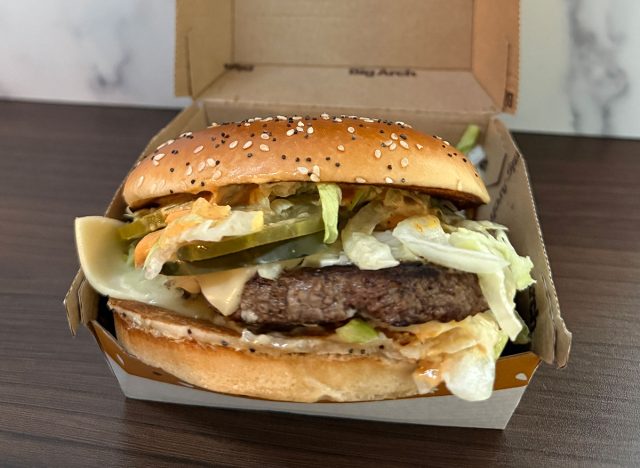
A closer examination of the McDonald’s Big Arch reveals a multi-layered sandwich designed to offer a more complex flavor experience. Departing from the classic Big Mac’s structure, the Big Arch features two savory beef patties, topped with slices of white cheddar cheese—a departure from the standard American cheese often found in fast-food burgers. Its distinctive flavor profile is further enhanced by a combination of both regular, finely diced onions and crispy fried onions, providing a textural contrast that adds depth to each bite. A generous application of a unique, mustard-based sauce, noticeably vibrant in color, coats the ingredients, contributing a tangy and robust element. While specific vegetable components beyond onions are generally consistent with standard burger toppings, the overall composition aims for a richer, more gourmet-like feel within the fast-food framework. Positioned at a price point of approximately $9.99, the Big Arch reflects McDonald’s strategy to compete in a higher-value segment.
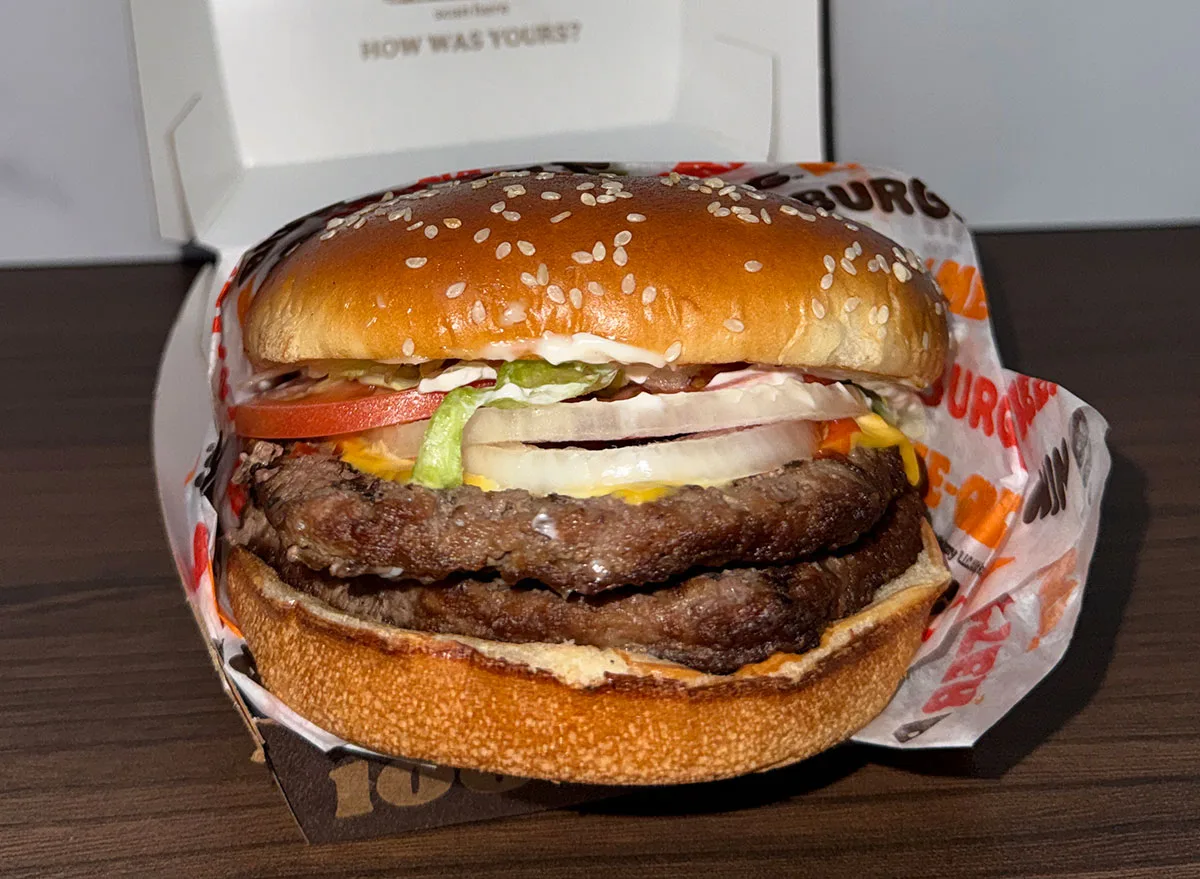
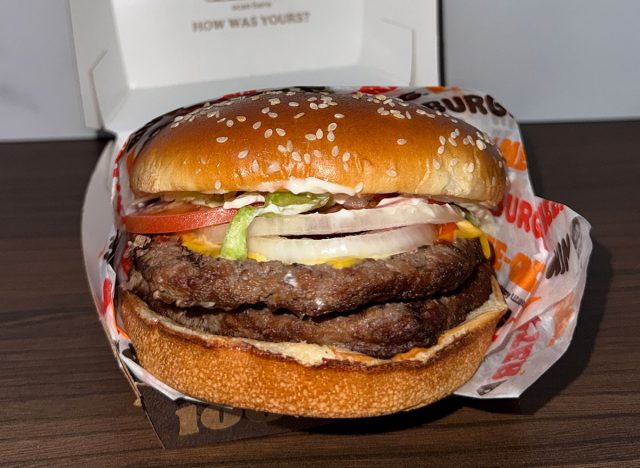
In parallel, Burger King’s revitalized Whopper builds upon its enduring reputation as a flame-grilled classic. The strategic enhancements are designed to address modern consumer expectations while preserving the burger’s beloved characteristics. The new mayonnaise, described as "heartier" and infused with "notes of citrus," aims to provide a richer mouthfeel and a brighter, more complex flavor than conventional mayonnaise. The commitment to "fresher ingredients" speaks to a broader industry trend towards perceived naturalness and quality. An "improved bun" signifies attention to the foundational element of the sandwich, likely focusing on better texture, resilience, and absorption properties to hold the ingredients together more effectively. Furthermore, the updated serving method, which involves partially wrapping the Whopper and placing it in a box, is a practical innovation intended to safeguard the burger’s structural integrity and visual appeal during transport, crucial for on-the-go consumption. The Double Whopper with Cheese, for instance, is priced around $8.49, positioning it as a premium option within Burger King’s menu, offering substantial value for its size and enhanced attributes.
When evaluating the aesthetic and practical aspects, distinct differences emerge. The Whopper, even in its previous iteration, was often perceived as a more substantial and less disheveled burger, an impression that appears to be reinforced by its recent upgrades and improved packaging. Its classic appearance and robust construction generally contribute to a cleaner eating experience, making it a more convenient option for consumption outside a traditional dining setting. In contrast, the Big Arch, while generously endowed with ingredients and sauce, tends to be a more formidable and potentially messier proposition. Its abundant toppings and rich sauce, while contributing significantly to its flavor, can make it challenging to consume neatly, particularly when on the move. This trade-off between indulgent flavor and ease of consumption is a key differentiator between the two offerings.
The sensory experience of tasting these two burgers reveals further distinctions. The Whopper has long been celebrated for its characteristic flame-grilled beef flavor, a hallmark that sets it apart from many of its fast-food counterparts. The harmonious blend of fresh tomatoes and the enhanced mayonnaise, creating a naturally distributed sauce, has consistently contributed to its appeal. Despite the advertised upgrades, some taste tests suggest that the core flavor profile of the Whopper remains largely consistent, perhaps not dramatically altered by the new ingredients in a way that is immediately discernible to all palates. A notable point of contention, however, emerged concerning sauce distribution in some individual servings, with a tendency for the sauce to concentrate at the top, potentially leaving the lower sections of the burger, particularly between the beef patties and the bottom bun, feeling somewhat dry. This inconsistency could impact the overall textural balance and enjoyment, though it may vary by preparation at different locations.
Conversely, the Big Arch presented a notably different flavor journey, distinguishing itself not only from the Whopper but also from McDonald’s own iconic Big Mac. Its strength lies in its abundant and well-distributed toppings and sauce. The rich, mustard-based sauce is a central player, offering a unique and pervasive flavor that permeates every component of the burger. The inclusion of both fresh and crispy onions is particularly effective, introducing a pleasing textural complexity that elevates the experience beyond a simple crunch. This combination of robust sauce and varied textures created a deeply satisfying and consistently flavorful bite across the entire sandwich. While its generous nature translated to a less tidy eating experience, the richness and evenness of its flavor distribution were frequently highlighted as significant advantages.
In conclusion, while the Whopper, with its distinctive flame-grilled taste and recent enhancements to its mayonnaise and bun, continues to hold a cherished place for many fast-food aficionados, the Big Arch made a compelling statement in this direct comparison. Despite the Whopper’s efforts to refine its classic appeal and improve its presentation for on-the-go convenience, the Big Arch garnered significant praise for its bold, complex flavor profile and the thoughtful integration of its ingredients, particularly its signature sauce and dual onion textures. The Big Arch’s robust and evenly distributed flavors provided a surprisingly distinct and enjoyable experience, suggesting that McDonald’s has successfully introduced a formidable contender in the premium burger category. This dynamic interplay of product innovation and consumer response underscores the ongoing vitality and strategic maneuvering within the global fast-food industry, where brands continually vie for consumer preference through evolving culinary offerings.
About the Author