
Maintaining robust physical health becomes an increasingly vital endeavor as individuals progress into their later years, particularly beyond the age of 65. A significant physiological challenge that accompanies aging is sarcopenia, a condition characterized by the progressive and generalized loss of skeletal muscle mass and strength. This natural, age-related decline is not merely an aesthetic concern; it profoundly impacts an individual’s capacity for independent living, overall mobility, and resistance to injury. Understanding the nuances of sarcopenia and proactively addressing its effects through targeted physical activity is paramount for preserving quality of life.
Sarcopenia typically begins to manifest around the fifth decade of life, accelerating significantly after 60. Several interconnected factors contribute to this phenomenon, including a reduction in overall physical activity, which leads to disuse atrophy. Hormonal shifts, such as decreased levels of testosterone, estrogen, and growth hormone, also play a crucial role in diminishing muscle protein synthesis. Furthermore, the nervous system experiences changes, leading to a decline in nerve signaling efficiency to muscle fibers. Perhaps most critically, the body loses fast-twitch muscle fibers, which are responsible for rapid, powerful movements and quick reaction times—essential for maintaining balance and preventing falls. The consequence of these physiological changes is a noticeable reduction in strength, particularly in large muscle groups like those found in the thighs.
The thigh muscles, primarily comprising the quadriceps (at the front) and hamstrings (at the back), along with the gluteal muscles, are fundamental pillars of lower body strength. Their integrity directly dictates a person’s ability to perform everyday activities that most take for granted. Weakness in these critical muscle groups can transform simple actions into formidable challenges. For instance, rising from a seated position, navigating a flight of stairs, walking extended distances, or even recovering from a momentary stumble becomes significantly more difficult and hazardous. Research consistently underscores the profound connection between lower-body strength and long-term independence in older adults. Studies have repeatedly demonstrated that robust lower-body musculature is one of the strongest predictors of fall prevention, directly correlating with improved balance, gait stability, and the overall resilience needed to withstand the minor traumas of daily life.
Given these considerations, implementing effective and safe strength-building strategies is not merely beneficial but essential for older populations. While traditional gym equipment, such as the leg press machine, offers a conventional approach to strengthening the lower body, it presents specific drawbacks for seniors. Leg presses can impose substantial compressive forces on the spine and knee joints, potentially aggravating pre-existing conditions like arthritis or other joint issues common in older age. Moreover, the logistics of using gym equipment—including the effort required to get on and off machines, navigating a potentially busy gym environment, and the financial commitment of a membership—can be impractical or even intimidating for many older adults. This often leads to reduced compliance and, consequently, slower or non-existent progress in strength restoration.
An alternative, highly effective, and remarkably accessible solution lies in a series of bed-based exercises. These routines offer a unique combination of stability, reduced joint stress, and convenience, making them an ideal choice for seniors seeking to enhance their thigh strength and overall mobility from the comfort of their homes. Karen Ann Canham, a Board-Certified Wellness Coach and Nervous System Specialist with nearly two decades of experience in the wellness sector, highlights the intrinsic advantages of these at-home options. She emphasizes that performing exercises while lying down provides a stable base, minimizing the risk of falls during the activity itself and allowing individuals to focus purely on muscle engagement without the added concern of balance. This increased stability and reduced compression on joints render bed exercises a safer and often more sustainable pathway to strength gains for adults over 65, potentially yielding faster, more consistent results due to higher adherence.
Let’s explore four foundational bed exercises that effectively target the thigh muscles and contribute significantly to lower body strength and stability:
1. Glute Bridges
The Glute Bridge is a foundational exercise that targets multiple muscle groups crucial for lower body function and pelvic stability. It primarily engages the gluteal muscles (gluteus maximus, medius, and minimus), hamstrings, and supporting thigh muscles, while also activating the core for pelvic stabilization. This exercise is particularly beneficial for strengthening the posterior chain, which often becomes weak from prolonged sitting, a common habit across all age groups.
To perform a Glute Bridge: Lie on your back on a firm surface, such as your bed or a mat on the floor. Bend your knees, keeping your feet flat on the surface, hip-width apart, and heels relatively close to your glutes. Ensure your arms are resting by your sides with palms facing down. Engage your abdominal muscles slightly to brace your core. Then, press through your heels and lift your hips off the bed towards the ceiling, forming a straight line from your shoulders to your knees. Squeeze your glutes at the top of the movement. Hold this peak contraction for a second or two before slowly lowering your hips back down to the starting position with control. Focus on a smooth, controlled movement rather than using momentum. Aim for 10-15 repetitions for 2-3 sets. For a progression, try performing single-leg glute bridges, which significantly increase the challenge to the working leg and core stability.
2. Straight-Leg Raises
Straight-Leg Raises are excellent for isolating and strengthening the quadriceps muscles, particularly the vastus medialis obliquus, which is vital for knee stability. This exercise also improves hip flexor strength and can be performed with minimal joint stress.
To perform a Straight-Leg Raise: Lie flat on your back with one leg bent at the knee, foot flat on the bed, and the other leg extended straight. Keep your back pressed gently into the bed to avoid arching. Engage the quadriceps of the straight leg, ensuring the knee is locked but not hyperextended. Slowly lift the straight leg upwards, keeping it as straight as possible, until it reaches the height of the bent knee, or just before your lower back begins to arch. Focus on using your thigh muscles, not your hip flexors, to initiate the lift. Hold briefly at the top, then slowly lower the leg back down to the bed with control. Avoid letting the leg flop down. Perform 10-15 repetitions on each leg for 2-3 sets. If this is too challenging, reduce the range of motion. For added resistance as strength improves, a light ankle weight can be incorporated.
3. Heel Slides
Heel Slides are a gentle yet effective exercise for improving knee mobility and strengthening both the quadriceps and hamstrings. This movement is often used in rehabilitation settings due to its low impact and controlled nature, making it perfect for individuals concerned about joint health.
To perform Heel Slides: Lie on your back with both legs extended straight on the bed. Keeping your heel in contact with the bed, slowly slide one heel towards your glutes, allowing your knee to bend naturally. Focus on maintaining control throughout the movement, engaging both the hamstrings to pull the heel in and the quadriceps to control the extension. Once your knee is bent as far as comfortable, slowly slide your heel back to the starting position, extending your leg fully. The goal is a smooth, continuous motion. Repeat for 10-15 repetitions on each leg for 2-3 sets. To increase the challenge, a light resistance band can be looped around the foot, providing resistance as you slide your heel in.
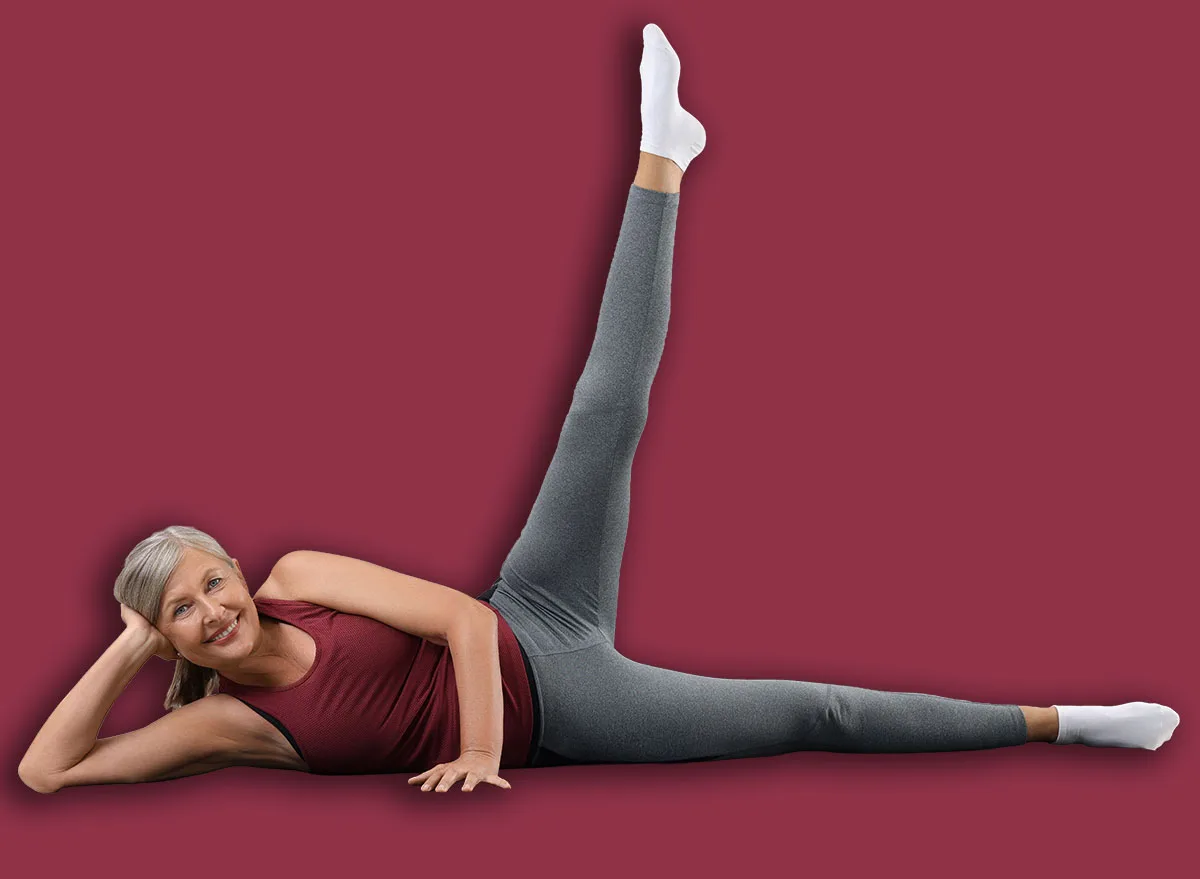
4. Side-Lying Leg Lifts
Side-Lying Leg Lifts primarily target the hip abductor muscles, including the gluteus medius and minimus, located on the outer part of the hip. These muscles are crucial for hip stability, balance, and efficient walking patterns. Strengthening them can significantly reduce the risk of lateral falls.
To perform Side-Lying Leg Lifts: Lie on your side with your legs extended straight and stacked one on top of the other. You can support your head with your lower arm or a pillow. For added stability, you can place your top hand on the bed in front of you. Keeping your core engaged and your body in a straight line, slowly lift your top leg directly upwards towards the ceiling, maintaining a neutral hip position (avoid rolling forward or backward). The movement should come from your hip, not your torso. Lift the leg only as high as you can without tilting your pelvis. Hold briefly at the top, then slowly lower your leg back down to meet the bottom leg. Ensure the movement is controlled and deliberate. Perform 10-15 repetitions on each side for 2-3 sets. As with straight-leg raises, ankle weights can be added for increased resistance as strength improves.
While these bed exercises offer a highly effective pathway to regaining and maintaining thigh strength, it is crucial to adopt a holistic perspective on senior fitness. Consistency is key; performing these exercises regularly, ideally 3-4 times a week, will yield the best results. It is equally important to listen to one’s body, avoiding movements that cause pain and gradually increasing repetitions or sets as strength improves. Before embarking on any new exercise regimen, especially for individuals with pre-existing health conditions or mobility limitations, consulting with a healthcare professional, such as a doctor or physical therapist, is strongly advised. They can provide personalized guidance and ensure the exercises are appropriate and safe. Beyond targeted strength training, a well-rounded fitness plan for seniors should also incorporate elements of cardiovascular health, flexibility, and proper nutrition, including adequate protein intake to support muscle preservation.
In conclusion, the journey to sustained independence and enhanced mobility for adults over 65 need not be confined to gym environments that may pose accessibility or safety concerns. By embracing the simplicity and effectiveness of bed-based exercises, individuals can proactively combat sarcopenia, fortify their lower body strength, and significantly reduce the risk of falls. These convenient, low-impact routines empower seniors to take charge of their physical well-being, fostering a greater sense of confidence, balance, and freedom to enjoy their golden years to the fullest.
About the Author










