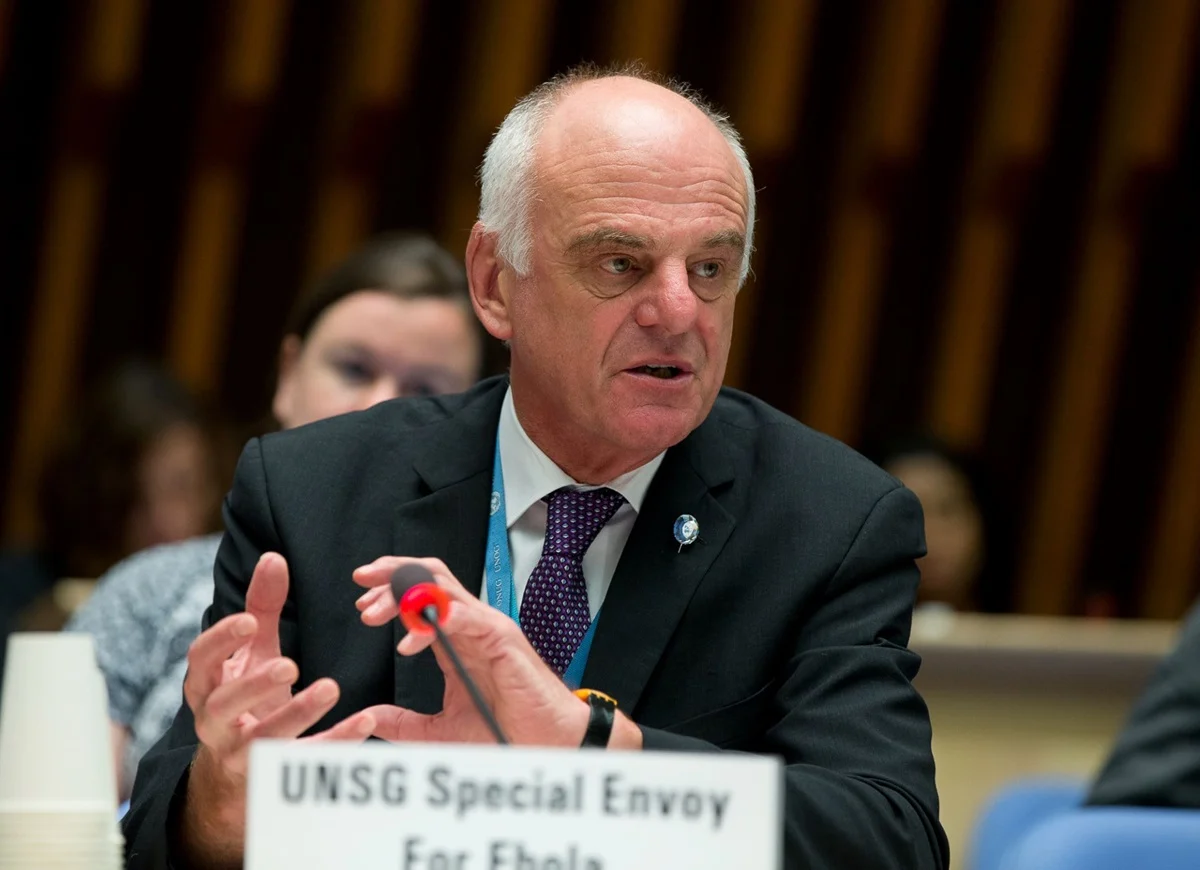
The global community is mourning the loss of Dr. David Nabarro, a towering figure whose unparalleled career spanned critical roles within the World Health Organization (WHO) and the United Nations system, profoundly shaping international responses to health crises, food insecurity, and climate change. Dr. Nabarro passed away at his home on Friday, July 25, at the age of 75, leaving behind an indelible legacy of compassionate leadership and tireless advocacy for the world’s most vulnerable populations. His passing marks the end of an era for a dedicated public servant whose vision and practical expertise guided countless initiatives designed to improve human well-being across continents.
Throughout his remarkable journey, Dr. Nabarro was consistently recognized for his exceptional capacity to convene diverse stakeholders, bridge divides, and catalyze action on some of humanity’s most complex challenges. His colleagues and beneficiaries alike remember him as a mentor and an unwavering advocate for equity, embodying a unique blend of strategic acumen, profound empathy, and resolute determination. The Director-General of the World Health Organization, Dr. Tedros Adhanom Ghebreyesus, conveyed deep sorrow at the news, emphasizing Dr. Nabarro’s instrumental role as a global health champion, a staunch proponent of health equity, and a sagacious, magnanimous guide to innumerable individuals whose careers he influenced. Dr. Ghebreyesus extended the organization’s deepest sympathies to Dr. Nabarro’s family, friends, and collaborators, acknowledging the immense void left by his absence and the profound impact his work had on lives worldwide.
Born from a deep-seated commitment to service, Dr. Nabarro’s professional trajectory was characterized by an extraordinary breadth of engagement, encompassing crucial sectors such as public health, nutrition, and environmental sustainability. His multifaceted contributions reflected an innate ability to grasp intricate global issues and an unwavering readiness to lend his considerable talents wherever they were most needed. This adaptability and comprehensive understanding allowed him to navigate the intricate landscapes of international development and humanitarian aid with remarkable effectiveness.
His distinguished tenure at the World Health Organization began in 1999, where he rapidly ascended to senior leadership positions. Initially serving as the Executive Director overseeing the ambitious Roll Back Malaria Project and holding a pivotal role within the Office of the Director-General, Dr. Nabarro quickly demonstrated his capacity for large-scale program management and strategic oversight. The Roll Back Malaria Project, launched in 1998, represented a critical global effort to halve the burden of malaria by 2010 through improved access to effective treatment, prevention, and control methods. Dr. Nabarro’s leadership during its formative years was crucial in establishing its multi-partner framework and galvanizing international commitment against a disease that disproportionately affects vulnerable communities. Following this, he was appointed the Director-General’s Special Representative for Health Action in Crises, a role that underscored his dedication to humanitarian intervention. This position required swift, coordinated responses to health emergencies arising from natural disasters, conflicts, and other acute crises, demanding both logistical prowess and a deep understanding of human suffering in precarious situations.
In 2005, Dr. Nabarro transitioned to the United Nations system, embarking on an extended period of influential service that solidified his reputation as a leading international coordinator and strategic thinker. His first major assignment was as the UN System Senior Coordinator for Avian and Pandemic Influenza, a role he held from 2005 to 2014. During this period, the world grappled with the significant threat of highly pathogenic avian influenza (H5N1), which raised fears of a devastating human pandemic. Dr. Nabarro was instrumental in orchestrating a coherent, system-wide UN response, working to enhance global preparedness, coordinate surveillance efforts, and ensure effective communication between governments, scientific bodies, and international organizations. His efforts were pivotal in building frameworks for global health security that remain relevant today.
Parallel to his work on pandemic threats, Dr. Nabarro concurrently served as the UN Secretary-General’s Special Representative for Food Security and Nutrition from 2008 to 2014. This period saw renewed international focus on addressing chronic hunger and malnutrition, particularly in the wake of global food price crises. His leadership culminated in his pivotal role as Coordinator of the Movement for Scaling Up Nutrition (SUN) from 2011 to 2014, a global initiative launched in 2010 that brought together governments, civil society, businesses, and donors in a collective effort to end malnutrition in all its forms. As an Assistant Secretary-General, Dr. Nabarro championed SUN’s multi-sectoral approach, advocating for integrated strategies that tackled the root causes of malnutrition, from agricultural practices to maternal and child health. The SUN Movement, under his guidance, transformed the discourse around nutrition, emphasizing national ownership and evidence-based interventions.
Perhaps one of his most challenging and defining roles came in 2014 when he was appointed the UN Secretary-General’s Special Envoy for the West Africa Ebola Outbreak Response. The 2014-2015 Ebola epidemic was an unprecedented public health crisis, devastating communities in Guinea, Liberia, and Sierra Leone and posing a severe threat to global health security. In this critical capacity, Dr. Nabarro was tasked with coordinating the entire UN system’s operational response, a monumental undertaking that required rapid deployment of resources, strategic communication, and intricate logistical management in highly volatile environments. His leadership was crucial in mobilizing international support, streamlining aid efforts, and ultimately bringing the deadly outbreak under control, offering invaluable lessons for future epidemic preparedness and response.
Following the Ebola crisis, Dr. Nabarro continued his impactful work at the highest levels of global governance, serving as Special Adviser for the 2030 Agenda for Sustainable Development and Climate Change from 2016 to 2017, with the rank of Under-Secretary-General. In this capacity, he played a crucial role in advancing the implementation of the Sustainable Development Goals (SDGs), a universal call to action to end poverty, protect the planet, and ensure that all people enjoy peace and prosperity. His extensive background in health, nutrition, and crisis response provided a unique lens through which to integrate these interconnected global challenges, emphasizing the critical linkages between environmental sustainability, social equity, and human well-being.
Even amidst his demanding UN roles, Dr. Nabarro was frequently called upon by the WHO for his expertise. In 2015, the WHO Director-General specifically appointed him to chair an expert group dedicated to reforming the organization’s approach to outbreaks and emergencies. This initiative, spurred by the lessons of the Ebola crisis, aimed to strengthen WHO’s capacity to respond more effectively and rapidly to future health emergencies, fundamentally reshaping its operational frameworks and coordination mechanisms.
Beyond his formal institutional roles, Dr. Nabarro remained an active and influential voice in global development. From mid-2019, he served as Co-Director and Chair of Global Health at the Institute of Global Health Innovation, Imperial College, London, contributing to cutting-edge research and thought leadership in the field. Demonstrating his entrepreneurial spirit and commitment to capacity building, he also co-founded and became the Strategic Director of the Swiss-based 4SD Foundation (Skills Systems and Synergies for Sustainable Development) in 2018, alongside Florence Lasbennes. This foundation was established with the explicit mission of training and mentoring future leaders to drive sustainable development initiatives, reflecting his enduring belief in empowering individuals to effect systemic change.
His dedication to transformative action extended to the critical domain of food systems. Between 2018 and 2025, Dr. Nabarro meticulously curated the Food Systems Dialogues, a series of crucial conversations designed to stimulate innovative solutions for creating more equitable, sustainable, and healthy food systems globally. These dialogues played a significant role in informing the preparations for the 2021 UN Food Systems Summit, from which a vibrant network of National Convenors for Food Systems transformation emerged and continues its vital work today, a testament to his catalytic influence.
Dr. Nabarro’s commitment to climate action was equally profound. He made substantial contributions to the preparations for the UN’s September 2019 Climate Action Summit and played a key role in co-facilitating the coalition that advanced the Nature-Based Solutions (NBS) workstream, an initiative co-led by China and New Zealand focused on leveraging natural processes to address climate change and biodiversity loss. Furthermore, he co-chaired the influential forum on Climate Change and Health, which concluded its work at the World Innovation Summit for Health in November 2020, highlighting the intricate connections between environmental degradation and public health outcomes.
In March 2020, as the world grappled with the nascent stages of the COVID-19 pandemic, Dr. Nabarro was once again called to serve, appointed as a Special Envoy of the WHO Director-General on COVID-19. He held this crucial position until his passing, leveraging his vast experience in outbreak response and global coordination to advise on strategic approaches to the pandemic. His insights were invaluable in navigating the complexities of a global health crisis that reshaped societies and economies.
Even in the final years of his life, Dr. Nabarro continued to respond to global exigencies with unwavering resolve. When the conflict in Ukraine erupted, triggering a cascade of global food, energy, and finance crises, he joined the UN Secretary-General’s response group, co-leading the vital Food Workstream. This demonstrated his enduring commitment to alleviating suffering and stabilizing global systems in the face of profound geopolitical upheaval.
His extraordinary contributions did not go unrecognized. In October 2018, Dr. Nabarro was awarded the prestigious World Food Prize, an international award recognizing individuals who have advanced human development by improving the quality, quantity, or availability of food in the world. This accolade specifically honored his exceptional leadership in the field of nutrition, particularly his role in spearheading the Scaling Up Nutrition Movement. Further cementing his legacy, King Charles III bestowed a knighthood upon Dr. Nabarro in 2023, recognizing his profound and sustained contributions to global health.
The 4SD Foundation, in a statement titled “A Difficult Announcement,” confirmed Dr. Nabarro’s passing at his home on Friday, July 25. The foundation underscored that his boundless generosity and steadfast dedication to enhancing the lives of others would be profoundly missed. He is survived by his beloved wife, Flo, and their six children, Tom, Ollie, Polly, Josie, Lucas, along with seven grandchildren. The family has expressed immense gratitude for the widespread support and compassion extended to them during this challenging period.
On July 30, Dr. Nabarro’s family issued a heartfelt statement, acknowledging the immense outpouring of tributes and the kindness shown to all those grieving his loss. They expressed pride in witnessing how his enduring legacy will continue to inspire and manifest through the work of numerous compassionate leaders dedicated to fostering systemic change across fields such as international development, public health, food systems transformation, nutrition, and crisis response. This sentiment captures the true measure of Dr. Nabarro’s impact: not just in the policies he shaped or the crises he helped avert, but in the countless individuals he inspired and empowered to carry forward the torch of global service.
A small, private funeral service for close family will be held on Monday, August 4. In the coming weeks, a series of memorial services are planned to provide an opportunity for the many individuals whose lives were touched by Dr. Nabarro to pay their respects and celebrate his extraordinary life and contributions. His passing leaves a significant void, but his transformative legacy will undoubtedly continue to guide and inspire future generations of leaders committed to a healthier, more equitable, and sustainable world.
About the Author