
The World Health Organization (WHO) has officially bestowed Timor-Leste with the prestigious certification of being malaria-free, marking a profound public health triumph for the young Southeast Asian nation. This momentous declaration signifies the complete interruption of indigenous malaria transmission across the entire territory for at least three consecutive years, a testament to nearly two decades of unwavering commitment and strategic public health interventions since the country regained its independence in 2002. For a nation that faced a staggering public health crisis with hundreds of thousands of malaria cases in the early years of its sovereignty, this achievement represents a paradigm shift in its health landscape and offers invaluable lessons for global disease eradication efforts.
Dr. Tedros Adhanom Ghebreyesus, the Director-General of the WHO, extended heartfelt congratulations to the citizens and government of Timor-Leste, emphasizing that this milestone underscores what can be accomplished when robust political resolve, intelligent health strategies, sustained domestic and international investment, and the tireless dedication of health professionals converge. The journey from a nation grappling with one of the highest malaria burdens to achieving complete elimination exemplifies a powerful narrative of resilience and focused public health action.
Timor-Leste now joins an exclusive group of nations, becoming the 48th country and territory globally to receive this certification from the WHO. Within the WHO South-East Asia region, it stands as the third country to attain this status, following the Maldives in 2015 and Sri Lanka in 2016. The WHO’s rigorous certification process demands irrefutable evidence that indigenous transmission chains have been broken nationwide for a minimum of three consecutive years, alongside a robust surveillance system capable of detecting and responding to any potential reintroduction of the disease. This meticulous validation process involves comprehensive reviews by the Technical Advisory Group on Malaria Elimination and Certification, with final approval granted by the WHO Director-General based on their recommendations and validation from the Malaria Policy Advisory Group.
Dr. Élia António de Araújo dos Reis Amaral, the Minister of Health for Timor-Leste, articulated the nation’s immense pride, describing malaria as a formidable, often silent, and devastating adversary that had claimed too many lives. She acknowledged the relentless efforts of health workers, the steadfast resolve of communities, and the crucial support from partners like the WHO. The minister highlighted the remarkable reduction from over 223,000 clinically diagnosed cases to zero indigenous cases, emphasizing that this victory honors both those who succumbed to the disease and the countless lives now safeguarded. She underscored the critical importance of ongoing vigilance and community engagement to prevent the re-establishment of malaria.
The genesis of Timor-Leste’s remarkable journey began almost immediately after its independence in 2002. Confronted with a nascent healthcare infrastructure and a high prevalence of infectious diseases, the government swiftly prioritized malaria control. By 2006, the country was reporting a peak of more than 223,000 clinically diagnosed cases, a stark indicator of the disease’s devastating impact on its vulnerable population and nascent economy. This grim reality spurred decisive action.
A pivotal moment came in 2003 with the establishment of the National Malaria Programme (NMP) within the Ministry of Health. Initially staffed by only two dedicated officers, this program laid the groundwork for a systematic, nationwide response. Its early success was attributed to strong technical leadership, effective managerial capabilities, and an acute attention to detail, enabling it to meticulously plan, implement, and monitor malaria control initiatives across the archipelago. This proactive approach was instrumental in shifting the trajectory of the disease.
Within a few years of its inception, the NMP began integrating advanced diagnostic and treatment modalities into the national health strategy. Rapid diagnostic tests (RDTs) were introduced, allowing for quick and accurate identification of malaria parasites, even in remote settings lacking microscopy facilities. Concurrently, artemisinin-based combination therapies (ACTs), highly effective and fast-acting antimalarial drugs, became the standard treatment protocol as part of the National Malaria Treatment Guidelines. These interventions significantly improved case management, reducing the parasite reservoir and limiting further transmission.
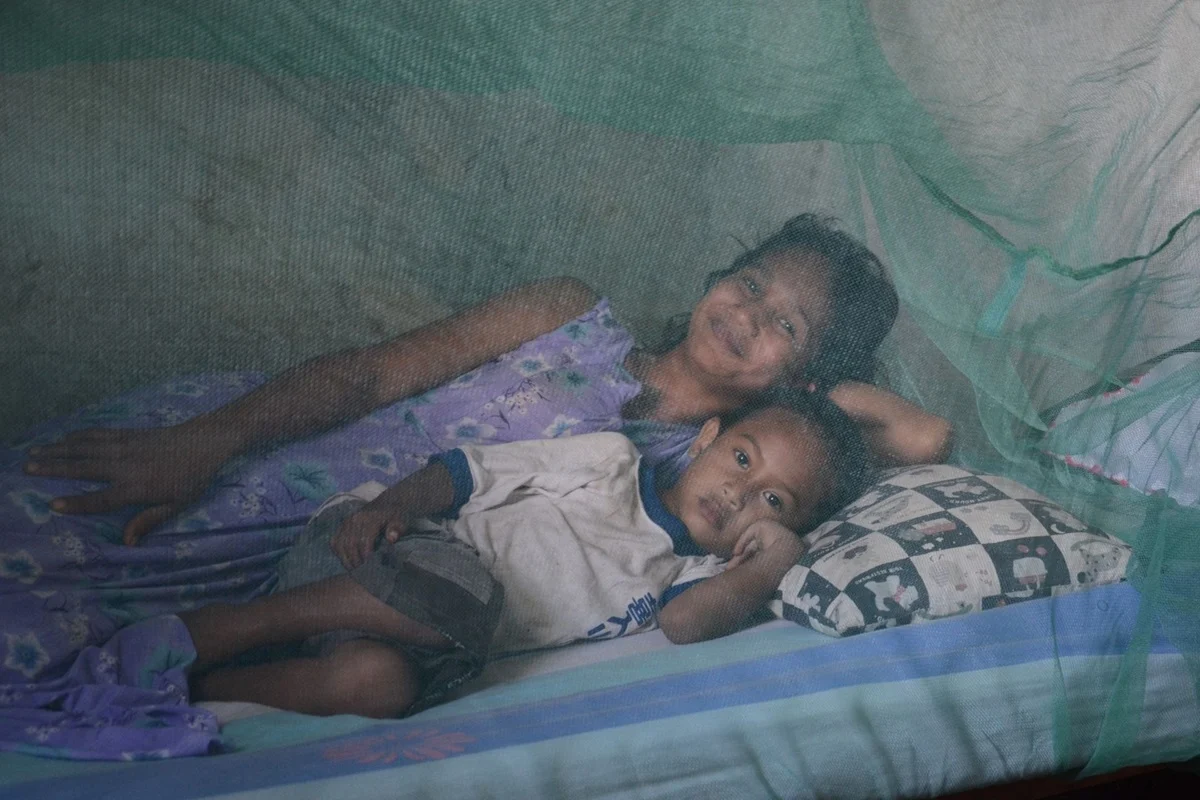
Crucially, the government also embarked on widespread vector control measures. Long-lasting insecticide-treated nets (LLINs) were distributed free of charge to communities identified as most at risk. These nets provide a protective barrier against mosquitoes while sleeping, reducing human-vector contact. By 2009, with significant financial and technical assistance from the Global Fund to Fight AIDS, Tuberculosis and Malaria, Timor-Leste dramatically scaled up its vector control efforts. This included not only expanding LLIN distribution but also implementing indoor residual spraying (IRS) in targeted areas. IRS involves applying a residual insecticide to the interior walls and ceilings of homes, killing mosquitoes that rest on these surfaces. Concurrently, malaria diagnosis was expanded to include both microscopy and RDTs at all local health posts, ensuring comprehensive diagnostic coverage at the point of care.
Addressing severe shortages of health workers and doctors, a common challenge for many developing nations, Timor-Leste made substantial investments in developing its healthcare infrastructure. The country established a robust three-tier health system comprising national hospitals, regional reference hospitals, community health centers (CHCs), and numerous health posts. This strategic distribution aimed to ensure that the majority of residents could access essential healthcare services within an hour’s walk or travel. Furthermore, the government implemented a policy of free universal healthcare at the point of care, removing financial barriers to access and ensuring equitable treatment for all citizens. To further bridge geographical gaps and serve rural and hard-to-reach populations, monthly mobile clinics and extensive community outreach programs were established, bringing vital health services directly to the people.
The comprehensive strategy adopted by Timor-Leste underscored the indispensable role of strong country leadership and extensive collaboration. The Ministry of Health worked hand-in-hand with the WHO, local communities, non-governmental organizations, international donors, and multiple government sectors. This multi-sectoral approach ensured that efforts were coordinated and resources optimized. A critical component of their success was the implementation of a real-time integrated case-based surveillance system. This sophisticated system enabled rapid data collection, allowing for swift detection of new cases, prompt epidemiological investigation, and immediate response to prevent further spread. Trained health workers, including those stationed at border crossings, played a vital role in ensuring timely detection and screening of malaria cases, a crucial measure to prevent re-importation of the disease.
Dr. Arvind Mathur, the WHO Representative to Timor-Leste, lauded the certification as a defining national triumph, attributing it to bold leadership, the tireless dedication of health workers, and the unwavering resolve of its people. He remarked on the young nation’s steadfast focus on testing, treating, and investigating cases with remarkable speed and efficiency. Dr. Mathur emphasized that eliminating transmission and maintaining zero deaths requires more than just scientific knowledge; it demands extraordinary perseverance. He concluded that this victory safeguards present and future generations and stands as a powerful testament to what a determined nation can achieve.
Beyond the immediate health benefits, Timor-Leste’s malaria-free status carries profound socio-economic implications. The eradication of malaria will alleviate a significant burden on the healthcare system, freeing up resources that can be redirected to address other public health challenges. It promises to boost economic productivity by reducing illness-related absenteeism from work and school, fostering a healthier and more productive workforce. Improved health outcomes, particularly among children, will contribute to enhanced human capital development. Furthermore, being malaria-free can significantly enhance the country’s appeal for tourism and foreign investment, contributing to sustainable economic growth.
However, the achievement of malaria elimination is not an endpoint but rather a new phase in public health vigilance. Timor-Leste must maintain its robust surveillance systems, continue to invest in its healthcare infrastructure, and remain prepared to respond swiftly to any potential imported cases to prevent the re-establishment of the disease. The nation’s journey serves as an inspiring blueprint for other countries striving to overcome similar public health challenges, demonstrating that with strategic planning, sustained commitment, and collaborative effort, even the most formidable diseases can be conquered.
About the Author












