As individuals advance into their later years, maintaining robust physical health becomes increasingly vital, not only for longevity but for preserving independence and quality of life. Among the many facets of fitness, core strength plays a foundational role, impacting everything from balance and mobility to spinal health and overall posture. For many in the over-sixty demographic, the pursuit of a stronger, more stable midsection often leads to exploring convenient and effective exercise options, with a growing number gravitating towards home-based regimens. This preference for exercising within one’s own living space aligns with broader societal trends; a study by Civic Science indicated that a significant majority of adults, approximately 52%, choose to work out at home, surpassing the 28% who frequent traditional gyms. This shift underscores a collective recognition that consistent physical activity, regardless of location, is the most impactful pathway to achieving personal health and wellness objectives.
The focus on core musculature for older adults extends beyond mere aesthetics; it’s fundamentally about functional fitness. A strong core acts as the body’s central powerhouse, stabilizing the spine, facilitating movement, and contributing to efficient energy transfer during daily activities. While the notion of "spot reduction"—targeting fat loss in specific areas—is largely a myth, strategically engaging and strengthening the deep abdominal muscles can profoundly alter the visual presentation of the midsection. These specialized movements work to reinforce the transverse abdominis (TVA), an often-overlooked muscle that functions much like a natural internal corset. By enhancing the tone and function of this muscle, along with other core stabilizers, individuals can achieve a flatter, firmer abdominal profile and improve overall postural integrity.
To navigate the landscape of effective home exercises, insights from seasoned professionals are invaluable. Terry Tateossian, the founder of THOR – The House of Rose and a certified Lifestyle Medicine Coach, Trainer, and Nutritionist specializing in women’s health and mid-life weight management, emphasizes a holistic approach. Drawing on extensive advanced training, Tateossian advocates for exercises that prioritize deep core firming and postural correction over superficial fat reduction. She clarifies a critical distinction: "There are no exercises that will remove loose skin. What I am recommending below are exercises that will firm the deep core, correct posture, and change how the belly visually sits on the body." This perspective underscores the importance of functional strength, which yields aesthetic benefits as a byproduct of improved physiological function. The following six exercises, curated by Tateossian, offer a comprehensive at-home strategy for older adults seeking to enhance their core strength and overall physical well-being.
1. The Dead Bug Exercise
Often underestimated due to its gentle appearance, the Dead Bug is a cornerstone exercise for re-establishing the mind-muscle connection with the transverse abdominis. This movement specifically educates the deep abdominal muscles on how to engage and stabilize the spine under controlled load. For many individuals over the age of 60, conscious activation of the TVA may have diminished over years of sedentary habits or suboptimal movement patterns. The Dead Bug effectively reawakens this crucial connection, fostering improved spinal stability and core control. Its direct engagement of the TVA is particularly beneficial because this muscle, when strong and properly activated, draws the abdominal wall inward, contributing to a noticeably flatter midsection. This exercise is performed supine, allowing for minimal stress on the back while maximizing core engagement, making it ideal for those with joint concerns.
2. The Bird-Dog Exercise
Complementing the spinal stability offered by the Dead Bug, the Bird-Dog exercise excels in developing anti-rotational core strength. This movement challenges the deep core stabilizers to resist the natural tendency of the torso to twist as opposing limbs extend. By continuously bracing against rotation, the muscles of the core, including the obliques and transverse abdominis, develop a robust, corset-like tone. This type of strength is highly functional, translating directly to improved balance and stability during everyday activities such such as reaching, lifting, or walking on uneven surfaces. For older adults, enhancing anti-rotational capabilities is paramount for preventing falls and maintaining fluid, controlled movement, thereby bolstering confidence and independence in daily life.
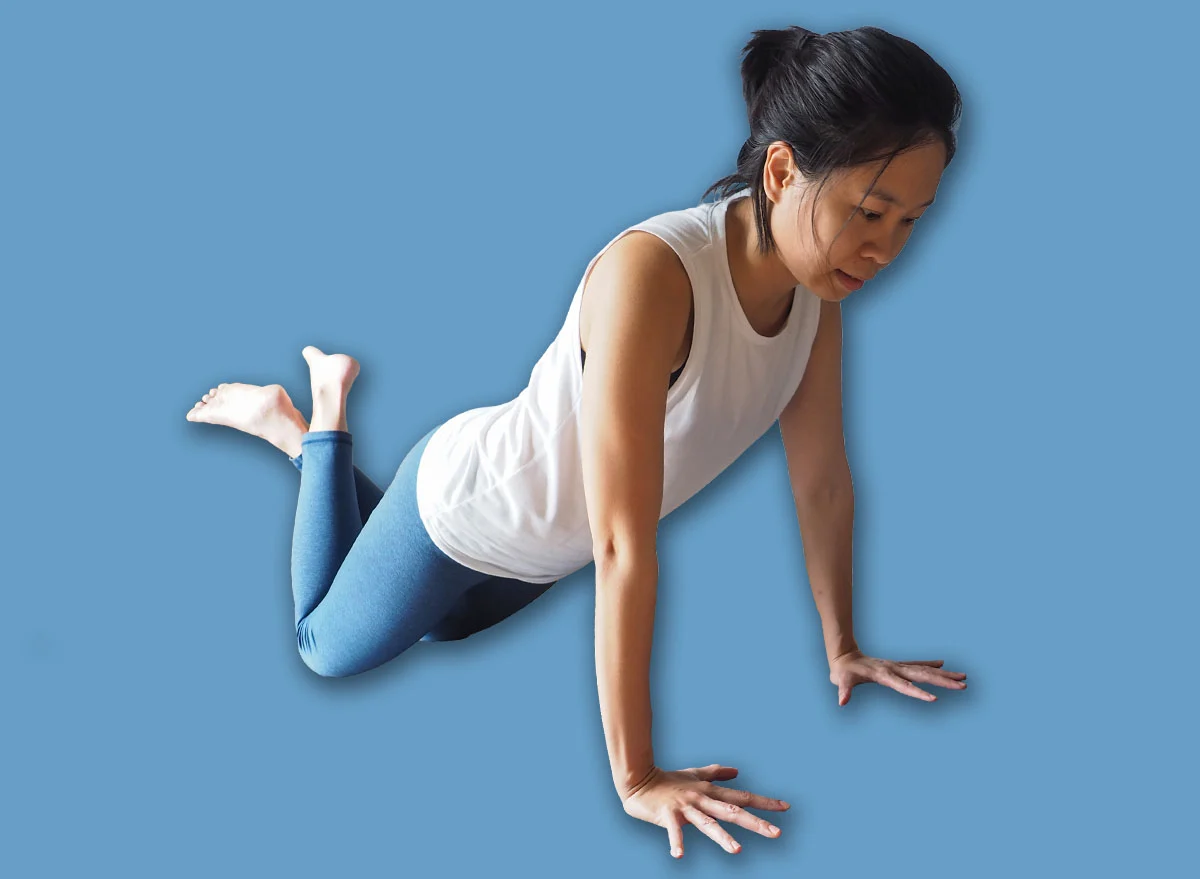
3. The Modified Plank
The plank is universally recognized as an exceptional full-body and core exercise, renowned for its isometric strength-building properties. For adults over 60, a modified version ensures safety and sustainability, allowing for gradual strength development without undue strain on joints or the lower back. By starting on the knees or utilizing an elevated surface, individuals can maintain proper form for longer durations, progressively increasing their "time under tension." This incremental approach is crucial for building muscular endurance and strength in the deep core, shoulders, and glutes. The plank effectively integrates multiple muscle groups, fostering a cohesive and resilient core that supports the entire kinetic chain, making it a highly efficient and adaptable exercise for varying fitness levels.
4. The Pelvic Tilt
Despite its deceptively simple appearance, the Pelvic Tilt is a profoundly effective exercise for reconnecting the deep abdominal wall with the pelvic floor, teaching these two interconnected systems to work in concert. This coordinated activation is often a "missing piece" for older adults, whose pelvic floor and deep core muscles may have weakened or become disengaged over time due to various factors including childbirth, surgery, or simply a lack of conscious engagement. The Pelvic Tilt serves as a fundamental "reset switch," reactivating these critical systems. By gently tilting the pelvis, individuals learn to subtly engage their lower abdominals and pelvic floor, improving control, supporting internal organs, and contributing to better posture and spinal alignment. Its gentle nature makes it accessible, yet its impact on foundational core health is significant.
5. Glute Bridges
While technically categorized as a posterior chain exercise, Glute Bridges are an indispensable component of any comprehensive core strengthening program, particularly for older adults. The appearance and function of the abdomen are intimately linked to the strength of the muscles at the back of the body, most notably the glutes. When the gluteal muscles are weak, it can lead to an anterior pelvic tilt, where the pelvis tips forward. This postural imbalance often causes the abdomen to protrude more visibly, creating an illusion of a softer midsection than is actually the case. Strong glutes, conversely, help to maintain the pelvis in a neutral, balanced position, which in turn pulls the entire body back into optimal alignment. This correction not only improves posture and reduces strain on the lower back but also contributes to a more streamlined abdominal appearance. Furthermore, robust glutes are critical for powerful hip extension, essential for walking, climbing stairs, and standing up from a seated position, thereby significantly enhancing functional mobility.
6. Diaphragmatic Breathing with Belly Draw-In
This practice transcends traditional exercise, serving as a fundamental retraining of the neuromuscular system. Many adults, particularly as they age, adopt shallow, upper-chest breathing patterns, which inadvertently neglect the deep abdominal wall. This lack of engagement prevents the transverse abdominis from developing and maintaining consistent tone. Diaphragmatic breathing, coupled with a conscious belly draw-in, actively teaches the deep core muscles to maintain their optimal position and engagement throughout the day. By focusing on deep, expansive breaths that originate from the diaphragm and gently drawing the navel towards the spine on exhalation, individuals can retrain their bodies for sustained core activation. Consistent practice, even for just ten mindful breaths daily, can profoundly impact core firmness and overall posture, leading to tangible improvements that are often reflected in one’s physical appearance and sense of bodily control.
In conclusion, a proactive approach to core strengthening, particularly for individuals over the age of sixty, offers a wealth of benefits that extend far beyond superficial aesthetics. By incorporating these six thoughtfully selected home exercises, older adults can systematically enhance their deep core strength, improve postural alignment, bolster balance, and increase functional independence. The convenience and accessibility of at-home routines, guided by expert principles, empower individuals to take ownership of their physical well-being, fostering a stronger, more resilient body that supports a vibrant and active lifestyle well into their golden years. This commitment to foundational fitness cultivates not just a firmer midsection, but a more stable, confident, and capable self.
About the Author