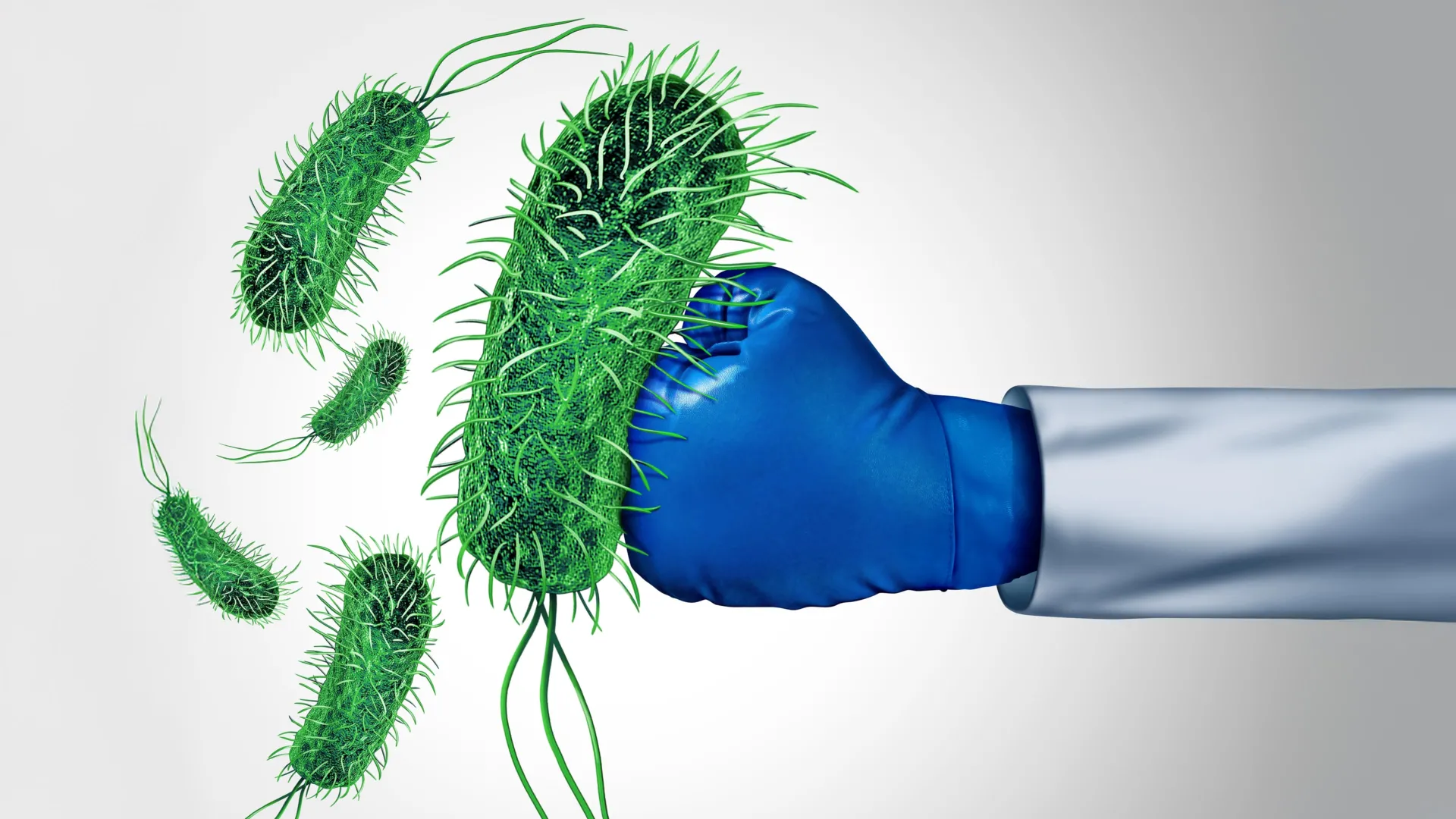
The escalating crisis of antimicrobial resistance represents one of the most profound challenges confronting contemporary healthcare systems, demanding novel strategies to safeguard human health. As microbial populations adapt with remarkable speed, pharmaceuticals that were once dependable bulwarks against infection are progressively losing their efficacy. This erosion of therapeutic power translates into a heightened difficulty in managing common infections, escalating the inherent risks associated with essential medical interventions such as surgical procedures, chemotherapy, and organ transplantation. The relentless evolution of bacteria necessitates a proactive and multifaceted approach, with researchers globally dedicating their efforts to staying a step ahead of these formidable adversaries. While the pursuit of entirely new classes of antimicrobial agents remains a crucial endeavor, a compelling alternative pathway involves revitalizing the therapeutic potential of existing medications that have fallen into disuse due to acquired resistance. This innovative concept forms the bedrock of antibiotic adjuvants, a class of companion molecules that, while not directly bactericidal, possess the capacity to restore or enhance the potency of established antibiotics.
At the forefront of this regenerative approach is the groundbreaking work spearheaded by Professor John Moses and his dedicated research cadre at Cold Spring Harbor Laboratory (CSHL). For an extended period, this team has been meticulously developing sophisticated chemical reaction methodologies designed to significantly accelerate and optimize the intricate process of drug discovery. Their pioneering efforts have culminated in the development and application of a technique known as diversity-oriented clicking (DOC), a proprietary methodology conceived and refined within the Moses laboratory. Through the judicious application of DOC, researchers have successfully constructed an expansive molecular library, now comprising an impressive collection of over 150 distinct chemical compounds. The molecules housed within this curated repository have already demonstrated considerable utility, contributing meaningfully to investigations into both antibiotic resistance mechanisms and the complexities of cancer biology.
In a significant collaborative undertaking with researchers at Scripps Research, this meticulously assembled library has now played a pivotal role in resuscitating the therapeutic effectiveness of vancomycin, a once-potent antibiotic that has seen its utility diminished by widespread bacterial resistance. Vancomycin has historically been a frontline treatment for serious infections, including those caused by notorious pathogens such as methicillin-resistant Staphylococcus aureus (MRSA) and Clostridium difficile (C. diff). The alarming capacity of these microorganisms to develop resistance to vancomycin has transformed them into formidable "superbugs," capable of evading the effects of previously reliable drugs. The subsequent proliferation of these resistant strains through healthcare facilities, long-term care residences, and wider communities poses a substantial public health threat.
The recent scientific investigation, detailed in a new study, saw researchers from Professor Moses’s laboratory at CSHL join forces with Professor Howard Hang’s distinguished team at Scripps to devise a novel strategy for re-establishing vancomycin’s efficacy against resistant bacterial strains. Their focused approach targeted a specific bacterial enzyme, identified as secreted antigen A (SagA), which plays a critical role in bacterial physiology and is implicated in the development of vancomycin resistance. By employing a carefully designed small molecule, designated pghi-4, the researchers were able to effectively inhibit the activity of SagA. Notably, pghi-4 was initially identified as a promising compound within the Moses laboratory’s molecular library, first discovered in 2020.
The critical juncture of the study involved the administration of vancomycin in conjunction with pghi-4 to drug-resistant strains of Enterococcus faecium, a bacterium known for its significant role in hospital-acquired infections and its increasing resistance to multiple antibiotics. The results were profoundly encouraging: the co-administration of vancomycin and pghi-4 effectively restored the antibiotic’s capacity to eradicate the targeted bacteria. This outcome underscores the potential of targeting specific enzymatic pathways to circumvent established resistance mechanisms.
Reflecting on the significance of this discovery, Professor Moses highlighted that the research was not initially conceived as a direct search for a new antibiotic intervention. Instead, he emphasized the foundational nature of the work: "This discovery emerged from fundamental chemical research," he stated. "The development of novel reaction pathways ultimately led to the identification of the first inhibitor of a crucial enzyme involved in antibiotic resistance. This is a continuous process of refinement, aimed at both maintaining the currency of our molecular library and expanding its contents to benefit our collaborators in their research endeavors." This perspective underscores the serendipitous yet systematic nature of scientific progress, where advancements in fundamental chemistry can yield unexpected and impactful solutions to pressing health challenges.
The broader implications of this research extend beyond the immediate restoration of vancomycin’s efficacy. By making their extensive molecular library accessible to the wider scientific community, Professor Moses and his team aspire to foster similar innovative approaches that could eventually lead to the development of treatments for a spectrum of other drug-resistant infections. The potential applications are vast, encompassing challenges posed by resistant strains of pathogens like tuberculosis, which continues to be a significant global health burden.
"This work embodies a philosophical commitment to chemistry that is intrinsically designed to accelerate drug discovery in its most fundamental form," articulated Professor Moses. "By harnessing reliable, robust, and intelligently designed chemical reactions, we are able to synthesize new molecules with unprecedented efficiency. This precise methodology was instrumental in achieving the outcomes observed in this study." This statement encapsulates the team’s conviction that a deeper understanding and mastery of chemical principles can unlock novel avenues for therapeutic innovation.
As the global prevalence of antibiotic resistance continues its alarming ascent, these findings serve as a powerful testament to the fact that crucial medical advancements may arise not necessarily from the invention of entirely new drugs, but from a sophisticated re-evaluation and reimagining of the chemistry underpinning existing therapeutic agents. The future of combating drug-resistant infections may well be rooted in the careful design of molecules that, rather than being antibiotics themselves, possess the ability to reignite the dormant power of venerable, yet once defeated, medications. This paradigm shift in drug discovery promises a more sustainable and potentially more effective approach to tackling the evolving threat of antimicrobial resistance.
The research efforts contributing to this significant breakthrough were generously supported by funding from several esteemed institutions, including the National Institutes of Health, the National Cancer Institute, the Australian Research Council, the New York State Biodefense Commercialization Fund, the F.M. Kirby Foundation, and the Starr Foundation. These contributions underscore the collaborative and well-supported nature of cutting-edge scientific inquiry in addressing global health challenges.
About the Author