The conventional wisdom often paints a bleak picture of physical decline as individuals navigate their fifth and sixth decades, frequently associating advancing years with an inevitable erosion of strength, agility, and overall mobility. This perspective, while acknowledging certain physiological realities such as the gradual reduction in skeletal muscle tissue—a process medically termed sarcopenia—and the progressive stiffening of connective tissues within joints, often overlooks the remarkable capacity of the human body for adaptation and resilience. Everyday actions that once required no conscious thought, like ascending stairs, lifting groceries, or simply rising from a chair, are commonly perceived to become increasingly arduous with age. However, a growing body of evidence and clinical observation challenges this deterministic view, revealing an encouraging landscape where many adults well into their 50s and 60s not only defy these expectations but also maintain exceptional levels of functional vigor, equilibrium, and stamina, particularly when they commit to consistent physical activity.
Indeed, contemporary research indicates that chronological age alone serves as a surprisingly imprecise metric for gauging an individual’s actual physical capabilities. Far more salient determinants of an individual’s physical aptitude encompass their muscular power, range of motion, and cardiorespiratory conditioning. Longitudinal studies have consistently demonstrated that older populations who consciously cultivate and sustain superior levels of muscular strength exhibit substantially diminished risks of experiencing functional limitations and developing chronic health conditions throughout their later years. This paradigm shift underscores the profound impact of proactive engagement with physical fitness as a cornerstone of healthy aging, moving beyond mere longevity to focus on enhancing an individual’s "healthspan"—the duration of life spent in good health and free from chronic disease.
Understanding the physiological underpinnings of aging is crucial to appreciating the role of exercise. Beyond sarcopenia, which can lead to a loss of up to 3-8% of muscle mass per decade after age 30, individuals may experience osteopenia, a reduction in bone mineral density, making bones more fragile. Joint cartilage can degrade, leading to conditions like osteoarthritis, while proprioception—the body’s sense of its position in space—can diminish, increasing the risk of falls. Furthermore, cardiovascular efficiency can decline, impacting endurance. Yet, these age-related changes are not entirely immutable. Regular physical activity, especially resistance training and functional movements, can significantly mitigate these effects, promoting muscle protein synthesis, improving bone density, enhancing joint lubrication and flexibility, sharpening proprioceptive feedback, and bolstering cardiovascular health. This adaptability highlights the body’s remarkable capacity to respond positively to appropriate stimuli, even in later life.
Functional fitness, therefore, emerges as a critical component of a holistic approach to well-being, particularly as one ages. Unlike exercises that target isolated muscle groups, functional movements are designed to train the body for the activities encountered in daily life. They involve multi-joint and multi-planar actions that mirror real-world movements, thereby improving coordination, balance, strength, and agility simultaneously. The ability to perform functional tasks independently directly correlates with a higher quality of life, greater autonomy, and reduced reliance on assistance for Activities of Daily Living (ADLs) such as dressing, bathing, and eating, as well as Instrumental Activities of Daily Living (IADLs) like shopping, cooking, and managing finances. Moreover, robust functional fitness significantly reduces the likelihood of falls, a leading cause of injury and disability among older adults, and contributes to better metabolic health, aiding in the management and prevention of conditions like type 2 diabetes and cardiovascular disease. Beyond the purely physical, maintaining functional capabilities fosters a sense of self-efficacy, boosts mood, and can even contribute to cognitive sharpness by engaging complex motor planning and execution pathways in the brain.
To shed light on practical benchmarks for assessing functional fitness, James Bickerstaff, a Certified Personal Trainer (CPT) affiliated with OriGym, shares insights into a quartet of foundational morning exercises. According to Bickerstaff, these movements, when mastered by individuals in their mid-fifties, serve as robust indicators of a superior fitness level, often surpassing that of many younger cohorts. "These specific movements are meticulously chosen because they collectively scrutinize various dimensions of physical aptitude, encompassing muscular power, equilibrium, coordinated movement patterns, and sustained effort," Bickerstaff articulates. "When an individual in their mid-fifties can execute these consistently with precision and controlled form, it invariably signifies an exceptional degree of functional readiness and overall physical health." These exercises are not merely about strength; they represent a holistic assessment of how well the body integrates its various systems to perform complex, everyday tasks.
The first exercise Bickerstaff highlights is the Bodyweight Squat. This fundamental movement is universally recognized for its direct translation to essential daily activities, essentially mimicking the action of lowering oneself into and rising from a seated position, an action performed countless times throughout a day. It is a cornerstone for maintaining lower body strength and mobility. The bodyweight squat comprehensively engages major muscle groups, including the quadriceps at the front of the thighs, the powerful gluteal muscles, and the core stabilizers, all while simultaneously fostering improved balance and contributing to the sustained health of knee and hip joints. For individuals beyond 50, proficient execution of this exercise indicates not only robust lower limb power but also a significant degree of flexibility in the hips and ankles, crucial for maintaining an active and independent lifestyle. It signifies the ability to perform basic locomotion and load-bearing tasks without undue strain, safeguarding against musculoskeletal issues and enhancing overall physical resilience.
Next, the Incline Push-Up serves as a vital gauge of upper body strength and the stability of the core musculature. While traditional floor push-ups can be demanding, performing this exercise on an incline—such as against a sturdy countertop, a stable bench, or even a wall—effectively reduces the gravitational load, thereby minimizing potential stress on the wrists, elbows, and shoulders while still providing a substantial challenge. Bickerstaff emphasizes that while upper body strength may naturally diminish with advancing age, the capacity to perform incline push-ups consistently demonstrates commendable strength in the chest, shoulders, and triceps, coupled with excellent core engagement. This translates directly to the ability to perform everyday actions like pushing open heavy doors, lifting objects onto shelves, or even pushing oneself up from a prone position, all critical for maintaining independence and preventing injuries from falls. It symbolizes a persistent upper body vigor essential for navigating the physical demands of daily existence.
The Reverse Lunge is another powerful yet often undervalued exercise in the realm of functional training. This dynamic movement poses a multi-faceted challenge, simultaneously demanding significant leg strength, precise balance, intricate coordination, and robust joint stability. Unlike forward lunges, the reverse lunge often places less strain on the knees while still effectively targeting the quadriceps, hamstrings, and glutes. Bickerstaff notes that mastering the reverse lunge powerfully illustrates superior control over various joints, particularly the knees and hips, alongside exceptional lower body stability. The ability to execute this movement with fluidity and control reflects advanced proprioception—the body’s awareness of its position in space—and robust single-leg strength, which is indispensable for activities such as walking on uneven terrain, climbing stairs, or stepping over obstacles, all of which are crucial for maintaining mobility and preventing falls in later life. It’s a testament to integrated leg power and dynamic equilibrium.
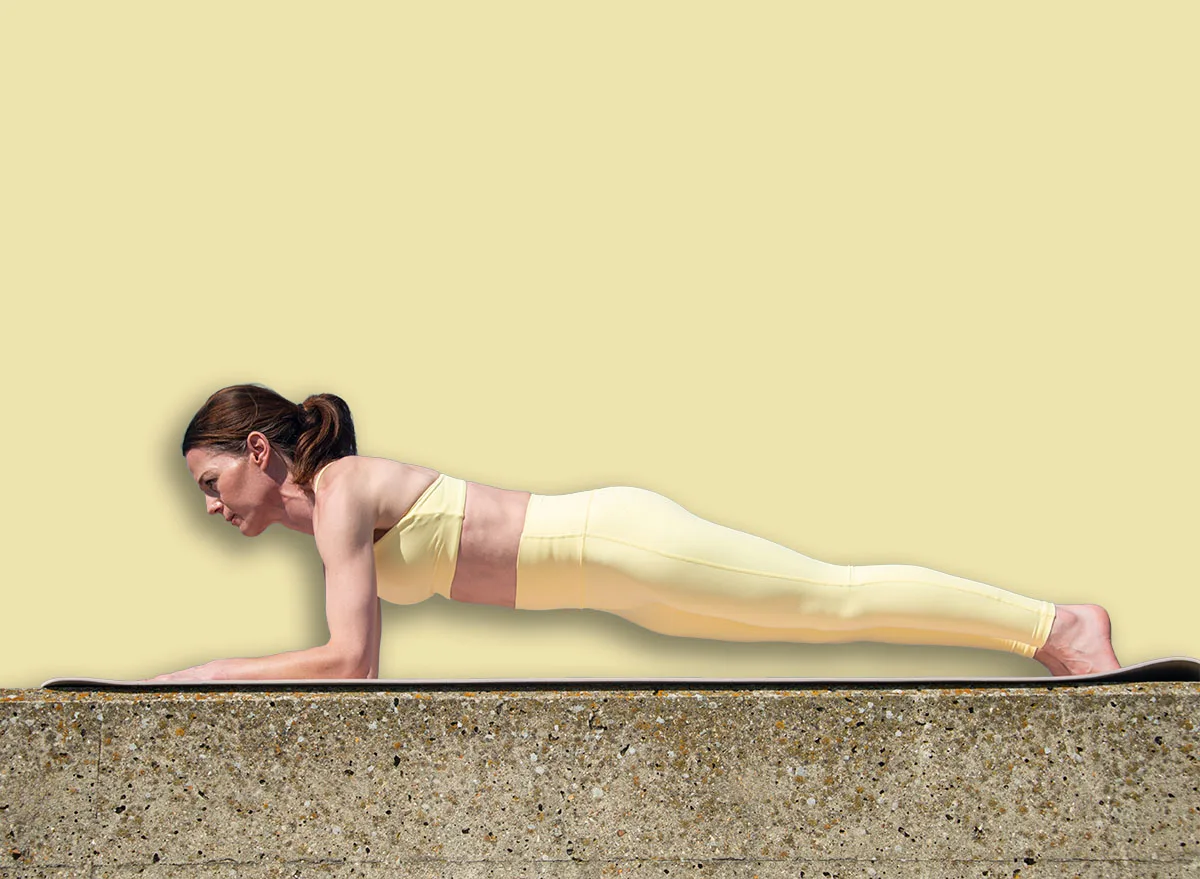
Finally, the Forearm Plank stands out as an exemplary exercise for developing and maintaining core strength and spinal stability. Often regarded as a definitive measure of trunk integrity, the traditional forearm plank simultaneously activates a wide array of muscle groups, including the rectus abdominis, the oblique muscles, the deep transverse abdominis, the glutes, and various muscles along the spine and shoulders. Bickerstaff underscores the profound importance of a strong core, identifying it as one of the most critical indicators of sustained overall fitness throughout the aging process. "The ability to hold a plank for an extended period typically signifies excellent endurance within the core muscles and robust stability throughout the spinal column," he explains. A resilient core is fundamental for maintaining good posture, facilitating efficient power transfer during other physical activities, and significantly reducing the risk of lower back pain and injury, thereby forming a foundational element of enduring physical capacity and comfort.
Beyond the specific mechanics and muscle groups, the broader implications of maintaining such functional prowess are far-reaching. Achieving mastery over these foundational movements at any age, but particularly in midlife and beyond, transcends mere physical ability. It represents a commitment to lifelong vitality, empowering individuals to preserve their independence, actively participate in social and recreational pursuits, and enhance their overall quality of life. This proactive engagement with physical well-being contributes significantly to reduced healthcare burdens, a prolonged "healthspan" marked by fewer chronic ailments, and an enhanced capacity to embrace life’s adventures without physical limitations. The message is clear: the trajectory of physical aging is not predetermined; rather, it is significantly influenced by consistent effort and a focus on functional movement. By embracing these core exercises and the principles of functional fitness, individuals can redefine their aging experience, demonstrating that age is truly more a number than a limit to physical capability and enduring vitality.
About the Author