
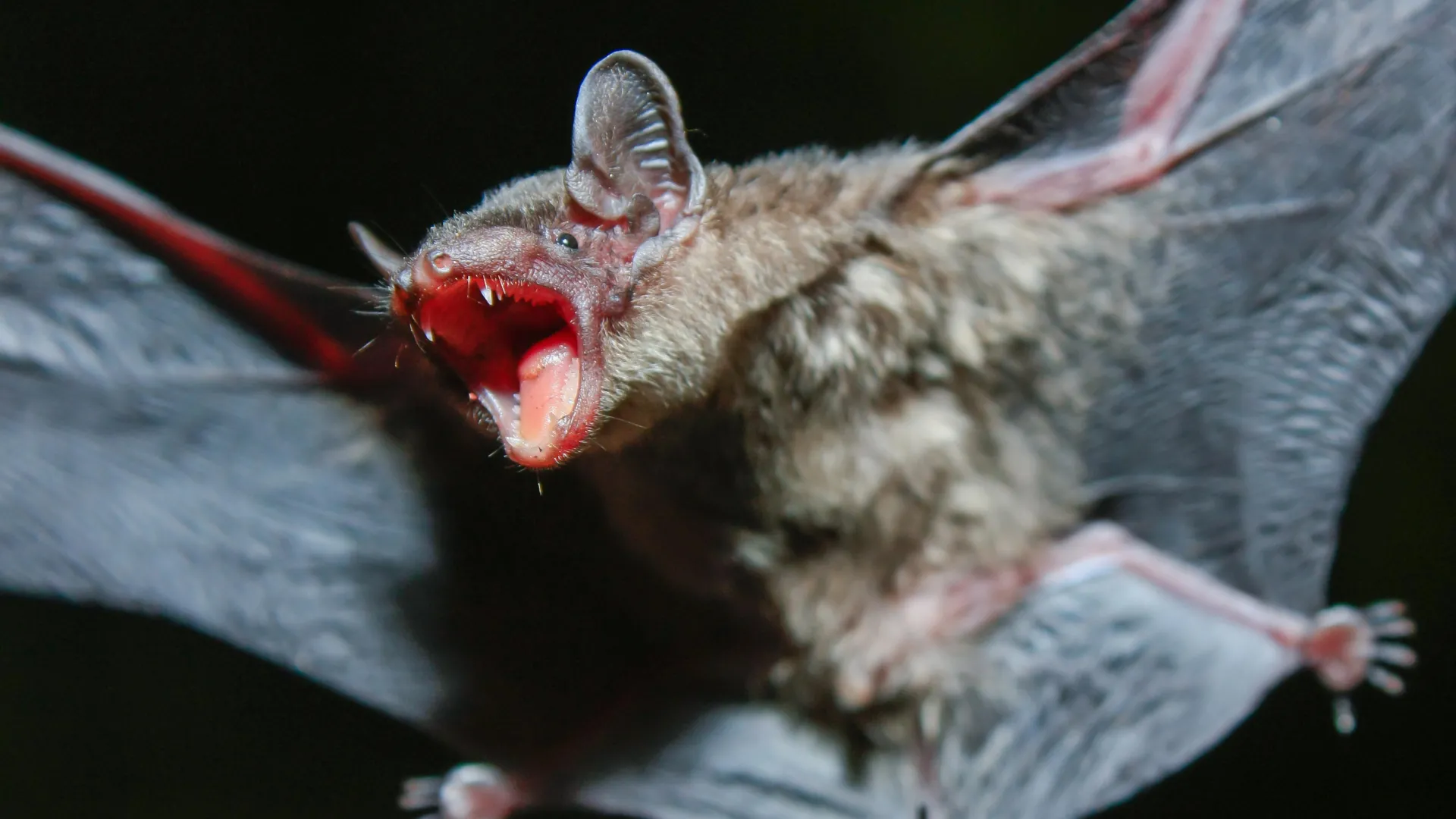
The enigmatic longevity of bats, remarkable for their small stature, has long fascinated scientists seeking to unravel the biological blueprints for extended, healthy lives. These winged mammals defy typical mammalian lifespan-to-body-size ratios, with some species living for decades, prompting a deeper exploration into their unique genetic makeup. This biological paradox positions bats as crucial models for understanding the fundamental processes of aging, disease immunity, and cellular resilience, potentially offering transformative insights for human health.
One researcher profoundly drawn to this mystery was Juan Manuel Vazquez, whose academic journey from a graduate student at the University of Chicago to a postdoctoral fellow at UC Berkeley in 2020 was consistently propelled by the scarcity of genomic data available for bats. Recognizing this significant void, Vazquez embarked on an ambitious quest to gather the necessary biological samples that could unlock the secrets embedded within bat DNA. His vision was to move beyond anecdotal observations to systematic genomic analysis, believing that the answers to complex questions about lifespan and disease resistance lay within these creatures’ evolutionary adaptations.
The practical execution of this groundbreaking research involved extensive fieldwork across the Western United States. Collaborating with undergraduate students from Berkeley, Vazquez meticulously set up mist nets in various nocturnal environments, primarily over natural water sources like streams, ponds, and rivers. This delicate operation allowed the team to safely capture bats, collect small, non-invasive biopsy samples – typically from wing tissue – and then release the animals unharmed back into their natural habitats. A significant portion of this dedicated effort focused on the Myotis genus, a group particularly noted for its species exhibiting extraordinary lifespans. The most famous example, a Brandt’s myotis (Myotis brandtii), was documented to live for an astonishing 50 years after being initially banded in Europe and subsequently recaptured half a century later, a lifespan equivalent to a human living for over 500 years based on metabolic rates.
The fruits of this arduous data collection culminated in a seminal study published in the prestigious journal Nature, representing the first comprehensive analysis of eight distinct Myotis genomes. The findings presented a compelling and unexpected correlation: a robust link between an individual bat’s lifespan and the efficacy of its immune system. Specifically, the genomes of longer-lived bat species revealed a significantly higher prevalence and activity of genes directly associated with combating cancer. This discovery strongly suggested that the ability to achieve exceptional longevity might be intrinsically tied to an immune system that maintains a heightened state of readiness and effectiveness against a dual threat: both infectious pathogens and cancerous cell proliferation. Furthermore, the research uncovered a substantial overlap between genes known to influence the aging process and those involved in disease defense, hinting that these two biological phenomena are far from independent. This intricate interplay implies that understanding the mechanisms of one could inherently illuminate the complexities of the other.
Vazquez articulated this profound connection, emphasizing the paradigm shift it proposes for biomedical research. He suggested that the traditional segregation of aging-related diseases and infectious diseases into entirely separate fields might be counterproductive. Bats, having evolved to thrive for extended periods without succumbing to debilitating illnesses, offer a living testament to the potential for a unified approach. By deciphering how bats fortify their immune systems against viral threats, scientists might uncover strategies to prevent the natural decline of immunity often associated with advanced age. Similarly, insights into their tumor-fighting capabilities could reveal novel ways to bolster the human immune system against malignancies, thereby enhancing overall resilience to life’s myriad stressors.
Beyond genomic analysis, the study delved into cellular responses to extreme stress. Vazquez established an extensive laboratory culture of bat cells derived from the collected wing biopsies, encompassing 259 individuals across 32 different species. These cultured cells were then subjected to toxic chemicals to observe their reactions to severe cellular damage. The response of the widespread little brown bat (Myotis lucifugus), recognized as the longest-lived bat species in North America, proved particularly enlightening and counterintuitive. Instead of activating genes responsible for DNA repair, as might be expected in an attempt to salvage damaged cells, the cells of Myotis lucifugus dramatically increased the activity of genes promoting programmed cell death, or apoptosis.
Vazquez described this as the "literal opposite" of their initial hypothesis. When confronted with a potentially lethal assault, the longest-lived bat’s cells made an immediate and decisive shift, prioritizing the elimination of compromised cells over attempting repair. This "kill the cell" strategy mirrored observations in other long-lived, cancer-resistant species, such as elephants, which employ a remarkably similar mechanism to prevent damaged cells from proliferating and becoming cancerous. This finding underscores the evolutionary diversity in cellular defense mechanisms, suggesting that different species have developed unique and highly effective strategies to mitigate cellular damage and maintain genomic integrity. Peter Sudmant, a Berkeley associate professor of integrative biology specializing in the genetics of aging, highlighted the immense value of this comparative biological approach. He posited that by studying the extraordinary longevity across diverse life forms, researchers could gain a deeper understanding of the critical interplay between DNA damage and the immune system, ultimately paving the way for healthier human lifespans. Vazquez further reinforced this perspective, stating that many health challenges faced by humans have already been elegantly "resolved" by nature in species like elephants, whales, and bats.
The evolutionary success of bats is undeniable. Emerging approximately 60 million years ago, they now constitute a staggering 20% of all known mammalian species, colonizing every continent except Antarctica and adapting to an astonishing array of ecological niches. Within the 1,511 recognized bat species, the Myotis genus, comprising around 139 species, is particularly compelling due to the dramatic lifespan disparities observed even among closely related members. While the Brandt’s myotis can live for half a century, its close relative, the black myotis (Myotis nigricans) of Central and South America, typically survives for only about seven years. This stark contrast, Vazquez noted, is akin to an imagined scenario where our close evolutionary kin, Homo neanderthalensis, outlived modern Homo sapiens by a factor of nine.
Another distinguishing feature of bats is their exceptionally dynamic immune system. Scientific investigations have revealed that it operates at an unusually high baseline level, enabling bats to effectively manage inflammation while simultaneously hosting a diverse array of viruses without succumbing to illness themselves. This robust immunological capacity allows healthy bats to carry an extraordinary variety of viral pathogens, some of which, like those related to SARS-CoV-2, pose significant zoonotic risks to humans. Researchers have hypothesized that this potent immune function is inextricably linked to bats’ intense physical activity. Vazquez vividly compared their nightly foraging flights, often spanning significant distances in pursuit of insects, to humans running multiple ultramarathons daily, suggesting a deep evolutionary connection between high metabolic rates, immune robustness, and disease resistance. He concluded that by understanding how bats evolved these remarkable capacities for fitness, disease resistance, and cancer prevention, science can uncover entirely novel and unexpected avenues for addressing common human diseases.
The genomic analysis also unearthed another fascinating interdependency. Vazquez observed a recurring pattern: whenever a gene was identified as being associated with bat longevity, his collaborator, Elise Lauterbur (then at the University of Arizona), had frequently identified the very same gene as playing a role in the intricate interactions between bats and viruses. This indicated a statistically significant overlap, far exceeding random chance, between genes governing lifespan and those involved in viral defense. Furthermore, the study revealed that Myotis bats possess an unusually high number of genes that produce proteins specifically interacting with DNA viruses, such as herpes viruses, which carry their genetic information in DNA. These viral-interacting proteins can either facilitate viral infection or, more often, confer protection upon the host, for instance, by enhancing the production of interferon, a critical antiviral signaling protein that orchestrates immune defenses. Sudmant elaborated that the selection for DNA viral interacting proteins was strongly enriched in bats, a pattern that contrasts with most other mammals, where selection pressure is typically strong for proteins interacting with both DNA and RNA viruses. Humans and other primates, for example, tend to exhibit a higher number of genes producing proteins that engage with RNA viruses, including globally significant pathogens like HIV and the viruses responsible for COVID-19.
This evolutionary divergence in immune defenses between bats and humans carries profound implications for global health, offering a plausible explanation for why certain viruses that originate in bats can cause severe zoonotic diseases upon spillover into human populations. Vazquez underscored this critical "mismatch," noting that "humans and bats are badly suited to each other," making interactions a "two-way street for zoonoses." He emphasized the imperative for caution when working with bats, not only to prevent human infection but also to avoid transmitting human pathogens to bat populations. This immunological incongruity between species, he argued, warrants much deeper investigation.
The quest to unlock these genetic mechanisms of longevity continues. Juan Manuel Vazquez, now holding a faculty position at Pennsylvania State University, is further investigating these intricate processes using advanced cell culture techniques. Concurrently, Peter Sudmant is focusing his research on understanding how bat cells meticulously regulate their immune responses. He expressed particular excitement about exploring the evolutionary trade-offs inherent in how bats protect their own genomes by producing proteins that attack viral genomes, while simultaneously ensuring these same protective proteins do not harm the bat’s host genome. Sudmant’s laboratory is also maintaining cell cultures from numerous primate species, employing these models to delve into the genetics of longevity and the complex relationship between lifespan and DNA repair genes in our closest evolutionary relatives.
This collaborative and interdisciplinary research, funded by prestigious institutions like the National Institutes of Health and the National Science Foundation, involved key contributions from Lucie Etienne of the École Normale Supérieure in Lyon, France, and David Enard of the University of Arizona in Tucson, alongside Vazquez, Sudmant, and Lauterbur, who is now at the University of Vermont. Their collective efforts are not merely expanding our understanding of bat biology but are actively charting new territories in the broader scientific pursuit of extended health and resilience for all life.
About the Author









