
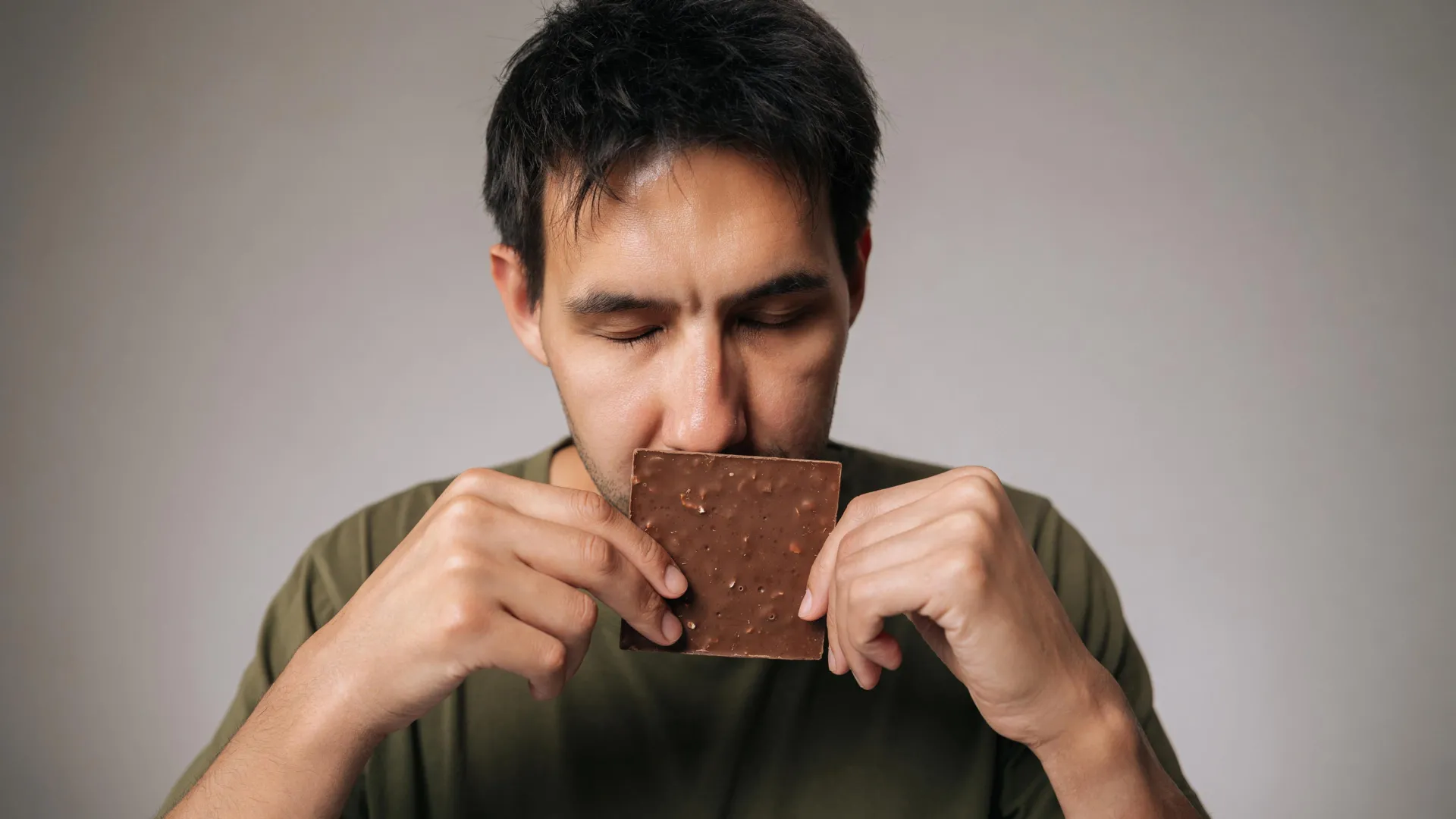
A recent investigation published in the esteemed journal Frontiers in Physiology suggests that the olfactory experience of chocolate could serve as an unexpected catalyst for enhanced physical exertion, specifically in the realm of resistance training. Participants exposed to the distinct aromas of cocoa, both preceding and interspersed with their exercise routines, demonstrated a notable capacity to perform more repetitions of leg extensions. Crucially, this increased output was not accompanied by a commensurate rise in their subjective sensation of fatigue or exertion, presenting a compelling psychobiological paradox.
Dr. Mohamed Nashrudin bin Naharudin, an assistant professor at the Faculty of Sports and Exercise Science, University of Malaya, and the senior author of the study, elaborated on these intriguing findings. He stated that the observed phenomenon, where moderately trained male participants significantly elevated their total training volume without experiencing a heightened sense of effort, represents a captivating outcome. This dissociation between increased physical work and maintained perceived exertion underscores the potent influence of sensory stimuli on human performance and internal physiological states.
The experimental design involved a cohort of 23 healthy young men, generally in their early to mid-twenties, who possessed a moderate level of physical conditioning. These individuals were systematically divided into three distinct experimental groups. Each group was then subjected to one of three olfactory conditions: the aroma emanating from a liquefied dark chocolate preparation containing a high concentration of cocoa (90%), the scent from a liquefied milk chocolate variant (60% cocoa), or a control condition involving plain water. This structured approach allowed researchers to isolate and assess the specific impact of the cocoa aromas.
The research team recognized the profound and well-documented connection between the sense of smell (olfaction) and the brain’s intricate networks governing appetite and emotional responses. However, they also noted a significant gap in existing scientific literature, as no prior study had systematically examined the complex interplay between olfactory input, appetite regulation, and the actual capacity for performing resistance exercise. This lack of comprehensive understanding provided the impetus for the current investigation.
To ensure a baseline state conducive to observing appetite-related changes, participants were instructed to abstain from food for a minimum of 10 hours prior to the commencement of the experimental session. The primary resistance exercise employed in the study was the leg extension, a common biomechanical movement where an individual is seated and applies force to straighten their lower legs against a resistance mechanism, thereby lifting a weighted load.
The researchers meticulously documented the participants’ leg extension performance both before the experimental session began and at various points during the training protocol. Furthermore, preceding the exercise, participants were asked to provide subjective ratings concerning their levels of hunger, satiety (fullness), their craving to eat, and their immediate intention to consume food. Throughout the exercise sets, following each 30-second exposure to one of the scent samples, their hunger and desire to eat were re-assessed.
A compelling divergence emerged in the way the two distinct chocolate aromas influenced the participants’ appetites. The scent of dark chocolate consistently correlated with a reduction in reported hunger, a diminished desire to eat, and a decreased intention to consume food in the near future. Simultaneously, the dark chocolate aroma was associated with enhanced feelings of fullness when compared to both the water control and the milk chocolate conditions. This suggests that the 90% cocoa aroma primarily exerted its appetite-modulating effect by suppressing hunger signals and amplifying the perception of satiety.
In contrast, the milk chocolate aroma elicited a different set of responses. While participants generally found the milk chocolate scent to be more pleasurable and aesthetically appealing than either the dark chocolate or the water, its presence did not lead to any statistically significant alterations in their reported hunger levels or overall appetite. This indicates that the hedonic (pleasure-seeking) aspect of the milk chocolate aroma, rather than its impact on core hunger mechanisms, might be responsible for its observed effects on performance.
The influence of the chocolate aromas extended beyond merely modulating appetite; they also appeared to have a direct impact on the participants’ capacity to complete exercise repetitions. Dr. Nashrudin Naharudin highlighted that inhaling the aroma of 90% dark chocolate led to an approximate increase of 18 repetitions in participants’ leg extensions, a substantial improvement over the control group. Similarly, the 60% milk chocolate aroma contributed to an increase of roughly nine repetitions compared to the water control condition, demonstrating a tangible performance enhancement.
The researchers posited that learned associations between specific food smells and the physiological and psychological responses to eating might underpin these observed effects. From an early developmental stage, individuals repeatedly encounter certain aromas in conjunction with the act of consuming food. Over time, these olfactory cues can become potent signals, priming the brain and body to anticipate the expected post-ingestive outcomes.
These anticipatory mechanisms, driven by learned associations, could potentially induce a shift in an individual’s internal state, moving from a perception of hunger towards one of fullness, even in the absence of actual food intake. Dr. Nashrudin Naharudin explained that the dark chocolate scent likely acts as a learned cue associated with a rich, bitter, and highly satiating food item. This learned association could, in essence, "trick" the physiological system into adopting a state of anticipatory fullness. Conversely, the sweeter scent of milk chocolate might function more as a hedonic reward cue, contributing to increased training volume by fostering a highly pleasant sensory environment, rather than by directly altering fundamental metabolic hunger signals.
The implications of these findings are particularly intriguing, suggesting that the mere anticipation of food, triggered by its aroma, could initiate physiological and psychological responses that mimic those typically elicited by actual food consumption. This phenomenon is especially noteworthy given that the observed effects occurred while the participants were in a fasted state. The presence of food aromas might serve to prepare the digestive system for an impending meal or to instigate psychological and physiological adaptations as the body anticipates eating. Some of these preparatory responses could bear a resemblance to the changes that naturally follow food ingestion.
However, the researchers were careful to acknowledge several significant limitations inherent in their study. The precise biological mechanisms responsible for the observed changes in appetite and exercise performance remain speculative, as the study did not involve the measurement of blood hormones or neural activity. Therefore, it is not possible to definitively identify the specific biological pathways involved.
Additional limitations included the potential for variability in the intensity of the dark and milk chocolate aromas, which may not have been perfectly standardized. Moreover, the use of odorless water as the control sample might have inadvertently allowed participants to deduce when they were in the control condition, potentially influencing their responses.
The study’s relatively small sample size, comprising only healthy, moderately trained young men, also restricts the generalizability of the findings. Further research involving larger and more diverse participant groups, encompassing different ages, sexes, and fitness levels, will be crucial to ascertain the broader applicability of these results.
An open question remains regarding the specificity of chocolate’s effects. It is yet to be determined whether chocolate possesses unique properties or if other familiar food aromas could elicit comparable performance enhancements. Dr. Nashrudin Naharudin suggested that while chocolate’s potent and universally recognized reward associations make it a compelling food cue, it is unlikely to be entirely unique in its capacity to influence performance.
It is plausible that other foods strongly associated with feelings of satisfaction after consumption could potentially trigger similar physiological and psychological responses. However, this hypothesis has not yet been empirically tested. The key determinant for eliciting the necessary psychological shift in appetite, leading to a performance boost, is likely the individual’s perception of the odor. A person would likely need to find the aroma familiar and appealing, or at the very least, not aversive, to experience the performance-enhancing benefits observed in this study.
About the Author












