The burgeoning landscape of digital health tools has revolutionized personal wellness management, with artificial intelligence (AI) playing an increasingly central role in dietary assessment. Photo-based calorie tracking applications, promising unprecedented convenience in monitoring nutritional intake, have surged in popularity as individuals seek streamlined methods for health management and weight loss. However, groundbreaking research has brought to light a substantial caveat: these sophisticated AI-powered platforms may consistently and significantly underestimate a meal’s caloric and fat content, potentially undermining users’ health objectives. A recent study reveals that estimates from these digital nutrition assistants could be off by hundreds of calories per meal, challenging the prevailing reliance on their purported accuracy.
This critical evaluation, spearheaded by researchers from the National Institute of Diabetes and Digestive and Kidney Diseases (NIDDK), a component of the National Institutes of Health (NIH), provides a much-needed empirical assessment of these widely adopted technologies. The investigation’s preliminary findings, presented at NUTRITION 2026, the American Society for Nutrition’s premier annual gathering, underscore a significant discrepancy between algorithmic estimations and actual dietary content. Aaron Hengist, a postdoctoral visiting fellow with the NIDDK’s Intramural Program, emphasized the pressing need for such rigorous evaluations, given the pervasive adoption of these apps by individuals striving to manage their health or achieve weight reduction goals. The study’s primary objective was to ascertain the reliability of these applications in quantifying caloric intake, a fundamental metric for effective dietary planning.
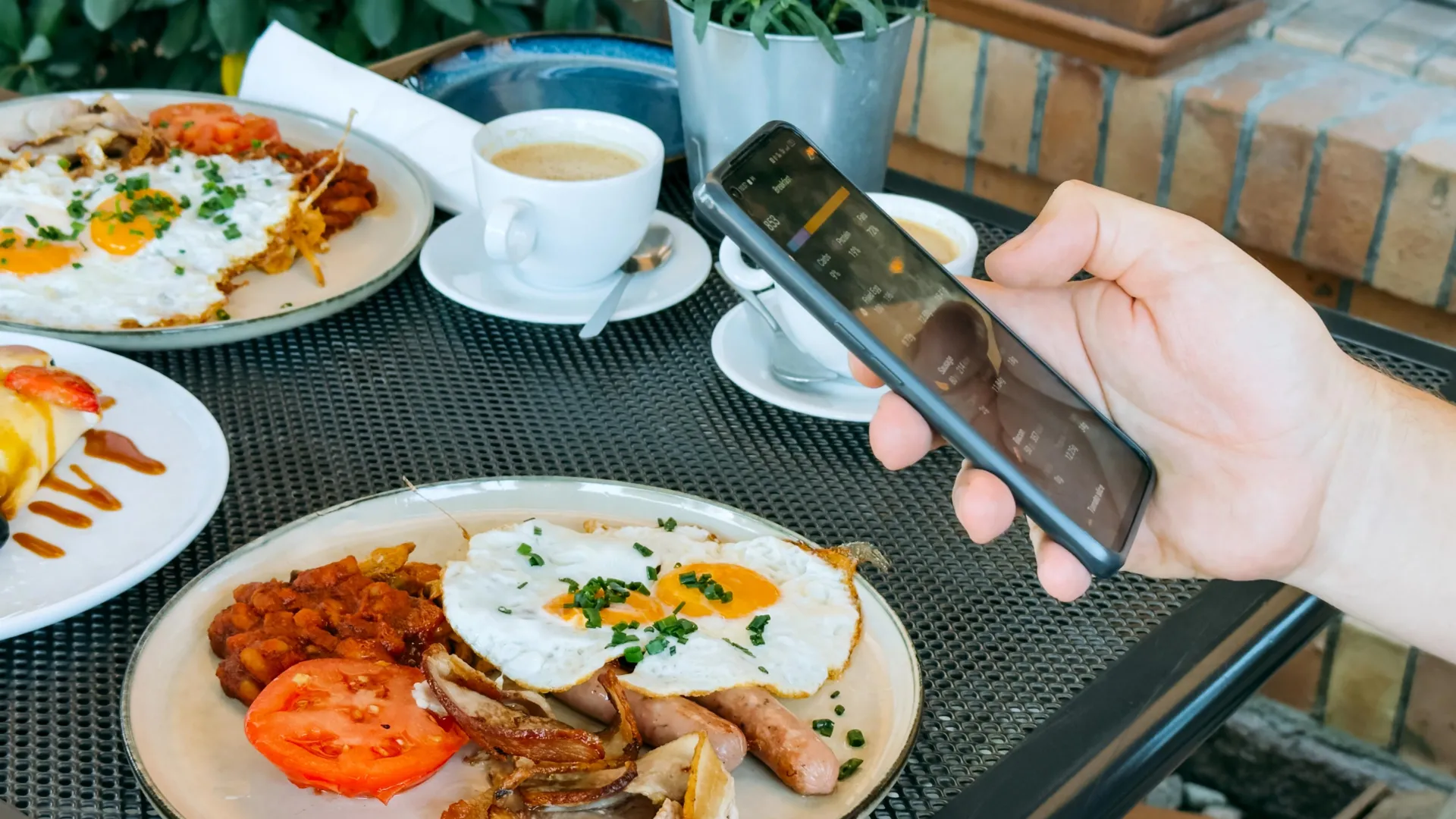
At the heart of photo-based calorie tracking lies a sophisticated interplay of AI image recognition and vast nutritional databases. Users typically capture an image of their meal, which the application then processes through advanced algorithms. These algorithms are designed to identify individual food items present in the photograph, discern their approximate portion sizes, and subsequently cross-reference this information with comprehensive nutritional data to compute caloric values and other macronutrient profiles. This technological innovation offers a seemingly effortless alternative to the laborious manual entry of every food item and its corresponding quantity, a traditional method often cited as a barrier to consistent dietary tracking. The allure of simply snapping a picture and receiving an instant nutritional breakdown is undeniably powerful, fostering a sense of ease and accessibility in personal health monitoring.
Yet, the inherent complexities of food—its diverse textures, varying densities, preparation methods, and often ambiguous portion sizes—present formidable challenges for even the most advanced AI systems. Factors such as lighting conditions, camera angles, and the presentation of food on a plate can significantly influence an algorithm’s ability to accurately perceive and quantify items. The study aimed to dissect these potential vulnerabilities by employing an exceptionally controlled experimental design, thus providing a robust benchmark against which app performance could be measured.
The research was meticulously integrated into a broader nutritional investigation being conducted at the NIH Clinical Center. This overarching study delves into the intricate mechanisms by which the human body metabolizes nutrients, specifically comparing responses to low-carbohydrate (ketogenic) and standard dietary regimens. This unique integration provided the ideal environment for evaluating the AI apps, leveraging the unparalleled precision of a metabolic kitchen. In this highly controlled culinary setting, every ingredient for each meal is weighed and measured to an astonishing degree of accuracy – down to the nearest 0.1 gram. This level of meticulousness ensured that the true nutritional content of every meal was precisely known, establishing an irrefutable "gold standard" for comparison.
Researchers systematically collected standardized photographs of 102 distinct meals prepared within this metabolic kitchen. These images were then meticulously processed through four popular photo-based calorie tracking applications: MyFitnessPal, LoseIt!, CalAI, and Appediet. The objective was to directly compare each app’s generated nutritional estimates against the exact, scientifically validated nutritional content of the meals. Dr. Hengist highlighted the unprecedented nature of this direct, high-quality comparative analysis, noting that such a precise reference point for evaluating these apps had not been previously available in scientific literature. This rigorous methodology stands as a cornerstone of the study’s credibility, eliminating many of the variables and uncertainties that often plague less controlled dietary assessment research.
The findings painted a clear and consistent picture of underestimation. Across all four applications examined, the aggregate caloric totals estimated by the AI systems were consistently lower than the actual values. On average, the discrepancy ranged from approximately 250 to a staggering 345 calories per meal. Beyond calories, the apps also demonstrated a significant tendency to underestimate fat content, missing roughly 30 grams per meal. Such consistent and substantial inaccuracies carry significant implications for users, particularly those engaged in calorie-restricted diets for weight management or those monitoring macronutrient intake for specific health conditions. A daily shortfall of several hundred calories in tracking could easily negate weight loss efforts or lead to unintended dietary imbalances.
Further granular analysis revealed some nuances in app performance. For instance, MyFitnessPal and LoseIt! exhibited greater accuracy when analyzing meals with higher caloric densities compared to those with lower calorie counts. Interestingly, all four applications demonstrated more consistent estimation capabilities for carbohydrates than for other macronutrients, suggesting varying levels of algorithmic proficiency across different nutritional components.
Subsequent investigations, involving over 200 additional meals, sought to identify factors influencing app accuracy. Preliminary data from this extended analysis pointed to a particular vulnerability in evaluating meals adhering to a low-carbohydrate ketogenic diet. These diets inherently feature a higher proportion of fats, a macronutrient that the apps consistently struggled to quantify accurately. This suggests that the visual characteristics or density of high-fat foods might pose specific challenges for current AI image recognition algorithms, leading to their habitual underestimation.
Olivia Charles, a postbaccalaureate intramural research training fellow at NIDDK, who presented these compelling findings, emphasized the practical takeaway for consumers. She advised that individuals relying on photo-based tracking applications without actively verifying or manually adjusting portion sizes should approach the results with a significant degree of skepticism. The pervasive tendency of these apps to underestimate calories, especially those derived from fats, means that actual intake is likely higher than what the digital display indicates.
The implications of this research extend beyond individual users, reaching app developers and the broader public health community. For developers, these findings highlight critical areas for algorithmic improvement, underscoring the need for more robust training datasets and refined image processing techniques that can better account for the diverse visual characteristics of food and accurately infer portion sizes. For public health, the widespread adoption of potentially inaccurate tracking tools could inadvertently contribute to a societal misunderstanding of dietary intake, hindering efforts to combat obesity and related metabolic disorders.
Looking ahead, the researchers advocate for a more integrated approach to dietary assessment. They propose that combining the convenience of photo-based tools with more traditional and validated methods of evaluating food intake and diet quality could significantly enhance the accuracy of calorie tracking in everyday practice. This hybrid approach might involve periodic cross-verification with manual food diaries, consultations with registered dietitians, or the incorporation of more sophisticated contextual data input from users. Such strategies could mitigate the current technological limitations, offering a more reliable pathway toward informed dietary choices and sustainable health outcomes.
It is crucial to remember, as noted in the abstract presented at NUTRITION 2026, that these findings are preliminary. While reviewed and selected by a committee of experts, they have not yet undergone the comprehensive peer-review process typically required for publication in a scientific journal. Nevertheless, these initial revelations serve as a vital wake-up call, urging both developers and users to exercise caution and to continuously strive for greater accuracy in the ever-evolving landscape of digital health and nutrition management. The promise of AI in personal health is immense, but its true utility hinges on rigorous validation and an unwavering commitment to scientific precision.
About the Author