
As individuals progress into their sixth decade and beyond, the pursuit of robust physical health often shifts focus from purely aesthetic goals to functional longevity and overall well-being. A critical component of this pursuit is developing a strong, resilient core, which plays an indispensable role in maintaining balance, supporting posture, facilitating daily movements, and mitigating the risk of falls and back pain. While the traditional crunch has long been synonymous with abdominal training, its efficacy and safety, particularly for an aging population, are increasingly being questioned by fitness professionals. For many, repetitive spinal flexion, inherent in crunches, can place undue stress on the intervertebral discs and cervical spine, potentially exacerbating existing conditions or creating new ones. Furthermore, crunches often predominantly engage the hip flexors rather than optimally targeting the deeper abdominal musculature crucial for spinal stability. Instead, a paradigm shift towards standing, functional core exercises offers a safer, more effective, and more transferable approach to building significant midsection strength and definition, especially for those over 60.
The human core is a complex network of muscles designed not just to move the spine, but primarily to resist unwanted movement. This encompasses resisting flexion (bending forward), extension (arching backward), lateral flexion (bending sideways), and rotation (twisting). Traditional crunches, by focusing solely on spinal flexion, neglect these other vital functions. For older adults, developing comprehensive core strength across all planes of motion is paramount for navigating everyday life with confidence and independence. Standing exercises naturally integrate core engagement with full-body movement patterns, mirroring the demands of real-world activities such as carrying groceries, reaching for objects, or simply walking with good posture. By training the core to stabilize the spine against various forces while upright, these exercises foster true functional strength that translates directly into improved quality of life. Moreover, they often recruit a broader array of stabilizing muscles throughout the hips, glutes, and shoulders, promoting a more integrated and resilient physique.
Incorporating resistance into these standing movements is key to stimulating muscle growth and adaptation. Just as with any other muscle group, the abdominals require sufficient challenge to develop strength and definition. This means selecting a weight or resistance level that pushes the muscles close to fatigue during the final repetitions or seconds of each set, ensuring a progressive overload that drives results. Beyond mere aesthetics, a well-conditioned core provides a powerful internal brace that protects the spine during dynamic movements, reduces strain on the lower back, and enhances overall bodily control.
Here are five highly effective standing exercises that prioritize functional core strength, spinal health, and muscular development without the need for a single crunch:
1. Standing Overhead Dumbbell Hold (Anti-Extension Focus)
The ability to maintain spinal neutrality while under load, particularly overhead, is a fundamental aspect of anti-extension core strength. This exercise directly addresses the tendency to hyperextend the lower back when lifting arms overhead, a common compensatory pattern that can lead to discomfort or injury. By holding a weight directly above the head, the abdominal muscles, especially the rectus abdominis and transverse abdominis, are powerfully engaged to prevent the lumbar spine from arching excessively. This trains the core to act as a stable anchor for the upper body, crucial for tasks like reaching into high cabinets or carrying items above shoulder height.
- Execution: Begin by standing tall with feet hip-width apart, engaging your glutes and bracing your core firmly. Carefully press a light dumbbell or kettlebell directly overhead, ensuring your arm is fully extended and the weight is aligned with your ears, not forward. Actively pull your rib cage down to prevent an anterior pelvic tilt and an exaggerated arch in your lower back. Your gaze should be forward, and your shoulders should remain away from your ears. Hold this position for a prescribed duration, focusing intently on maintaining a rigid midsection and neutral spine. A useful technique for understanding proper form involves standing with your back against a wall. With your hips, shoulders, and head in contact with the wall, raise one arm overhead, aiming to touch the wall with the back of your hand, elbow, and shoulder. This helps establish the correct spinal alignment and teaches the sensation of engaging the core to maintain it.
- Benefits: Enhances posture, strengthens the muscles that prevent spinal extension, improves shoulder stability, and builds deep core endurance.
2. Dumbbell Suitcase Carry (Unilateral Anti-Lateral Flexion Focus)
Few exercises replicate real-world functional demands as effectively as the suitcase carry. Whether hauling groceries, luggage, or a briefcase, the body constantly encounters unilateral loads that challenge its ability to remain upright and balanced. This movement specifically targets the obliques and quadratus lumborum on the side opposite the weighted arm, forcing them to work intensely to prevent the torso from collapsing laterally. It’s an exceptional builder of unilateral core stability, which is essential for gait, balance, and resisting sideways forces. Furthermore, the sustained grip required also offers significant forearm and grip strength benefits, which are vital for older adults.
- Execution: Select a challenging yet manageable dumbbell and hold it in one hand, allowing it to hang naturally by your side. Stand tall, shoulders level, and gaze forward. Engage your core as if preparing for an impact, maintaining a perfectly upright posture without leaning or tilting towards the unweighted side. Walk deliberately and steadily for a set distance or duration, ensuring your hips remain level and your spine stays vertical. Resist the urge to compensate by hiking up the hip on the weighted side or leaning away. Focus on controlled, even steps and consistent breathing. After completing the desired distance or time, switch the dumbbell to the other hand and repeat.
- Benefits: Dramatically improves unilateral core strength, enhances spinal stability against lateral forces, strengthens obliques and deep core stabilizers, boosts grip endurance, and contributes significantly to fall prevention.
3. Standing Dumbbell Wood Chop (Rotational Strength and Coordination Focus)
Many daily activities, from twisting to reach something in the back seat of a car to swinging a golf club, involve rotational movement. The standing dumbbell wood chop effectively trains the core’s ability to generate and control rotation, involving a synergistic movement pattern from the ankles through the hips and torso to the shoulders. This comprehensive engagement strengthens the entire kinetic chain, fostering better coordination and power transfer, while simultaneously building robust rotational strength in the obliques and other core muscles. Crucially, it teaches the body to rotate safely and efficiently, reducing the risk of injury during dynamic twisting motions.
- Execution: Hold a single dumbbell with both hands, arms extended, positioned above one shoulder (e.g., left shoulder). Stand with your feet slightly wider than shoulder-width apart, knees softly bent. Initiate the movement by rotating your torso and pivoting on your back foot, bringing the dumbbell diagonally across your body and down towards the opposite hip (e.g., right hip). Allow your hips to follow the rotation, ensuring the power comes from your core and glutes, not just your arms. Control the eccentric (lowering) phase, resisting gravity. Reverse the motion, bringing the dumbbell back to the starting position with controlled power. Perform the desired repetitions on one side before switching to the other.
- Benefits: Develops dynamic rotational core strength, improves full-body coordination, enhances power transfer through the kinetic chain, and strengthens the obliques for daily twisting motions.
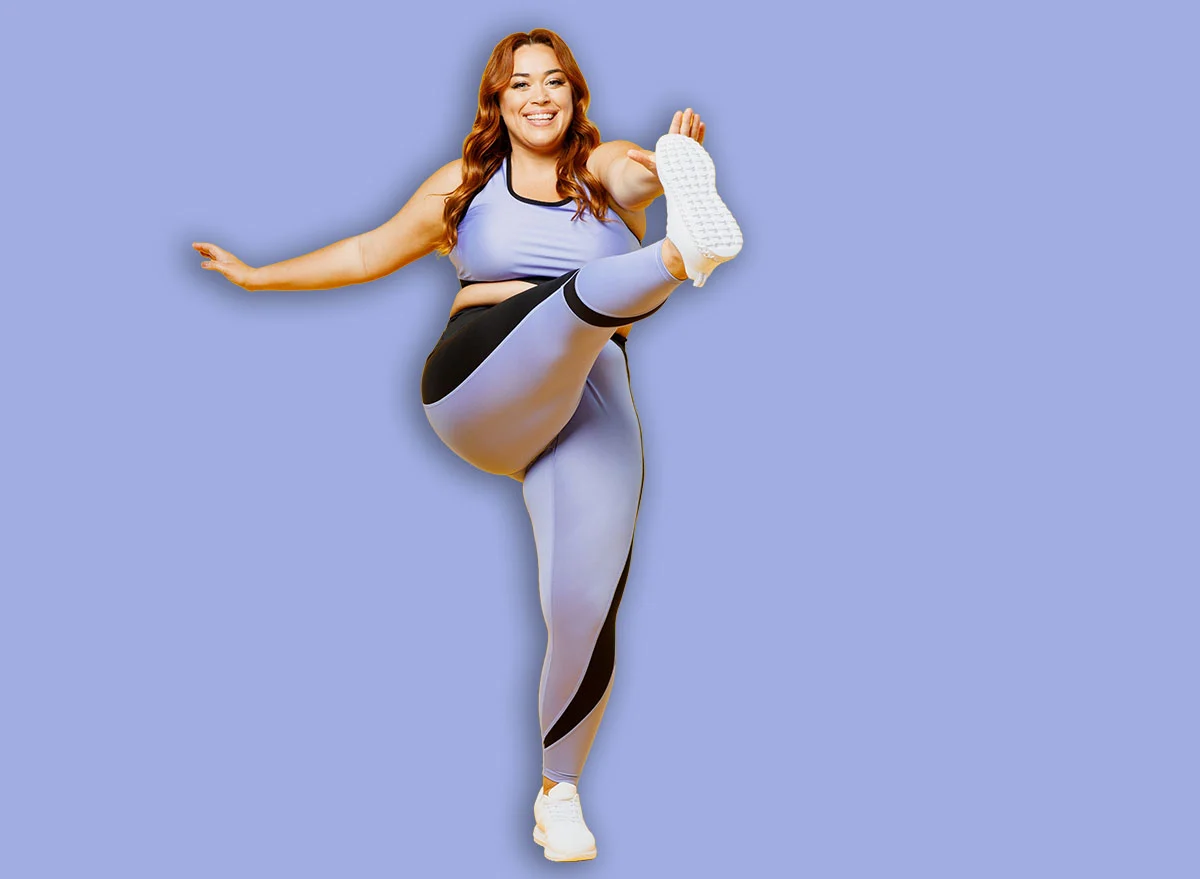
4. Standing Forward Leg Raise (Lower Abdominal and Hip Flexor Integration Focus)
While often performed lying down, the standing forward leg raise offers unique benefits, particularly for older adults, by integrating balance and single-leg stability alongside lower abdominal engagement. This exercise targets the lower rectus abdominis and the hip flexors, crucial for gait and lifting the legs during movement. By performing it standing, it demands greater stabilization from the core and supporting leg, making it a highly functional movement that translates to improved walking mechanics and reduced tripping hazards. The emphasis on a controlled eccentric phase maximizes muscle recruitment and promotes muscle growth.
- Execution: Stand upright, ideally near a stable object like a wall or sturdy chair for balance assistance if needed. Engage your core, keeping your spine neutral. Slowly raise one leg straight forward, aiming to lift it to hip height or as high as comfortable without arching your lower back. Focus on feeling the contraction in your lower abdominals and hip flexors. Crucially, control the descent of the leg, lowering it slowly and deliberately back to the starting position. Avoid letting gravity drop your leg. Maintain a steady, upright posture throughout the movement. Perform the desired repetitions on one leg before switching to the other.
- Benefits: Strengthens the lower abdominals and hip flexors, improves dynamic balance and single-leg stability, enhances gait mechanics, and promotes controlled eccentric muscle action for greater strength.
5. Standing Anti-Rotation Press (Pallof Press) (Transverse Abdominis and Oblique Focus)
Also widely known as the Pallof press, this exercise is a cornerstone for training the core’s ability to resist rotation, specifically targeting the deep transverse abdominis and internal/external obliques. Unlike the wood chop which involves rotation, the anti-rotation press demands that the core prevent rotation against an external force. This is incredibly important for stabilizing the spine during asymmetrical loads or movements, such as reaching across your body or carrying an object in one hand. It cultivates a powerful, rigid midsection that protects the spine from unwanted twisting, a common mechanism of injury.
- Execution: Position yourself perpendicular to a cable machine or resistance band anchored at chest height. Grasp the handle with both hands, holding it firmly against your sternum. Step away from the anchor point until there is tension in the cable/band. Stand with your feet shoulder-width apart, knees slightly bent, and core tightly braced. Your body should be a straight, stable pillar. Slowly press the handle straight out in front of your chest, extending your arms fully. The resistance will try to pull your torso towards the anchor point, but your core’s job is to resist this rotational force, keeping your hips and shoulders perfectly square and facing forward. Hold the extended position for a moment, feeling the intense core engagement, then slowly and with control, bring the handle back to your chest. Maintain consistent tension and a neutral spine throughout the entire set.
- Benefits: Develops exceptional anti-rotational core strength, profoundly activates the transverse abdominis and obliques, enhances spinal stability against twisting forces, and improves overall body control.
In conclusion, for individuals over 60, shifting away from traditional crunches towards a regimen of standing, functional core exercises offers a multitude of benefits that extend far beyond aesthetics. By systematically training the core to resist flexion, extension, lateral flexion, and rotation, these movements build a resilient midsection that supports spinal health, improves balance, enhances daily functional capacity, and significantly contributes to an active and independent lifestyle. Prioritizing proper form, controlled movements, and progressive overload will ensure maximum effectiveness and safety, paving the way for a stronger, more stable, and more capable physique for years to come. Always consult with a healthcare provider or certified fitness professional before embarking on any new exercise program, especially when managing existing health conditions.
About the Author










