Navigating the Digital Deluge: Countering Misinformation’s Threat to Pandemic Resilience.
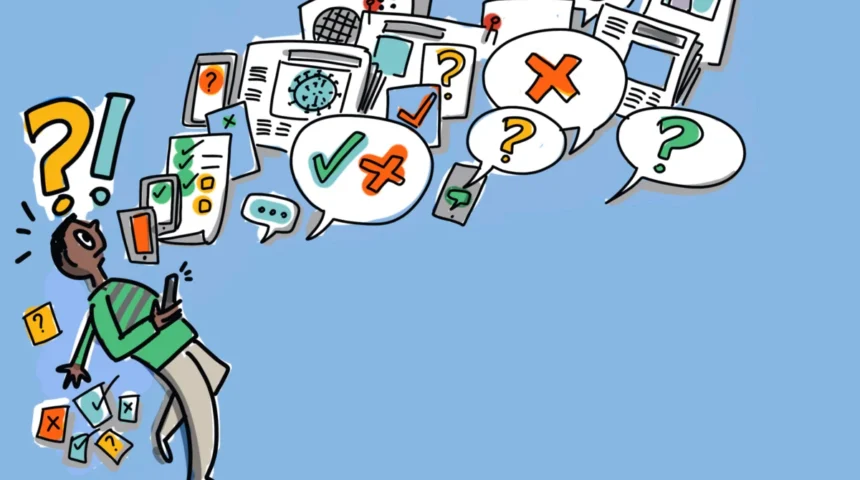
The global battle against the novel coronavirus, COVID-19, marked an unprecedented era where advanced digital technologies and expansive social media networks played a dual role: empowering communities with critical updates and fostering connection, while simultaneously fueling an overwhelming surge of information, both accurate and misleading. This parallel phenomenon, termed an "infodemic," has emerged as a formidable challenge, subtly eroding the effectiveness of public health interventions and jeopardizing the collective capacity to manage and ultimately overcome the pandemic. The inherent nature of this crisis, coupled with the instantaneous global reach of digital platforms, created fertile ground for an information environment characterized by both unprecedented access and profound vulnerability to harmful narratives.
An infodemic fundamentally describes an excessive volume of information, disseminated through both online and offline channels. This informational overload is not merely about sheer quantity; it critically encompasses the deliberate propagation of inaccurate or manipulated content designed to undermine established public health guidance or to advance specific, often covert, agendas of individuals or groups. The distinction between misinformation (unintentional spread of false information) and disinformation (deliberate creation and spread of false information with malicious intent) is crucial, though both contribute to the overall toxicity of the infodemic. The consequences of this distorted information landscape are far-reaching, impacting not only physical and mental well-being but also fostering societal division and obstructing the path to recovery.
The ramifications of an unchecked infodemic are severe and multifaceted. On an individual level, exposure to false health advice can lead to dangerous self-medication, rejection of scientifically proven preventive measures like vaccination or mask-wearing, and unnecessary exposure to the virus. Such behaviors directly contribute to increased rates of infection, severe illness, and mortality, thereby straining healthcare systems and prolonging the pandemic’s duration. The psychological toll is also considerable, as individuals grapple with anxiety, confusion, and distrust fueled by conflicting reports and sensationalized claims. Beyond direct health impacts, the infodemic intensifies stigmatization against affected populations, exacerbating social inequalities and undermining community cohesion essential for a unified response. For instance, false narratives linking the virus to specific ethnic groups or behaviors led to discrimination and harassment, impeding contact tracing efforts and alienating vulnerable populations from seeking necessary medical care.
At a broader societal and political level, the proliferation of false narratives during the COVID-19 crisis has had profound destabilizing effects. Disinformation campaigns have been observed to polarize public discourse, transforming critical public health debates into ideological battlegrounds. This polarization, often amplified by algorithmic biases on social media, has fueled the spread of hate speech, targeting healthcare workers, scientists, and minority groups. Such rhetoric heightens the risk of social unrest, violence, and violations of human rights, threatening the foundational principles of democracy and social cohesion in the long term. The erosion of trust in scientific institutions, governmental bodies, and traditional media outlets, propelled by persistent disinformation, poses a significant threat to a society’s ability to respond effectively to future crises.
Recognizing the urgent need to address this parallel crisis, the international community mobilized early in the pandemic. In April 2020, the United Nations Secretary-General initiated the United Nations Communications Response, a strategic initiative specifically designed to counter the widespread dissemination of misinformation and disinformation related to COVID-19. This proactive measure aimed to ensure that accurate, science-based information reached global populations effectively. Building on this, in May 2020, the UN also released a comprehensive Guidance Note on Addressing and Countering COVID-19 related Hate Speech, providing member states with a framework to tackle the escalating issue of discriminatory and inciteful content online, underscoring the interconnectedness of information integrity and human rights.
Further cementing the global commitment to tackling the infodemic, the World Health Assembly (WHA), the decision-making body of the World Health Organization (WHO), adopted Resolution WHA73.1 on the COVID-19 response in May 2020. This landmark resolution unequivocally acknowledged that the effective management of the infodemic is not merely an auxiliary task but a fundamental component of controlling the COVID-19 pandemic itself. The resolution issued a robust call to all Member States, urging them to undertake decisive actions. Specifically, it mandated that national governments ensure the provision of reliable, evidence-based content regarding COVID-19 to their populations. Furthermore, it called upon states to implement proactive measures to counteract misinformation and disinformation and to strategically leverage digital technologies not only for information dissemination but also for monitoring and responding to the evolving information environment. The resolution also extended its directive to international organizations, compelling them to address the challenges posed by misinformation and disinformation within the digital sphere, to actively prevent harmful cyber activities that could undermine global health responses, and to bolster efforts in providing the public with transparent, science-based data.
The collective expertise and resources of the entire UN system, alongside numerous civil society organizations, have been marshaled to confront this complex informational challenge. However, as the pandemic’s protracted nature continues to breed uncertainty and heighten public anxiety, the imperative for more decisive and coordinated action has become increasingly evident. A fragmented approach is insufficient; what is required is a harmonized strategy involving governments, multilateral institutions, non-governmental organizations, technology companies, and every other entity with a legitimate role in upholding information integrity.
In this spirit, there is an urgent appeal for Member States to develop and rigorously implement comprehensive national action plans specifically tailored to manage the infodemic. Such plans must prioritize the timely and equitable dissemination of accurate information, grounded in scientific evidence, to all segments of society, with particular emphasis on vulnerable and high-risk communities who may be disproportionately targeted by false narratives or lack access to credible sources. Simultaneously, these strategies must incorporate robust mechanisms for preventing the propagation of, and actively combating, misinformation and disinformation. Crucially, these efforts must be undertaken within a framework that meticulously respects and safeguards fundamental freedoms, especially the inviolable right to freedom of expression, ensuring that measures to counter harmful content do not inadvertently stifle legitimate discourse or dissent.
Furthermore, a critical aspect of effective infodemic management lies in genuine community engagement. Member States are strongly encouraged to actively solicit input from and attentively listen to their communities as they formulate and refine their national action plans. This participatory approach is vital for ensuring that solutions are culturally appropriate, relevant, and trusted. Empowering communities to develop their own adaptive strategies and build resilience against the insidious effects of misinformation and disinformation is paramount. This can involve supporting local fact-checking initiatives, fostering media literacy education, and leveraging trusted community leaders as credible information conduits.
Beyond governmental bodies, the call for strengthened action extends to all other critical stakeholders. This includes the media, which bears a profound responsibility in ethical reporting, rigorous fact-checking, and resisting sensationalism. Social media platforms, the primary conduits through which misinformation and disinformation frequently proliferate, are urged to intensify their efforts in content moderation, enhance transparency regarding their algorithms, and collaborate more closely with public health authorities to identify and flag harmful content. Researchers and technologists are crucial partners in this endeavor, tasked with designing and building innovative tools and analytical frameworks to detect, analyze, and counter false narratives more effectively. Civil society leaders and influential public figures also have a significant role to play, leveraging their reach and credibility to disseminate accurate information and champion evidence-based approaches. A collaborative ecosystem, where the UN system, Member States, and all other stakeholders work in concert, strengthening their individual and collective actions, is the only sustainable path to mitigating the enduring threat of the infodemic and safeguarding global health and societal well-being.
Related posts:

Related News