Unraveling the Evolutionary Blueprint: Scientists Propose Ancient Visual System as Origin of Brain’s Crossed Wiring
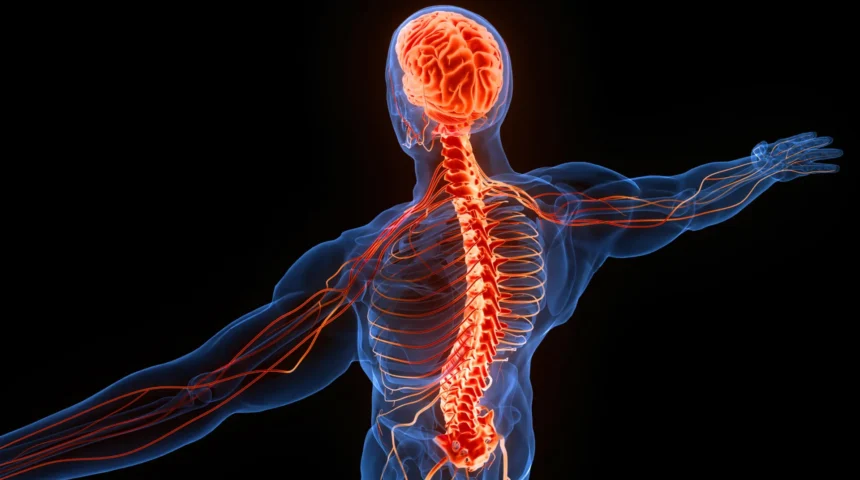
Neuroscientists Martin Wessendorf and Daniel Wang, through their collaborative research, have put forth a compelling hypothesis suggesting that the fundamental crisscross organization of the vertebrate nervous system, where one hemisphere of the brain governs the contralateral side of the body, may be deeply rooted in the evolutionary development of ancient visual processing pathways. This groundbreaking theory, detailed in the journal Frontiers in Neuroanatomy, posits that as new neural circuits emerged over hundreds of millions of years, they were built upon and inherited the pre-existing contralateral arrangement established by the earliest visual systems.
The intricate architecture of the central nervous system, encompassing both the brain and the spinal cord, features numerous pathways that traverse the midline, connecting opposite sides. Understanding the genesis of these contralateral connections is crucial for comprehending the functional architecture of neural processing and motor control. The researchers’ investigation delves into the evolutionary trajectories of various sensory and motor circuits in tetrapods – animals possessing four limbs, including mammals, birds, reptiles, and amphibians – to illuminate the origins of this pervasive neural wiring pattern.
A cornerstone of their hypothesis centers on the processing of visual information, a fundamental sensory modality for many organisms. The initial reception of light by the eye’s retina involves an inversion, where images from the right visual field are projected onto the left retina and vice versa. This information is then transmitted via the optic nerve to the optic chiasm, a critical junction where a partial decussation, or crossing over, of nerve fibers occurs. This arrangement ensures that visual data from the right hemifield of vision is routed to the left hemisphere of the brain, and data from the left hemifield is directed to the right hemisphere.
A significant portion of this visual input is processed by the optic tectum, a structure present in the midbrain of all vertebrate species and considered one of the most evolutionarily ancient components of the vertebrate nervous system. In mammals, this structure is known as the superior colliculus. The optic tectum is instrumental in mediating rapid, reflexive responses to visual stimuli, such as the swift detection of movement. Each side of the optic tectum contains a topographical representation of the contralateral visual field. Intriguingly, deeper layers within this ancient structure also organize somatosensory information, creating corresponding maps of the body’s physical sensations. This conserved, contralateral organization within the optic tectum across a vast array of vertebrate species is a key piece of evidence supporting the researchers’ theory.
Extending their analysis beyond vision, Wessendorf and Wang examined two principal sensory pathways responsible for relaying bodily sensations to the brain. Both pathways exhibit a contralateral organization and are widely distributed among tetrapods. The first, the dorsal column pathway, conveys information related to fine touch, vibration, and proprioception – the sense of the relative position of one’s own parts of the body. Signals from the limbs and torso ascend through the dorsal aspect of the spinal cord, synapse with neurons in the brainstem, and subsequently cross to the opposite side before reaching higher brain centers. While this specific pathway is absent in fish, its presence in amphibians, reptiles, birds, and mammals suggests its emergence early in tetrapod evolution and its remarkable conservation over time.
The second major sensory pathway, the spinothalamic tract, is responsible for transmitting nociceptive signals (pain) and thermal sensations, as well as certain types of tactile input. Unlike the dorsal column pathway, the spinothalamic tract undergoes its decussation within the spinal cord itself, with ascending fibers crossing to the contralateral side. These signals then project to the thalamus, a vital relay station in the forebrain that plays a central role in sensory processing and consciousness. The contralateral organization of the spinothalamic tract is observed in birds, mammals, and reptiles, and even in some cartilaginous fish like sharks, indicating that aspects of this neural arrangement possess even more ancient evolutionary origins.
The principle of contralateral control extends beyond sensory perception to the realm of motor commands governing skeletal muscle activity. The researchers identified three critical motor pathways that exhibit this crossed wiring pattern, linking one cerebral hemisphere to the opposite side of the spinal cord. The tectospinal pathway, originating in the optic tectum, plays a role in rapid, orienting responses to sensory stimuli. This pathway integrates visual, auditory, and somatosensory information, aligning it with the contralateral visual field representation within the optic tectum. For instance, the sudden perception of an approaching vehicle from one’s peripheral vision triggers an immediate head and neck turn towards the source of the stimulus, a coordinated action facilitated by the tectospinal tract. Nerve fibers from the deeper layers of the optic tectum descend to the contralateral side of the spinal cord to influence motor neurons. This pathway is found in most tetrapods and some cartilaginous fish.
Another significant motor pathway discussed is the rubrospinal tract, believed to be involved in limb control. This tract originates in the red nucleus, a nucleus in the midbrain, and projects to the contralateral spinal cord. While particularly prominent in many mammals, it has also been identified in other tetrapod groups and certain cartilaginous fish, further underscoring its evolutionary antiquity.
The corticospinal tract, the third motor pathway examined, holds particular significance for humans and other primates due to its crucial role in enabling fine, voluntary motor control, especially of the hands and fingers. The evolutionary history of this pathway is more complex, reflecting the development of the cerebral cortex. While all vertebrates possess a telencephalon, the anterior part of the brain, only mammals have developed a highly organized, six-layered cerebral cortex. This advanced cortical structure underpins sophisticated cognitive functions, including sensory integration, complex motor planning, and language processing. The corticospinal tract originates in the cerebral cortex and projects to the spinal cord. Its precise function and reach vary across species. In many mammals, it primarily modulates sensory processing, allowing the brain to fine-tune incoming sensory information. However, in primates and other animals capable of intricate movements, the corticospinal tract also directly innervates spinal cord regions controlling muscles, thereby facilitating delicate and precise motor actions. This pathway’s fibers invariably cross the nervous system midline. The researchers propose that the remarkable fine motor capabilities of humans might have evolved not through the creation of an entirely novel neural system, but rather by repurposing and elaborating upon an older circuit that initially served a sensory modulation role.
Synthesizing these observations across multiple sensory and motor pathways, Wessendorf and Wang propose a unifying explanation for the brain’s contralateral organization. They hypothesize that the ancient visual system, with its inherent contralateral processing architecture, served as a foundational template. As new sensory and motor circuits evolved, particularly within the lineage leading to tetrapods, they may have adopted and inherited this established contralateral arrangement. The pervasive presence of the optic chiasm and the contralateral visual field mapping in the optic tectum across all living vertebrates, including primitive jawless fish, suggests that this fundamental organization was in place as early as the Cambrian Period, over 500 million years ago. This temporal placement predates the emergence of modern humans by an immense margin. The researchers even suggest that this hypothesis could be empirically tested by examining fossilized cranial structures of ancient jawless fish for anatomical clues about the presence of these early visual processing centers.
The proposed evolutionary inheritance model offers a departure from the assumption that every biological adaptation must confer a direct, immediate survival advantage. Instead, it highlights the principle of evolutionary conservatism, where existing structures are frequently modified and repurposed rather than being entirely replaced. Once the contralateral organization was established by the early visual system, it may have acted as a structural predisposition, guiding the development and organization of subsequent neural pathways. Under this perspective, the crossed wiring of the nervous system might not represent an independently evolved optimal solution for contralateral control, but rather a lasting imprint of an ancient organizational principle that evolution repeatedly leveraged. This enduring legacy, tracing back to the visual systems of creatures that navigated the primordial seas more than half a millennium ago, could be one of the most profound examples of how the nervous system preserves its evolutionary history, manifesting in the seemingly peculiar yet deeply ingrained relationship between our brains and the opposite sides of our bodies.

Related News