
Unraveling a Century-Old Enigma: A Specific Mushroom Species Linked to Vivid Hallucinations of Miniature Humanoids
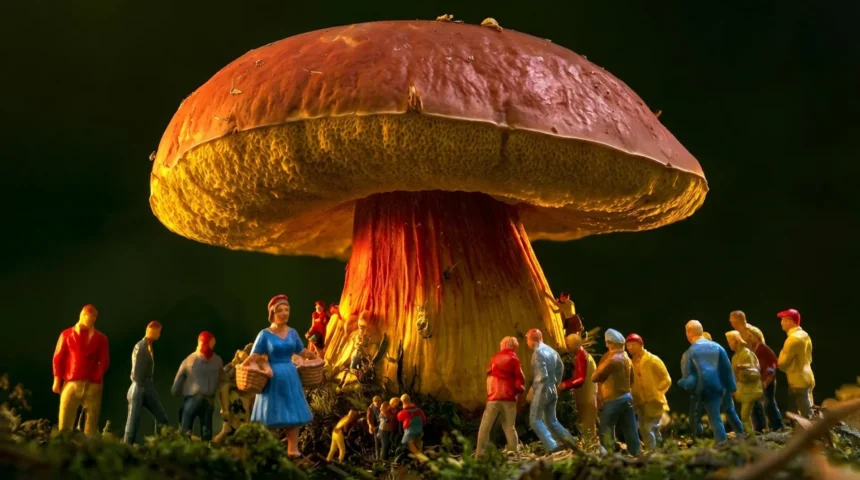
For generations, disparate communities, geographically separated by vast distances, have recounted a shared and profoundly peculiar phenomenon following the consumption of certain wild mushrooms. Individuals have reported experiencing vivid visual disturbances where they perceive the presence of diminutive human figures, seemingly navigating and interacting within their immediate environment, traversing objects, and ascending surfaces as if subject to the laws of physics. This peculiar perceptual alteration, known scientifically as Lilliputian hallucinations, draws its name from the minuscule inhabitants depicted in Jonathan Swift’s seminal work, "Gulliver’s Travels." For decades, the scientific community grappled with explaining the uncanny synchronicity of these accounts across diverse cultures, initially suspecting that shared folklore or ingrained cultural narratives might underpin such remarkably similar subjective experiences.
However, a recent scientific investigation has unearthed compelling evidence suggesting a purely biological genesis for this extraordinary perceptual distortion. Researchers affiliated with the University of Utah, employing advanced DNA sequencing methodologies, have definitively identified Lanmaoa asiatica as the specific fungal species responsible for these striking hallucinations observed in Southwest China and the northern Philippines. In a surprising turn of events, their exhaustive analysis revealed no detectable presence of any known psychoactive compounds, including psilocybin, which is commonly associated with psychedelic mushroom experiences. This absence of familiar hallucinogenic agents strongly implies that Lanmaoa asiatica may harbor an entirely novel class of psychoactive chemical, hitherto unknown to science. The subsequent identification and characterization of this new compound hold the potential to significantly advance our understanding of various neurological disorders, the intricacies of unusual visual perception, and the fundamental mechanisms by which the human brain constructs our subjective reality.
This groundbreaking research was spearheaded by Colin Domnauer, a doctoral candidate at the University of Utah, in collaboration with Bryn Dentinger, a distinguished mycologist associated with the university and the Natural History Museum of Utah. Their seminal findings were formally published in the peer-reviewed journal Mycologia. In a candid interview with the university’s publication, @theU, Domnauer detailed the meticulous process undertaken to pinpoint the mushroom’s identity, elucidated the unique characteristics that render its hallucinogenic effects so exceptional, and underscored the far-reaching implications of this discovery, extending well beyond the realm of mycology.
The Enduring Enigma of Miniature Visions: A Phenomenon Persisting for Nearly a Hundred Years
The scientific fascination with this perplexing phenomenon dates back to 1934, when Western researchers first encountered reports from Papua New Guinea detailing vivid apparitions of diminutive humans experienced by individuals after ingesting wild mushrooms. This unusual effect was colloquially termed "mushroom madness." During the 1950s and 1960s, anthropologists and mycological experts embarked on expeditions to Papua New Guinea to investigate these claims. Their preliminary research pointed towards several potential species belonging to the Boletaceae family, commonly known as boletes.
Despite extensive efforts, chemical analyses of the mushroom samples failed to identify any active ingredients that could account for the reported hallucinations. Notably, even Albert Hofmann, the pioneering scientist credited with the initial isolation of psilocybin and the discovery of LSD, examined these samples without success in identifying a causative agent. The lack of a chemical explanation led some researchers to question the direct involvement of the mushrooms, proposing instead that the visions might be a consequence of cultural conditioning or ingrained ancestral beliefs. By the close of the 1960s, formal scientific inquiry into this specific phenomenon had largely subsided.
However, the mystery was reignited in the 1990s when individuals in Yunnan Province, Southwest China, began reporting similar hallucinatory experiences after consuming bolete mushrooms. While the precise species remained elusive, researchers began to suspect a connection to a recently described mushroom known as Lanmaoa asiatica.
Deciphering the Fungal Culprit: Scientists Pinpoint the Mushroom Responsible for the Strange Visions
A significant breakthrough occurred in 2024 when Domnauer became aware of analogous experiences documented within an Indigenous community residing in the remote Northern Cordillera region of the Philippines. Community members described a wild edible mushroom, locally referred to as "Sedesdem," which occasionally induced the perception of miniature human figures. Strikingly, similar mushrooms were known by distinct local names: "Nonda" in Papua New Guinea and "Jian shou qing" in Yunnan, China. These mushrooms play an integral role in local culinary traditions, but it was observed that inadequate cooking could precipitate the unusual hallucinogenic effects. The Philippine accounts represented the third independent geographical region to report wild mushrooms causing remarkably consistent visions of diminutive humanoids.
In response to these compelling parallels, Domnauer undertook extensive fieldwork in both Yunnan and the Philippines. His research involved in-depth interviews with local residents and the systematic collection of specimens, focusing on L. asiatica and other closely related species within the Lanmaoa genus. This fieldwork also encompassed the first-ever scientific survey of fungal diversity in the northern Philippines. Subsequently, researchers subjected the collected mushroom samples to rigorous DNA analysis to accurately establish their taxonomic identities and their evolutionary relationships. The genetic analyses yielded a significant finding: the mushrooms identified as Jian shou qing in China and Sedesdem in the Philippines were, in fact, the same species, Lanmaoa asiatica. This discovery was particularly noteworthy, as the scientific community had previously believed this species to be endemic to China.
Regrettably, a planned visit by Dentinger to Papua New Guinea to collect samples from the original locus of the mystery was thwarted by unusually dry weather conditions, preventing the acquisition of genetic material for comparative analysis. Nevertheless, the substantial evidence gathered from China and the Philippines, linking two distinct geographical occurrences of the same specific hallucinations to a single mushroom species, provides a powerful and compelling connection. The consistency across three geographically dispersed cultures, reporting the same highly specific visual phenomena, strongly suggests a shared chemical and neurological basis for the hallucinations, rather than disparate cultural influences.
The Uncanny Realism of Tiny Figures: Hallucinations Exhibiting Remarkable Coherence
What distinguishes these hallucinations is their extraordinary similarity across diverse individual accounts. Sufferers typically report perceiving dozens, if not hundreds, of miniature figures, generally ranging in height from 3 to 30 centimeters. These perceived entities appear with exceptional clarity, often possessing a tangible and convincing presence akin to actual human beings. According to Domnauer’s observations, approximately 90% of individuals experiencing these visions describe figures resembling fantastical beings such as elves, clowns, or other fairy-like characters, frequently adorned in vibrantly colored attire.
Even more astonishing is the apparent adherence of these imagined figures to established physical principles. Rather than exhibiting ethereal or non-physical behavior, they appear to interact with their surroundings in a manner consistent with physical laws. They are described as navigating around obstacles, traversing ordinary surfaces, and occasionally tumbling from the edges of elevated surfaces. Domnauer recounted a particularly vivid anecdotal report involving an individual consuming soup. The person described witnessing tiny figures leaping from the spoon into the bowl, where they appeared to swim. When another spoonful was taken, the miniature beings reportedly remained visible within the individual’s mouth. Such detailed and contextually relevant interactions significantly differentiate these visions from many other forms of drug-induced hallucinations.
A Chemical Enigma: The Mushroom’s Unidentified Psychoactive Compound
A critical component of the research involved scrutinizing L. asiatica for the presence of known chemicals that induce psychedelic experiences. Through a combination of chemical testing and genetic analysis, the researchers meticulously searched for established psychoactive compounds commonly found in other mushroom species. Their comprehensive investigation yielded negative results; no trace of these familiar hallucinogens was detected. The absence of known psychoactive agents is particularly intriguing, given the profoundly different nature of the mushroom’s effects compared to those typically associated with established psychedelic drugs.
Consequently, researchers now hypothesize that L. asiatica synthesizes an as-yet-unidentified psychoactive substance responsible for inducing these specific Lilliputian hallucinations. The precise nature and mechanism of action of this compound remain unknown, as it has not yet been isolated or chemically characterized. The discovery and subsequent identification of this novel compound could pave the way for entirely new avenues of research into how specific chemicals modulate visual perception and alter consciousness.
Unlocking Brain Secrets: What This Mushroom Can Reveal About Human Perception
While L. asiatica presents a remarkably consistent trigger for Lilliputian hallucinations, it is important to note that this phenomenon is not exclusive to mushroom consumption. Narratives involving miniature humanoid beings are woven into the fabric of folklore across numerous global cultures. Furthermore, similar hallucinatory experiences have been documented in individuals experiencing alcohol withdrawal, dementia, macular degeneration, and various other neurological conditions. These broader associations suggest that such visual distortions may stem from fundamental aspects of how the human brain processes visual information.
However, the precise neurological mechanisms underlying these experiences, and the most effective therapeutic interventions when they manifest in clinical settings, remain incompletely understood. This is precisely where the enigmatic mushroom offers a unique scientific advantage. Unlike the often sporadic occurrence of Lilliputian hallucinations in neurological and medical conditions, L. asiatica appears to induce the phenomenon with a more predictable and discernible pattern. Should researchers succeed in isolating the active chemical compound, it could serve as an invaluable tool for probing the neural circuits and cognitive processes responsible for generating these unusually detailed visual experiences. Such research could ultimately enhance scientific comprehension of hallucinations associated with various neurological diseases. The immediate objective for the research team is to isolate and definitively identify the suspected psychoactive compound.
Fungal Biodiversity Unveiled: DNA Sequencing Discovers Four New Mushroom Species
Beyond its direct implications for understanding hallucinations, this investigation has also yielded significant discoveries concerning fungal biodiversity. Instead of focusing solely on L. asiatica, Domnauer and Dentinger undertook the first comprehensive genomic analysis of the entire Lanmaoa genus. Their study encompassed the examination of 53 mushroom specimens, meticulously collected from diverse natural habitats and preserved within fungarium collections worldwide. The resulting genetic sequencing efforts revealed the existence of 17 distinct species within the genus, including four that were previously unknown to the scientific community.
Remarkably, two of these newly identified species had already been cataloged within existing museum collections in the United States, their unique identities having gone unrecognized until subjected to genetic scrutiny. The comprehensive analysis also indicated that L. asiatica stands as the sole species within the genus currently known to possess psychoactive properties. Scientists are now actively engaged in reconstructing the evolutionary history of this fungal group, aiming to elucidate the evolutionary pathways that led to the development of this unusual chemical trait and to investigate whether closely related species might produce comparable bioactive substances. The findings also underscore the profound scientific value of historical museum collections, demonstrating that specimens preserved over many years can harbor significant biological discoveries that become apparent only with the application of contemporary analytical techniques. For Domnauer, the discovery of hidden diversity within these collections serves as a powerful reminder that numerous species, and potentially crucial biological characteristics, remain undiscovered, even among organisms already collected and cataloged.
The Untapped Potential of Fungi: A Frontier for New Medicines and Scientific Breakthroughs
The broader implications of fungal exploration extend far beyond the realm of unusual perceptual phenomena. Fungi represent one of the least thoroughly investigated groups of organisms on Earth, and scientists widely believe that their immense chemical diversity holds the key to unlocking invaluable insights across biology, medicine, and neuroscience. A seminal example of this potential is penicillin, the life-saving antibiotic originally derived from a fungus, which revolutionized the treatment of bacterial infections and remains one of the most consequential medical discoveries of the past century. Researchers anticipate that continued exploration of fungal biodiversity will undoubtedly lead to the identification of further medically significant compounds and the uncovering of previously unknown biological processes. The intriguing effects of L. asiatica serve as a compelling illustration of the vast expanse of knowledge yet to be acquired within the fungal kingdom. A mushroom that has been a part of traditional diets in Asian communities for an extended period may contain a substance capable of illuminating new aspects of the human brain and the intricate mechanisms by which it constructs conscious experience.
This research was supported by funding from the National Science Foundation under award number DEB-2114785.

Related News