
The specter of plague, often conjuring images of rat-infested medieval metropolises and Europe’s catastrophic Black Death, has a far more ancient lineage, according to groundbreaking research published in the esteemed journal Nature. This new scientific inquiry pushes the timeline of plague’s lethal impact back an astonishing 5,500 years, revealing its capacity to decimate small, mobile hunter-gatherer communities long before the advent of agriculture and the dense urban environments typically associated with widespread epidemic devastation. This discovery fundamentally reshapes our understanding of this ancient pathogen’s evolutionary trajectory and its early virulence.
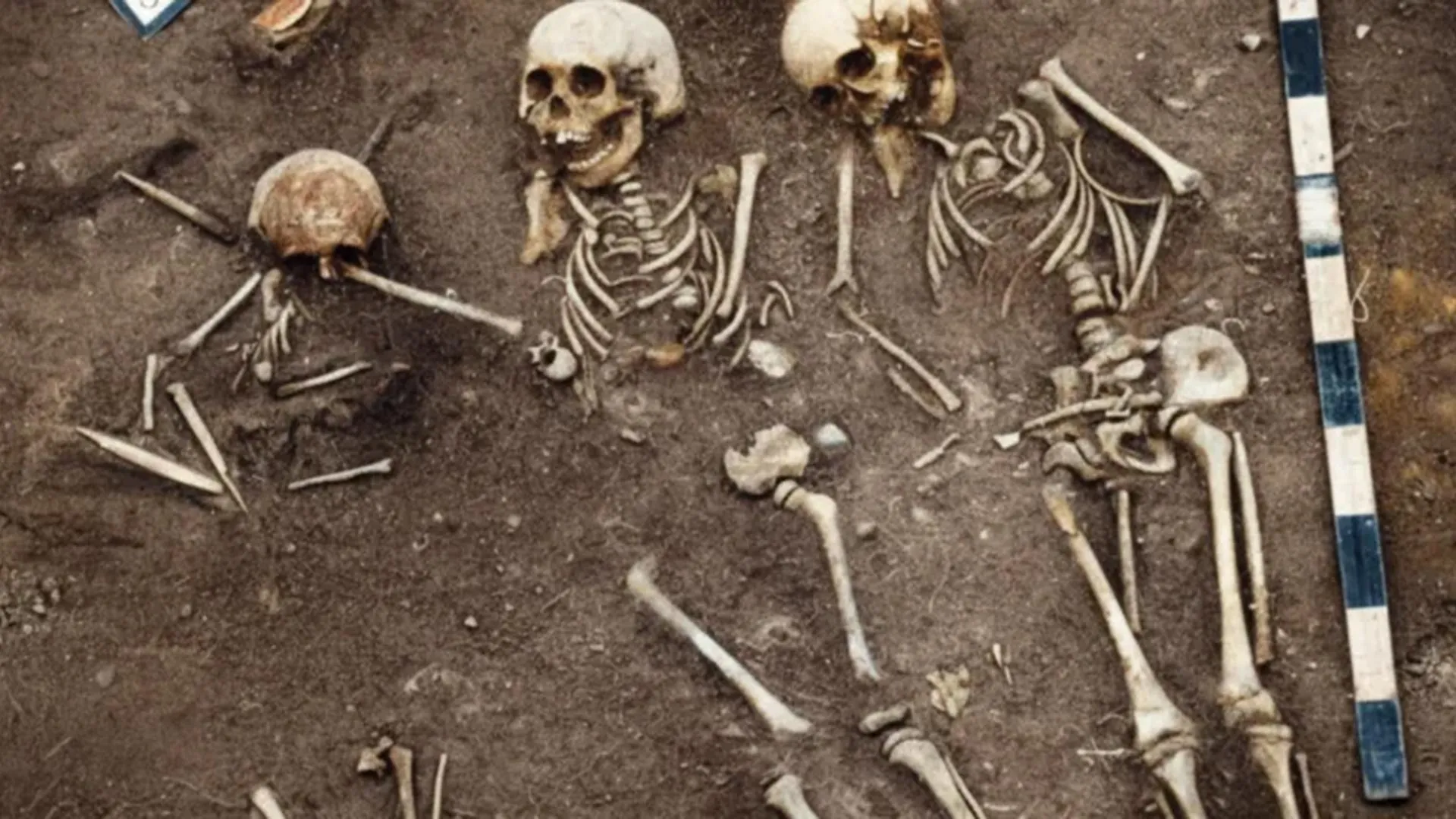
A consortium of international researchers meticulously examined ancient DNA extracted from human skeletal remains unearthed at four distinct hunter-gatherer burial grounds situated in the vicinity of Lake Baikal in Eastern Siberia. Through the sophisticated process of sequencing genetic material meticulously preserved within dental samples, the scientific team successfully reconstructed ancient bacterial genomes, thereby identifying hitherto unknown, early iterations of the plague bacterium. These findings directly challenge long-held assumptions about the pathogen’s early capabilities.
"The question of whether the earliest manifestations of plague were characterized by mild or exceptionally virulent forms has been a persistent subject of scientific discussion; however, our investigations unequivocally demonstrate that these ancient strains possessed a formidable lethality from their inception," stated senior author Eske Willerslev, a distinguished Professor affiliated with both the University of Copenhagen and the University of Cambridge. This assertion is supported by the sheer prevalence of the pathogen found in the ancient samples.
The research team identified the presence of Yersinia pestis, the causative agent of plague, in a significant proportion of the individuals analyzed: 18 out of 46 tested subjects, translating to nearly 40 percent, exhibited genetic evidence of infection. This detection rate is notably high, even surpassing that observed in certain medieval plague burial sites, underscoring the substantial burden of disease within these prehistoric populations.
To contextualize these genetic findings and paint a comprehensive picture of the events that transpired within these ancient communities, the researchers integrated their genomic data with robust archaeological evidence and precise radiocarbon dating techniques. This multidisciplinary approach allowed for the construction of a remarkably clear and complete narrative of the plague outbreaks. "By synergistically combining the plague DNA, the intricate genetic relationships among the deceased individuals, the detailed archaeological analyses, and the accurate radiocarbon dating, we have been able to construct a truly lucid and holistic depiction of the dynamics of these historical outbreaks," explained lead author Ruairidh Macleod, who undertook this pivotal research during his doctoral studies at the University of Cambridge and is now a Research Fellow at the University of Oxford.
Previously, scientific consensus suggested that ancient strains of Yersinia pestis lacked certain key genetic adaptations that later facilitated the efficient transmission of bubonic plague via fleas and rodent hosts. This absence of specific genetic markers had led to the prevailing hypothesis that earlier versions of the bacterium were unlikely to instigate severe, widespread epidemics. The current research directly confronts and refutes this long-standing hypothesis.
Further supporting the notion of early, severe outbreaks, analysis of the two most substantial burial sites revealed a disproportionately high number of deceased children and young adolescents. For decades, archaeologists had grappled with explaining this anomaly – the presence of so many young individuals interred within a compressed timeframe. "The unusually elevated mortality rate among children, coupled with the remarkably short period over which these burials occurred, presented a persistent enigma that archaeologists have been endeavoring to unravel since the 1990s. Discovering that plague was the underlying cause is nothing short of extraordinary, yet it also provides a profoundly logical explanation," commented archaeologist Andrzej Weber of the University of Alberta, who serves as the Principal Investigator for the Baikal Archaeology Project.
The application of radiocarbon dating techniques provided critical temporal resolution, indicating that a significant number of these deaths occurred in close chronological proximity. In some instances, the evidence suggests that siblings may have succumbed together, while other graves appear to contain familial units, including parents and children, who likely perished during the same catastrophic outbreak.
A significant breakthrough in understanding the pathogen’s potency comes from the identification of a distinctive genetic element within the ancient plague strains: a superantigen. This toxin-producing factor is notably absent in later, historic plague strains. Superantigens are known to trigger an exaggerated and potentially damaging immune response in the host, leading to severe inflammation and significantly increasing the danger and lethality of an infection. "This discovery fundamentally alters our comprehension of the earliest plague outbreaks. It indicates that even before the bacterium evolved the mechanisms for efficient flea-borne transmission, these ancient strains were already equipped with a potent arsenal of virulence factors capable of rendering infection highly lethal," elaborated senior author Martin Sikora, an Associate Professor at the University of Copenhagen.
When viewed collectively, the accumulated evidence strongly suggests that some of the earliest documented plague outbreaks may have rivaled the deadliness of later, more infamous historical epidemics, particularly concerning the impact on younger populations. This level of devastation was apparently achievable even prior to the bacterium’s development of the efficient flea-based transmission cycle that became characteristic of later bubonic plague.
The implications of this research extend to the very origins and initial spread of the plague. The findings lend considerable weight to the prevailing theory that plague likely first emerged in Central or Northeastern Asia before disseminating across Eurasia. This spread is thought to have occurred through the movement of wild rodent populations, which served as natural reservoirs for the bacterium.
Archaeological data from the Lake Baikal region indicates that the hunter-gatherer populations residing there maintained close ecological interactions with marmots – large, burrowing rodents that continue to harbor plague to this day. Based on this evidence, researchers posit that some of these prehistoric outbreaks may have originated from direct transmission of the disease from infected marmots to human populations. If this zoonotic leap was indeed the initial spark, then plague was already demonstrating its capacity to ignite deadly outbreaks within small human groups, thousands of years before the societal shifts towards larger settlements, burgeoning cities, and the subsequent flea-driven pandemics that would ultimately cement plague’s infamous reputation in human history. This ancient pathogen, therefore, has a far longer and more insidious history of impacting human health than previously understood.
About the Author












