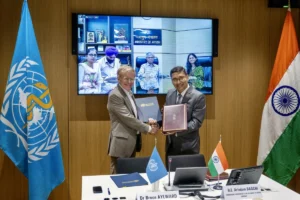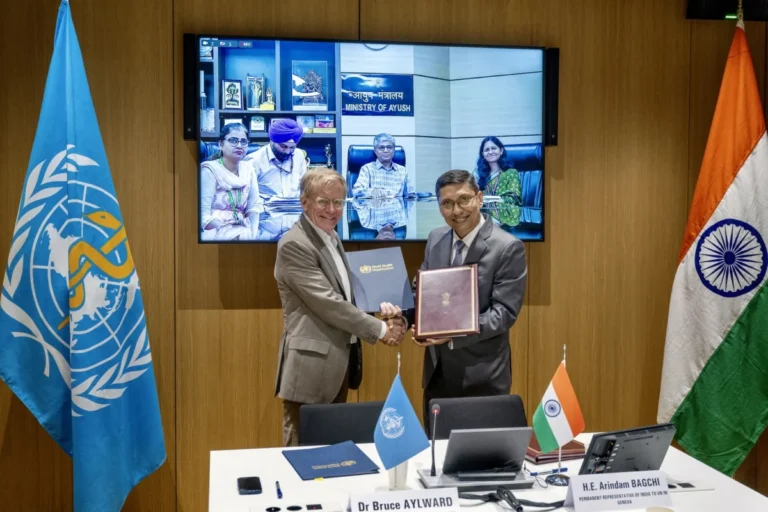
In a significant show of international solidarity and commitment to global public health, the Qatar Fund for Development (QFFD) and the World Health Organization (WHO) recently formalized a pivotal Core Contribution Agreement. This accord, signed in the lead-up to the Seventy-seventh World Health Assembly, channels US$4 million from the State of Qatar to WHO, providing crucial flexible funding designed to bolster the implementation of the organization’s extended Thirteenth General Programme of Work (GPW13). This financial infusion is poised to empower WHO in its multifaceted endeavors to tackle pressing health challenges across the globe, underscoring Qatar’s dedication to fostering equitable health outcomes and advancing sustainable development objectives worldwide.
The Thirteenth General Programme of Work, initially spanning from 2019 to 2023, represents WHO’s overarching strategic blueprint for addressing global health priorities. It is anchored by ambitious "triple billion targets": ensuring one billion more people benefit from universal health coverage, one billion more people are better protected from health emergencies, and one billion more people enjoy better health and well-being. The decision to extend GPW13 through 2025 was largely a pragmatic response to the unprecedented disruptions caused by the COVID-19 pandemic and other concurrent global health crises. This extension acknowledges the profound impact these events had on progress towards the original targets, necessitating a recalibration of efforts and resources to maintain momentum and adapt to an evolving epidemiological landscape.
A fundamental aspect of GPW13 is its comprehensive approach, which transcends singular health issues to embrace a holistic view of human well-being. This strategy encompasses robust efforts against both communicable and non-communicable diseases. For communicable diseases, the program targets infectious threats ranging from established pathogens like tuberculosis and HIV/AIDS to emerging viral outbreaks and the pervasive challenge of antimicrobial resistance. The global community’s experience with recent pandemics has starkly highlighted the imperative for robust surveillance, rapid response mechanisms, and equitable access to vaccines and treatments. Simultaneously, GPW13 confronts the escalating burden of non-communicable diseases (NCDs), such as cardiovascular diseases, cancers, diabetes, and chronic respiratory illnesses, which now account for a substantial majority of global deaths. Strategies here include prevention through lifestyle interventions, early detection, and improved access to long-term care and management.
Beyond disease-specific interventions, the program places a strong emphasis on strengthening health systems themselves. This involves advocating for universal health coverage (UHC), ensuring that all individuals and communities receive the health services they need without suffering financial hardship. Key pillars of health system strengthening include fortifying primary healthcare infrastructure, developing a competent and equitably distributed health workforce, improving access to essential medicines and technologies, and enhancing health information systems for better data-driven decision-making. Furthermore, GPW13 champions health promotion across the life course, addressing the unique health needs from maternal and child health through adolescence and into healthy aging, recognizing that health is a continuous journey influenced by environmental, social, and economic factors at every stage of life.
The nature of the Qatari contribution—flexible funding—is particularly significant for WHO’s operational efficacy. Unlike earmarked funds, which are restricted to specific projects or geographical areas, flexible contributions allow WHO to allocate resources dynamically to where needs are most urgent and strategic opportunities are greatest. This adaptability is critical in a world characterized by unpredictable health emergencies, shifting priorities, and evolving epidemiological patterns. It empowers the organization to respond swiftly to sudden outbreaks, humanitarian crises, or to invest in underfunded yet vital programmatic areas that might not attract specific donor interest. Dr. Tedros Adhanom Ghebreyesus, the Director-General of WHO, articulated this critical need, stating, "Flexible funds are critical for WHO’s life-saving work. With thanks to long-standing partners like the Qatar Fund for Development, WHO can use these funds to swiftly respond to global health needs as they arise. I am grateful to the State of Qatar for their support and for allowing us the flexibility we need to carry out our mission and mandate." His remarks underscore the immense value placed on unconstrained capital in facilitating agile and impactful global health interventions.
The Qatar Fund for Development operates as the State of Qatar’s leading public institution responsible for coordinating and implementing foreign aid projects, driven by a vision to achieve sustainable development and foster global peace. Established with a mandate to support developing countries, QFFD channels assistance through various mechanisms, including grants, loans, and technical cooperation, often prioritizing education, health, economic empowerment, and infrastructure development. Qatar’s broader foreign policy is increasingly characterized by its robust humanitarian and development initiatives, reflecting a commitment to global responsibility and solidarity. Through QFFD, the nation has become a significant player in international aid, responding to crises and investing in long-term development across numerous regions, particularly in the Middle East, Africa, and Asia.
This specific partnership with WHO aligns seamlessly with QFFD’s core mission, especially its emphasis on providing crucial aid in complex environments. Mr. Sultan Ahmed Al-Aseeri, Acting Director-General of QFFD, highlighted this synergy: "Our partnership with WHO is a testament to our dedication to leaving no one behind in the pursuit of health equity worldwide. By supporting WHO, we aim to empower communities, enhance healthcare access, and contribute to a healthier future for all." This statement resonates deeply with GPW13’s foundational principle of equity and universal access. A significant facet of this collaboration will be the focused support for countries grappling with crises and those in post-crisis recovery phases. Such contexts—often marked by conflict, natural disasters, or severe economic hardship—present unique and profound health challenges, including damaged infrastructure, displaced populations, disrupted supply chains, and a heightened risk of disease outbreaks. Qatar’s extensive experience in humanitarian response makes this a natural and impactful area of shared focus, ensuring that the most vulnerable populations are not overlooked in global health strategies.
In a contemporary global health landscape riddled with complexities, such partnerships are more vital than ever. The world continues to navigate the lingering effects of the COVID-19 pandemic, alongside the escalating threats posed by climate change, geopolitical instabilities, and persistent health inequities. Climate change, for instance, is increasingly recognized as a major determinant of health, driving new disease patterns, exacerbating existing ones, and creating humanitarian emergencies through extreme weather events. Geopolitical conflicts displace millions, disrupt health services, and create fertile ground for public health crises. In this intricate web of challenges, the role of multilateral organizations like WHO in coordinating global responses, setting norms, and providing technical guidance becomes indispensable.
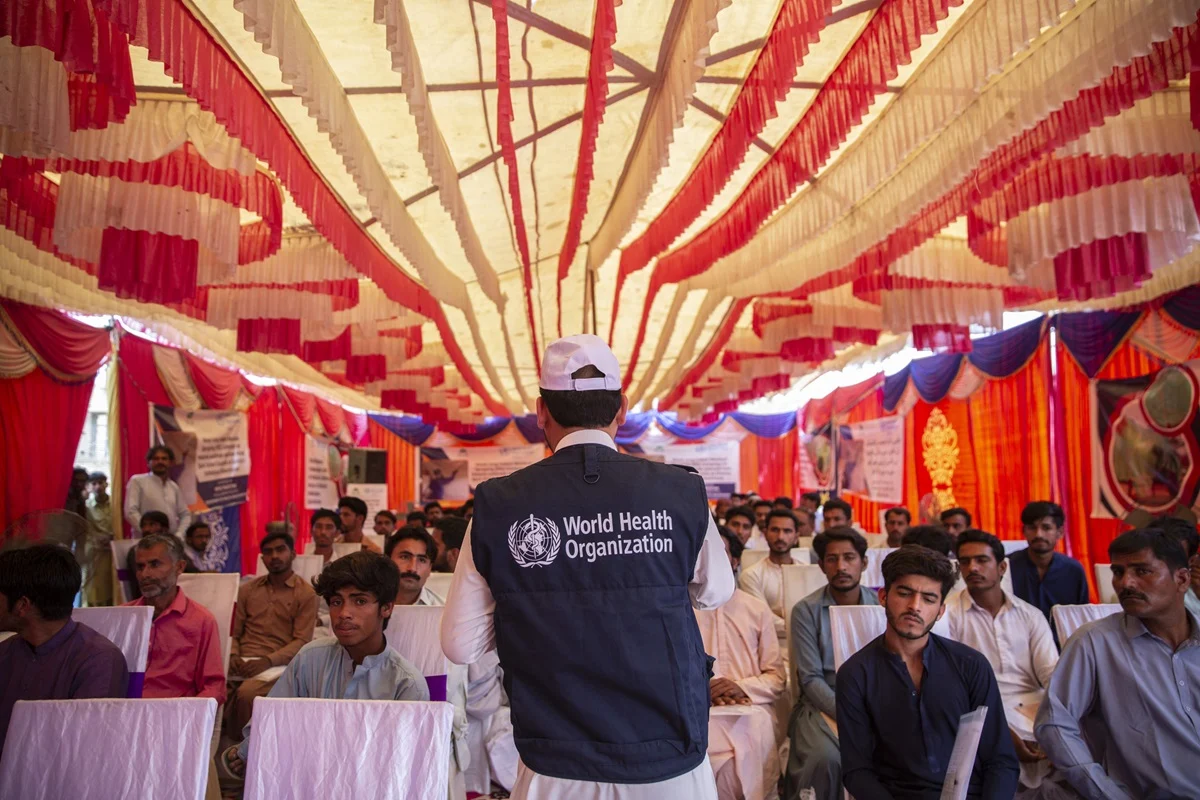
The US$4 million flexible contribution from QFFD is expected to translate into tangible progress across various domains of WHO’s work. It will facilitate the scaling up of essential health interventions, bolster surveillance systems for early detection of disease threats, and strengthen local health capacities in vulnerable regions. This funding will support initiatives that expand access to primary healthcare services, ensure vaccine equity, enhance preparedness for future pandemics, and accelerate efforts to control and eliminate diseases. Beyond the financial value, this agreement serves as a powerful symbol of international cooperation, demonstrating how nations can unite to address shared challenges and build a more resilient global health architecture.
As the Seventy-seventh World Health Assembly convenes, bringing together health ministers and delegates from around the world to deliberate on critical global health issues, this renewed commitment from Qatar provides a timely impetus. Discussions at the Assembly will undoubtedly center on strengthening global health security, achieving universal health coverage, and addressing the impacts of environmental factors on health. The QFFD-WHO agreement directly underpins these overarching objectives, reinforcing the collective ambition for a healthier, more equitable, and more resilient world where every individual has the opportunity to achieve their highest attainable standard of health.
About the Author