The global community collectively paused to acknowledge the profound loss of Dr. David Nabarro, a towering figure whose unparalleled dedication to international public health, humanitarian response, and sustainable development left an indelible mark on countless lives and institutions worldwide. Dr. Nabarro passed away at his home on Friday, July 25, at the age of 75, concluding a distinguished career characterized by visionary leadership, unwavering commitment, and profound compassion. His departure has resonated deeply across the World Health Organization (WHO), the United Nations system, academic circles, and numerous non-governmental organizations where his influence was keenly felt.
Dr. Tedros Adhanom Ghebreyesus, the Director-General of the WHO, articulated the widespread sentiment of grief and respect in a heartfelt statement. He conveyed profound shock and sorrow at the passing of a cherished friend and esteemed colleague, highlighting Dr. Nabarro’s role as a WHO Special Envoy. Dr. Tedros lauded Nabarro as an ardent advocate for global health equity, a benevolent and sagacious mentor to innumerable individuals, and a professional whose work positively impacted populations across every continent. On behalf of the entire organization, Dr. Tedros extended sincere condolences to Nabarro’s family, friends, and professional associates, expressing deep regret at the absence of his expertise, sagacity, and innate kindness.
Throughout his remarkable career, Dr. Nabarro exhibited an extraordinary capacity to navigate and lead complex global challenges, demonstrating an exceptional range of expertise that spanned critical areas such as health, nutrition, and the escalating crisis of climate change. His professional journey was a testament to a versatile intellect and an unyielding readiness to contribute wherever his formidable skills were most needed.
His initial significant contributions to the WHO unfolded between 1999 and 2005, where he rapidly ascended to senior leadership echelons. He first assumed the executive directorship of the "Roll Back Malaria Project," an ambitious global initiative launched in 1998 aimed at drastically reducing the burden of malaria, a disease that disproportionately affects vulnerable populations. This role positioned him at the vanguard of a critical public health battle, requiring strategic oversight, international collaboration, and the mobilization of resources to combat one of the world’s deadliest diseases. Subsequently, he was appointed to lead the Office of the Director-General, a pivotal position involving high-level strategic planning and operational coordination. His tenure at the WHO culminated with his designation as the Director-General’s Special Representative for Health Action in Crises, a role that underscored his burgeoning reputation as an expert in rapid response and recovery efforts in regions afflicted by humanitarian emergencies. This period laid the groundwork for his extensive future engagement in crisis management, demonstrating his early recognition of the interconnectedness of health, conflict, and disaster.
In 2005, Dr. Nabarro transitioned to the United Nations system, embarking on an even broader spectrum of global service that would span nearly a decade and a half. His initial assignment at the UN was as the UN System Senior Coordinator for Avian and Pandemic Influenza, a critical role from 2005 to 2014. During this period, the world faced the looming threat of an H5N1 avian influenza pandemic, and Nabarro was instrumental in coordinating a coherent global response, fostering inter-agency collaboration, and developing preparedness strategies to mitigate the potential devastation of a widespread viral outbreak.
His commitment to global well-being extended beyond infectious diseases into the fundamental human right to adequate nutrition and food security. From 2008 to 2014, he served as the UN Secretary-General’s Special Representative for Food Security and Nutrition. Within this capacity, he played a crucial role in shaping international policies and galvanizing collective action to address chronic hunger and malnutrition. This work was further amplified by his concurrent leadership from 2011 to 2014 as the Coordinator of the Movement for Scaling Up Nutrition (SUN), holding the rank of Assistant Secretary-General. The SUN Movement, under his guidance, grew into a global partnership of countries, civil society, businesses, and donors dedicated to improving nutrition outcomes, particularly for women and children, by supporting national efforts to implement effective nutrition policies and programs.
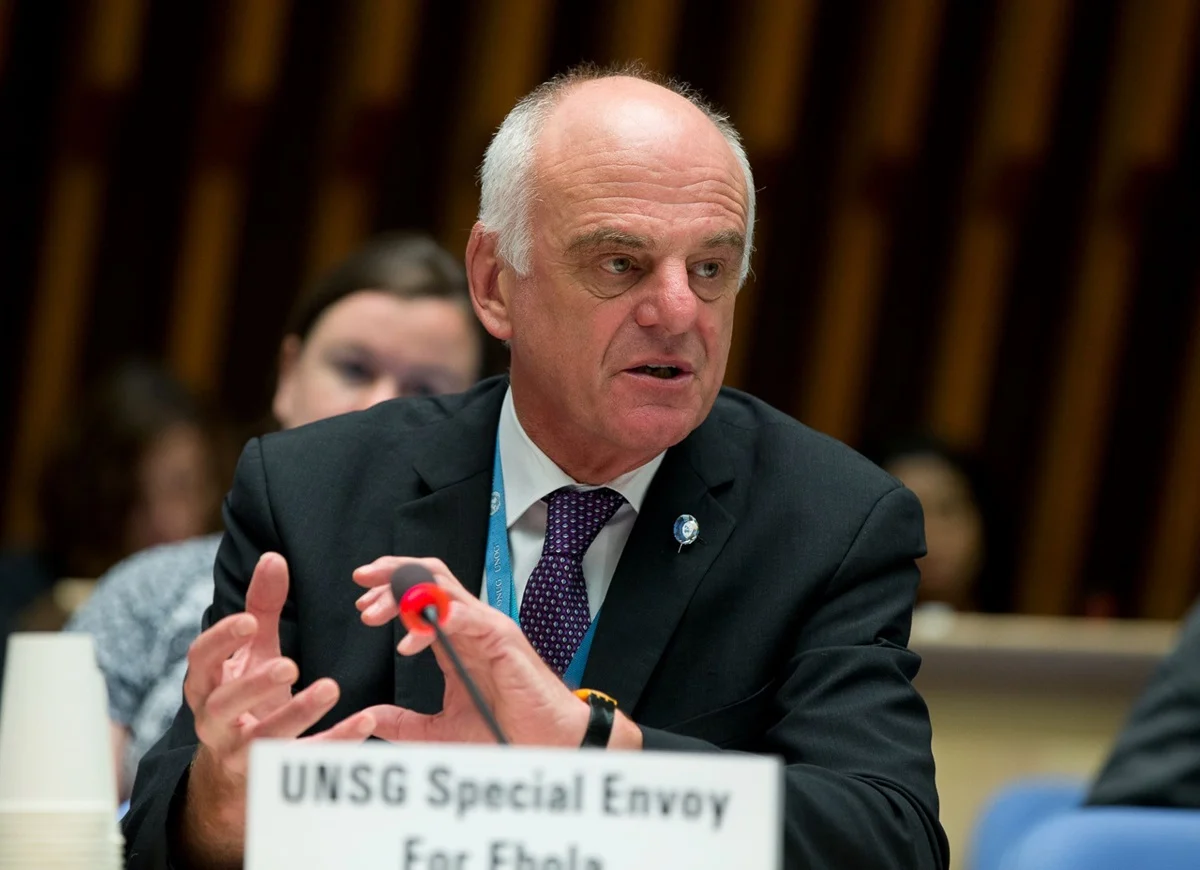
Perhaps one of his most recognized and impactful roles came in response to the devastating West Africa Ebola outbreak. From 2014 to 2015, Dr. Nabarro was appointed the UN Secretary-General’s Special Envoy for the Ebola Response. This unprecedented public health crisis required an extraordinary level of international coordination and rapid deployment of resources. Nabarro’s leadership was critical in mobilizing global efforts, streamlining communication, and ensuring a unified response to contain the deadly virus and support affected communities. His strategic acumen and ability to forge consensus among diverse stakeholders were vital in bringing the epidemic under control.
Following his pivotal role in the Ebola response, Nabarro continued to contribute to foundational global agendas. From 2016 to 2017, as an Under-Secretary-General, he served as Special Adviser for the 2030 Agenda for Sustainable Development and Climate Change. In this capacity, he was instrumental in advancing the newly adopted Sustainable Development Goals (SDGs), emphasizing their integrated nature and the urgent need for action on climate change, which he recognized as a profound threat multiplier for health and development.
Even after his primary UN roles, Dr. Nabarro remained deeply engaged in critical reforms and initiatives. In 2015, the WHO Director-General specifically tasked him with chairing an expert group dedicated to reforming the organization’s approach to outbreaks and emergencies. This critical evaluation aimed to strengthen the WHO’s capacity to respond more effectively to future health crises, drawing lessons from past experiences, including the Ebola epidemic. His insights were crucial in shaping a more resilient and responsive global health architecture.
His tireless work in nutrition was formally recognized in October 2018 when he was awarded the prestigious World Food Prize, an honor often referred to as the Nobel Prize for food and agriculture. This accolade celebrated his exceptional leadership in transforming global nutrition policies and galvanizing collective action to combat malnutrition in all its forms.
In his later career, Dr. Nabarro continued to shape future leaders and initiatives through academic and foundational work. From mid-2019, he served as Co-Director and Chair of Global Health at the Institute of Global Health Innovation, Imperial College London, a position he was slated to hold until 2025. This role allowed him to mentor emerging professionals and contribute to cutting-edge research and policy development in global health. Concurrently, in 2018, he co-founded the Swiss-based 4SD Foundation (Skills Systems and Synergies for Sustainable Development) with Florence Lasbennes, serving as its Strategic Director. The foundation’s mission was to equip and mentor leaders with the essential skills to drive sustainable development initiatives, reflecting Nabarro’s enduring belief in systemic change and human capacity building.
Between 2018 and 2025, Dr. Nabarro played a pivotal role in curating the Food Systems Dialogues, a critical series of conversations designed to catalyze the transformation of global food systems. These dialogues were a significant contribution to the preparations for the monumental 2021 UN Food Systems Summit, from which a robust network of National Convenors for Food Systems transformation emerged, continuing its vital work today. His foresight recognized the imperative to address the complex interplay of food production, consumption, environmental impact, and public health.
His engagement extended to the pressing issue of climate change, where he contributed significantly to the preparations for the UN’s September 2019 Climate Action Summit. He was also instrumental in co-facilitating the influential coalition that advanced the Nature-Based Solutions (NBS) workstream, an initiative co-led by China and New Zealand, advocating for environmentally sound approaches to address climate change and biodiversity loss. Furthermore, he co-chaired the forum on Climate Change and Health, which concluded its impactful work at the World Innovation Summit for Health in November 2020, underscoring the intrinsic link between planetary health and human well-being.
In March 2020, at the onset of the unprecedented global COVID-19 pandemic, Dr. Nabarro was once again called upon for his extraordinary leadership, accepting the appointment as Special Envoy of the WHO Director-General on COVID-19. He held this crucial position until his passing. In this capacity, he provided strategic guidance, communicated critical public health messages, and advocated for a coordinated global response to the pandemic, leveraging his vast experience in outbreak management and international cooperation. Under his strategic direction, the 4SD Foundation spearheaded the Summit Dialogues that informed the 2021 UN Food Systems Summit, facilitating a lasting network dedicated to food system transformation.
Even in the final years of his life, his commitment to humanitarian action remained undiminished. When the conflict in Ukraine escalated, triggering a profound global crisis in food, energy, and finance, Dr. Nabarro joined the UN Secretary-General’s crisis response group, co-leading the vital Food Workstream. This demonstrated his unwavering dedication to alleviating suffering and finding practical solutions to complex, real-time emergencies. His exceptional contributions to global health were formally recognized by King Charles III in 2023, who bestowed upon him a knighthood, an honor reflecting his profound and lasting impact.
In a statement titled "A Difficult Announcement," the 4SD Foundation confirmed Dr. Nabarro’s peaceful passing at his home. The foundation’s message underscored his boundless generosity and steadfast commitment to improving the lives of others, qualities that will be profoundly missed by all who knew him. Dr. Nabarro is survived by his beloved wife, Flo, his six children—Tom, Ollie, Polly, Josie, Lucas—and seven grandchildren. The family has expressed deep gratitude for the outpouring of support and compassion extended to them during this challenging period.
On July 30, the Nabarro family released their own statement, acknowledging the immense volume of tributes received. They expressed pride in witnessing how his enduring legacy, particularly across the fields of international development, public health, food systems transformation, nutrition, and crisis response, will continue to inspire and empower countless compassionate leaders dedicated to instigating systemic change from within.
A private funeral service, attended by immediate family, is scheduled for Monday, August 4. In the weeks ahead, a series of memorial services will be organized, providing opportunities for the vast network of individuals whose lives were touched by Dr. Nabarro to pay their respects and celebrate his extraordinary life and achievements. Messages, memories, and mementos can be shared on a dedicated memorial webpage, with further arrangements to be updated via the 4SD Foundation. Dr. David Nabarro’s life was a testament to the power of dedicated service, a beacon of hope and practical action in the face of humanity’s most daunting challenges. His legacy of vision, skill, compassion, and patience will undoubtedly continue to guide and inspire future generations of global leaders and health advocates.
About the Author