
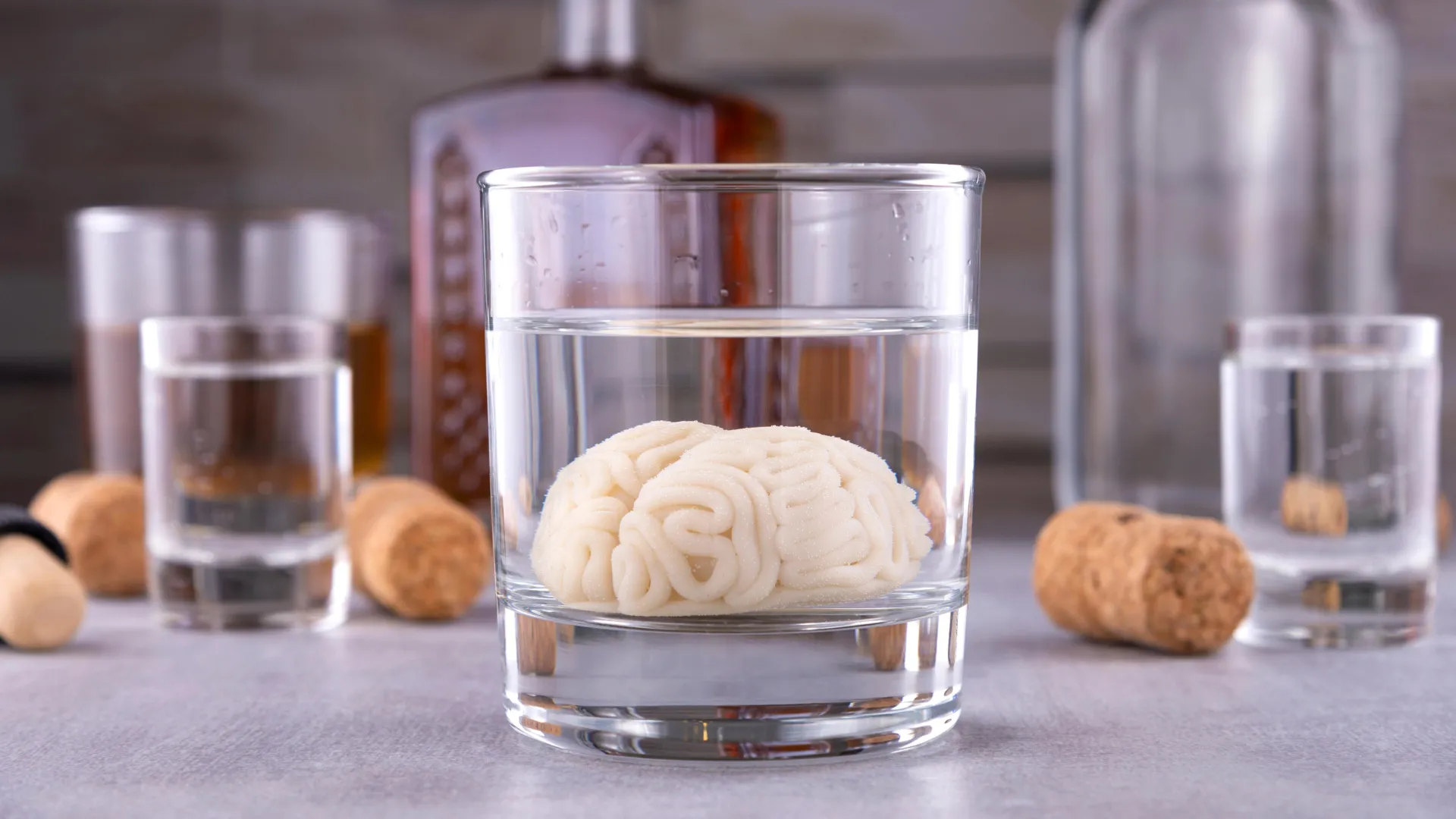
Recent scientific inquiry has illuminated a complex paradox within the journey of alcohol abstinence: while periods of sobriety are generally associated with a marked improvement in overall health and well-being, emerging theories among addiction researchers suggest that the very neurological adaptations occurring during this abstinent phase might, paradoxically, increase an individual’s susceptibility to returning to alcohol consumption. This intriguing hypothesis has driven investigations into the intricate biological mechanisms that could underpin this heightened risk of relapse, seeking to unravel the subtle yet significant ways the brain responds to periods of enforced sobriety.
To rigorously examine this theory, a team of researchers embarked on a controlled study utilizing a murine model, meticulously observing the behavioral patterns of mice following an extended period of voluntary alcohol access, subsequently followed by a mandated period of abstinence. Within this experimental cohort, a distinct subgroup of the mice exhibited a phenomenon termed "aversion-resistant alcohol intake." This classification signifies a critical behavioral shift: these mice continued to consume alcohol even when presented with quinine, a bittering agent deliberately introduced to render the beverage unpalatable, and its concentration was progressively increased. Furthermore, and of profound significance, these particular mice demonstrated a propensity to consume even larger quantities of this deliberately noxious alcoholic solution when compared to their counterparts who did not undergo the forced abstinence protocol. These findings collectively point towards the existence of formidable physiological challenges inherent in the abstinence process, which may actively contribute to the recurrent nature of relapses experienced by individuals grappling with alcohol use disorder.
The research then delved deeper, meticulously monitoring the neural activity within a specific cluster of neurons located in a brain region identified as the bed nucleus of the stria terminalis, commonly abbreviated as the BNST. This relatively small anatomical structure has garnered substantial attention from the scientific community due to its profound and established involvement in a spectrum of symptoms associated with alcohol use disorder, including heightened anxiety and depressive states. The researchers specifically focused on this area, hypothesizing its pivotal role in mediating the behavioral responses observed during abstinence and potential relapse.
A pivotal phase of the investigation involved allowing these abstinent mice to re-enter the environmental context previously associated with alcohol availability. Strikingly, even though the dispensing mechanism now contained only plain water, the mice exhibited persistent attempts to ingest it, mimicking their prior drinking behaviors. These observable attempts to consume water were directly correlated with heightened neural activity within the BNST. More specifically, the abstinent mice that had previously developed a tolerance for the intentionally bitter alcohol displayed significantly amplified activity in this crucial brain region, registering more than double the neural activation levels compared to the control group that had not experienced forced abstinence. This suggests a potent neural priming effect linked to the prior consumption and subsequent abstinence.
Crucially, the researchers observed a notable increase in BNST activity even prior to the reintroduction of any alcohol-related stimuli, including the bitter alcohol itself. This forewarning observation carries significant implications, suggesting the potential for developing biomarkers or screening methods. It raises the possibility that identifying individuals at elevated risk of relapse might be achievable by assessing BNST activity when individuals are exposed to cues or environments associated with alcohol consumption, even before any actual intake occurs.
The broader societal impact of these findings cannot be overstated, particularly in the context of the United States, where alcohol misuse stands as one of the most pressing public health challenges. Despite its pervasive presence in social settings and celebrations, the public often underestimates the profound severity of its health consequences. The ramifications of alcohol misuse are extensive, contributing to a wide array of detrimental health outcomes that are frequently overlooked or downplayed.
The stark reality of alcohol-related mortality is particularly alarming. In recent years, deaths directly attributed to alcohol consumption have been reported to be substantially higher – approximately 4.5 times more numerous – than those linked to opioid-related causes. While the principles of harm reduction, a cornerstone of effective treatment for opioid use disorder, are beginning to be explored and implemented within the framework of alcohol use disorder management, abstinence continues to be the predominant, and often sole, therapeutic objective in most current treatment paradigms.
The widespread consumption of alcohol across the American population is undeniable. Data indicates that upwards of 80% of individuals aged 12 and older engage in alcohol consumption at some point in their lives. From this substantial population, a significant percentage, estimated to be around 10%, subsequently develop alcohol use disorder. This translates to an estimated 30 million Americans who require professional intervention and treatment for this complex condition.
A significant challenge within the current clinical landscape is the limited ability of healthcare professionals to accurately predict which individuals are most likely to develop alcohol use disorder or experience relapse. Although a range of pharmacologically approved treatments are available for managing alcohol use disorder, the number of diagnosed cases has seen a dramatic increase, effectively doubling in the United States since 1999, underscoring the escalating nature of this public health crisis. Consequently, there is an urgent need for the development of more effective strategies to identify individuals at high risk, both for developing the disorder and for relapsing after treatment, thereby enabling more targeted and successful therapeutic interventions.
Despite these significant advancements, several critical questions remain unanswered regarding the precise neurobiological underpinnings of alcohol use disorder and relapse. The exact functional role of the BNST in mediating behaviors associated with alcohol use disorder is not yet fully elucidated. Furthermore, the specific factors that drive the observed increases in BNST activity during abstinence, and indeed, which distinct subpopulations of neurons within the BNST are responsible for encoding this heightened activity, are still subjects of ongoing research. Unlocking these specific details could pave the way for the identification of novel and more effective therapeutic targets.
Looking ahead, the field of neuroscience is equipped with increasingly sophisticated tools that enable researchers to precisely manipulate the activity of specific neuronal populations within the brains of animal models. Leveraging these advanced techniques, the research team is actively engaged in further dissecting the intricate role the BNST plays in driving the compulsive consumption of alcohol, even in the face of recognized detrimental consequences. Concurrently, a collaborative effort with researcher Jennifer Blackford is underway, focusing on investigating BNST activity in human subjects who are experiencing early stages of abstinence from alcohol use disorder. Should similar patterns of BNST activation be observed in human participants, a logical and crucial next step would involve rigorously evaluating the potential of the BNST as a reliable screening tool within the context of clinical trials, aiming to translate these fundamental research findings into tangible clinical applications.
About the Author












