A remarkable scientific endeavor has successfully elucidated a key portion of the complex chemical synthesis occurring within two highly toxic plant species, wolfsbane and larkspur, potentially paving the way for novel therapeutic agents. These plants, notorious for their ability to induce severe neurological effects, including paralysis, even at minuscule concentrations, also harbor compounds with significant pharmacological promise. Researchers, through a collaborative effort between Michigan State University and the Czech Academy of Sciences, have engineered a method to replicate a segment of this intricate molecular machinery in a controlled laboratory environment, opening promising avenues for the sustainable development of new medicines derived from natural sources.
The findings, recently published in the esteemed journal Molecular Plant, represent a significant leap forward in understanding the biosynthesis of diterpenoid alkaloids, a class of potent natural products. These complex molecules have captivated scientists for centuries, not only for their formidable toxicity but also for their potential to combat a range of ailments, including chronic pain, infectious diseases like malaria, various forms of cancer, and even to serve as natural deterrents against agricultural pests. The ability to artificially generate these compounds offers a sustainable and potentially more accessible alternative to harvesting them from their natural, often limited, sources.
Garret Miller, a former doctoral candidate in Björn Hamberger’s lab at Michigan State University and now an assistant professor of biotechnology at the University of Michigan-Flint, shared his insights as a co-first author of the study. He highlighted the deep-rooted historical connection between humans and these plants, noting their long-standing use in traditional medicine across diverse cultures worldwide. "These plants have been integral to various healing practices for millennia," Miller stated, emphasizing that their profound interactions with biological systems are well-documented. "Our current work aims to demystify the precise mechanisms by which they produce these potent compounds, thereby unlocking entirely new pathways for scientific investigation and therapeutic innovation."
The plant kingdom, with its evolutionary legacy spanning millions of years, stands as an unparalleled architect of molecular diversity. "Plants are, in essence, the planet’s most sophisticated chemists," explained Björn Hamberger, the James K. Billman Endowed Professor in MSU’s Department of Biochemistry and Molecular Biology and a senior author on the paper. "They have continuously refined their repertoire of natural compounds as a vital strategy for survival and defense. Our research lab is dedicated to exploring these specialized metabolites, discerning their intricate structures, and ultimately, identifying their practical applications for human benefit."
Lana Mutabdžija, a graduate student at the Czech Academy of Sciences and the other co-first author, underscored the ubiquity and importance of plant-derived molecules in human life. "From the invigorating boost of caffeine to the soothing properties of menthol and the aromatic allure of vanillin, countless compounds we encounter daily originate from or are inspired by plant chemistry," she remarked. "Furthermore, a substantial proportion of modern pharmaceuticals either are directly sourced from plants or draw their fundamental structural blueprints from botanical molecules."
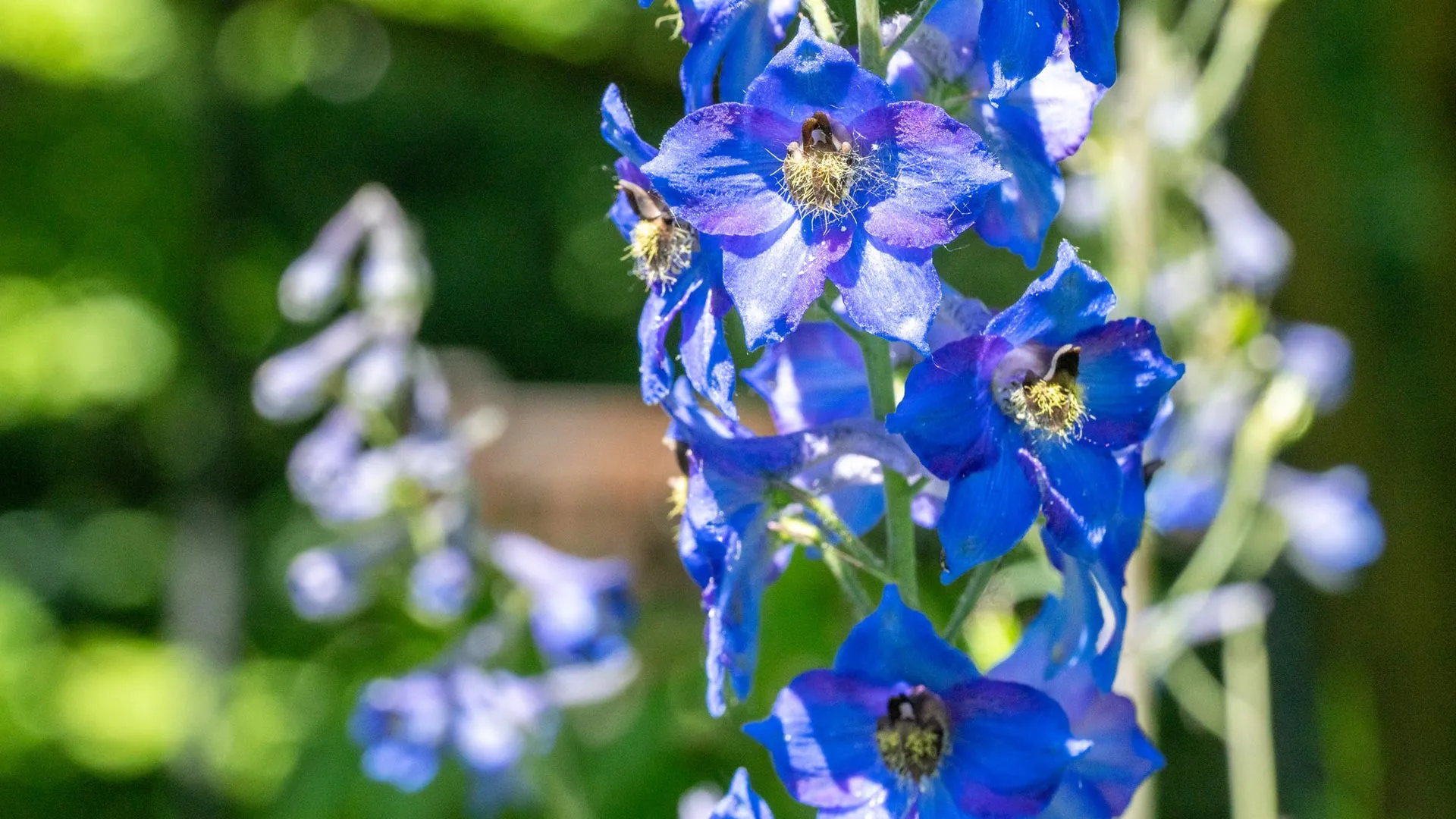
The Hamberger Lab has long been at the forefront of investigating these complex natural substances, known as specialized metabolites. Their recent focus has been on the delphinium genus, commonly referred to as larkspur, a plant characterized by its distinctive dolphin-shaped flowers. The researchers’ primary objective was to unravel the biosynthetic pathways responsible for the production of diterpenoid alkaloids, a class of chemicals that, despite their inherent toxicity, exhibit remarkable therapeutic potential.
The intricate molecular architecture of diterpenoid alkaloids presented a formidable scientific challenge that had persisted for decades. These compounds represent a confluence of features from two of the most ancient and extensive families of plant-derived chemicals. Their structural complexity had eluded complete understanding and laboratory synthesis for a considerable period. For instance, aconitine, a well-known member of this alkaloid family, was first isolated almost two centuries ago, yet its total synthesis in a laboratory setting remained an elusive goal for researchers until more recent advancements.
The breakthrough in this long-standing chemical puzzle was facilitated by an unexpected convergence of scientific interests. During an international conference in Barcelona, Professor Hamberger encountered researchers from the laboratory of Tomáš Pluskal at the Czech Academy of Sciences. The Pluskal Group, including Mutabdžija, was independently investigating the same challenging class of diterpenoid alkaloids, but within Aconitum species, commonly known as wolfsbane or monkshood, a relative of larkspur and equally renowned for its potent toxicity.
"Such serendipitous meetings at scientific gatherings can lead to two outcomes: either we pursue separate paths, or we join forces," Professor Hamberger elaborated. "It is invariably through collaboration and the pooling of expertise that the most impactful scientific discoveries are made."
Following this fortuitous encounter, the newly formed international team embarked on a comprehensive mission to map the precise sequence of biochemical reactions that wolfsbane and larkspur employ to construct their diterpenoid alkaloids. This investigative process was akin to a molecular detective hunt, involving the meticulous examination of numerous plant species. The researchers screened thousands of genes, meticulously identifying those that were actively expressed in the relevant plant tissues at the opportune moments during the synthesis process.
Garret Miller likened this intricate biological process to an industrial assembly line. "Imagine a production process that requires ten distinct steps to yield a final product," he explained. "If any single step in this sequence falters or ceases to function, the entire chain is broken, and the subsequent steps cannot proceed. Our task was to identify each functional ‘station’ on this molecular assembly line."
Specialized metabolites are typically produced by plants in extremely small quantities and at a slow metabolic rate. Therefore, elucidating the specific biosynthetic pathways is crucial for enabling the large-scale production of these compounds, thereby facilitating their further study and application to address real-world challenges. Once the genetic blueprint for a particular pathway is understood, it can be transferred into a more manageable and efficient host organism, such as yeast or, as in this study, tobacco plants.
This technique, often referred to as "biohacking" or metabolic engineering, transforms the host organism into a living bioreactor, capable of producing substantial quantities of the desired chemical for rigorous analysis and potential therapeutic development. "Our ultimate aspiration is to harness the inherent chemical power of these plants through environmentally friendly and sustainable biotechnological tools," Mutabdžija stated. "This could, in an ideal scenario, lead to the development of entirely new classes of drugs that are inspired by these remarkable natural products."
To validate their findings, the research team successfully transferred the identified genetic instructions from wolfsbane and larkspur into tobacco plants. These plants served as convenient and responsive biological factories for testing whether the introduced genes could indeed orchestrate the complex chemical processes observed in the original species.
Subsequent analyses confirmed the success of this experimental approach. The genetically modified tobacco plants demonstrated the ability to assemble the identified biosynthetic pathway, leading to the production of atisinium, a diterpenoid alkaloid. This intricate molecular transformation was facilitated by a coordinated action of six distinct enzymes. These enzymes not only guided the molecule through its complex structural folding but also facilitated the crucial addition of a nitrogen atom, a step that had not been previously anticipated by the researchers.
By successfully pinpointing the initial biochemical steps involved in the synthesis of atisinium, the team has established a foundational understanding that can be leveraged to explore the broader family of diterpenoid alkaloids and their vast potential for medicinal applications. This achievement represents a significant stride towards unlocking the therapeutic secrets held within nature’s most potent, and often misunderstood, botanical pharmacopoeia.
About the Author