
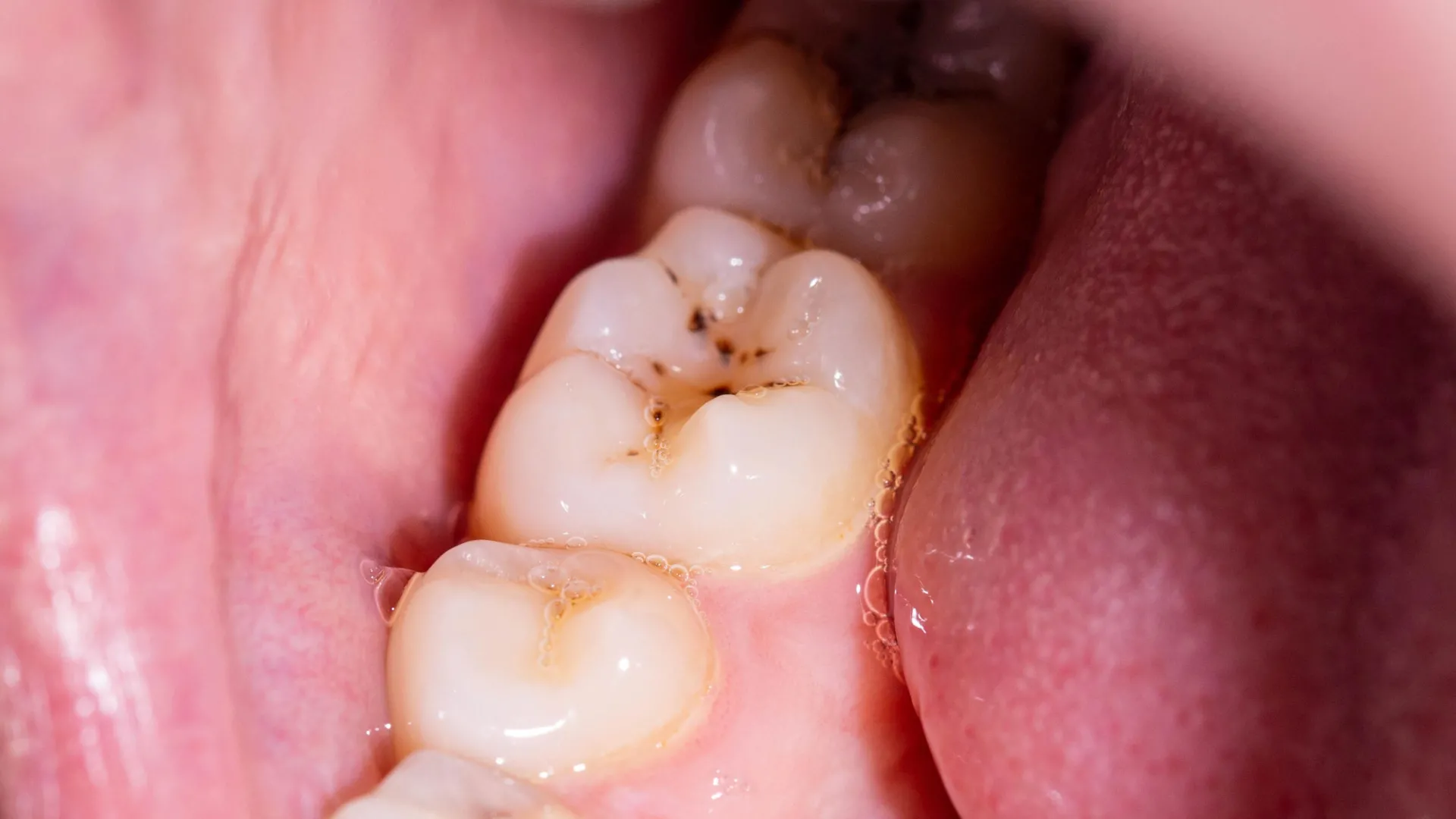
A groundbreaking dental gel, meticulously engineered to mimic the body’s inherent enamel-forming mechanisms, presents a transformative paradigm shift in combating tooth decay and restoring compromised dental structures. This innovative substance, developed by a collaborative team of scientists from the University of Nottingham’s School of Pharmacy and Department of Chemical and Environmental Engineering, has demonstrated the remarkable capability to rebuild damaged tooth enamel. Their published findings, featured in the esteemed journal Nature Communications, suggest that this gel could not only repair enamel weakened by mineral depletion or acidic erosion but also fortify existing healthy enamel, thereby proactively safeguarding teeth against future degradation.
The genesis of this revolutionary material lies in its ability to replicate the intricate biological processes that govern natural enamel development during early life stages. Unlike conventional dental treatments that often rely on fluoride to strengthen enamel, this novel gel eschews fluoride entirely. Instead, it is formulated from specially designed proteins that meticulously reproduce the crucial functions of the natural proteins instrumental in the formation of enamel in infancy.
The application process for this advanced gel is envisioned to be swift and straightforward, akin to the familiar administration of fluoride treatments by dental professionals. Upon application to a tooth’s surface, the gel forms an exceptionally thin yet remarkably robust coating. This coating possesses the unique ability to permeate the superficial layers of the tooth, effectively penetrating and filling microscopic fissures, porosities, and other areas exhibiting signs of damage or wear. This integrated coating then serves as a sophisticated scaffolding, facilitating the reconstruction of the enamel’s mineral architecture.
A pivotal aspect of the gel’s efficacy stems from its ingenious mechanism for mineral acquisition and organization. It actively draws calcium and phosphate ions from the surrounding saliva, utilizing these essential building blocks to guide the controlled accretion of new mineral crystals. This sophisticated process, termed epitaxial mineralization, ensures that the newly formed crystals grow in precise alignment with the tooth’s pre-existing crystalline structure. This ordered growth allows for seamless integration with the natural tooth tissue beneath, precluding the formation of a superficial, poorly organized layer that might otherwise compromise structural integrity. The researchers emphasize that this highly organized growth is instrumental in restoring both the intricate microscopic architecture and the essential physical properties characteristic of healthy, pristine enamel.
Beyond its restorative capabilities for damaged enamel, the gel holds significant promise for individuals experiencing heightened tooth sensitivity, often a consequence of exposed dentin. Dentin, the softer layer situated beneath enamel, can become exposed through enamel wear or gum recession. This exposure can be particularly discomforting as dentin contains microscopic tubules that lead directly to the tooth’s nerve endings, triggering sharp pain in response to thermal variations, sweet stimuli, or even light touch. When applied to areas of exposed dentin, the gel facilitates the growth of an enamel-like mineral layer that effectively seals these sensitive tubules. This not only alleviates discomfort but also establishes a more robust and receptive surface for subsequent dental restorative procedures, improving the bond strength of fillings and other prosthetic applications.
The pervasive issue of enamel loss represents a significant contributor to the global burden of dental caries and a host of other oral health conditions that afflict a substantial portion of the world’s population. Severe dental pathologies can precipitate considerable pain, lead to debilitating infections, and ultimately result in the irreversible loss of teeth. Furthermore, mounting scientific evidence underscores a concerning association between compromised oral health and a heightened risk of systemic health issues, including chronic conditions such as diabetes and cardiovascular disease. Enamel, the tooth’s outermost protective layer, plays a critical role in shielding the underlying dentin and pulp from mechanical forces, temperature fluctuations, acidic challenges, and the daily wear and tear of mastication. Despite its status as the hardest tissue in the human body, enamel is an acellular structure, meaning it lacks living cells and consequently possesses no intrinsic capacity for self-repair once its integrity is compromised.
Current dental interventions, such as fluoride varnishes and various remineralization therapies, offer valuable benefits in strengthening existing enamel and mitigating the symptoms of early demineralization. However, these treatments are generally incapable of fully recreating the complex, hierarchical structure of original enamel. The Nottingham-based research team’s innovative material offers a more fundamentally restorative approach, promoting organized mineral deposition that closely recapitulates the natural tissue’s architecture.
Dr. Abshar Hasan, a Postdoctoral Fellow and the lead author of the study, elaborated on the significance of this biomimetic approach, stating, "Dental enamel possesses a unique structural organization that imbues it with remarkable protective properties, shielding our teeth throughout life from physical, chemical, and thermal insults. When our material is applied to demineralized or eroded enamel, or exposed dentin, it actively guides the growth of crystals in an integrated and organized fashion, effectively reconstructing the architecture of our natural, healthy enamel. Rigorous testing of the mechanical properties of these regenerated tissues under simulated ‘real-life’ conditions, including tooth brushing, chewing forces, and exposure to acidic environments, has confirmed that the regenerated enamel exhibits performance characteristics indistinguishable from that of healthy enamel."
To validate the durability and functional integrity of the regenerated tissue, the researchers subjected it to a series of rigorous tests designed to replicate the diverse mechanical and chemical stresses encountered by teeth during everyday life. These simulations encompassed repeated abrasive actions akin to tooth brushing, the application of forces simulating mastication, and exposure to acidic food simulants, which are known to gradually dissolve enamel. The outcomes of these comprehensive evaluations were highly encouraging, demonstrating that the restored enamel exhibited mechanical resilience and functional behavior analogous to that of healthy, natural enamel, thereby suggesting its substantial potential for long-term efficacy in clinical dental applications.
Professor Alvaro Mata, Chair in Biomedical Engineering & Biomaterials and the principal investigator of the research, expressed considerable enthusiasm regarding the project’s trajectory toward practical implementation. He remarked, "We are exceptionally pleased with the progress, as the underlying technology has been conceived with both the clinician and the patient as central considerations. Its inherent safety, ease and speed of application, and scalability are significant advantages. Moreover, the inherent versatility of this technology opens avenues for translation into a diverse array of products designed to assist patients of all ages grappling with various dental challenges stemming from enamel loss and exposed dentin. We have initiated this translation process through our nascent startup company, Mintech-Bio, and harbor aspirations of launching a first-generation product within the coming year. This innovation holds the potential to provide relief and improved oral health to patients worldwide in the near future."
The researchers envision that the gel’s facile and rapid application, coupled with its potential for large-scale production, will facilitate its incorporation into a wide spectrum of dental products. Potential applications span a broad range, including professional treatments designed to address enamel erosion, specialized formulations for alleviating tooth sensitivity, and advanced materials aimed at enhancing the longevity and structural integrity of dental fillings and other restorative prosthetics. To accelerate the transition from laboratory innovation to patient benefit, the team has actively engaged in the commercialization process, establishing the startup company Mintech-Bio with the explicit objective of developing and bringing to market an initial clinical product.
About the Author












