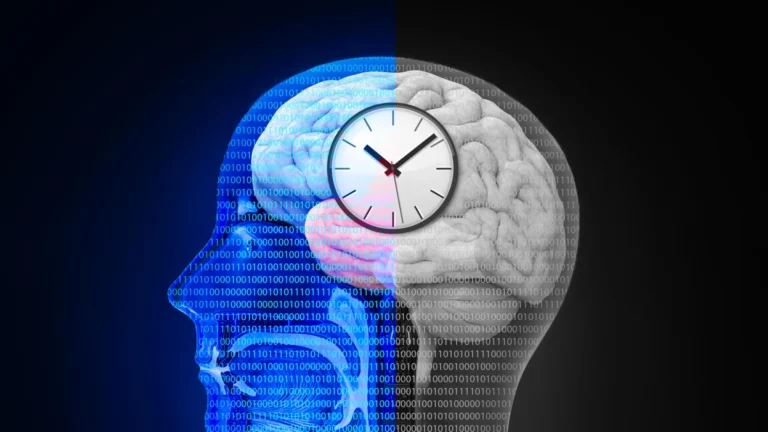
Groundbreaking research originating from Georgetown University has illuminated a profound mechanism by which the human brain physically reconfigures itself as individuals acquire and master complex skills, transforming demanding cognitive processes into highly automated functions. This seminal work challenges the long-held scientific consensus that genuine multitasking remains beyond human capacity, instead proposing that with sufficient dedicated practice, the brain can indeed execute multiple distinct activities concurrently, rather than merely engaging in rapid, superficial task-switching. The implications of these findings extend far beyond our daily routines, potentially offering invaluable insights into the fundamental processes of habit formation, the recalcitrance of certain ingrained behaviors, and the future development of artificial intelligence systems capable of more sophisticated and continuous skill acquisition.
Senior author Maximilian Riesenhuber, PhD, a distinguished professor of neuroscience at Georgetown University School of Medicine and a co-director of the Center for Neuroengineering, characterized the discovery as another significant stride in our comprehension of neural learning. He expressed encouragement that individuals can genuinely develop the capacity to multitask, asserting that the brain possesses an inherent plasticity allowing for the remodeling of its fundamental architecture and the recruitment of previously underutilized neural networks. This remodeling process, he explained, enables a fundamental shift in how tasks are processed, moving them from areas requiring high executive control to more specialized, automated pathways.
The foundation of this investigation builds upon decades of scientific inquiry into how the brain develops new competencies. While considerable knowledge has been amassed regarding the initial phases of learning, the intricate transformations that occur after a skill has been extensively practiced and becomes nearly effortless have remained a more enigmatic area of study. Riesenhuber offered the common example of learning to drive: the initial stages demand an intense and unwavering focus. However, with years of experience, many individuals can simultaneously engage in conversations, enjoy music, or contemplate complex issues while maintaining safe control of their vehicle. The central question this research sought to answer was precisely how the brain achieves this remarkable feat of parallel processing.
To unravel this mystery, the research team enlisted volunteers to participate in a rigorous training regimen. Participants were tasked with categorizing morphed images of automobiles into two distinct groups by discerning subtle visual discrepancies. This sophisticated visual discrimination task was administered through a gamified smartphone application, requiring participants to complete over 30,000 individual sorting trials spread across a period of five to ten weeks. This extended duration and high volume of practice were crucial for observing the long-term effects of skill acquisition on brain structure and function.
The researchers employed advanced neuroimaging techniques, specifically functional Magnetic Resonance Imaging (fMRI) and Electroencephalography (EEG), to meticulously map brain activity. These scans were conducted both before the commencement of the training program and again upon its completion, providing a critical baseline and post-intervention comparison.
In the initial stages of learning the car categorization task, brain scans consistently revealed significant activation within the prefrontal cortex. This region of the brain is renowned for its executive functions, encompassing critical processes such as strategic planning, logical reasoning, and conscious decision-making. Given that the prefrontal cortex typically handles one demanding cognitive operation at a time, it has long been considered a primary neurobiological bottleneck limiting the human capacity for true multitasking.
However, the neuroimaging results taken after the extensive practice period demonstrated a striking shift in neural engagement. The identical categorization task, which had previously heavily relied on the prefrontal cortex, was now predominantly processed by the temporal cortex. This brain region is primarily associated with memory functions and the recognition of complex visual patterns and objects.
First author Patrick Cox, PhD, who initiated this study as a doctoral candidate in Riesenhuber’s laboratory and is now an assistant professor of psychology at Lehigh University, highlighted the unique contribution of this research. He noted that prior studies had indicated that specific areas within the temporal cortex could become activated by particular object categories in highly experienced individuals, such as recognizing birds, cars, or even fictional characters like Pokémon. Nevertheless, a significant limitation of these previous investigations was their cross-sectional nature, examining expertise only after it had been fully established. The strength of the current study, Cox emphasized, lies in its longitudinal design. By measuring brain activity before and after a prolonged training period, the researchers were able to directly observe how extensive experience effectively sculpted a category-selective neural area within the temporal lobe that was demonstrably absent prior to the training.
Cox further elaborated on the real-world ramifications of these findings, drawing a parallel to the diagnostic capabilities of radiologists. Through years of dedicated training, radiologists develop the ability to accurately and almost automatically classify anomalies on X-ray images as benign or malignant, often without requiring extensive conscious deliberation. This exemplifies how specialized neural pathways can be forged through experience, enabling rapid and accurate interpretation of complex visual data.
The research team’s detailed analysis revealed a critical mechanism underpinning this newfound multitasking ability: information processed by the newly developed car-selective area in the temporal cortex was able to bypass the prefrontal cortex and transmit signals directly to brain regions responsible for initiating motor responses or generating outputs. Riesenhuber explained that this process effectively remodels the brain’s circuitry, circumventing the executive control bottleneck imposed by the prefrontal cortex. Consequently, the prefrontal cortex is freed up to attend to other cognitive demands, thereby expanding the individual’s overall processing capacity.
Furthermore, the study uncovered a direct correlation: the greater the extent to which the car sorting task was "offloaded" from the prefrontal cortex to these specialized temporal lobe areas, the more proficient participants became at simultaneously performing a secondary task. This empirical evidence directly challenges the long-held assumption that humans are incapable of true multitasking. Instead, many scientists had posited that the brain merely engages in rapid attentional switching between tasks, creating a compelling illusion of concurrent operation. The Georgetown University findings, however, provide robust evidence that the neural circuitry itself undergoes a transformation, enabling the brain to genuinely process two distinct tasks in parallel.
Beyond the realm of multitasking, these discoveries hold significant implications for understanding the neurobiological underpinnings of habitual behaviors, including those that are compulsive or unwanted. Because well-established behaviors become ingrained in neural circuits that operate with diminished reliance on conscious control, simply attempting to consciously override them may prove insufficient for behavioral change. Riesenhuber suggested that the initial step in unlearning a behavior involves identifying its precise location and processing within the brain. This research underscores why strategies that rely solely on conscious redirection, such as advising someone to simply "think of something else," are often ineffective, as the behavior in question may no longer be under direct conscious command.
The researchers also posit that these findings could offer valuable insights into the persistent disparities between human learning capabilities and current artificial intelligence systems. While humans possess the remarkable ability to continuously build new skills throughout their lives, contemporary AI often struggles with incremental learning without compromising previously acquired knowledge. Riesenhuber proposed that the human brain’s capacity to transfer a well-learned skill to specialized regions like the temporal cortex liberates the prefrontal cortex to engage with novel challenges. This process allows existing knowledge to serve as a robust foundation for future learning, a flexible architectural characteristic that is largely absent in today’s AI frameworks.
The research team intends to further investigate the precise signaling mechanisms that facilitate the transfer of learning between different brain regions. They also aim to delineate the specific types of tasks that are amenable to such parallel processing through extensive training. Cox raised an intriguing question regarding the boundary conditions for true multitasking: while humans can readily walk and chew gum simultaneously, engaging with a mobile phone while driving presents an inherent safety risk because it requires diverting visual attention from the road. He concluded that the ability to perform two tasks concurrently ultimately depends on the capacity to train fully independent neural circuits for each task in a manner that renders them compatible and non-interfering.
The comprehensive study, titled "Extensive Experience Remodels Neural Task Circuitry to Escape the Frontal Bottleneck and Increase Automaticity of Categorization," was published on June 4th in the esteemed Journal of Cognitive Neuroscience. The collaborative effort included contributions from Clara A. Scholl, Marissa L. Laws, Nelson E. Jaimes, and Xiong Jiang, all affiliated with Georgetown University, alongside Riesenhuber and Cox. This research was generously supported by grants from the National Science Foundation (BCS-1232530), the ARCS Foundation, and the Army Research Laboratory (W911NF-24-1-0097). The authors have declared no personal financial interests pertinent to the findings of this study.
About the Author