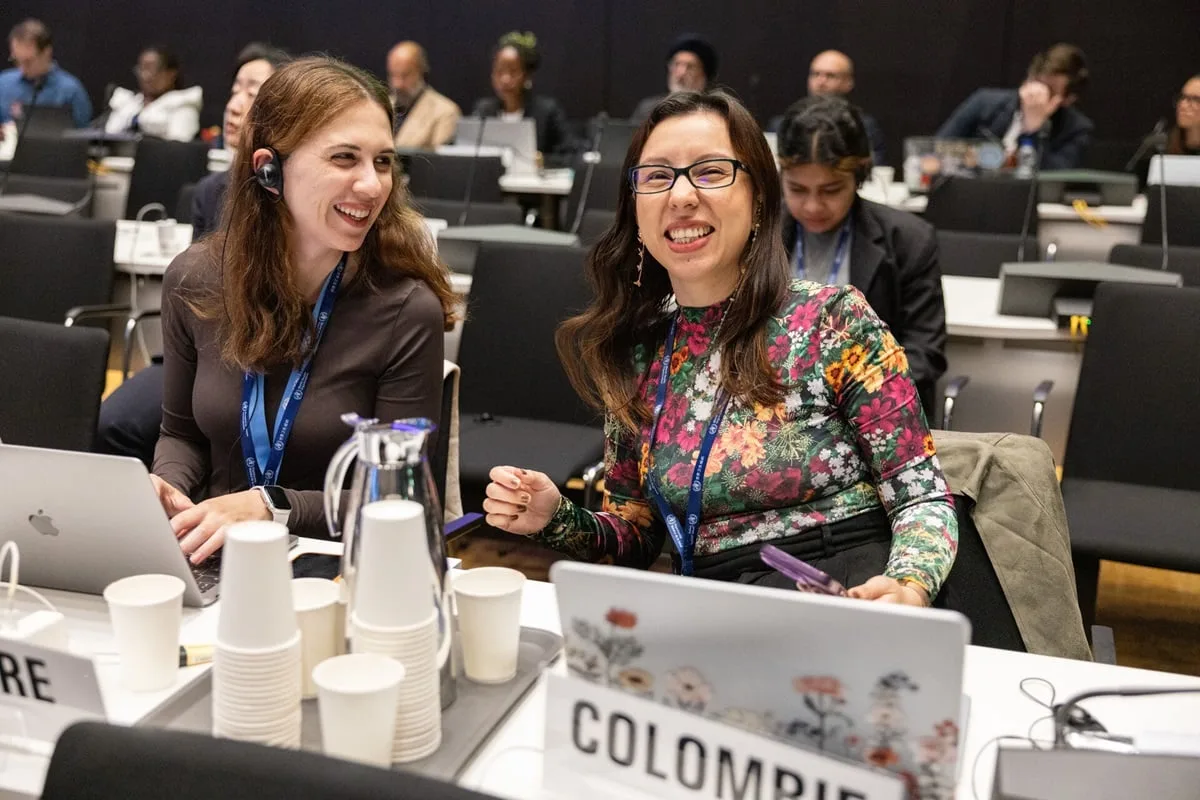
The 79th World Health Assembly (WHA), the paramount decision-making body of the World Health Organization (WHO), concluded its deliberations in Geneva, marking a pivotal moment for global public health. Delegates from Member States convened to address an expansive array of pressing health challenges and strategic imperatives, culminating in the endorsement of over thirty directives, encompassing both comprehensive resolutions and critical policy decisions. These outcomes are poised to shape international health policy, resource allocation, and collaborative efforts for years to come, reflecting a collective commitment to fostering more resilient, equitable, and sustainable health systems worldwide. The agenda traversed critical areas from disease prevention and workforce development to the economic underpinnings of health and environmental hazards, demonstrating the interconnected nature of modern health crises.
A groundbreaking development from the Assembly was the approval of the "Strategy on the economics of health for all (2026–2030)," a decisive move to fundamentally reorient global economic frameworks to prioritize well-being and health outcomes. For decades, health expenditures have often been perceived primarily as a societal cost, rather than a foundational investment critical for economic growth and stability. This new strategy champions a paradigm shift, asserting that robust health systems and a healthy populace are indispensable drivers of prosperity, social equity, and sustainable development. The framework envisions an economic model where societal well-being, rather than mere GDP growth, serves as the central metric of success, with human health and equity explicitly integrated into the fabric of policy and financing decisions.
The urgency for such a strategic re-evaluation has been amplified by recent global health crises, which exposed profound vulnerabilities in both health infrastructure and economic resilience. The strategy advocates for systematic embedding of health considerations within national economic, fiscal, and industrial policies. This means that decisions concerning national budgets, tax structures, trade agreements, and industrial development would proactively consider their impact on public health, ensuring that economic progress does not inadvertently undermine population health. Furthermore, it seeks to fortify the rationale for increased investment in health, advocating for sustained and predictable financing mechanisms essential for achieving universal health coverage (UHC). Member States underscored the immediate necessity of these measures, particularly in light of an ongoing global health financing emergency. The shift toward "well-being-oriented economies" necessitates substantial investment in resilient health systems and the provision of essential public goods, such as clean water, sanitation, and robust disease surveillance. This strategic blueprint is also designed to bolster national capacities, equipping countries with enhanced technical expertise and a more robust evidence base. This improved foundational knowledge will enable nations to engage more effectively with financial and economic stakeholders, fostering informed decision-making that aligns economic aspirations with health imperatives. The broad endorsement of this forward-looking strategy signals a global consensus on the imperative for coordinated governmental approaches, emphasizing that economic vitality and public health are inextricably linked and must advance in unison. Its successful implementation will depend on sustained collaboration and meticulous execution at the country level, supported by clear guidance and robust monitoring frameworks.
Another significant resolution centered on strengthening the ethical governance of the global health workforce, with Member States endorsing critical amendments to the "WHO Global Code of Practice on the International Recruitment of Health Personnel." Initially adopted in 2010, the Code serves as a crucial ethical compass for the cross-border movement of health professionals, aiming to mitigate the adverse impacts of "brain drain" on countries, particularly those with fragile health systems. The global landscape of health worker migration has grown increasingly complex, driven by factors such as aging populations in high-income countries, persistent workforce shortages, and the allure of better economic opportunities for health professionals. These dynamics often exacerbate existing inequalities, draining vital human resources from nations that can least afford to lose them.
The recent revisions, the first comprehensive update in 16 years following a thorough third review, signify a renewed global commitment to advancing health equity and fostering ethical international collaboration. Key modifications broaden the Code’s applicability to include care workers, a recognition of the growing global demand for long-term care services and the ethical considerations involved in their international recruitment. Additionally, the amendments provide clearer guidance on the Code’s principles during emergency situations, acknowledging the heightened demand for health personnel during crises and the potential for exploitation. Crucially, the revised Code now actively promotes co-investment in health systems and workforce development in both source and destination countries. This provision aims to ensure that international recruitment generates proportional benefits, preventing a one-sided drain of talent and encouraging sustainable capacity building in sending nations. An Expert Advisory Group, commissioned by the WHO Director-General, was instrumental in recommending these additions. Their final report not only highlighted advancements in health workforce data availability, the protection of migrant health worker rights, and the integration of ethical recruitment principles into national policies, but also pinpointed areas requiring further improvement, particularly the need for greater support for health system strengthening in source countries. These amendments represent a vital step towards realizing a vision where everyone, irrespective of their location, can access competent and motivated health and care professionals—a fundamental prerequisite for achieving both universal health coverage and robust global health security.
In a concerted effort to combat one of the most insidious threats to modern medicine, countries approved an updated "Global Action Plan on Antimicrobial Resistance (GAP-AMR) for 2026–2036." Antimicrobial resistance (AMR) represents a silent pandemic, threatening to render common infections untreatable and undermine the efficacy of life-saving medical procedures. The original GAP-AMR, launched in 2015, catalyzed significant global momentum, leading to over 170 countries developing multisectoral national action plans and 104 nations reporting AMR data to the WHO’s Global Antimicrobial Resistance and Use Surveillance System (GLASS) by 2025. Despite this progress, the threat remains dire. Data from GLASS revealed that in 2023, a staggering one in six common bacterial infections exhibited resistance to standard antibiotic treatments. Studies from 2021 estimated that bacterial AMR was directly associated with 4.71 million deaths, underscoring the immediate and profound human cost. Projections warn that without urgent, coordinated action, AMR could lead to an additional 39 million deaths by 2050, with a disproportionately heavy burden falling on low- and middle-income countries.
The revitalized GAP-AMR 2026–2036 renews and intensifies global commitments, seeking to preserve the ability to treat infections in humans, animals, and plants. A cornerstone of the updated plan is the "One Health" approach, which recognizes that human health is intricately connected to the health of animals and the environment. This holistic perspective is critical for tackling AMR, as resistant microbes can transmit between these domains. The plan aims to expand equitable access to and appropriate use of effective antimicrobials, simultaneously working to reduce infection rates across all sectors. By 2030, the plan sets ambitious targets, including enabling the achievement of the 2024 UN General Assembly’s goal of a 10% reduction in bacterial AMR-associated human deaths. Concurrently, it seeks to curtail antimicrobial usage in agrifood systems and minimize environmental pollution from resistant microbes and antimicrobial residues. Sustainable action is central to the updated framework, emphasizing the need for fortified governance structures, robust and sustainable financing mechanisms, and clear accountability for AMR interventions, including their integration into broader health system strengthening initiatives. The WHO, in collaboration with its Quadripartite partners—the Food and Agriculture Organization (FAO), the United Nations Environment Programme (UNEP), and the World Organisation for Animal Health (WOAH)—will amplify technical support and coordination efforts. The plan provides adaptive guidance, empowering countries to accelerate action through a tailored One Health approach that aligns with national priorities and contexts, and will be complemented by a distinct operational and monitoring framework.
For the first time in its history, the World Health Assembly also endorsed a comprehensive resolution on "Radiation and health: strengthening global protection, preparedness and response." This landmark agreement signifies a unified global approach to managing health risks associated with both ionizing and non-ionizing radiation. Humanity is pervasively exposed to various forms of radiation in daily life, emanating from diverse sources including natural environmental background radiation, occupational settings, medical diagnostics and therapies, and emergency situations. The resolution acknowledges the associated health risks, which span acute effects such as radiation sickness and long-term consequences, most notably an increased risk of cancer. It also specifically highlights the heightened vulnerability of children and pregnant women to radiation exposure, alongside the broader health and psychosocial impacts that can arise from radiation emergencies.
Through this pivotal resolution, Member States have committed to bolstering their national systems for radiation protection. This includes enhancing the monitoring of radiation exposure, implementing comprehensive training programs for healthcare and emergency personnel, and integrating robust radiation risk management strategies into broader public health initiatives. The resolution further underscores the imperative for the safe and equitable application of radiation in medical contexts, covering diagnostic imaging, radiotherapy, and radiopharmaceuticals, ensuring that the benefits of these essential medical tools outweigh potential risks. Recognizing that naturally occurring sources, such as ultraviolet (UV) radiation from sunlight and radon gas, contribute significantly to the global cancer burden, nations also pledged to scale up prevention efforts, public communication campaigns, and awareness programs. The resolution unequivocally reaffirms the WHO’s leadership in providing evidence-based guidance and technical support in this complex field. It also calls for intensified global coordination with key international partners and requests the WHO to conduct a comprehensive global mapping of relevant actors and initiatives—detailing their roles and mandates in radiation and health—to identify existing gaps and advance the public health agenda on radiation protection and emergency preparedness and response. Progress on these commitments is slated to be reported back to the World Health Assembly in 2028.
Beyond these cornerstone resolutions, the Assembly’s broad mandate encompassed a range of other critical health issues. Delegates adopted decisions and resolutions pertaining to specific diseases and conditions such as stroke, liver disease, tuberculosis, and haemophilia, along with discussions on diagnostic imaging, emergency care, and the burgeoning field of precision medicine. Furthermore, the Assembly addressed significant political and administrative matters, including a consensus to reform the global health architecture through a Member State-led, WHO-hosted joint process. This reflects an ongoing effort to ensure the WHO remains agile, effective, and responsive to the evolving global health landscape.
As the Assembly drew to a close, WHO Director-General Dr. Tedros Adhanom Ghebreyesus delivered poignant closing remarks, emphasizing that the true measure of any resolution or agreement lies not in its formal adoption, but in its tangible impact on the lives of individuals. "Every resolution you adopt, every agreement you reach, only has value when it changes what happens in a clinic, in a community, or in a household," he articulated, stressing the practical implications of policy. He elaborated on this vision, highlighting instances where health workers possess the necessary resources, where children receive vaccinations, where mothers survive childbirth, and where outbreaks are swiftly contained before widespread transmission. Dr. Tedros underscored that achieving these real-world transformations represents the formidable task ahead, one that demands unwavering political commitment, sustained financial investment, and continuous collaboration among Member States, partners, and communities. In a gesture of appreciation, Dr. Tedros presented ceremonial gavels to Dr. Víctor Atallah Lajam, Minister of Health of the Dominican Republic and President of the Seventy-ninth World Health Assembly, as well as to the Chairs of Committee A, Dr. Timur Sultangaziyev, Deputy Minister of Health of Kazakhstan, and Committee B, Dr. Kwabena Mintah Akandoh, Minister of Health of Ghana, acknowledging their leadership in guiding the week’s crucial proceedings. The extensive agenda and the transformative nature of the adopted strategies collectively underscore the WHA’s enduring role as a vital forum for global health governance, setting the stage for concerted international action to build a healthier and more equitable future for all.
About the Author