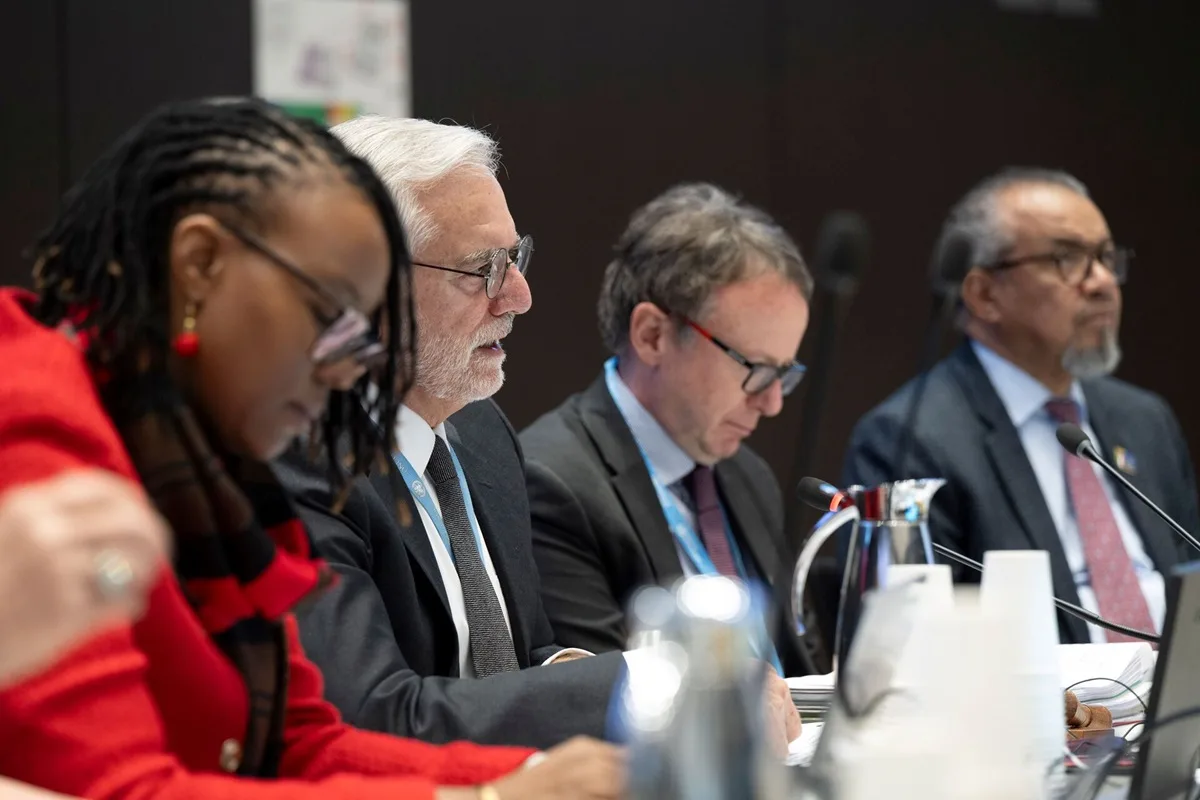
Nations worldwide, under the auspices of the World Health Organization (WHO), have determined that additional time is indispensable for finalizing the intricate details of a crucial component within the broader international accord aimed at fortifying global pandemic preparedness. The Intergovernmental Working Group (IGWG), tasked with developing the Pathogen Access and Benefit Sharing (PABS) annex, concluded its latest session in Geneva with a consensus that further negotiation rounds are required to forge a truly effective and impartial framework for confronting future health crises. This decision underscores the profound complexity and strategic importance of establishing mechanisms that ensure both the swift sharing of novel pathogens and the just distribution of medical countermeasures derived from them.
The genesis of this comprehensive global health pact, often referred to as the WHO Pandemic Agreement, lies in the stark lessons painfully absorbed during the COVID-19 pandemic. That global health emergency exposed critical vulnerabilities in international cooperation, highlighting the devastating consequences of delayed information sharing, fragmented responses, and profound inequities in access to life-saving tools. As the virus swept across continents, the world witnessed a scramble for limited resources, with wealthier nations often securing disproportionate shares of vaccines, diagnostics, and therapeutics, leaving many low- and middle-income countries struggling to protect their populations. This period of intense global challenge galvanized the international community to seek a legally binding instrument that would fundamentally transform how the world prevents, prepares for, and responds to pandemics, ensuring a more unified and equitable approach.
At the core of this ambitious endeavor is the Pathogen Access and Benefit Sharing (PABS) system. This annex represents the reciprocal commitment nations must undertake to safeguard collective health. On one side, it mandates the rapid sharing of biological materials and genetic sequence data of pathogens with pandemic potential. This immediate sharing is critical for scientific research, enabling scientists to swiftly characterize new threats, develop diagnostic tests, and accelerate the design of vaccines and treatments. Without prompt and unhindered access to pathogen samples and their genetic blueprints, the global scientific community’s ability to mount a timely defense is severely hampered.
Conversely, the PABS framework simultaneously insists on the fair and equitable sharing of the benefits that arise from the utilization of these pathogens. These benefits are multifaceted and extend far beyond mere product distribution. They encompass access to finished medical products such as vaccines, antiviral medications, and diagnostic kits, ensuring that these are not monopolized by a few nations or corporations but are available globally, particularly to those most vulnerable. Crucially, benefit sharing also involves the transfer of technology and know-how for manufacturing these medical countermeasures, empowering more countries to produce their own essential supplies. Furthermore, it includes strengthening public health infrastructure, supporting surveillance systems, and building capacity in developing nations, thereby fostering a more robust and resilient global health architecture. The PABS system is thus designed to break the cycle of "sample sharing without benefit sharing" that has historically disadvantaged developing countries during outbreaks.
The current extension of negotiations highlights the formidable challenges inherent in drafting such an international instrument. The discussions navigate a minefield of sensitive issues, including national sovereignty over biological resources, the intellectual property rights of pharmaceutical companies, and the intricate mechanisms for financing and distributing benefits. Different nations bring diverse perspectives and priorities to the table; developed countries often emphasize innovation and intellectual property protection, while developing nations prioritize equitable access and technology transfer. Reconciling these divergent interests while upholding the principle of global solidarity requires exceptional diplomatic skill, flexibility, and a shared understanding of the existential threat posed by future pandemics. The IGWG’s task is not merely to draft text, but to bridge fundamental philosophical and economic divides, crafting a solution that all member states can commit to.
Dr. Tedros Adhanom Ghebreyesus, the Director-General of the WHO, has consistently underscored the pressing need for expeditious resolution. He articulated a clear sense of urgency, emphasizing that the emergence of the next pandemic is not a hypothetical scenario but an inevitable eventuality. Dr. Tedros views the PABS annex as a cornerstone, an indispensable element not only for the overarching Pandemic Agreement itself but also for the entire suite of initiatives and reforms instituted by the WHO and its member states in response to the profound insights gleaned from the COVID-19 experience. Its finalization is thus not merely a procedural step but a foundational requirement for operationalizing a truly effective global health security strategy.
Echoing this sentiment, the Co-Chairs of the Intergovernmental Working Group acknowledged the significant strides made while also recognizing the remaining hurdles. Ambassador Tovar da Silva Nunes of Brazil, a Co-Chair of the IGWG Bureau, commended the member states for their unwavering dedication and meticulous attention to detail in addressing a document of such considerable technical and legal complexity. He expressed confidence that, with the granted extension, the participating nations would ultimately achieve consensus. Similarly, Mr. Matthew Harpur, the other Co-Chair, affirmed the strong and persistent commitment demonstrated by WHO Member States to these crucial negotiations, stating his conviction that the group is progressing in the correct direction towards completing the PABS annex. Both Co-Chairs recognize that this annex is pivotal for providing the entire WHO Pandemic Agreement with the operational framework necessary to ensure countries are better equipped, and more equitably protected, against future pandemic threats.
The decision to seek an extension for these critical negotiations means that the outcome of the IGWG’s work, initially intended for immediate presentation, will now be brought before the Seventy-ninth World Health Assembly (WHA) later this month. At this assembly, member states will be asked to endorse the continuation of the IGWG’s mandate, as initially outlined in Resolution WHA78.1. The revised timeline anticipates the submission of a finalized PABS annex to the next World Health Assembly in May 2027, with the possibility of an earlier presentation via a special WHA session in 2026 if sufficient progress is made. To facilitate this ongoing work, the IGWG has scheduled its seventh meeting for July 6 to 17, 2026, providing a dedicated forum for these intensive discussions.
This extended timeline, while potentially perceived as a delay, is more accurately interpreted as a reflection of the profound commitment of WHO member states to forge a robust, comprehensive, and universally accepted agreement. Rushing such a pivotal instrument could lead to a flawed or inadequately supported framework, undermining its long-term effectiveness. The additional time allows for deeper deliberation, greater consensus-building, and the careful crafting of legal language that can withstand the pressures of future pandemics. Without a fully realized PABS annex, the broader Pandemic Agreement, despite its adoption in principle by the World Health Assembly in May 2025 as a means to strengthen global prevention, preparedness, and response, would remain incomplete and significantly hampered in its operational capacity. Its successful finalization is not merely an administrative milestone, but an essential step towards building a truly resilient and equitable global health security architecture capable of protecting all humanity from the specter of future outbreaks.
About the Author