
As individuals navigate the landscape of aging, a common concern frequently surfaces: the perceptible decline in physical capabilities, particularly muscle strength. This phenomenon, scientifically termed sarcopenia, represents a gradual yet significant loss of muscle mass, strength, and function that typically accelerates after the sixth decade of life. It’s not merely an aesthetic change; it profoundly impacts daily living, transforming once-effortless tasks like rising from a chair or carrying groceries into challenging endeavors. However, a wealth of fitness expertise suggests that this trajectory is far from inevitable. According to seasoned fitness professionals, including educators at institutions like TRAINFITNESS, accessible and equipment-free bodyweight exercises offer a potent solution for rebuilding and sustaining functional strength, often proving more effective for real-world application than traditional gym machinery. This comprehensive guide delves into the mechanisms of age-related strength loss, champions the efficacy of bodyweight training, and outlines a specific, four-movement regimen designed to empower individuals over 60 to regain their physical autonomy from the comfort of their homes.
The physiological underpinnings of sarcopenia are multifaceted and complex, involving a cascade of biological changes that collectively diminish muscular integrity. Beyond the straightforward reduction in muscle size, known as atrophy, the quality of muscle tissue also deteriorates. There’s a preferential loss of fast-twitch muscle fibers, which are crucial for generating rapid, powerful movements essential for balance recovery or reacting quickly to a stumble. Concurrently, the neuromuscular system, responsible for transmitting signals from the brain to the muscles, becomes less efficient. Motor neurons, the nerve cells that activate muscle fibers, can degrade or die, reducing the number of fibers that can be recruited to perform a task. This means that even if muscle mass is present, its full potential may not be accessible, leading to a disproportionate decline in power output compared to absolute strength. Research indicates that power can decrease at roughly twice the rate of strength itself, explaining why actions requiring quick bursts of force, such as standing up quickly, become noticeably harder.
Several systemic factors contribute to this age-related decline. Hormonal fluctuations play a critical role, with decreasing levels of anabolic hormones like testosterone, growth hormone, and insulin-like growth factor 1 (IGF-1). These hormones are vital for protein synthesis, muscle repair, and growth. Chronic low-grade inflammation, often referred to as "inflammaging," also becomes more prevalent with age, interfering with the muscle repair process and exacerbating tissue breakdown. Furthermore, mitochondrial dysfunction, where the powerhouses of muscle cells become less efficient at producing energy, impacts muscle endurance and recovery. Finally, behavioral patterns, particularly reduced physical activity, act as a significant accelerant. A sedentary lifestyle compounds these biological changes, creating a vicious cycle where decreased activity leads to greater weakness, which in turn discourages further movement. This interplay of biological and lifestyle factors underscores the critical need for targeted intervention to mitigate sarcopenia’s impact.
While the allure of gym machines, with their seemingly precise movements and adjustable weights, might seem appealing, a closer examination reveals their limitations, especially for fostering functional strength in older adults. Exercise machines often isolate specific muscle groups, guiding the body through a fixed, predetermined range of motion. While this can build targeted strength, it largely negates the need for stabilizer muscles to engage, nor does it challenge the body’s natural balance and coordination systems. Real-world movements, however, are rarely isolated. Standing up from a low couch, ascending a flight of stairs, or reaching for an object on a high shelf demands the synchronized effort of multiple muscle groups, core stability, and proprioception – the body’s awareness of its position in space.
Bodyweight exercises inherently address these functional demands. By utilizing one’s own mass as resistance, these movements compel the body to work as an integrated unit. They recruit a wider array of muscles, including the smaller, often overlooked stabilizer muscles that are crucial for balance and injury prevention. This holistic engagement translates directly into improved functional capabilities, enhancing mobility, stability, and overall physical competence for everyday activities. Another significant advantage of bodyweight training, particularly for older populations, is its self-limiting nature. The resistance is proportional to the individual’s body weight, meaning one cannot inadvertently lift more than their body can safely handle. This built-in feedback mechanism significantly reduces the risk of injury, allowing for gradual progression as strength and control improve. Moreover, the accessibility of bodyweight training eliminates barriers such as gym memberships, specialized equipment, or travel, making it a sustainable and convenient option for consistent engagement.
A veteran personal trainer with four decades of experience in the fitness industry emphasizes that a focused regimen of four specific bodyweight exercises can effectively reverse age-related strength loss. These movements are chosen for their direct relevance to daily functional activities and their ability to engage major muscle groups.
1. The Sit-to-Stand (Chair Squat):
This exercise is arguably the most fundamental and impactful for restoring lower body functional strength. It directly mimics the essential daily action of transitioning between sitting and standing.

- Muscles Trained: Primarily targets the quadriceps, glutes, and hamstrings, with significant engagement of the core muscles for stability.
- How to Perform: Begin by sitting upright on a sturdy chair, feet flat on the floor, hip-width apart. Lean slightly forward, engaging your core, and push through your heels to stand up without using your hands if possible. Once standing fully, slowly and with control, lower yourself back down to the chair, ensuring your glutes gently touch the seat rather than collapsing.
- Focus Points: Maintain a neutral spine throughout the movement. Control the descent, resisting gravity rather than dropping. Aim for knees to track over toes, avoiding inward collapse.
- Recommended Progression: Start with 3 sets of 8-12 repetitions. If 8 reps are too easy, slow down the lowering phase to 3-4 seconds per rep. To increase difficulty, use a lower chair.
- Modifications: If unable to complete 8 reps without assistance, use a higher chair or lightly touch armrests for balance, gradually reducing reliance.
- Common Errors: Rounding the back, using momentum to stand, or collapsing onto the chair upon descent.
2. The Wall Press-Up:
A highly accessible adaptation of the traditional push-up, this exercise effectively builds upper body pushing strength.
- Muscles Trained: Engages the chest (pectorals), shoulders (deltoids), and triceps.
- How to Perform: Stand facing a wall, about arm’s length away. Place your hands on the wall slightly wider than shoulder-width apart, at chest height. Keeping your body in a straight line from head to heels, bend your elbows to lower your chest towards the wall. Push back to the starting position by extending your arms.
- Focus Points: Keep your core engaged to prevent your hips from sagging or arching your back. Control the movement both ways.
- Recommended Progression: 3 sets of 10-15 repetitions. To increase difficulty, step further away from the wall, increasing the angle and thus the resistance.
- Common Errors: Letting hips sag, shrugging shoulders, or performing the movement too quickly without control.
3. The Glute Bridge:
This foundational exercise strengthens the posterior chain, which is crucial for posture, walking, and preventing lower back pain.
- Muscles Trained: Primarily targets the glutes and hamstrings, with supporting work from the lower back.
- How to Perform: Lie on your back with knees bent, feet flat on the floor hip-width apart, and heels close to your glutes. Engage your core and glutes, then lift your hips off the floor until your body forms a straight line from your shoulders to your knees. Squeeze your glutes at the top. Slowly lower your hips back down.
- Focus Points: Avoid arching your lower back excessively at the top. Focus on driving through your heels and squeezing your glutes.
- Recommended Progression: 3 sets of 12-15 repetitions. If easy, hold the top position for 3-5 seconds on each rep or progress to single-leg glute bridges.
- Common Errors: Using momentum, over-arching the lower back, or not fully engaging the glutes at the peak of the movement.
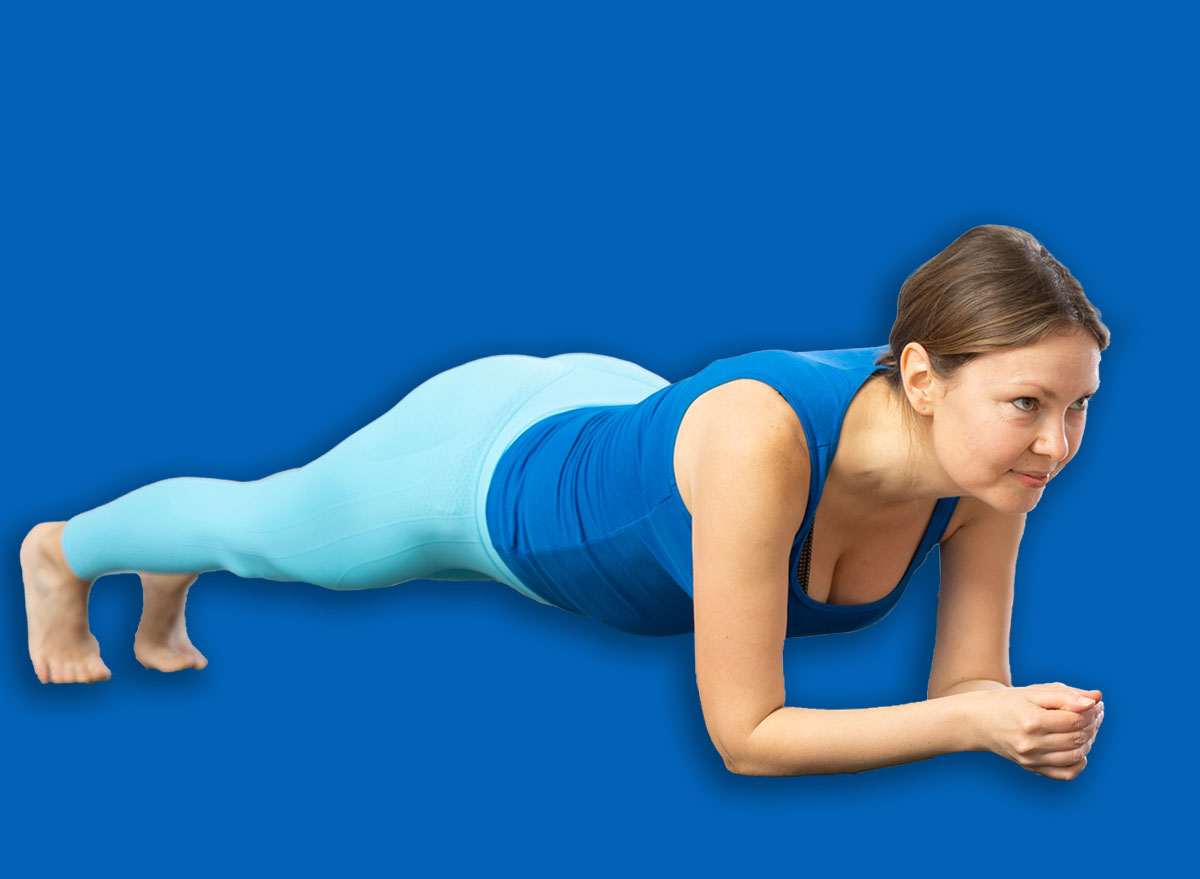
4. The Modified Plank:
An excellent core stability exercise that is gentler than a full plank, yet highly effective for strengthening the core, which supports virtually all movements and protects the spine.
- Muscles Trained: Engages the entire core musculature (abdominals, obliques, lower back), as well as the shoulders and hips for stability.
- How to Perform: Begin on your hands and knees. Lower onto your forearms, ensuring elbows are directly under shoulders. Extend your legs back, resting on your knees, maintaining a straight line from head to knees. Engage your core, avoiding any sagging in the hips or arching of the lower back.
- Focus Points: Keep your neck in a neutral position, looking down. Breathe deeply and steadily. Imagine pulling your belly button towards your spine.
- Recommended Progression: 3 sets, holding for 15-30 seconds. As strength increases, extend the hold time or progress to a full plank on your toes.
- Common Errors: Letting the hips sag, raising the hips too high, or holding breath.
The journey to regaining strength is a process of physiological adaptation, and understanding the typical timeline for results can help maintain motivation. The initial changes observed within the first 1-2 weeks are primarily neurological. The nervous system becomes more efficient at recruiting existing muscle fibers, leading to improved coordination, control, and a feeling of increased ease during the exercises, even before significant muscle growth occurs. By weeks 3-4, these neural adaptations begin to translate into tangible improvements in everyday tasks. Activities like rising from a chair, climbing stairs, or carrying shopping bags will demand less effort. Noticeable muscle hypertrophy (growth) and measurable strength gains typically manifest around the 6-8 week mark. At this stage, individuals will likely be able to perform more repetitions, hold positions longer, or attempt more challenging variations of the exercises. Others might also observe improvements in posture and movement quality. By 12 weeks of consistent effort, the benefits become undeniable, with a solid foundation of functional strength established, improved posture, and a marked enhancement in overall physical confidence. Consistency, performing the routine most days of the week, is the cornerstone of achieving these progressive outcomes.

Beyond the exercises themselves, a holistic approach encompassing recovery and nutrition is paramount for accelerating results and ensuring sustainable progress.
Protein Intake: For individuals over 60, protein becomes an even more critical macronutrient. Ageing bodies develop a phenomenon known as "anabolic resistance," meaning they require a higher protein intake to stimulate muscle protein synthesis effectively. The recommended daily intake shifts from standard guidelines, aiming for 1.2 to 1.6 grams of protein per kilogram of body weight. For a 70kg individual, this translates to 84-112 grams daily. Crucially, this protein should be distributed throughout the day across all meals, rather than concentrated solely at dinner, to provide a consistent supply of amino acids for muscle repair and growth. Excellent sources include lean meats, poultry, fish, eggs, dairy products, legumes, and plant-based protein powders.
Quality Sleep: Sleep is not merely a period of rest; it’s an active recovery phase vital for muscle regeneration. During deep sleep, the body releases growth hormone and testosterone, both instrumental in muscle repair and synthesis. Insufficient or poor-quality sleep disrupts these hormonal processes, elevates cortisol (a stress hormone that can promote muscle breakdown), and increases inflammation, all of which hinder recovery and muscle growth. Aiming for 7-8 hours of uninterrupted sleep per night is essential for optimizing the physiological benefits of training.
Consistency over Intensity: For long-term gains and injury prevention, consistent engagement with a moderate effort routine far outweighs sporadic bursts of maximum intensity. Performing the recommended bodyweight exercises five days a week at a manageable intensity will yield superior results compared to two or three intense, exhaustive sessions followed by long periods of inactivity. Incorporating two dedicated rest days allows muscles to fully recover and adapt.

Adequate Hydration: Often overlooked, hydration plays a fundamental role in muscle function and recovery. Water is essential for nutrient transport to muscle cells, removing metabolic waste products, maintaining joint lubrication, and regulating body temperature. Even mild dehydration can impair muscle performance and slow recovery. A simple indicator for adequate hydration is urine color: it should be pale yellow, not dark.
Daily Movement: Even on rest days, incorporating light daily movement is beneficial. Activities such as walking, gentle stretching, or performing household chores help maintain mobility, improve circulation, and aid in active recovery. Prolonged periods of sitting, even between exercise sessions, can counteract the positive effects of training by promoting stiffness and reducing overall energy expenditure. Regularly breaking up sedentary periods by standing, walking, or stretching throughout the day contributes significantly to overall health and supports the strength-building process.
Embracing this holistic approach, combining a targeted bodyweight exercise regimen with mindful nutrition and recovery practices, offers individuals over sixty a powerful pathway to not just reverse age-related strength loss but to significantly enhance their overall quality of life, maintain independence, and cultivate enduring physical resilience. The investment in these simple, accessible practices yields profound dividends in vitality and well-being.
About the Author