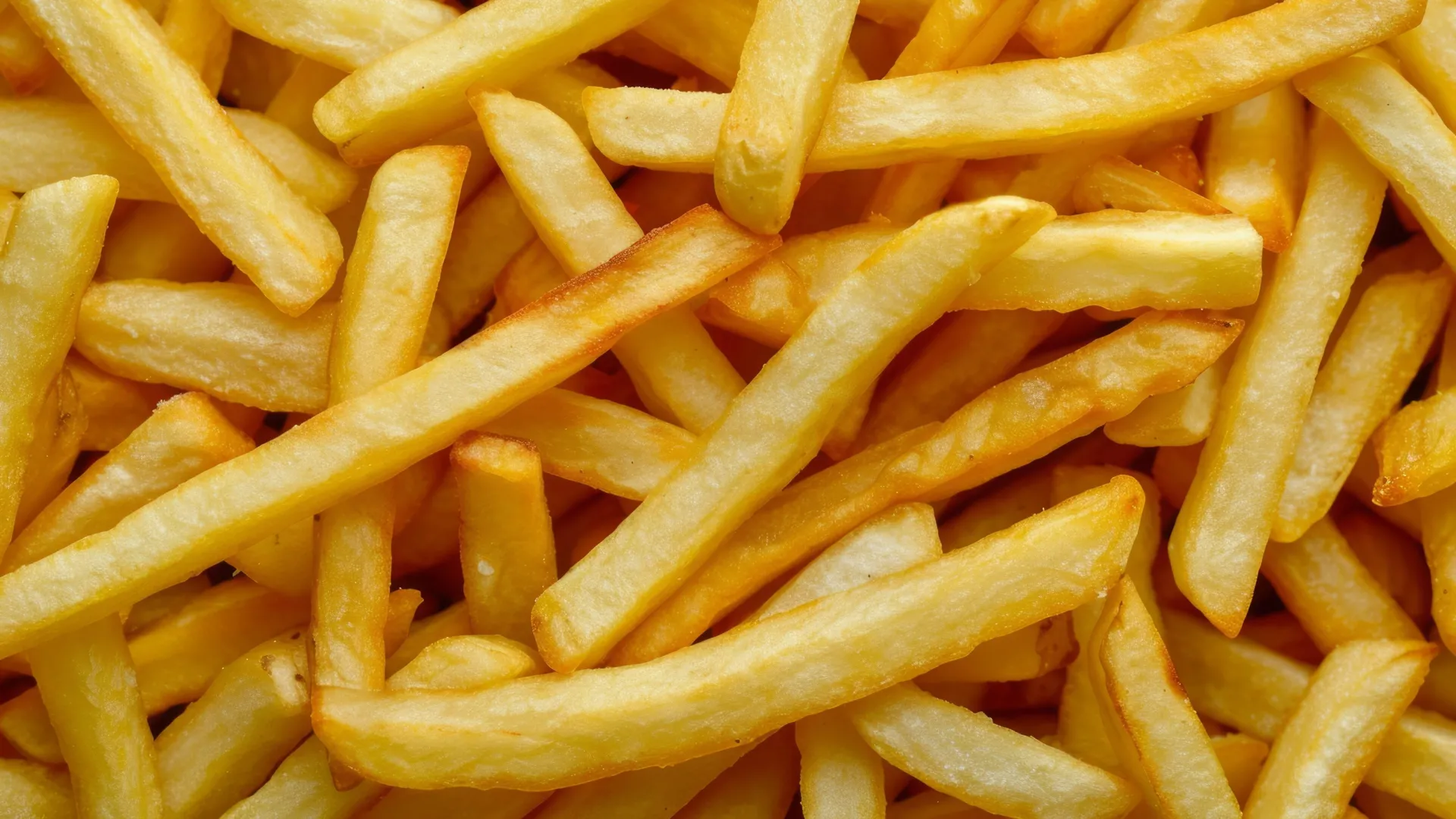
The global appetite for fried foods remains undeniable, with items like French fries serving as a ubiquitous comfort staple enjoyed across cultures. However, the indulgence often comes with a significant health cost, as these culinary delights are typically laden with oil, contributing to high caloric intake and an elevated risk of chronic health conditions such as obesity, cardiovascular disease, and hypertension. This persistent dilemma—balancing consumer preference for rich flavors and satisfying textures with the imperative for healthier dietary choices—has long presented a formidable challenge to food scientists and the wider food industry. A new wave of innovation from the University of Illinois Urbana-Champaign offers a promising solution, unveiling a novel frying methodology that ingeniously combines traditional deep-frying with microwave technology to dramatically reduce oil absorption without compromising the coveted crispy texture.
At the forefront of this pioneering research is Pawan Singh Takhar, a distinguished professor of food engineering within the Department of Food Science and Human Nutrition at the U of I’s College of Agricultural, Consumer and Environmental Sciences. Alongside doctoral student Yash Shah, Professor Takhar has spearheaded investigations into the intricate dynamics of oil uptake during the frying process. Their collective work illuminates a pathway to creating healthier versions of beloved fried foods, addressing a critical gap in the market where consumers often face a difficult choice between taste satisfaction and nutritional well-being. The essence of their discovery lies in modulating the internal pressure within food items during cooking, a sophisticated approach designed to actively repel oil rather than draw it in.
The journey to understanding and manipulating oil absorption begins with a deep dive into the conventional frying process. When foods like potato strips are immersed in hot oil, a rapid sequence of physical changes ensues. Initially, the food’s surface and internal pores are saturated with water. As heat penetrates, this water rapidly transforms into steam, creating a vigorous outward flow that initially prevents oil from entering. This phase is characterized by a positive internal pressure, effectively pushing against the surrounding oil. However, as cooking progresses and a substantial amount of water evaporates, the internal structure of the food begins to dry out, leading to the formation of empty capillaries and voids. This desiccation creates a vacuum-like effect, where the internal pressure drops below the external pressure of the oil. Much like a straw drawing liquid upwards, this negative pressure differential actively pulls the hot oil into the food matrix, leading to the characteristic high fat content of conventionally fried products. This capillary action, driven by pressure gradients, is the primary mechanism behind oil absorption.
Professor Takhar articulates this phenomenon with a vivid analogy: "Consider the action of a straw. If you blow air into it, positive pressure expels any liquid. Conversely, if you suck, liquid rises. Food materials possess countless microscopic channels. When positive pressure prevails, oil is kept out. But as negative pressure develops, oil begins to infiltrate these channels." The challenge, therefore, was to extend the duration of positive pressure and minimize the period when negative pressure predominates, thereby inhibiting oil ingress.
This is precisely where microwave technology emerges as a transformative element. Unlike conventional heating, which transfers thermal energy from the exterior inwards, microwave energy penetrates the food material uniformly, exciting water molecules throughout its volume. This volumetric heating causes water to vaporize more rapidly and consistently from the inside out. The increased rate of internal steam generation serves to maintain a higher, more sustained positive pressure within the food structure. By counteracting the vacuum effect that typically develops during conventional frying, microwaves significantly reduce the tendency for oil to be drawn into the food’s interior. This fundamental shift in pressure dynamics is the cornerstone of the reduced oil uptake observed in microwave-assisted frying.
The researchers’ meticulous methodology involved a comprehensive experimental setup and analytical framework. In a collaborative effort with Washington State University, a specially engineered microwave fryer was utilized, capable of operating at two distinct frequencies: 2.45 gigahertz, commonly found in household microwave ovens, and 5.8 gigahertz, often employed in industrial heating applications. The experimental samples, carefully prepared potato strips, underwent a standardized pre-treatment regimen: rinsing, peeling, precise cutting, blanching to deactivate enzymes and remove surface starches, and salting for flavor. These prepared strips were then fried in soybean oil maintained at a constant temperature of 180 degrees Celsius.
Throughout and following the frying process, the team conducted an array of precise measurements to quantify the changes occurring within the food. Parameters such as internal temperature, pressure profiles, volume changes, textural attributes (e.g., crispness, hardness), moisture content, and, crucially, oil uptake were systematically monitored. This multi-faceted data collection allowed for a holistic understanding of how different heating methods impacted the final product characteristics. Beyond empirical experimentation, the research also incorporated sophisticated mathematical modeling. These models were developed to simulate the complex interplay of heat, mass transfer, and electromagnetic fields during frying. By solving equations based on hybrid mixture theory and electromagnetics, the researchers could predict how various factors influence quality attributes under different conditions, including conventional frying, 2.45 GHz microwave frying, and 5.8 GHz microwave frying. This dual approach of experimental validation and theoretical modeling provided a robust scientific foundation for their findings.
The results of these extensive investigations were compelling. Microwave frying, when applied, demonstrated a marked acceleration in moisture loss from the potato strips, consequently reducing overall cooking times. More significantly, it led to a substantial reduction in the total oil absorbed by the food. However, the research also highlighted a crucial caveat: while microwave heating excelled at minimizing oil content, it alone did not yield the desired textural characteristics. Foods fried solely with microwaves often emerged soft and lacking the crisp, appealing crunch that consumers associate with well-fried products.
This observation led to the breakthrough concept of a hybrid approach. "If microwave frying is used in isolation, the outcome is often soggy," Professor Takhar explained. "To achieve that essential crispy texture and flavor profile, the element of conventional heating is indispensable. Therefore, our proposition centers on integrating both methods within a single processing unit. Conventional heating maintains the desirable crispness, while microwave heating actively mitigates oil absorption." This synergistic combination harnesses the best attributes of each method: the rapid, internal heating and oil-repelling capabilities of microwaves, paired with the surface browning and crisping power of traditional hot oil immersion.
The practical implications of this hybrid frying technique for the food industry are substantial and immediate. The researchers propose that existing industrial deep-fryers, which form the backbone of large-scale food production, could be retrofitted with microwave generators. These generators are described as relatively low-cost and widely available, making the adoption of this advanced technology economically feasible for manufacturers. The ability to upgrade current infrastructure rather than requiring entirely new equipment significantly lowers the barrier to entry for widespread implementation. This adaptability positions the hybrid method as a viable and attractive option for commercial food producers seeking to meet the growing consumer demand for healthier food options without compromising on sensory qualities.
The findings have been meticulously documented and disseminated through peer-reviewed publications. The first paper, "The Effect of Conventional and Microwave Frying on the Quality Characteristics of French Fries," was published in the Journal of Food Science. Authored by Yash Shah, Xu Zhou, Juming Tang, and Pawan Singh Takhar, it details the empirical results and comparative analysis of different frying methods. The theoretical underpinnings and predictive modeling aspects were presented in a second paper, "Predicting the quality changes during microwave frying of food biopolymers by solving the hybrid mixture theory-based unsaturated transport, and electromagnetics equations," which appeared in Current Research in Food Science. This comprehensive publication strategy underscores the rigor and depth of the research. The vital work was supported by funding from the USDA National Institute of Food and Agriculture, highlighting the national importance of research into sustainable and healthy food production.
Ultimately, this innovative hybrid frying technique represents more than just a scientific curiosity; it signifies a tangible step towards reconciling the enjoyment of fried foods with the imperative of public health. By offering a practical, scalable solution for producing beloved snacks with significantly reduced fat content while preserving their sensory appeal, the University of Illinois Urbana-Champaign research team is poised to influence a paradigm shift in how fried foods are manufactured and consumed globally. This advancement not only caters to evolving consumer preferences for "better-for-you" options but also demonstrates the transformative power of food engineering in addressing complex nutritional challenges of the 21st century. The promise of a guilt-free, crispy French fry, among other popular fried products, moves closer to reality, heralding a future where taste and health can coexist harmoniously on our plates.
About the Author