As individuals progress into their later years, a common, yet often misunderstood, physiological shift occurs: the gradual decline in muscle mass and strength, particularly in the lower limbs. This condition, medically termed sarcopenia, is not an inevitable consequence of aging to be passively accepted, but rather a preventable and reversible process that significantly impacts overall health and quality of life. For decades, fitness professionals have observed and countered the widespread misconception that diminished leg power is an unavoidable aspect of growing older. With a tailored, accessible approach, robust leg strength can be meticulously rebuilt, fostering renewed independence and reducing critical health risks. Surprisingly, one of the most effective tools for this restorative journey is readily available in virtually any community: the ubiquitous park bench. This article will delve into the critical importance of lower body strength for older adults, explain why conventional exercises sometimes fall short, and introduce a highly effective, outdoor-based routine designed to enhance mobility, balance, and confidence.
The profound significance of maintaining strong leg muscles in the aging population cannot be overstated. Beyond the visible aesthetics, the musculature of the lower body serves as a fundamental pillar for functional independence and systemic health. After the age of sixty, the rate at which leg muscles lose mass accelerates, outpacing other body regions. Research indicates that the lower extremities can experience muscle loss at approximately double the rate of the upper body. Specific muscle groups, such as the quadriceps (anterior thigh muscles) and glutes (buttock muscles), are particularly susceptible, potentially diminishing by 1-2% of their total mass annually if no targeted intervention is undertaken.
The implications of this muscular decline extend far beyond minor inconveniences. Weak leg muscles are a strong predictive factor for falls, which represent a leading cause of injury-related fatalities and severe morbidity among individuals over 65. When the lower limbs lack the necessary strength to adequately support body weight, an individual’s balance inherently suffers. Should a stumble or trip occur, compromised leg muscles are often too slow or too weak to initiate a protective response, leading to potentially devastating fractures, particularly hip fractures. For many older adults, a hip fracture can herald a cascade of negative health outcomes, including prolonged recovery, loss of independence, and even increased mortality risk.
Furthermore, the lower body acts as a significant metabolic engine. Muscle tissue is metabolically active, burning calories even at rest. A reduction in leg muscle mass consequently leads to a decelerated metabolism, making weight management considerably more challenging. This creates a detrimental feedback loop: less muscle tissue contributes to a slower metabolism, potentially leading to weight gain, which in turn can reduce physical activity, thereby accelerating further muscle loss.
Perhaps the most overlooked, yet deeply impactful, danger of diminished leg strength is the erosion of personal autonomy. Weakened legs impede the ability to perform everyday tasks that are crucial for independent living, such as rising from a chair, ascending stairs, carrying groceries, or even navigating restroom facilities without assistance. These are not trivial challenges; they fundamentally differentiate between a life of self-sufficiency and one requiring substantial external support.
While conventional strength training modalities are undeniably beneficial, the standard barbell or bodyweight squat, a cornerstone exercise for lower body development, often presents unique difficulties for many individuals once they cross the age of sixty. Performing a perfect, deep squat requires a complex interplay of mobility, balance, and inherent strength that may have diminished over time. Age-related physiological changes, such as reduced ankle dorsiflexion, decreased hip flexibility, and the onset of degenerative changes in knee joints, can make the full range of motion required for traditional squats painful, ineffective, or even unsafe. Asking someone with these limitations to execute a free-standing squat often results in either incorrect form, which significantly elevates injury risk, or complete avoidance, thereby preventing any potential strength gains.
Beyond the physical constraints, a significant psychological barrier often accompanies traditional squats: the fear of falling or being unable to recover from a lowered position. When balance is compromised, the brain’s natural protective mechanisms can trigger apprehension, preventing individuals from engaging their muscles through their full potential range of motion. This fear, while protective in intent, inadvertently hinders progress.
This is precisely where the innovative use of a park bench offers a transformative solution. Park bench exercises effectively circumvent many of the challenges associated with conventional squats. The bench itself acts as a reliable reference point, providing clear guidance on how low to descend. The tactile feedback of sitting onto the bench eliminates guesswork and alleviates the fear of instability. Crucially, the presence of the bench means that assistance is always within reach; individuals can use their hands to aid in the ascent if needed, fostering a sense of security that encourages greater effort and range of motion.
Most park benches are designed with a height typically ranging between 16 to 18 inches. This elevation is slightly lower than a standard dining chair, offering a sufficient challenge to the leg muscles without imposing excessive stress on the knee joints, making it ideal for beginners and those with joint sensitivities. The inherent stability of a fixed park bench provides a solid foundation, empowering individuals to push their limits with confidence, free from concerns about equipment shifting or wobbling.
Let us now explore five highly effective park bench exercises designed to restore and build lower body strength:
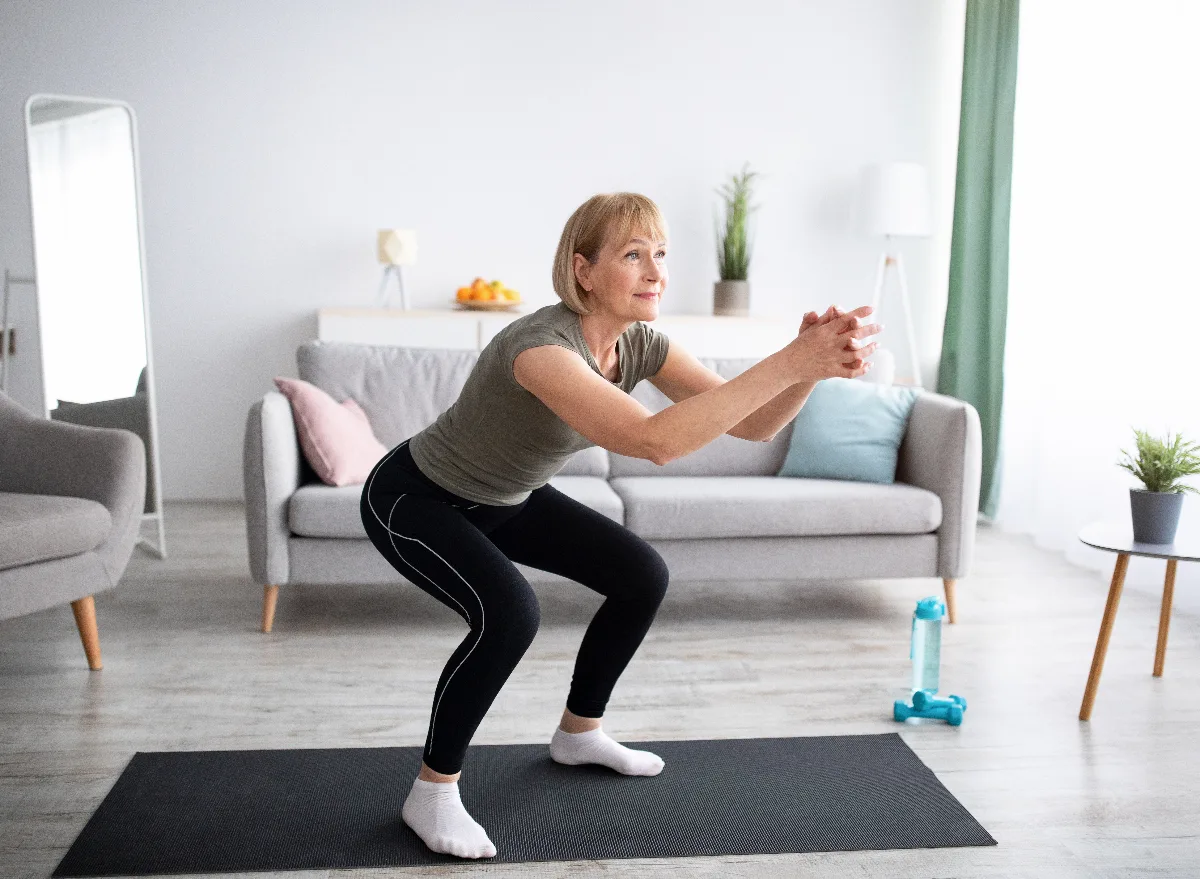
1. Bench Sit-to-Stand
This fundamental exercise forms the cornerstone of any effective leg routine for older adults. It directly mimics and strengthens the movements required for daily tasks like rising from chairs, beds, or vehicles, which often become progressively harder as key muscle groups weaken with age.
- Muscles Trained: Quadriceps, glutes, hamstrings.
- Execution: Position yourself in front of the bench, feet hip-width apart, approximately six inches away. Initiate the movement by slowly lowering your body in a controlled manner until you are seated on the bench; avoid simply collapsing into the seat. Once seated, lean slightly forward and, pressing firmly through your heels, stand back up to the starting position. This completes one repetition.
- Modifications: For balance support, keep your hands lightly on the bench beside you during both the descent and ascent. If knee discomfort arises, limit the depth of the sit, going only as low as comfortable before standing up. For additional stability, hands can be placed on the backrest.
- Progression: Gradually reduce reliance on hand support (two hands, one hand, fingertips, no hands). Once comfortable without support, increase the time under tension by slowing the sitting phase to 3-4 seconds.
- Avoid These Mistakes: Do not rely on momentum by leaning excessively forward or throwing your upper body to stand. Maintain an upright chest and drive through your heels, engaging the leg muscles.
2. Bench Step-Up
The bench step-up is an excellent exercise for enhancing the functional strength needed for navigating stairs and curbs, actions that become increasingly challenging as leg power diminishes. It also significantly improves hip stability.
- Muscles Trained: Quadriceps, glutes, hip stabilizers.
- Execution: Stand facing the bench. Place your entire right foot firmly on the bench seat, ensuring it is not just the toes making contact. Push through your right heel to step up onto the bench, bringing your left foot to meet your right. Step back down, leading with your left foot, then your right. Complete the desired repetitions on one leg before switching to the other.
- Modifications: For balance assistance, place one hand on the backrest. If knee pain is a concern, begin with a lower step height, such as a curb. Ensure the pushing force comes from the heel to minimize knee stress.
- Progression: Remove hand support, then slow down the entire movement. Advance by stepping down with the same leg that stepped up (e.g., right foot up, right foot down) to mimic stair climbing more closely.
- Avoid These Mistakes: Do not use the bottom foot to push off; the leg on the bench should perform all the work. The non-working foot should merely brush the ground for balance.
3. Single-Leg Bench Squat
This exercise is paramount for addressing strength imbalances between legs and significantly bolstering overall balance, both critical factors in reducing fall risk.
- Muscles Trained: Quadriceps, glutes, balance stabilizers.
- Execution: Stand on your right leg in front of the bench, with your left foot hovering off the ground and extended slightly forward for counter-balance. Slowly lower your body until you are seated on the bench. Stand back up using only your right leg, keeping the left foot elevated throughout. Complete all repetitions on one leg before switching.
- Modifications: For balance, hold onto the backrest with both hands. If knee pain occurs, limit the depth. For those finding it too challenging, lightly touch the toes of the non-working foot to the ground for minimal support while still emphasizing single-leg engagement.
- Progression: Gradually decrease hand support. Introduce a 2-3 second pause while seated. Eventually, attempt to hover just above the bench seat without fully sitting.
- Avoid These Mistakes: Avoid twisting your torso or leaning excessively to one side to compensate for weakness. Maintain level hips and a forward-facing chest. Prioritize form over prematurely removing support.
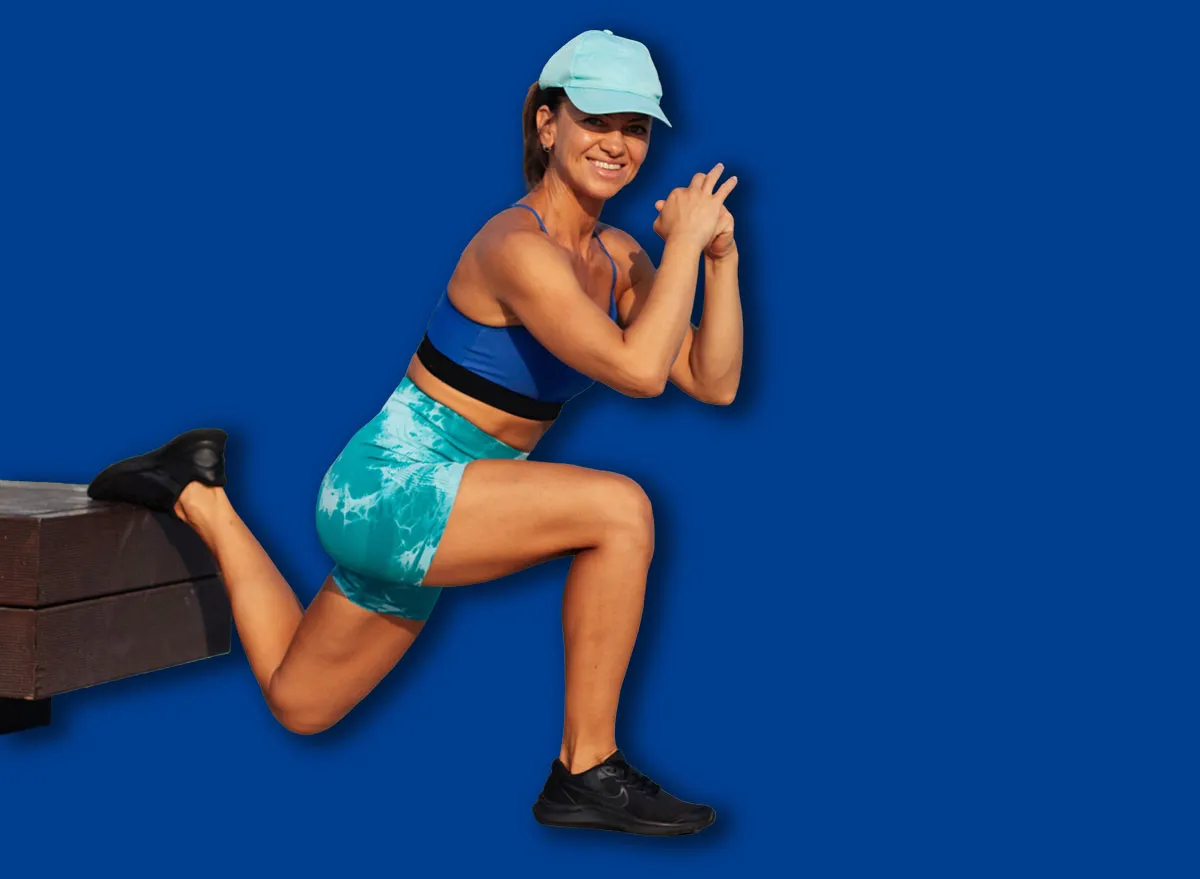
4. Bench Bulgarian Split Squat
This exercise comprehensively targets the quadriceps, glutes, hamstrings, and hip flexors. It is exceptionally effective for improving walking stride length and the ability to confidently step over obstacles, both of which commonly decline with age.
- Muscles Trained: Quadriceps, glutes, hamstrings, hip flexors.
- Execution: Stand approximately two feet in front of the bench, facing away. Place the top of your left foot on the bench seat behind you, laces down. Adjust your right foot forward enough so that when you lower, your right knee does not extend past your toes. Descend by bending your right knee until your left knee nearly touches the ground. Push back up to the starting position. Complete all repetitions on one leg, then switch.
- Modifications: For balance, hold onto a nearby tree or another bench. If knee pain is present, reduce the depth of the squat. If placing the back foot on the bench feels unstable, rest it on the ground behind you instead (this converts it to a standard split squat).
- Progression: Remove hand support, then add a pause at the bottom of the movement. For increased challenge, hold light weights (e.g., water bottles) in your hands.
- Avoid These Mistakes: Maintain an upright torso; avoid leaning too far forward. The front shin should remain as vertical as possible. If the front knee tracks excessively forward, reposition your front foot further from the bench.
5. Bench Calf Raise
Strong calf muscles are indispensable for maintaining balance, facilitating a healthy gait, and preventing ankle injuries. Weak calves can contribute to a shuffling walking pattern, increasing the propensity for falls.
- Muscles Trained: Calves (gastrocnemius, soleus).
- Execution: Stand facing the bench, using the backrest for support. Place the balls of your feet on the edge of the bench seat, allowing your heels to hang off. Rise as high as possible onto your toes, holding briefly at the peak contraction. Slowly lower your heels below the bench level to achieve a stretch in the calves. This completes one repetition.
- Modifications: Maintain both hands on the backrest for continuous balance support. If ankle pain or stiffness is an issue, avoid lowering heels below bench level; simply move from flat foot to toes and back. If standing on the edge feels unstable, perform the exercise on flat ground.
- Progression: Gradually reduce hand support (one hand, fingertips, no hands). Once proficient, transition to single-leg calf raises.
- Avoid These Mistakes: Do not bounce through the movement; control both the ascent and descent. A slow, deliberate tempo ensures muscle engagement over momentum.
Structuring Your Weekly Strength Routine
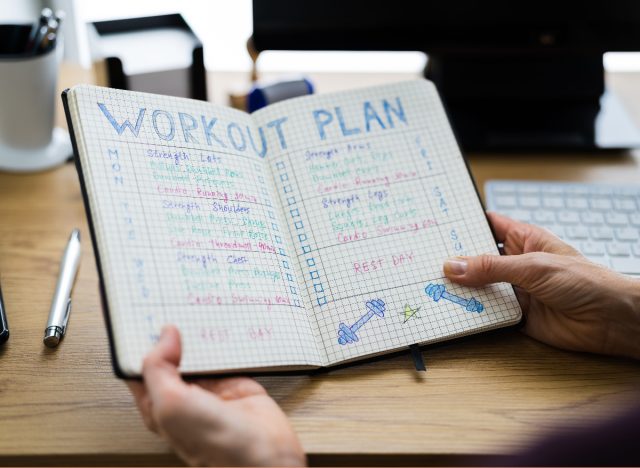
To maximize results and allow for adequate muscle recovery, a routine of three sessions per week is ideal, for example, on Monday, Wednesday, and Friday. Rest days between workouts are crucial for muscle repair and growth, as true strength gains occur during this recovery phase, not solely during the exercise itself.
Begin with a manageable volume for the first two weeks: two sets of 8-10 repetitions for each exercise. This initial phase, including brief rest periods of 60-90 seconds between sets, should take approximately 20 minutes. After two weeks, gradually increase to three sets of 10-12 repetitions, extending the session to 25-30 minutes. Following another two weeks, progress further to three sets of 12-15 repetitions.
The sequence of exercises is important. Perform them in the order listed above: sit-to-stands, step-ups, single-leg squats, Bulgarian split squats, and calf raises. This progression moves from bilateral (two-legged) to unilateral (one-legged) exercises, allowing for better form maintenance as fatigue sets in.
For individuals who are very deconditioned or have been sedentary for many years, a more cautious start is advisable. Begin with just one set of 8 repetitions, focusing only on the first three exercises. Gradually introduce additional exercises and sets as confidence and strength improve. Always prioritize proper form over the number of repetitions or sets. Do not underestimate the importance of rest days; if muscle soreness persists for more than two days, incorporate an additional day of recovery.
Optimizing Your Outdoor Workout: Timing and the Power of the Walk
Choosing the right time of day for your park bench workout can enhance its benefits. For most older adults, morning sessions are often preferable. Joints tend to be stiffer upon waking, making the walk to the park an excellent, natural warm-up that prepares the body for activity. Moreover, morning workouts are less likely to be derailed by unforeseen daily commitments. However, if morning stiffness or unsteadiness is significant, deferring the workout to mid-morning or early afternoon, after a few hours of movement, might be more suitable. Listen to your body’s individual rhythms.
The walk to and from the park should be considered an integral part of your fitness regimen. This low-impact cardiovascular activity perfectly complements the strength training, elevating heart rate, improving circulation, and contributing to the recommended 150 minutes of moderate-intensity physical activity per week for older adults.
It’s generally advised to avoid static stretching of "cold" muscles. Instead, use the walk to the park as a dynamic warm-up. Perform your bench exercises, and then, if desired, incorporate stretching after your muscles are thoroughly warm during your walk home or upon returning.
Beyond the physical benefits, exercising outdoors in natural light helps regulate circadian rhythms, which can significantly improve sleep quality. Enhanced sleep, in turn, facilitates better muscle recovery and subsequent strength gains, creating a virtuous cycle of well-being.
Anticipating Progress: What to Expect in 4-6 Weeks
Embarking on a new fitness routine brings with it the anticipation of results. Here’s a realistic timeline of what you can expect over the first few weeks:
- Week 1: You will likely experience mild to moderate muscle soreness in your legs upon waking. This sensation, known as delayed onset muscle soreness (DOMS), is a positive indicator that your muscles are being challenged and adapting. By the end of the second week, your body will have largely adjusted, and the soreness should significantly dissipate.
- Week 2: You will begin to feel noticeably stronger during the exercises themselves. Movements that initially felt difficult will become more manageable. While profound changes in daily life may not yet be apparent, your nervous system is rapidly becoming more efficient at recruiting and coordinating your leg muscles.
- Week 4: At this stage, you will start to observe tangible improvements in your daily functional strength. Tasks like rising from chairs will feel easier, requiring less reliance on armrests. You may find yourself less inclined to avoid stairs and perhaps even actively choosing them over elevators. Your balance will feel more stable, particularly when navigating uneven surfaces.
- Week 6: By this point, others around you may notice positive changes in your gait and posture. You might find yourself walking with a slightly faster pace, even without conscious effort. Getting in and out of a car will feel more fluid. Improved core and leg strength will contribute to a more upright posture. While significant muscle hypertrophy (increase in muscle size) typically requires 8-12 weeks to become visible, your functional strength will have markedly improved due to faster neurological adaptations.
Crucially, Week 6 often marks the greatest surge in self-confidence. You will begin to trust your legs again, approaching daily movements with less hesitation and self-limitation. This renewed psychological assurance is just as vital as the physical gains, empowering you to re-engage with activities and experiences previously deemed challenging. The park bench, therefore, becomes more than just a piece of outdoor furniture; it transforms into a stepping stone towards a more active, independent, and confident life.
About the Author