Maintaining robust physical capabilities, particularly upper body strength, becomes increasingly vital as individuals age. While conventional perceptions of strength training often conjure images of crowded gyms filled with heavy dumbbells and complex machinery, an alternative, highly effective methodology is gaining recognition: chair-based exercise. This accessible approach offers a safe, stable, and surprisingly potent pathway to enhance arm and shoulder strength, improve functional mobility, and bolster overall well-being for the over-sixty demographic. Far from being a mere compromise, integrating a sturdy chair into a fitness regimen transforms it into a versatile piece of equipment that can yield significant physiological benefits, often surpassing the practical results of traditional weight training for those prioritizing consistency and injury prevention.
The physiological landscape undergoes discernible shifts with advancing years. A phenomenon known as sarcopenia, the age-related loss of muscle mass and strength, typically begins around age 30 and accelerates after 60. This decline impacts not only physical performance but also metabolic health, bone density, and the ability to perform daily activities independently. Furthermore, concerns about joint health, balance, and the potential for injury can deter many older adults from engaging in more vigorous forms of exercise. This is precisely where the strategic utilization of a chair proves revolutionary. It provides inherent stability, mitigating balance challenges and allowing individuals to concentrate on muscle engagement and proper form rather than apprehension. This fundamental support fosters a sense of security, encouraging more consistent adherence to an exercise routine, which is arguably the most critical factor in achieving long-term strength gains.
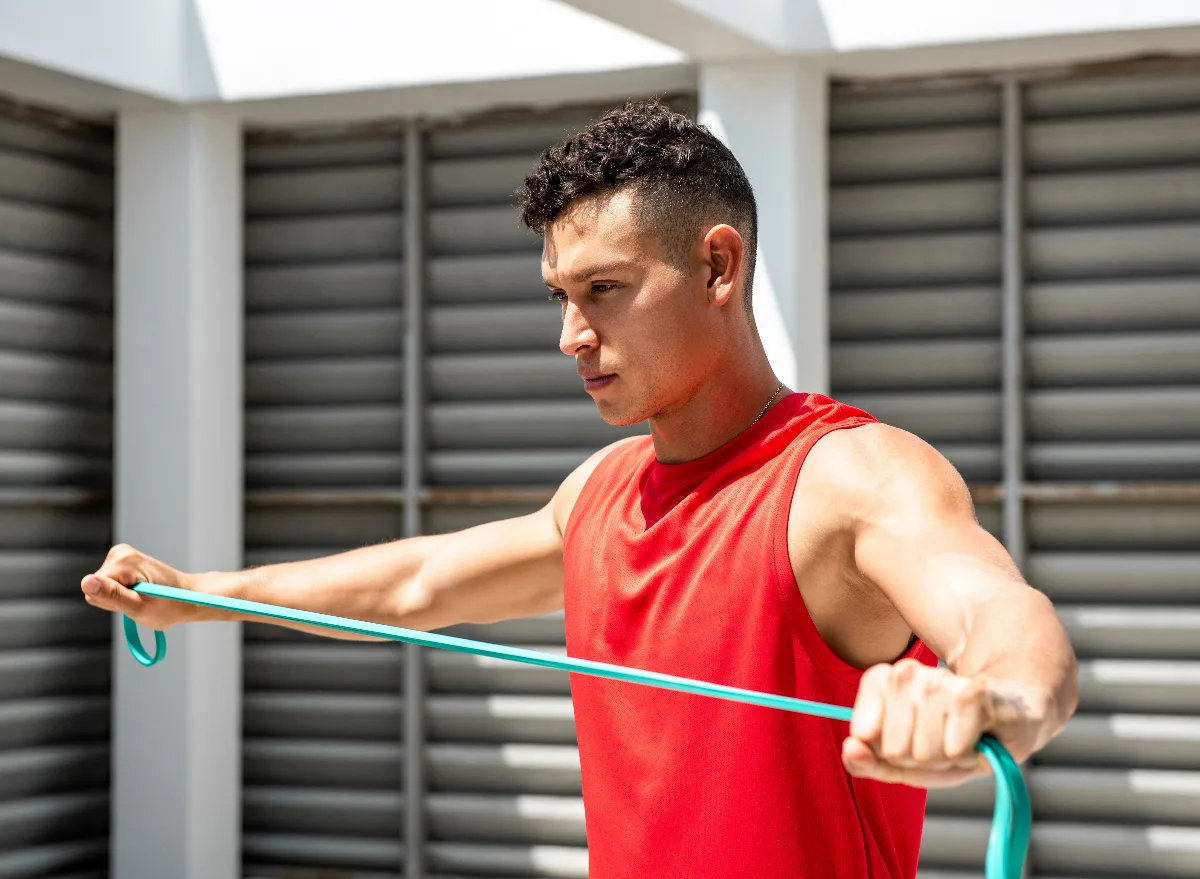
A certified strength coach, Jarrod Nobbe, MA, CSCS, highlights the profound impact of these seemingly simple exercises. He observes that clients are frequently astonished by the efficacy of chair-based workouts. The core principle lies in the application of bodyweight movements and resistance bands. These modalities generate continuous tension across muscle groups throughout the entire range of motion, providing a potent stimulus for hypertrophy and strength adaptation without imposing excessive stress on joints. Unlike free weights, where momentum can sometimes assist movement, resistance bands progressively increase tension as they stretch, forcing muscles to work harder at different points in the exercise. This sustained effort encourages neural adaptations, improving motor control and the efficiency with which muscles contract, leading to more capable and resilient arms.
The advantages extend beyond mere aesthetics. Enhanced upper body strength directly translates to improved functional independence in daily life. Tasks such as lifting groceries, pushing open heavy doors, rising from seated positions, reaching overhead, or even maintaining proper posture become significantly easier and safer. This practical application of strength is paramount for maintaining an active and fulfilling lifestyle in later decades. Moreover, robust arm and shoulder strength contributes to overall stability, reducing the risk of falls—a major concern for older adults. The exercises presented here are specifically designed to address these needs, building a foundation of strength that supports everyday movements and promotes a higher quality of life.
Let us explore five foundational chair-based exercises that can serve as cornerstones of an effective upper-body strengthening program:
1. Chair Push-Ups: Building Pressing Power
Often considered a benchmark for upper-body strength, the push-up effectively targets the chest, shoulders, and triceps, with significant engagement from the core stabilizers. Performing push-ups with hands elevated on a chair considerably reduces the gravitational load compared to floor push-ups, making the movement more accessible while still providing a substantial challenge. This modification allows for greater control over each repetition, fostering better muscle activation and endurance. The mechanical advantage gained from elevating the hands permits individuals to perform a higher volume of quality repetitions, gradually building pressing strength over time.
- Muscles Engaged: Primarily pectoralis major (chest), deltoids (shoulders), and triceps brachii (back of arms). Secondary engagement from the serratus anterior and core musculature.
- Functional Benefit: Improves ability to push objects, get up from the floor, and maintain an upright posture.
- Execution Principle: Position yourself facing the chair with hands shoulder-width apart on the seat edge. Step your feet back until your body forms a straight line from head to heels. Lower your chest towards the chair, keeping elbows tucked slightly, then push back up.
- Form Tip: Actively brace your core to prevent your hips from sagging or arching your back. Maintain a straight spine throughout the movement.
- Recommended Protocol: Aim for 3 sets of 10 to 15 repetitions, with approximately 45 seconds of rest between sets.
- Variations: To increase difficulty, use a lower surface or move feet further back. For less intensity, perform against a wall.
2. Chair Triceps Dips: Sculpting the Back of the Arms
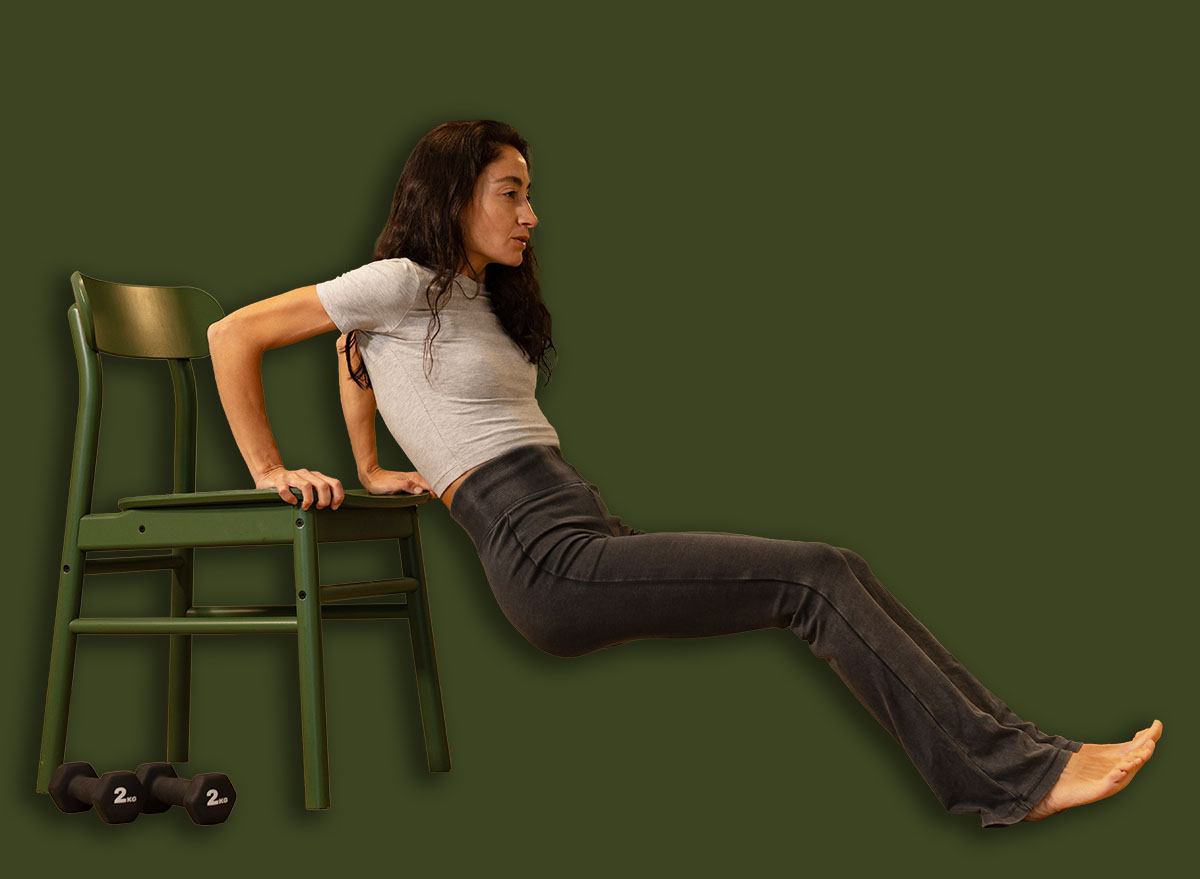
The triceps brachii muscle group, located at the back of the upper arm, is crucial for extending the elbow and contributes significantly to pushing movements. Triceps dips are a highly effective, direct exercise for strengthening these muscles. Utilizing a chair for dips allows for precise control over the depth of the movement, protecting the shoulder joints while maximizing triceps engagement. The shoulders play a vital role in stabilizing the body throughout the exercise, adding to the overall upper-body benefit. Many individuals report feeling an immediate activation in their triceps, highlighting the direct nature of this exercise. Consistent practice leads to more defined and functional triceps.
- Muscles Engaged: Primarily triceps brachii. Secondary engagement from the anterior deltoids (front of shoulders) and pectoralis major.
- Functional Benefit: Enhances the ability to push away from surfaces, straighten arms, and provides support for getting up from a chair.
- Execution Principle: Sit on the edge of a sturdy chair with hands gripping the seat next to your hips, fingers pointing forward. Slide your hips off the chair, supporting your weight with your arms. Bend your elbows, lowering your body until your upper arms are roughly parallel to the floor, then push back up. Keep knees bent for easier variation, or extend legs for more challenge.
- Form Tip: Focus on keeping your shoulders depressed and away from your ears; avoid shrugging or letting your shoulders round forward.
- Recommended Protocol: Perform 3 sets of 10 to 12 repetitions, resting for 45 seconds between sets.
- Variations: Adjust foot placement (closer or further from the chair) to modify intensity.
3. Seated Resistance Band Biceps Curl: Targeting Arm Flexors
While push-ups and dips focus on pushing muscles, the biceps curl targets the opposing muscle group: the biceps brachii and forearms, responsible for pulling and curling movements. Resistance bands are particularly effective here because they provide continuous tension throughout the entire range of motion, unlike free weights where resistance can diminish at the top or bottom of a lift. Sitting on a chair eliminates the possibility of using momentum from the legs or torso, ensuring that the biceps perform all the work. The resistance band’s progressive tension means the muscle works harder as it contracts, stimulating comprehensive strength gains and improving elbow control.
- Muscles Engaged: Primarily biceps brachii and brachialis. Secondary engagement from the forearm flexors.
- Functional Benefit: Improves ability to lift, carry, and pull objects towards the body.
- Execution Principle: Sit upright on a chair. Place the middle of a resistance band under your feet, holding one end in each hand with palms facing up. Keep your elbows pinned to your sides and curl your hands towards your shoulders, squeezing your biceps at the top. Slowly lower back down against the band’s resistance.
- Form Tip: Maintain strict form by keeping your elbows stationary and close to your torso, preventing any swinging or jerky movements.
- Recommended Protocol: Complete 3 sets of 12 to 15 repetitions, with a 45-second rest period between sets.
- Variations: Experiment with different band strengths, perform alternating curls, or incorporate hammer curls (palms facing each other).
4. Seated Resistance Band Overhead Press: Strengthening Shoulders and Core
The overhead press is a fundamental movement for developing strong, stable shoulders and triceps, which are crucial for reaching, lifting, and maintaining good posture. Performing this exercise while seated with a resistance band adds several distinct advantages. The seated position inherently stabilizes the lower body, allowing greater focus on the upper body and core. Resistance bands provide a smooth, joint-friendly resistance profile that intensifies as the arms extend upward, effectively challenging the muscles without the jarring impact sometimes associated with traditional weights. The act of pressing overhead while seated also encourages active engagement of the core stabilizers to maintain an upright posture, contributing to overall trunk strength.
- Muscles Engaged: Primarily deltoids (shoulders) and triceps brachii. Significant contribution from core stabilizers and upper back muscles.
- Functional Benefit: Enhances ability to reach overhead, lift objects to high shelves, and improves posture.
- Execution Principle: Sit tall in a chair, placing the resistance band under your feet. Hold one end of the band in each hand, bringing your hands to shoulder height, palms facing forward, with elbows bent. Press your hands directly overhead until your arms are fully extended, then slowly lower back to the starting position.
- Form Tip: Actively pull your navel towards your spine to engage your core and avoid excessive arching in your lower back. Keep your ribs "down."
- Recommended Protocol: Perform 3 sets of 10 to 12 repetitions, with 45 seconds of rest.
- Variations: Try a single-arm press to challenge core stability further, or an alternating press.
5. Seated Resistance Band Triceps Extensions: Isolating the Arm Extensors
Similar to triceps dips, seated resistance band triceps extensions specifically target the triceps, but with a different angle of attack. This exercise focuses on the direct extension of the elbow joint, creating continuous tension on the triceps throughout the movement, thanks to the elastic nature of the band. The seated position aids in maintaining strong posture and encourages consistent core engagement, preventing compensatory movements. Many find this exercise creates a noticeable "burn" in the triceps quickly, indicating effective muscle activation. Regular inclusion of triceps extensions contributes to overall arm strength and improves pressing capabilities.
- Muscles Engaged: Primarily triceps brachii. Secondary involvement from the shoulders.
- Functional Benefit: Supports pushing movements, extends the arm powerfully, and helps with tasks requiring arm straightening.
- Execution Principle: Sit tall in a chair. Loop a resistance band around your back, holding one end in each hand. Bring your hands behind your head, elbows pointing forward. Extend your arms upwards, straightening your elbows, then slowly lower your hands back down behind your head.
- Form Tip: Keep your elbows relatively stable and pointing forward throughout the movement; avoid letting them flare out to the sides.
- Recommended Protocol: Execute 3 sets of 12 to 15 repetitions, with a 45-second rest period.
- Variations: Try single-arm extensions for increased focus, or incorporate a pause at the peak contraction.
Beyond these specific exercises, the success of any strength training regimen for individuals over 60 hinges on several key daily habits. Consistency is paramount; muscles respond to regular stimulation. Aim for 2-3 structured strength sessions per week, allowing adequate recovery time between workouts. Proper nutrition, including sufficient protein intake, supports muscle repair and growth. Hydration is also critical for joint health and overall physiological function. Crucially, listening to one’s body and adjusting intensity or taking rest days when needed prevents overtraining and injury. A short warm-up (e.g., arm circles, gentle stretches) before and a cool-down after each session are highly recommended to enhance flexibility and reduce muscle soreness.
In conclusion, the journey to enhanced upper body strength and stability after the age of sixty does not necessitate an expensive gym membership or intimidating equipment. A simple, sturdy chair, combined with the versatility of resistance bands, can unlock a profound capacity for muscle development and functional improvement. These chair-supported exercises offer a safe, accessible, and highly effective pathway to combat age-related muscle decline, bolster daily independence, and significantly enrich the quality of life. By embracing this intelligent approach to fitness, individuals can build stronger, more capable arms and shoulders, empowering them to navigate the world with greater confidence and vitality for years to come.
About the Author