
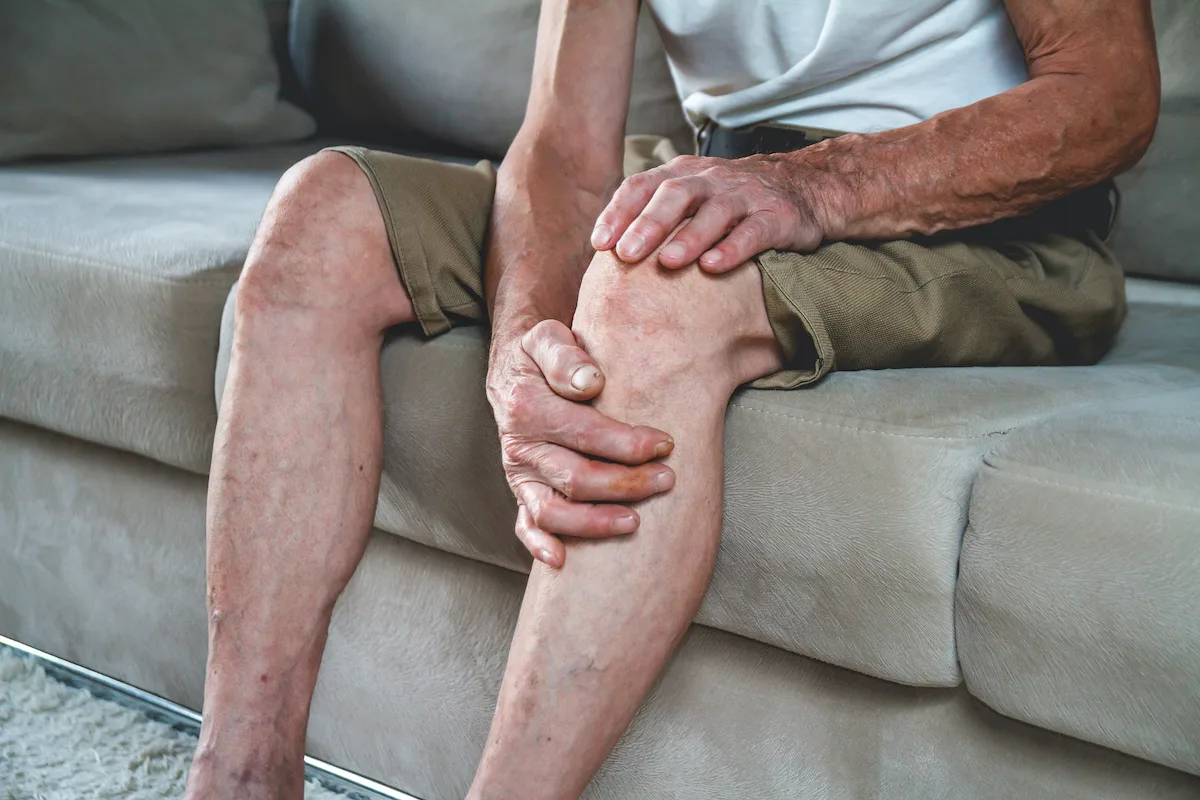
As individuals advance beyond their mid-fifties, a common apprehension often surfaces regarding the reliability and fortitude of their knee joints. This widespread concern is not merely anecdotal; it reflects genuine physiological shifts that can impact daily living. For decades, fitness professionals have observed that among clients over the age of 55, a pervasive sentiment is that their knees feel increasingly untrustworthy, lacking the steadfastness they once possessed. However, this sensation of instability is largely amenable to intervention, with significant improvements in strength, balance, and overall joint confidence being entirely attainable without the need for specialized gym equipment or even leaving the comfort of one’s home. A targeted regimen of four specific bodyweight movements can serve as a potent catalyst in this restorative process.
The perception of knee instability is rooted in a confluence of age-related physiological transformations. Understanding these underlying mechanisms is crucial for effectively addressing them. One primary factor is the natural decline in quadriceps muscle mass, a phenomenon known as sarcopenia. The quadriceps, a powerful group of muscles located at the front of the thigh, are paramount stabilizers of the knee joint. Research indicates that individuals can experience a substantial reduction in quadriceps strength, potentially up to 40%, between the ages of 30 and 80 if proactive measures are not taken. When these critical muscles weaken, the knee’s inherent stability is compromised. This often manifests as a noticeable wobble or uncertainty when performing actions like stepping off a curb, descending stairs, or navigating uneven terrain, signaling insufficient quadriceps strength to adequately control joint movement.
Concurrently, proprioception—the body’s intrinsic ability to sense the position and movement of its parts in space—undergoes a gradual decline with age. Proprioceptors, specialized sensory receptors found within muscles, tendons, and joints, transmit vital information to the brain about joint position. After 55, the efficiency and responsiveness of these sensors diminish, leading to a delayed neural feedback loop. This means the brain receives information about knee joint activity less rapidly, impeding the muscles’ ability to react swiftly and precisely to stabilize the joint. The disconcerting sensation of a knee "giving out" is often not a structural collapse but rather a momentary lapse in this crucial neuromuscular communication, where nerve impulses are simply not transmitting quickly enough to coordinate muscular response.
Furthermore, the articular cartilage within the knee joint, which acts as a shock absorber and facilitates smooth movement, naturally thins over time. As this protective layer erodes, the forces exerted on the joint during movement are transmitted more directly to the underlying bone, frequently resulting in inflammation, discomfort, and swelling. This cascade of events often leads to a reduction in physical activity, which in turn exacerbates muscle weakness and stiffness, perpetuating a cycle of decline. Lastly, individuals often unconsciously alter their movement patterns in response to pain or perceived instability. These adaptive behaviors, such as shortening strides, favoring one leg, or avoiding stairs, initially feel protective. However, over extended periods, they inadvertently contribute to further muscle atrophy, reduced range of motion, and increased joint stiffness, ultimately worsening the very issues they aim to mitigate.

It is paramount to recognize that while certain age-related changes, such as cartilage thinning, are largely irreversible through exercise alone, the majority of factors contributing to knee instability—namely muscle weakness, impaired proprioception, and suboptimal movement patterns—are highly modifiable. While new cartilage cannot be regenerated, significant improvements in strength, neuromuscular control, and joint awareness are well within reach.
The concept of "rebuilding knee strength" encompasses a holistic approach focusing on three interconnected pillars. First is the augmentation of actual muscle strength and mass. The quadriceps, hamstrings, and gluteal muscles collectively govern knee function, absorbing impact and orchestrating movement. Empirical evidence unequivocally demonstrates that older adults, even those in their 60s, 70s, and 80s, possess the remarkable capacity to build both muscle mass and strength at rates comparable to younger individuals, provided they engage in consistent and appropriate resistance training. While the absolute rate of muscle gain might differ from that of a 25-year-old, the functional strength improvements achieved are profoundly meaningful, translating directly to enhanced daily capabilities.
Second, the enhancement of neuromuscular control is vital. This refers to the intricate communication pathway between the brain and the muscles surrounding the knee. Optimal neuromuscular control ensures that muscles activate rapidly and in the correct sequence to stabilize the joint during dynamic movements. Consistent training refines the speed and accuracy of these neural signals, which is why individuals who exercise regularly typically exhibit superior balance and a reduced risk of falls. Finally, improving proprioception and joint position sense is critical. Mechanoreceptors embedded within the knee joint are responsible for detecting movement, pressure, and spatial orientation. Through specific exercises, the sensitivity and reaction time of these receptors can be significantly improved. This heightened sensory feedback is precisely what cultivates the feeling of a more reliable and trustworthy knee, as the joint is literally being re-educated on its position and actions within the body’s spatial awareness.
An important caveat is that exercise cannot reconstruct severely damaged cartilage or repair completely torn ligaments. However, a crucial insight often overlooked is that individuals can possess structural damage within their knees and still maintain excellent functional capacity. Robust musculature and intelligent movement strategies are remarkably effective in compensating for various structural irregularities. The realistic goal for adults over 55 is not necessarily to revert to the knees of their youth, but rather to cultivate sufficient strength, control, and proprioception to navigate daily life without pain, confidently trusting their knees in a wide array of activities. This objective is not only achievable but can dramatically enhance independence and quality of life.
While resistance bands hold a legitimate place in various fitness regimens, they are not the optimal primary tool for comprehensively rebuilding knee strength in older adults, and their exclusive reliance presents several notable limitations. The principle of progressive overload, fundamental to any effective strength program, is inherently more challenging to monitor and implement with resistance bands. Progression in bodyweight exercises is clearly quantifiable through increased range of motion, slower movement tempos, or more challenging variations. With resistance bands, however, objectively quantifying the incremental resistance difference between a "medium" and a "thick" band is often ambiguous. For many older adults, a transparent, trackable progression is a powerful motivator, and bands often fall short in providing this clarity.
Moreover, resistance bands frequently fail to adequately train functional movement patterns. The knee requires stabilization under the dynamic demands of real-world activities, such as transitioning from a seated position to standing, descending a staircase, or stepping onto an uneven surface. Bodyweight exercises, including squats, step-ups, and single-leg stands, directly mimic and strengthen these crucial movements. In contrast, many common band exercises, particularly those performed while seated, tend to isolate specific muscles rather than integrating them into complex, functional movements. While band-resisted leg extensions might build quadriceps strength, this isolated strength does not automatically translate to improved stair climbing ability.
A critical distinction also lies in the type of force applied. When standing or climbing, the knee experiences significant compression forces, as the body’s weight is driven down through the joint. This type of loading is essential for stimulating the adaptation and strengthening of muscles, tendons, and bones, and for training the joint’s mechanoreceptors to respond effectively. Resistance bands, by their nature, primarily provide tension (pulling) forces. The physiological adaptations stimulated by tension are different and often less directly transferable to the compression-dominant forces encountered in most daily activities. Lastly, many band exercises, due to their isolating nature, do not effectively build coordination. Functional movements are inherently multi-joint and multi-muscle, requiring synergistic coordination. A well-executed squat, for instance, demands the simultaneous and integrated action of the ankles, knees, hips, and core. Most band exercises, by focusing on a single joint, neglect the complex neuromuscular coordination patterns essential for real-life stability. Therefore, the most efficacious strategy positions functional bodyweight exercises as the cornerstone of a knee strengthening program, with resistance bands serving as a supplementary tool where appropriate.
The Four Foundational Bodyweight Exercises for Knee Stability
-
Sit-to-Stand: This exercise is arguably the most critical for knee strength in older adults because it directly mirrors an action performed countless times daily: rising from a seated position. It comprehensively strengthens the quadriceps, glutes, and hamstrings, while simultaneously enhancing hip and knee coordination, addressing the very movement pattern that many individuals over 55 find increasingly challenging.
- Muscles Engaged: Quadriceps, gluteals, hamstrings, hip stabilizing muscles.
- Execution: Begin seated in a sturdy chair with feet flat on the floor, hip-width apart. Lean slightly forward, engage your core, and push through your heels to stand up fully, avoiding using your hands for support if possible. Control the movement as you slowly lower back to the chair, barely touching the seat before rising again. Maintain a controlled pace, focusing on the muscles working.
- Common Errors: Rocking forward excessively, relying on momentum, collapsing into the chair, allowing knees to cave inward.
- Progression/Regression: Easier: Use a higher chair or stack cushions. Use armrests or thighs for minimal assistance, gradually reducing help. Harder: Use a lower chair. Progress to "hovering" above the seat without fully sitting between repetitions. Eventually, perform a full bodyweight squat without the chair. Incorporate a 2-3 second pause at the bottom to eliminate momentum.
- Recommended: 10-12 repetitions.
-
Step-Ups: This movement is instrumental for developing single-leg strength, a vital component of knee stability, given that most daily activities—walking, climbing stairs, and stepping over obstacles—are inherently unilateral. Step-ups compel each knee to bear the entire body’s weight independently, thereby cultivating significant functional strength.
- Muscles Engaged: Quadriceps, gluteals, hamstrings, hip stabilizers.
- Execution: Stand facing a sturdy step or low bench. Place one foot flat on the step, ensuring the entire foot is supported. Drive through the heel of the elevated foot to lift your body onto the step, bringing the trailing leg up but not fully placing it down. Maintain control as you slowly lower the trailing leg back to the floor. Repeat on one side before switching.
- Common Errors: Pushing off excessively with the bottom leg, allowing the knee of the stepping leg to track inward, leaning excessively forward or to the side.
- Progression/Regression: Easier: Utilize a lower step (e.g., a thick book or a single stair). Hold onto a railing or wall for balance, minimizing reliance. A "tap-down" variation can also be a good starting point: step up until the knee reaches a 90-degree angle, lightly tap the top of the step, and then lower back down without fully standing. Harder: Increase the step height (20-30cm). Progress to performing without any hand support. Introduce a 2-second pause at the top, balancing on one leg. Gradually add light handheld weights.
- Recommended: 8-10 repetitions per leg.
-
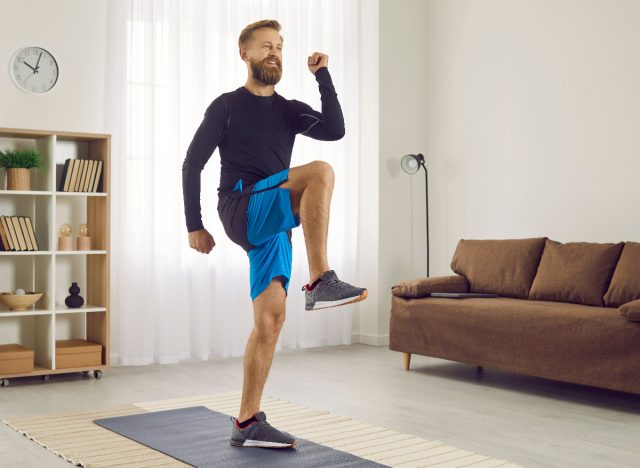
Single-Leg Balance: This exercise is essentially proprioceptive training in action. By standing on one leg, the intricate network of muscles surrounding the knee is compelled to make continuous, subtle adjustments to maintain equilibrium. This process rigorously trains the neuromuscular system to react swiftly and precisely, directly counteracting the sensation of the knee "giving out."
- Muscles Engaged: Quadriceps, gluteals, calf muscles, ankle stabilizers, core musculature.
- Execution: Stand tall with good posture, feet hip-width apart. Shift your weight onto one leg, gently lifting the other foot a few inches off the floor. Fix your gaze on a non-moving point in front of you. Maintain balance for the designated duration, keeping the standing knee slightly soft, not locked.
- Common Errors: Slouching, locking the standing knee, allowing the lifted foot to touch down prematurely, using excessive arm flailing for balance.
- Progression/Regression: Easier: Lightly hold onto a wall or counter with one or both hands, progressively reducing support. Even shifting most weight to one leg while the other foot barely touches the ground is a valid starting point. Harder: Close your eyes to remove visual input, dramatically increasing the challenge. Stand on an unstable surface like a folded towel or cushion. Incorporate small head turns or arm reaches while balancing. Progress to performing slow, controlled knee bends on the standing leg.
- Recommended: 3 sets of 30 seconds per leg.
-
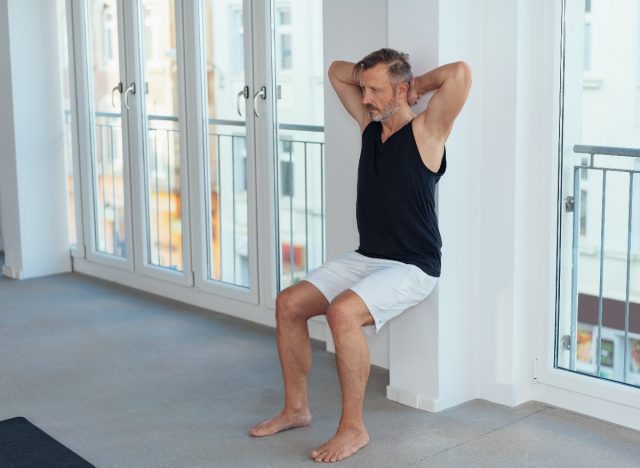
Wall Slides: This exercise cultivates isometric quadriceps strength while simultaneously reinforcing proper knee tracking and alignment. The wall offers invaluable support and immediate feedback, making it a safer alternative to a freestanding squat for many, yet still delivering substantial strength benefits. It particularly targets the vastus medialis obliquus (VMO), the teardrop-shaped muscle on the inner aspect of the thigh crucial for patellar (kneecap) stability.
- Muscles Engaged: Quadriceps (especially VMO), gluteals, hamstrings.
- Execution: Stand with your back flat against a wall, feet shoulder-width apart, approximately 18-24 inches away from the wall. Slowly slide down the wall, bending your knees as if sitting into an invisible chair, until your thighs are parallel to the floor (or as low as comfort allows). Hold this position, ensuring your knees track directly over your ankles, and your back remains pressed against the wall. Push through your heels to slide back up to the starting position.
- Common Errors: Allowing knees to track inward past the toes, lifting the lower back off the wall, holding breath, descending too quickly.
- Progression/Regression: Easier: Reduce the depth of the knee bend to 30-45 degrees. Shorten the hold duration to 5-10 seconds. Placing a small ball or cushion between the knees and gently squeezing it can activate inner thigh muscles, further assisting knee stability. Harder: Increase the hold time to 30-45 seconds. Work towards achieving a full 90-degree knee bend. Incorporate small pulses (moving up and down 5-10cm) at the bottom of the hold for 10 repetitions. Progress to single-leg wall slides, where one foot is slightly lifted.
- Recommended: 5-8 repetitions with a 10-second hold at the bottom of each, resting briefly between reps.
Distinguishing Productive Discomfort from Warning Signs
Given the daily nature of these exercises, discerning between beneficial muscle fatigue and signals of potential injury is paramount. Many individuals err by either pushing through genuine pain, risking aggravation, or by resting at the slightest discomfort, hindering progress.
Productive discomfort manifests as muscle fatigue or a generalized, dull ache in the working muscles—quadriceps, hamstrings, or glutes. This sensation typically occurs during or immediately following exercise and usually subsides within a few hours. Delayed Onset Muscle Soreness (DOMS), which appears 24-48 hours post-exercise, is also a normal physiological response indicating muscle adaptation. This type of discomfort is generally safe to work through, although a slight reduction in intensity might be appropriate.
Warning signs, however, present differently:
- Sharp, stabbing, or shooting pain: Particularly localized to the joint itself.
- Pain that worsens with movement: Instead of improving as the muscles warm up.
- Persistent pain: That does not subside within a few hours or intensifies overnight.
- Swelling or warmth around the knee joint: Indicating inflammation.
- Clicking, popping, or grinding noises accompanied by pain: These mechanical sounds, especially with discomfort, warrant attention.
- A feeling of instability or "giving way" during an exercise: Beyond the initial nervous system adaptation.
On days when knees experience moderate soreness without swelling, modification, rather than complete cessation, is advised. This might involve reducing the range of motion, halving the exercise volume, or further slowing the tempo. Such adjustments allow for consistency without exacerbating inflammation. If, however, knees are swollen or painful to walk on, complete rest from these specific exercises is necessary. Swelling is a clear indicator of inflammation, and loading an inflamed joint can worsen the condition. During these periods, gentle walking on flat surfaces, seated range-of-motion drills, or light ankle pumps are suitable. Applying ice for 15-20 minutes post-exercise can be beneficial if knees feel warm or puffy, and elevating the legs above heart level when resting can aid in reducing swelling. The guiding principle is simple: muscle soreness that improves with movement is acceptable; joint pain that intensifies with movement is not.
Anticipated Progress: A 4 to 8 Week Outlook
Consistent adherence to this regimen yields tangible results within a relatively short timeframe.
- Week 1: While visible changes may not be apparent, a distinct improvement in subjective stability will likely be felt. Everyday actions like rising from a chair or descending stairs will feel less precarious. This initial shift primarily stems from rapid neuromuscular adaptation, as the nervous system becomes more adept at efficiently recruiting and coordinating the correct muscles.
- Week 2: Functional improvements become more noticeable. Maneuvering in and out of a car might feel easier, and morning stiffness around the knees may diminish. Individuals often find themselves relying less on their hands for support when standing up.
- Week 4: Measurable strength gains emerge. Exercises that initially felt challenging will become more manageable, enabling progression to harder variations. The quadriceps may even begin to exhibit a subtle increase in definition.
- Week 8: A marked enhancement in knee stability and confidence is typically observed. Activities previously avoided—such as longer walks, navigating stairs without handrails, or standing for extended periods—become more accessible and less daunting. Research consistently demonstrates that 8 to 12 weeks of dedicated strength training can elevate quadriceps strength by 20-40% in older adults, directly translating to profound improvements in daily functional capabilities.
Habits That Accelerate (and Impede) Progress
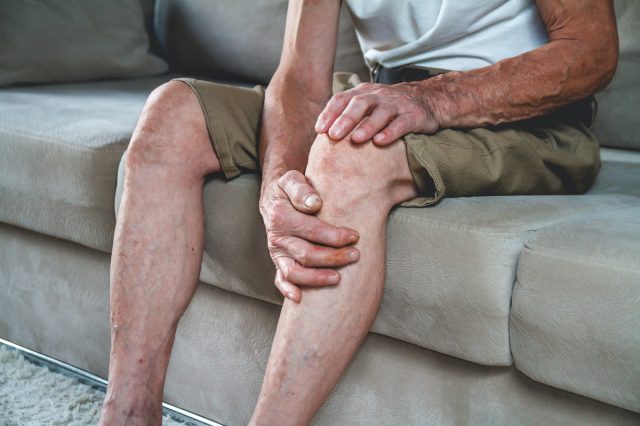
The efficacy of these exercises is significantly influenced by broader lifestyle choices.
Habits that support progress:
- Consistent Hydration: Adequate water intake supports joint lubrication and tissue elasticity.
- Balanced Nutrition: A diet rich in protein supports muscle repair and growth, while anti-inflammatory foods can mitigate joint discomfort.
- Sufficient Sleep: Quality sleep is crucial for muscle recovery and hormonal balance.
- Mindful Movement: Being aware of posture and movement patterns throughout the day reinforces learned stability.
- Gradual Progression: Incrementally increasing challenge avoids overstressing the joints.
Habits that slow progress:
- Sedentary Lifestyle: Prolonged inactivity weakens muscles and stiffens joints.
- Poor Posture: Incorrect alignment places undue stress on the knees.
- Ignoring Pain: Pushing through sharp joint pain can lead to injury and chronic issues.
- Inconsistent Training: Sporadic exercise limits adaptation and long-term gains.
When Professional Medical Consultation is Prudent
For the vast majority of healthy individuals over 55 experiencing mild knee weakness, stiffness, or occasional soreness, this bodyweight program is generally safe and highly beneficial. However, certain circumstances necessitate a preliminary discussion with a general practitioner or physiotherapist before commencing.
It is imperative to consult with a surgeon if you have undergone a total or partial knee replacement. While most individuals are cleared for modified versions of these exercises post-rehabilitation, professional verification is crucial. Discussion with a doctor is also advisable if you have moderate to severe osteoarthritis accompanied by significant cartilage loss. Although exercise is broadly beneficial for arthritis, cases involving bone-on-bone contact or severe joint space narrowing may require tailored guidance on program modification.
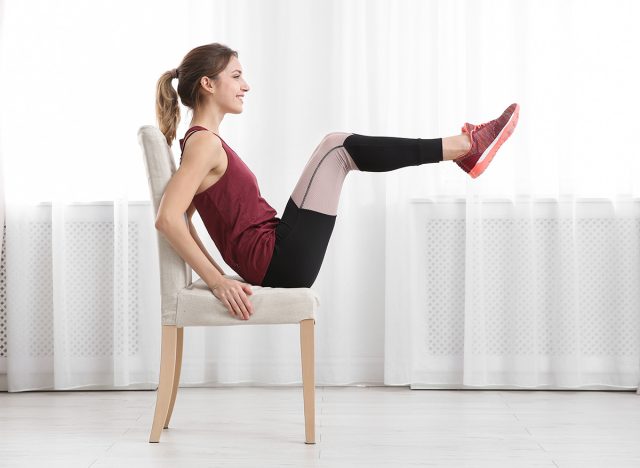
A physiotherapist should be consulted if you have a meniscal tear, particularly a recent one or one that has not been surgically addressed. The appropriate course of action for meniscal tears—whether strengthening or surgical intervention—varies significantly, and self-diagnosis should be avoided. Similarly, seek assessment before beginning if you have a torn knee ligament (ACL, PCL, MCL, or LCL) or exhibit significant joint laxity. While strengthening often helps compensate for ligamentous issues, understanding the extent of damage and suitable exercises is paramount.
Medical attention is warranted for regular episodes of unexplained knee swelling. Persistent swelling can signal inflammatory arthritis, infection, or other underlying conditions that require medical diagnosis and treatment before engaging in joint-loading exercises. Individuals with any form of inflammatory arthritis (e.g., rheumatoid arthritis, psoriatic arthritis, ankylosing spondylitis) should consult their rheumatologist. Exercise is typically advantageous, but active disease flares necessitate a different management approach. Furthermore, if you are taking blood thinners or have a bleeding disorder, consult your doctor. While these conditions do not preclude exercise, awareness of potential risks like easier bruising is important. Finally, if significant neuropathy or reduced sensation in the feet or legs is present, working with a physiotherapist is crucial. Compromised sensation impacts proprioception and increases fall risk, particularly during single-leg exercises.
In any scenario of uncertainty, a brief conversation with a healthcare professional—be it a GP or physiotherapist—is always a valuable step. They can provide an individualized assessment and recommend necessary adjustments to the exercise program, ensuring safety and optimizing outcomes.
About the Author










