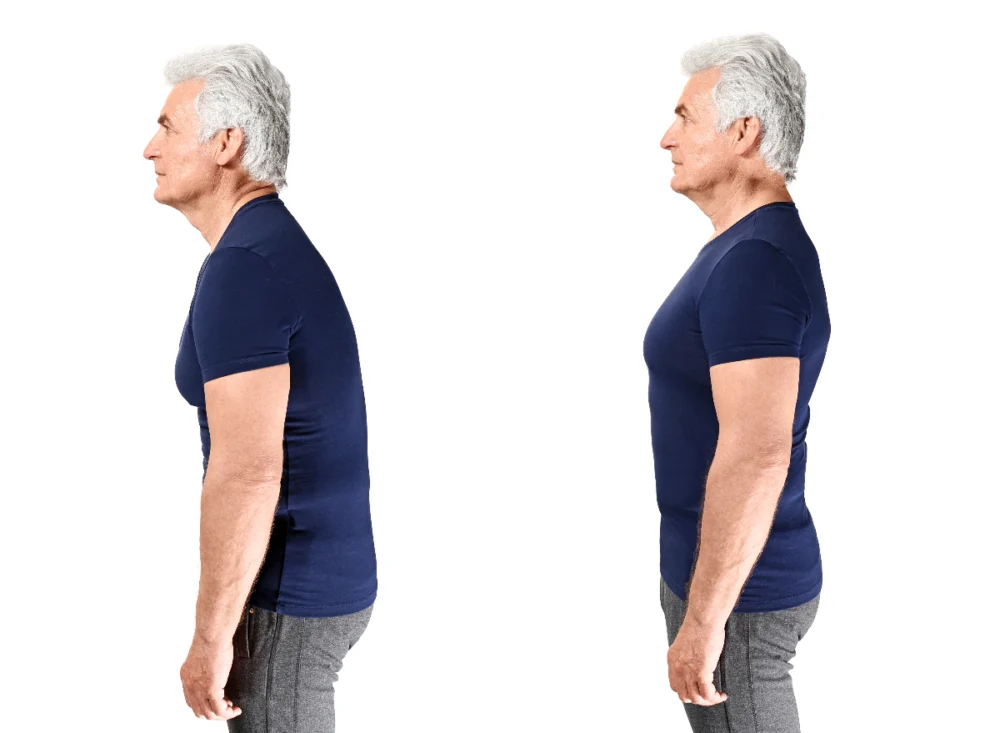
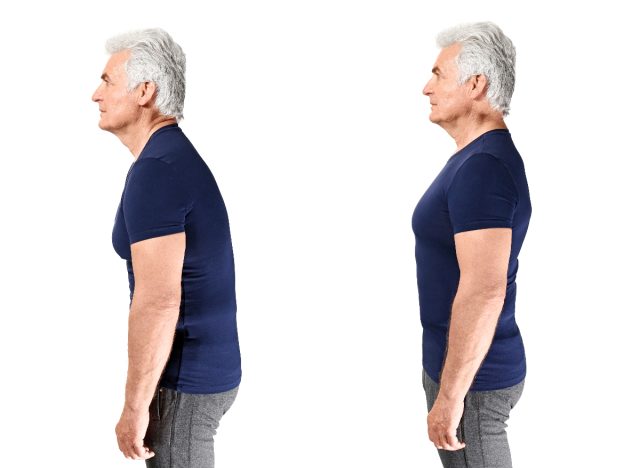
Maintaining optimal posture often becomes a more conscious endeavor as individuals navigate the second half of life, particularly beyond the age of fifty. The natural aging process, coupled with contemporary sedentary lifestyles, frequently contributes to a common postural deviation characterized by a forward rounding of the upper back and shoulders, medically termed thoracic kyphosis, often accompanied by a forward head carriage. This shift in spinal alignment can significantly impact overall well-being, influencing everything from physical comfort and mobility to balance and even respiratory function. Fortunately, a proactive approach incorporating accessible, low-impact exercises, especially those performed from a seated position, offers a potent strategy for mitigating and even reversing these age-related postural changes, as endorsed by health professionals.
The prevalence of rounded shoulders and a forward-jutting head, clinically recognized as Upper Crossed Syndrome (UCS), tends to increase markedly after the fifth decade. This complex condition arises from a constellation of factors, including intrinsic physiological alterations and extrinsic behavioral patterns accumulated over years. As we age, the body undergoes various transformations that can compromise spinal integrity. Muscle mass naturally diminishes in a process known as sarcopenia, affecting crucial stabilizing muscles that support the spine. Concurrently, changes in bone density, such as osteopenia or osteoporosis, can weaken the vertebral structures, making them more susceptible to compression and altered curvature. Intervertebral discs, which act as cushions between vertebrae, also experience a reduction in height and elasticity, contributing to a general shortening of the spinal column and a tendency towards flexion.
Beyond these biological shifts, modern living plays a substantial role. Decades spent in positions that encourage poor posture, such as prolonged sitting at a desk with eyes fixed on a computer screen, extensive driving, or even habitual slouching while relaxing, can lead to chronic muscular imbalances. The muscles located at the front of the body—specifically the pectorals (chest muscles) and certain neck flexors—tend to shorten and tighten. This anterior muscular tension exerts a persistent pull on the upper body, drawing the shoulders forward and the head into an anterior position. Simultaneously, the muscles in the upper back and posterior neck, including the rhomboids, lower trapezius, and deep cervical flexors, become elongated and weakened from chronic underuse. This muscular dichotomy—tightness in the front, weakness in the back—creates an imbalance that perpetuates the rounded posture, making it the body’s default "comfortable" position. Dr. Gbolahan Okubadejo, a New York City-area Spinal and Orthopaedic Surgeon, highlights this dynamic, noting that "the more rounded your posture becomes, the harder your weakened back muscles need to work to keep your body upright. The imbalance continues to worsen unless you take proper steps to address it."
The implications of persistent poor posture extend beyond aesthetics. A significantly rounded upper back can compress internal organs, potentially affecting lung capacity and digestive function. It can also lead to chronic pain in the neck, shoulders, and upper back, contribute to headaches, and impair mobility, making everyday tasks more challenging. Furthermore, a compromised center of gravity due to forward head posture can increase the risk of falls, a significant concern for older adults. Addressing these postural deviations is therefore not merely about appearance but about safeguarding long-term health, functional independence, and quality of life.
This is where seated exercises emerge as an invaluable intervention. Their inherent accessibility makes them suitable for a broad spectrum of individuals, including those with limited mobility, balance concerns, or joint issues that might preclude standing exercises. These low-impact movements offer a safe yet effective pathway to enhancing muscle strength, improving flexibility, bolstering cardiovascular endurance, and refining balance. The versatility of chair exercises means they can be integrated into nearly any daily routine, requiring minimal equipment and space. Marta Hanrahan, a Registered Massage Therapist and Clinical Director at Myosense Wellness, underscores their utility, stating, "We see many changes in the body after age 50… Clinically, this pattern can be described as Upper Crossed Syndrome (UCS)." She emphasizes that these exercises directly target the muscular imbalances associated with UCS, providing a practical solution to a widespread problem.
A series of expert-recommended chair exercises specifically designed to counteract rounded posture offers a structured approach to spinal rehabilitation:
1. Seated Resistance Band Row: This foundational exercise directly targets the weakened muscles of the upper back—the rhomboids and middle trapezius—which are crucial for pulling the shoulder blades together and maintaining an upright thoracic spine. By utilizing a resistance band, individuals can engage these often-underused muscles, gradually building strength to counteract the forward pull of tight chest muscles. Regular practice helps to "reset" the shoulders into a more retracted and depressed position, thereby reducing the severity of thoracic kyphosis.
2. Seated Chin Tucks: Forward head posture is a hallmark of rounded posture, placing undue stress on the cervical spine and surrounding musculature. Chin tucks are specifically designed to strengthen the deep neck flexors, a group of muscles located at the front of the neck that become weak and elongated in UCS. By gently drawing the chin straight back, parallel to the floor, this exercise helps to realign the head over the shoulders, alleviating strain and promoting a more neutral cervical curve. It’s a subtle yet profoundly effective movement for improving head and neck stability.
3. Seated Chest Opener: To effectively correct rounded shoulders, it is imperative to address the tightness in the anterior chest muscles, primarily the pectorals. The seated chest opener achieves this by promoting thoracic extension and stretching the chest. This movement helps to lengthen the shortened chest muscles, thereby reducing their anterior pull and allowing the shoulders to naturally settle back into a more aligned position. Opening the chest also encourages deeper breathing and improved posture during daily activities.
4. Seated Band Pull-Aparts: This exercise is another excellent method for strengthening the posterior shoulder and upper back musculature, particularly the posterior deltoids and rhomboids. Using a resistance band held in front of the body, individuals pull the band apart while maintaining a seated posture, activating the muscles responsible for scapular retraction and external rotation of the shoulders. This action directly counters the internal rotation and protraction often seen in rounded posture, contributing to a broader, more open chest and better spinal alignment.
5. Seated Hip Hinges: While seemingly focused on the lower body, proper hip hinging from a seated position is fundamental to developing awareness of pelvic tilt and lumbar spine alignment, which profoundly impacts the entire spinal column. Many individuals with rounded upper backs also exhibit a posterior pelvic tilt when seated, further contributing to a slouched posture. By learning to hinge correctly at the hips, maintaining a neutral spine, this exercise strengthens the core and lower back muscles, fostering better postural habits that translate to both sitting and standing.
6. Levator Scapula Stretch: The levator scapulae muscles, located in the neck, often become tight and contribute to neck pain and restricted movement, particularly in individuals with forward head posture. This specific stretch targets these muscles, alleviating tension that can pull the shoulders upward and contribute to an uncomfortable, compromised neck position. By gently stretching the levator scapulae, individuals can experience reduced neck stiffness, improved range of motion, and a greater ability to maintain a relaxed, elongated neck.
7. Seated Lat Extensions: The latissimus dorsi, large muscles in the back, can also contribute to rounded posture when tight, limiting overhead reach and promoting a hunched position. Seated lat extensions work to lengthen these muscles and promote thoracic extension, encouraging a more elongated and upright spinal position. By reaching overhead and gently stretching the sides of the torso, this exercise enhances spinal flexibility and strengthens the muscles that support an extended, healthy posture.
Integrating these seven expert-designed movements into a regular fitness regimen can be a transformative step towards reclaiming and maintaining optimal posture beyond fifty. However, the journey to improved spinal health extends beyond structured exercises. Consistency is paramount; performing these movements regularly, even for short durations, yields cumulative benefits. Furthermore, cultivating an awareness of one’s posture throughout the day—whether sitting at a desk, driving, or standing—and making conscious adjustments is crucial. Ergonomic considerations in work and home environments can also significantly support postural improvements.
Beyond physical activity, a holistic approach to wellness, encompassing adequate hydration, a nutrient-rich diet supporting bone and muscle health, and sufficient rest, further contributes to spinal resilience. While these exercises offer a powerful self-care tool, individuals experiencing significant pain, severe postural deviations, or underlying medical conditions should consult with healthcare professionals, such as a physical therapist, orthopedic surgeon, or massage therapist, to ensure a personalized and safe approach to postural correction. By embracing these accessible strategies, individuals can proactively combat the effects of aging and modern living on their posture, fostering greater comfort, mobility, and vitality for years to come.
About the Author