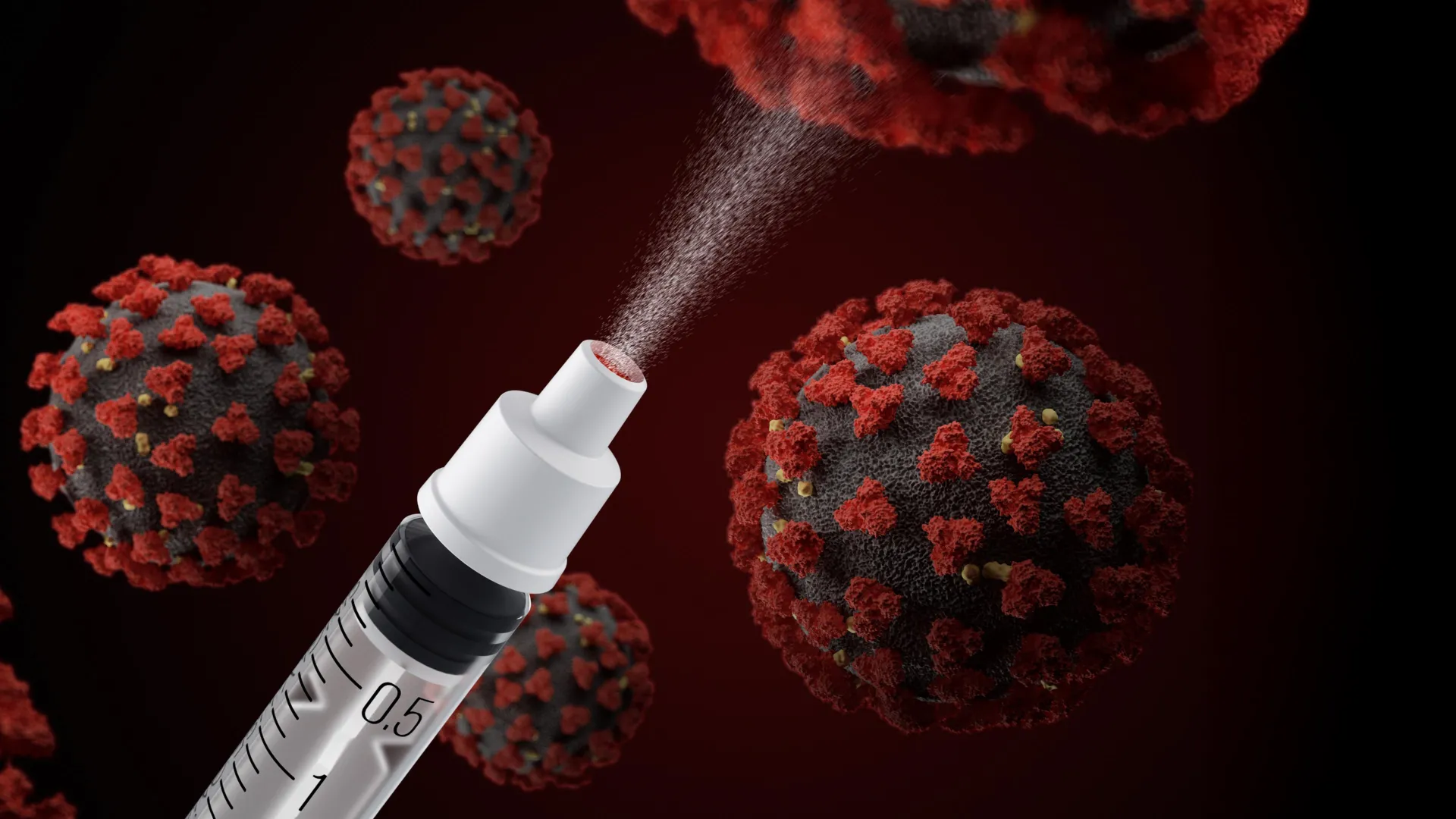
A groundbreaking advancement in vaccine technology is emerging from Stanford Medicine, offering a tantalizing glimpse into a future where a single intranasal application could provide robust protection against a wide array of respiratory ailments, including viral infections, bacterial pathogens, and even common allergens. This innovative approach, detailed in a recent study published in the prestigious journal Science, represents a significant departure from conventional vaccine strategies and has demonstrated remarkable efficacy in preclinical trials conducted on laboratory mice. The research team, a collaborative effort involving scientists from Stanford, Emory University School of Medicine, the University of North Carolina at Chapel Hill, Utah State University, and the University of Arizona, has potentially unlocked a pathway toward a truly universal respiratory vaccine.
For centuries, the pursuit of a singular prophylactic agent capable of neutralizing diverse infectious agents has remained an aspirational, almost mythical, endeavor within the scientific community. The traditional paradigm of vaccinology, established over two centuries ago with Edward Jenner’s pioneering work against smallpox, has largely revolved around the principle of antigen specificity. This method involves presenting the immune system with a weakened or inactivated portion of a specific pathogen, such as the spike protein characteristic of the SARS-CoV-2 virus. The immune system then learns to recognize and mount a targeted defense against this specific threat, generating antibodies and memory cells for future encounters. While highly effective against individual pathogens, this approach necessitates frequent updates and booster shots as viruses and bacteria rapidly evolve, altering the surface proteins that vaccines target. This evolutionary arms race has led to the recurring need for annual influenza vaccinations and updated COVID-19 boosters, a logistical and public health challenge.
The limitations of antigen-specific vaccines become particularly apparent when confronting the rapid mutation rates observed in many pathogens. Viruses, in particular, possess an uncanny ability to alter their surface structures, rendering previously potent vaccines less effective. This constant adaptation has fueled the search for alternative vaccine platforms that can overcome the inherent challenge of pathogen variability. While some efforts have focused on targeting conserved regions within viral families, such as all coronaviruses or influenza strains, the concept of a single vaccine conferring immunity against entirely unrelated pathogens has long been considered a formidable, if not improbable, objective. This skepticism was shared by senior author Bali Pulendran, PhD, the Violetta L. Horton Professor II and professor of microbiology and immunology at Stanford, who admitted that the initial idea of such a broad-spectrum vaccine seemed "outrageous."
The novel vaccine developed by Pulendran’s team takes a fundamentally different approach by focusing on the body’s innate immune system, the first line of defense that acts within minutes of pathogen entry. Unlike the adaptive immune system, which is pathogen-specific and generates long-lasting memory, innate immunity is more generalized and typically wanes within days. However, the researchers hypothesized that by mimicking the signaling pathways that immune cells use to communicate during an infection, they could potentially prolong and broaden the innate immune response, thereby creating a more enduring and versatile protective barrier. This strategy aims to bridge the gap between the rapid, broad action of innate immunity and the specific, long-term protection offered by adaptive immunity.
This innovative concept draws inspiration from observations of the Bacillus Calmette-Guerin (BCG) tuberculosis vaccine, which, despite targeting a specific bacterium, has been suggested to offer protective benefits against other infections, leading to reduced infant mortality. While the precise mechanisms behind this observed cross-protection remained elusive for years, Pulendran’s group shed light on this phenomenon in a 2023 study. They discovered that the BCG vaccine not only elicited an adaptive immune response but also maintained an active innate immune response for an extended period, lasting up to three months in mice. This prolonged innate immunity was found to be orchestrated by T cells, a key component of the adaptive immune system, which continuously signaled to innate immune cells, keeping them activated.
Building upon this revelation, the Stanford team conceptualized a synthetic vaccine that could replicate these T cell-mediated signals, thereby sustaining innate immune cell activation. Their experimental formulation, currently designated GLA-3M-052-LS+OVA, is engineered to deliver specific stimuli that activate toll-like receptors (TLRs) on innate immune cells, effectively mimicking the signals that prolong their activity. Furthermore, the vaccine incorporates a harmless antigen, ovalbumin (OVA), derived from egg protein. This antigen serves a dual purpose: it attracts T cells to the lung tissue, where they can then provide the necessary signals to sustain the innate immune response, and it also primes the adaptive immune system for a rapid response should a pathogen breach the initial defenses.
In the mouse studies, the vaccine was administered via intranasal droplets, a method that offers a non-invasive and potentially more comfortable delivery route compared to traditional injections. Mice receiving multiple doses of the nasal spray demonstrated remarkable protection against a range of respiratory threats. Following exposure to SARS-CoV-2 and other coronaviruses, these vaccinated mice exhibited significantly reduced viral loads and remained asymptomatic, a stark contrast to the severe illness and mortality observed in unvaccinated control groups. The sustained innate response was so potent that it reduced viral levels in the lungs by an astonishing 700-fold. Any viruses that managed to evade this initial innate defense were swiftly encountered by a highly alert and primed adaptive immune system, which mounted a rapid antibody and T cell response in as little as three days, a dramatically accelerated timeline compared to the typical two weeks seen in unvaccinated animals.
The protective capabilities of this experimental vaccine extended beyond viral pathogens. When tested against common bacterial culprits of hospital-acquired infections, such as Staphylococcus aureus and Acinetobacter baumannii, vaccinated mice again showed significant protection lasting for approximately three months. This demonstrated the vaccine’s ability to bolster the immune system’s defenses against a diverse spectrum of microbial threats.
Intrigued by the breadth of protection, the researchers further explored the vaccine’s potential against allergens, a common trigger for respiratory distress and allergic asthma. Exposure to proteins from house dust mites, a prevalent allergen, elicited a strong allergic Th2 response in unvaccinated mice, characterized by mucus accumulation in the airways. In contrast, vaccinated mice exhibited a markedly attenuated Th2 response, maintaining clear airways and mitigating allergic symptoms. This finding suggests that the vaccine’s ability to modulate immune responses is not limited to pathogens but can also extend to allergenic triggers. Pulendran enthusiastically summarized these findings, stating, "I think what we have is a universal vaccine against diverse respiratory threats."
The implications of these findings for human health are profound. The development of a single, intranasal vaccine that can protect against influenza, coronaviruses, respiratory syncytial virus (RSV), common colds, bacterial pneumonia, and even seasonal allergens would represent a paradigm shift in public health and preventative medicine. Such a vaccine could potentially eliminate the need for multiple annual vaccinations, simplifying immunization schedules and ensuring broader population immunity. Furthermore, in the event of a novel pandemic emerging, a universal vaccine platform could provide rapid, broad-spectrum protection, mitigating the devastating impact of emerging infectious diseases.
The next critical step in this research is to translate these promising preclinical results into human trials. A Phase I safety study is slated to commence, followed by larger clinical trials to assess efficacy and optimal dosing in human populations. Pulendran anticipates that two doses of the nasal spray formulation might be sufficient for effective immunization in people. With adequate resources and continued research, he estimates that such a universal respiratory vaccine could become a reality within the next five to seven years, transforming medical practice and offering unprecedented protection against the myriad of airborne threats we face. The research was supported by grants from the National Institutes of Health, along with generous endowments from the Violetta L. Horton Professor endowment, the Soffer Fund endowment, and Open Philanthropy.
About the Author