
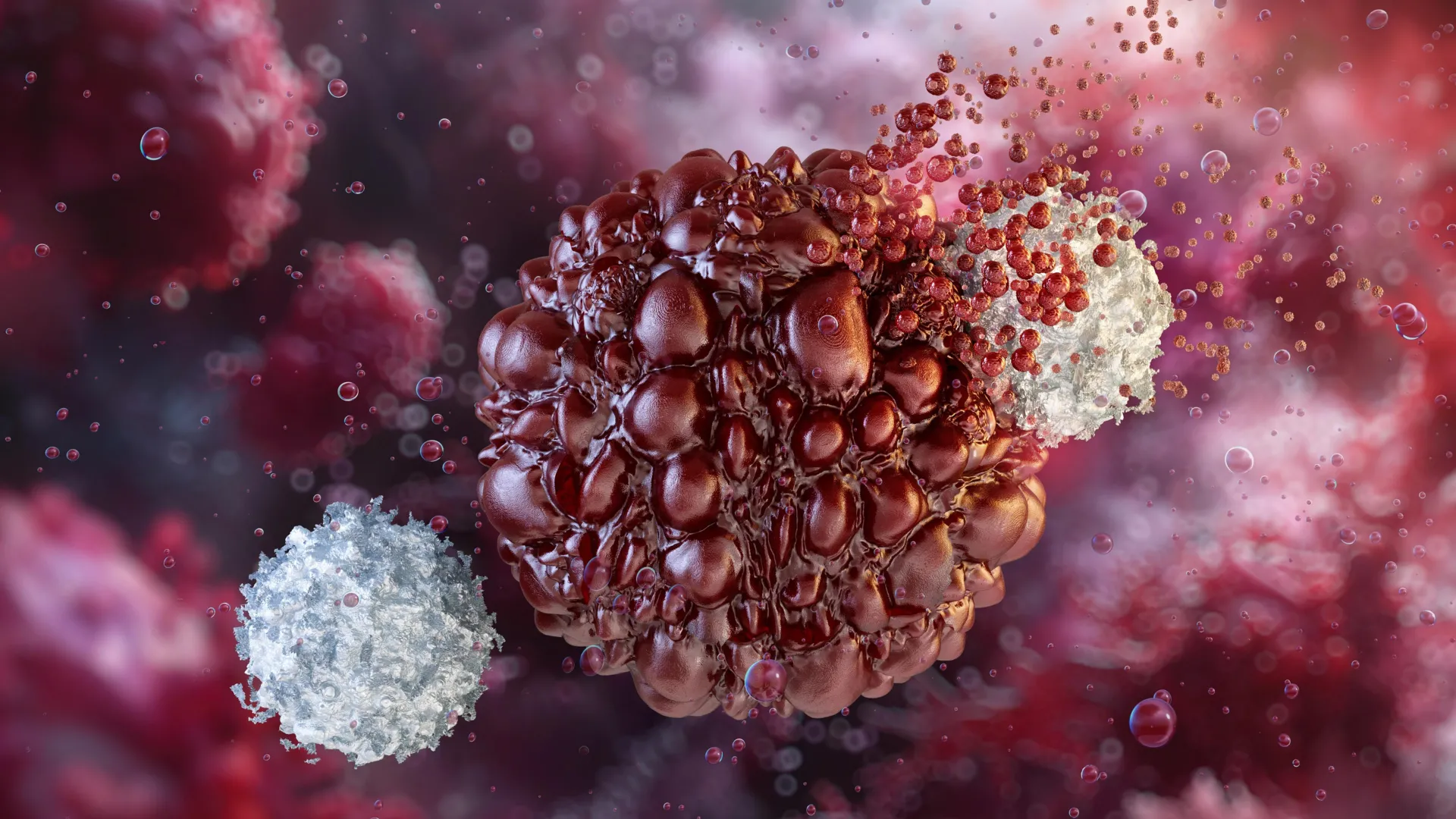
A significant advancement in the field of cancer immunotherapy has emerged from China, where scientists have devised a groundbreaking method to cultivate vast quantities of specialized immune cells with remarkable tumor-destroying capabilities. This innovative strategy focuses on harnessing the power of natural killer (NK) cells, a crucial component of the innate immune system, and dramatically enhancing their therapeutic potential for combating malignancies. The breakthrough promises to overcome long-standing hurdles in the production of these vital cells, potentially paving the way for more accessible and effective cancer treatments.
NK cells are inherently equipped to patrol the body, acting as an early line of defense against viral infections and the emergence of cancerous growths. Their intrinsic ability to identify and eliminate aberrant cells makes them highly attractive candidates for therapeutic interventions. In the realm of adoptive cell therapy, specifically chimeric antigen receptor (CAR)-NK therapy, researchers engineer NK cells by equipping them with synthetic receptors. These CARs are designed to recognize specific molecular signatures present on the surface of cancer cells, thereby directing the immune cells to target and destroy malignant tumors with enhanced precision.
Historically, the production of NK cells for therapeutic applications has relied on harvesting mature NK cells from established sources such as peripheral blood or umbilical cord blood. This conventional approach, however, is fraught with challenges. These include considerable variability in cell quality and effectiveness among donors, suboptimal efficiency when attempting genetic modifications to introduce therapeutic receptors, prohibitively high production expenses, and extended timelines required for preparation, all of which can impede clinical translation.
Addressing these limitations, a research consortium spearheaded by Professor WANG Jinyong at the Institute of Zoology, Chinese Academy of Sciences, has pioneered an alternative pathway. Rather than commencing with already differentiated NK cells, the team initiated their process with hematopoietic stem and progenitor cells (HSPCs) that express the CD34 marker, obtained from cord blood. These primitive, multipotent cells, often referred to as CD34+ HSPCs, were then guided through a sophisticated differentiation process to generate lab-engineered NK (iNK) cells and, subsequently, CAR-engineered iNK (CAR-iNK) cells. This research, detailing their innovative methodology, has been published in the esteemed journal Nature Biomedical Engineering.
Previous attempts to generate functional NK cells from cord blood-derived CD34+ HSPCs were often hampered by low yields and the development of cells that lacked full functional maturity. The Chinese research team ingeniously circumvented these issues by relocating the critical genetic engineering step to an earlier developmental stage. By performing CAR transduction directly on the CD34+ HSPCs, they integrated the genetic modification with a robust expansion phase for these progenitor cells and precisely guided their differentiation trajectory specifically towards the NK cell lineage. This strategic repositioning of the engineering process was key to achieving superior outcomes.
The core of their innovative protocol involves a meticulously orchestrated three-stage expansion and differentiation system. The initial phase involves the substantial amplification of CD34+ HSPCs, or alternatively, CD19 CAR-transduced HSPCs. This expansion is facilitated by co-culturing the stem cells with irradiated AFT024 feeder cells, a supportive cellular environment that promotes rapid proliferation. Within a remarkably short period of 14 days, this stage alone achieved an astonishing cell multiplication rate, expanding the initial population by approximately 800 to 1,000-fold.
Following this initial expansion, the augmented cell population was transferred to a second culture environment. Here, they were grown in the presence of OP9 feeder cells, a different type of supporting cell. This cultivation led to the formation of intricate, three-dimensional structures known as artificial hematopoietic organoid aggregates. These organoids are specifically designed to foster efficient commitment to the NK cell lineage and support their subsequent development, mimicking aspects of natural bone marrow development.
The final stage of the process focuses on the maturation and further proliferation of the cells that have successfully differentiated into NK cell precursors. Within this controlled environment, these cells were allowed to mature into fully functional iNK or CAR-iNK cells. A significant achievement of this final stage is the generation of highly pure cell populations that authentically express CD16, a critical receptor on NK cells involved in antibody-dependent cellular cytotoxicity (ADCC), a mechanism that amplifies their tumor-killing capacity.
The sheer scale of cellular output from this novel method is perhaps its most striking feature. The researchers demonstrated that a single CD34+ HSPC, when subjected to this optimized protocol, could ultimately give rise to an impressive number of up to 14 million iNK cells. Even more remarkably, the CAR-engineered iNK cells, designed for targeted cancer cell destruction, could be generated at a rate of up to 7.6 million cells from a single progenitor cell. Extrapolating these findings, the team estimates that even a modest fraction, approximately one-fifth, of a standard cord blood unit could theoretically yield a sufficient number of therapeutic cells to provide treatment for thousands, or even tens of thousands, of patients. This represents a paradigm shift in the scalability of NK cell therapy.
Furthermore, the innovative approach offers substantial benefits in terms of resource utilization, particularly concerning the use of viral vectors for CAR gene delivery. Compared to the quantities typically required for genetically modifying mature NK cells, this stem cell-based method drastically reduces viral vector consumption. The researchers reported that the amount of viral vector needed was reduced to a mere fraction, approximately 1/140,000 by day 42 of culture and even lower, around 1/600,000 by day 49, highlighting a significant reduction in manufacturing costs and potential safety concerns associated with viral vectors.
The therapeutic efficacy of the generated iNK and CAR-iNK cells was rigorously evaluated in preclinical models. In laboratory experiments, both types of engineered cells exhibited potent cytotoxic activity against tumor cells. Specifically, when tested in both cell line-derived xenograft (CDX) and patient-derived xenograft (PDX) mouse models simulating human B-cell acute lymphoblastic leukemia (B-ALL), the CD19 CAR-iNK cells demonstrated a profound ability to suppress tumor growth and significantly prolong the survival of the treated animals. These results underscore the potent anti-leukemic potential of the engineered cells.
In conclusion, the research team’s novel strategy not only revolutionizes the efficiency of producing iNK and CAR-iNK cells but also dramatically curtails the associated costs of CAR engineering. This multifaceted advancement holds immense promise for accelerating the development and clinical implementation of NK cell-based immunotherapies, offering a more abundant, cost-effective, and potent means of harnessing the immune system to fight cancer. This groundbreaking work was made possible through the generous support of the Ministry of Science and Technology of the People’s Republic of China, the National Natural Science Foundation of China, and other contributing funding bodies.
About the Author












