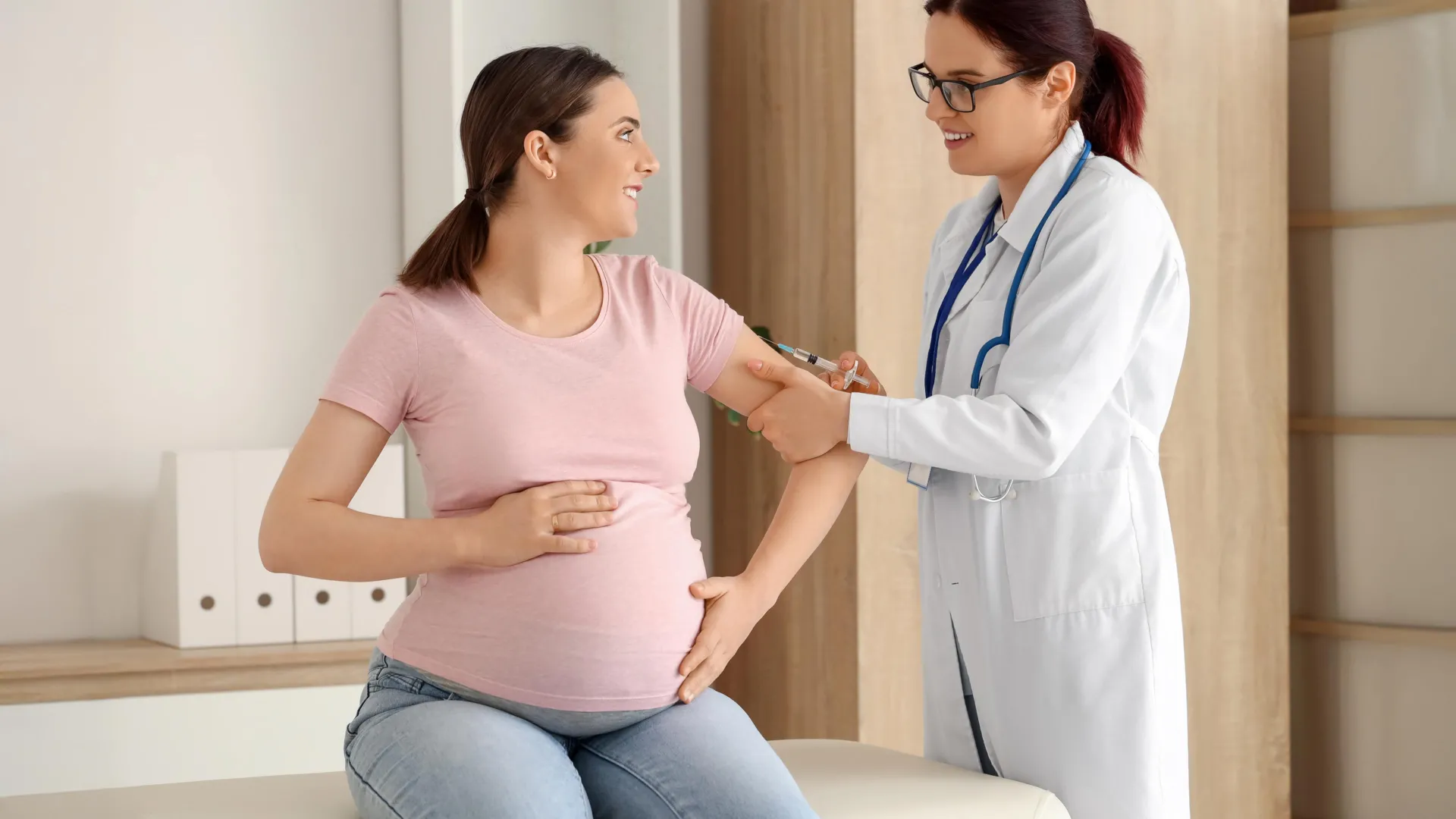
A significant body of new research, unveiled at the 2026 Society for Maternal-Fetal Medicine (SMFM) Pregnancy Meeting, has provided definitive evidence that the administration of mRNA COVID-19 vaccines, whether preceding conception or during any trimester of gestation, does not correlate with an increased incidence of autism spectrum disorder or other neurodevelopmental challenges in offspring. This extensive investigation offers crucial, long-term data concerning the health trajectories of children whose mothers received these inoculations in proximity to pregnancy.
In the United States, the public health framework has endorsed two primary vaccine types for combating the SARS-CoV-2 virus: the messenger ribonucleic acid (mRNA) platform and a protein subunit formulation. Both of these vaccine categories are recognized as safe and effective for use throughout all phases of pregnancy, with recommendations prioritizing the robust protection of both maternal and infant well-being against the potentially severe impacts of COVID-19 infection.
The cornerstone of this latest scientific revelation is a meticulously designed study involving a cohort of 434 toddlers. Researchers affiliated with the Maternal-Fetal Medicine Units Network undertook this rigorous investigation, focusing on children aged between 18 and 30 months. The objective was to systematically identify any indicators suggestive of autism or other developmental variances within this age group.
This research was characterized by its prospective, multi-center, and observational design, with data collection spanning from May 2024 to March 2025. The study participants were strategically divided into two equally sized groups of 217 children each. One half of the cohort comprised infants born to mothers who had received at least a single dose of an mRNA COVID-19 vaccine, either during their pregnancy or within the 30-day period immediately preceding conception. The control group consisted of children whose mothers had not received an mRNA COVID-19 vaccine during pregnancy or in the 30 days prior to becoming pregnant.
"The neurodevelopmental outcomes observed in children born to mothers who were vaccinated against COVID-19 during or shortly before their pregnancies showed no discernible differences when compared to those born to unvaccinated mothers," stated Dr. George R. Saade, the senior researcher for this initiative. Dr. Saade holds the distinguished positions of Professor and Chair of Obstetrics and Gynecology, as well as Associate Dean for Women’s Health, at the Macon & Joan Brock Virginia Health Sciences campus of Old Dominion University in Norfolk, Virginia. His expertise underscores the credibility and significance of these findings.
To ensure the utmost precision in comparing developmental trajectories, the research team implemented a meticulous pairing strategy. Mothers who had received the vaccine were matched with unvaccinated mothers based on a range of critical demographic and logistical factors. These included the specific hospital or birth center where delivery occurred, the exact date of birth, the type of insurance coverage held, and racial or ethnic background. Furthermore, certain pregnancies were deliberately excluded from both the vaccinated and unvaccinated groups to maintain the integrity of the comparison. These exclusions encompassed pregnancies that terminated prematurely (before 37 weeks of gestation), those involving multiple births, or instances where the infant was born with a significant congenital malformation. This stringent methodology was designed to isolate the potential impact of the vaccine from confounding variables.
Upon reaching the developmental milestone of 18 to 30 months of age, the children in the study underwent comprehensive developmental assessments. Researchers employed the highly regarded Ages and Stages Questionnaire Version 3 (ASQ-3), a widely recognized screening tool that evaluates a child’s progress across five key developmental domains: communication skills, gross motor abilities, fine motor coordination, problem-solving capacities, and personal-social interaction. Complementing the ASQ-3, the study also incorporated results from the Child Behavior Checklist (CBCL), the Modified Checklist for Autism in Toddlers (M-CHAT), and the Early Childhood Behavior Questionnaire (ECBQ). These additional instruments provided a more nuanced evaluation of behavioral patterns and developmental milestones, offering a multifaceted view of each child’s progress.
Dr. Brenna L. Hughes, a leading expert in reproductive biology and family planning, shared her perspective on the study’s implications. As the Edwin Crowell Hamblen Distinguished Professor of Reproductive Biology and Family Planning and Interim Chair of the Department of Obstetrics and Gynecology at Duke University in Raleigh, North Carolina, Dr. Hughes emphasized the study’s robust scientific foundation. "This investigation, executed through a highly rigorous scientific process within an NIH clinical trials network, yields profoundly reassuring findings regarding the long-term health and neurodevelopmental outcomes for children born to mothers who received COVID-19 vaccination during pregnancy," she commented. Her endorsement highlights the confidence researchers have in the study’s methodology and conclusions.
The financial underpinning for this critical research was provided by the Eunice Kennedy Shriver National Institute of Child Health and Human Development (NICHD), a division of the National Institutes of Health (NIH). The researchers were diligent in noting that the conclusions presented reflect their independent findings and interpretations, and do not necessarily represent the official stance or policy of the National Institutes of Health. This disclosure adheres to the highest standards of scientific transparency and integrity.
The full findings of this pivotal study, under the abstract title "Association between SARS-CoV-2 vaccine in pregnancy and child neurodevelopment at 18-30 months," are slated for publication in the February 2026 issue of PREGNANCY, the esteemed peer-reviewed medical journal published by the Society for Maternal-Fetal Medicine. This forthcoming publication will make the comprehensive data and detailed analysis accessible to the broader scientific and medical communities, further solidifying the understanding of vaccine safety during pregnancy.
The broader implications of this research extend to public health policy and individual decision-making. During the ongoing global effort to manage and mitigate the impact of COVID-19, pregnant individuals have faced particular uncertainties regarding vaccination. Concerns, often amplified by misinformation, have frequently centered on potential risks to fetal development, including neurodevelopmental outcomes. This study directly addresses and dispels these unfounded fears concerning mRNA vaccines, providing a critical data point for healthcare providers advising expectant parents and for pregnant individuals making informed choices about their health and the health of their future children.
The COVID-19 pandemic underscored the critical importance of maternal vaccination in protecting vulnerable populations. Pregnant women are at an elevated risk of severe illness from COVID-19 infection, which can lead to adverse pregnancy outcomes such as preterm birth and stillbirth. Vaccination offers a crucial layer of protection, not only for the mother but also by potentially conferring some passive immunity to the newborn. Studies like the one presented here are instrumental in building confidence in vaccine safety profiles during pregnancy, encouraging higher vaccination rates among this demographic, and ultimately contributing to better public health outcomes.
The scientific community’s commitment to thoroughly investigating vaccine safety, particularly in sensitive populations like pregnant women, is paramount. This multi-center, prospective observational study exemplifies such a commitment, employing robust methodologies and comprehensive assessment tools to generate reliable data. The long-term follow-up of children in this cohort will continue to be valuable, offering further insights into childhood health and development following maternal vaccination.
In conclusion, the findings presented at the SMFM Pregnancy Meeting provide a strong, evidence-based reassurance that mRNA COVID-19 vaccines are not associated with an increased risk of autism or other neurodevelopmental disorders in children. This research contributes significantly to the growing body of literature supporting the safety and efficacy of these vaccines for pregnant individuals and their offspring, promoting informed decision-making and reinforcing public health recommendations.
About the Author