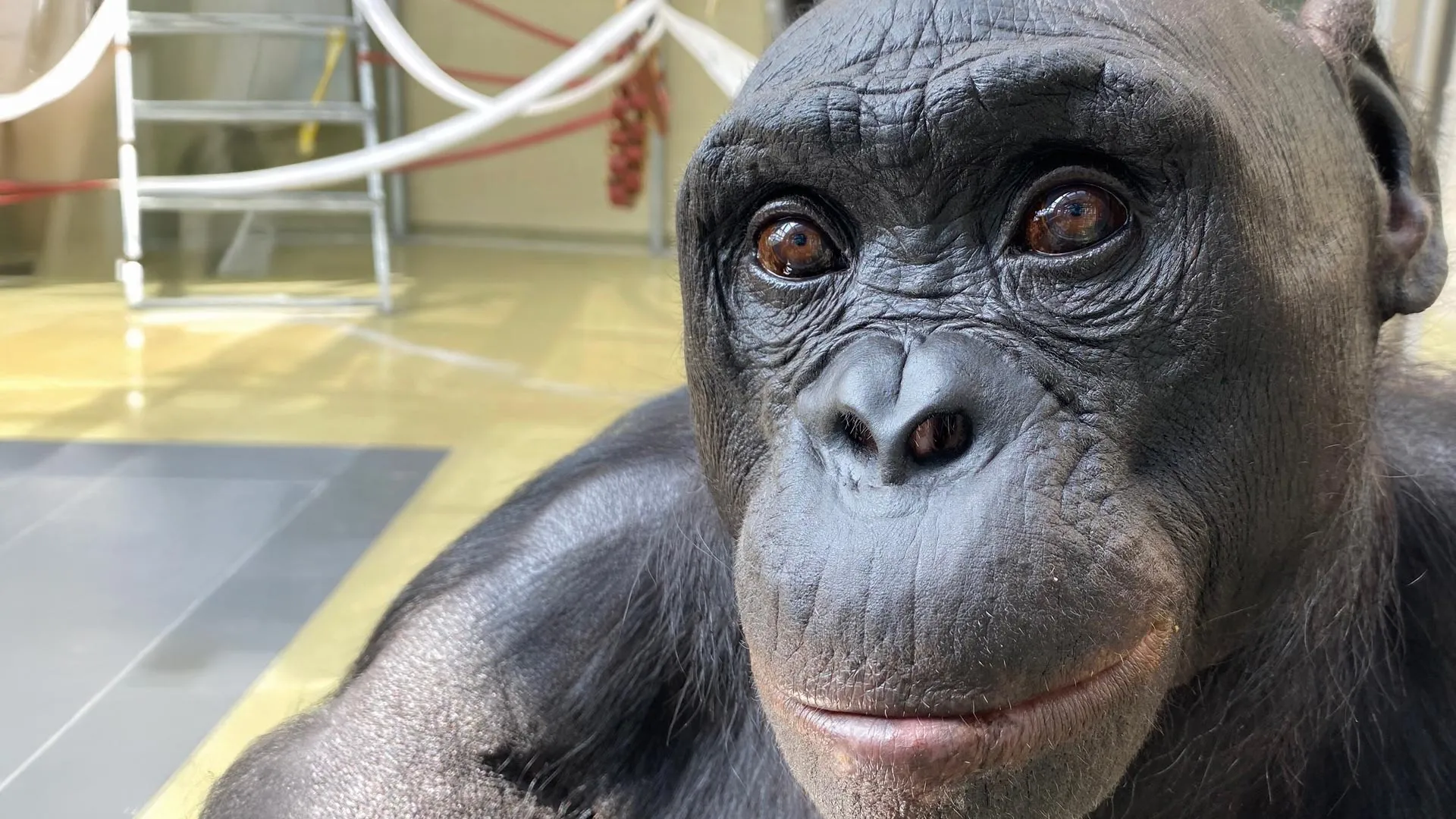
A landmark investigation, published in the esteemed journal Science, has provided compelling evidence that bonobos possess the capacity for imaginative thought and engage in what researchers term "pretend play," a cognitive ability long considered an exclusive hallmark of human intellect. This groundbreaking discovery, spearheaded by a team at Johns Hopkins University, fundamentally reshapes prevailing scientific understanding of non-human animal minds and their potential for abstract reasoning. The findings suggest a deeper evolutionary lineage for complex cognitive functions than previously theorized, potentially extending back millions of years to a common ancestor shared by humans and modern apes.
For generations, the ability to conceptualize scenarios beyond immediate reality—to conjure imaginary objects, create fictional narratives, or engage in make-believe—has been positioned as a defining characteristic of human consciousness. From the philosophical treatises of antiquity to contemporary psychological frameworks, imaginative play has been seen as a developmental milestone unique to Homo sapiens, crucial for social learning, problem-solving, and the very fabric of culture. Yet, the meticulously designed experiments involving a single, highly enculturated bonobo named Kanzi now challenge this long-held anthropocentric view, suggesting that the mental landscapes of certain non-human primates may be far richer and more flexible than previously assumed.
The research team, led by Christopher Krupenye, an assistant professor in the Department of Psychological and Brain Sciences at Johns Hopkins, along with Amalia Bastos, a former postdoctoral fellow now a lecturer at the University of St. Andrews, set out to rigorously test this hypothesis. Their approach deliberately mirrored the playful interactions often observed in human children, creating a controlled environment where a bonobo could demonstrate an understanding of imaginary objects and events. Kanzi, a 43-year-old bonobo residing at the Ape Initiative, was an ideal subject for this study. Known for his advanced comprehension of spoken language and a history of displaying behaviors indicative of symbolic understanding, Kanzi provided a unique opportunity to probe the depths of primate cognition in a scientific context.
In humans, the development of pretend play is a well-documented trajectory. Infants as young as 15 months old exhibit signs of recognizing make-believe, often reacting with surprise or engagement when an adult pretends to drink from an empty cup. By the age of two, children commonly initiate elaborate pretend scenarios, such as hosting imaginary tea parties, demonstrating a nascent capacity for symbolic representation and the ability to distinguish between reality and fantasy. Despite this clear developmental pathway in humans, and numerous anecdotal observations of similar behaviors in non-human primates—such as young female chimpanzees carrying sticks as if they were infants, or a captive chimpanzee seemingly dragging invisible blocks after interacting with real ones—controlled, empirical studies to validate these observations in non-human animals had been conspicuously absent from scientific literature. The Johns Hopkins study thus fills a critical void, transforming speculative anecdotes into robust experimental data.
The experimental setup was elegantly simple yet profoundly insightful. Kanzi sat across a table from an experimenter, separated by a clear barrier, with various props arranged before them—empty cups, pitchers, bowls, and jars—designed to facilitate social, playful interactions. The core of the experiments involved tracking Kanzi’s responses to imaginary substances and objects.
In the initial experiment, two empty, transparent cups were placed alongside an empty, transparent pitcher. The experimenter performed the action of pouring "juice" from the pitcher into both cups. Subsequently, the experimenter mimed dumping the "juice" from one cup, even shaking it to emphasize its emptiness, before asking Kanzi, "Where’s the juice?" Crucially, Kanzi consistently and reliably pointed to the cup that was understood to still contain the pretend liquid. This pattern persisted even when the cups were rearranged, demonstrating that his response was not based on spatial memory alone but on an understanding of the simulated event.
To meticulously rule out the possibility that Kanzi genuinely believed real juice was secretly hidden in the cup, a second, crucial control experiment was conducted. This time, one cup actually contained real juice, while the other held the "pretend" juice from the previous scenario. When presented with the choice and asked what he desired, Kanzi almost invariably indicated the cup containing the real, tangible juice. This distinction is paramount, as it strongly suggests Kanzi was not simply hallucinating or failing to differentiate between real and imaginary; he understood the pretend nature of the invisible liquid while simultaneously recognizing the presence of actual sustenance.
The third experiment further solidified these findings by replicating the logic with a different set of objects: grapes. The experimenter pretended to eat a grape from an empty container and then placed an imaginary grape into one of two jars. After pretending to empty one of these jars, the experimenter posed the question, "Where’s the grape?" Once again, Kanzi reliably pointed to the jar that was supposed to contain the pretend object. While Kanzi’s responses were not flawless, their consistent accuracy across multiple trials and different scenarios provides compelling statistical evidence for his capacity to engage with and track imaginary entities.
These groundbreaking observations carry immense implications for the field of animal cognition and our broader understanding of evolution. "It’s extremely striking and very exciting that the data seem to suggest that apes, in their minds, can conceive of things that are not there," remarked Amalia Bastos. She highlighted the profound nature of Kanzi’s ability to "generate an idea of this pretend object and at the same time know it’s not real," a sophisticated dual awareness previously attributed solely to humans. This suggests a form of metacognition—the awareness of one’s own thought processes—that challenges existing paradigms.
Christopher Krupenye elaborated on the transformative potential of these findings, stating that they are truly "game-changing" in their implication that "their mental lives go beyond the here and now." He drew a powerful parallel to Jane Goodall’s seminal discovery that chimpanzees craft and use tools, which necessitated a re-evaluation of the very definition of humanity. Similarly, this new evidence of imaginative play compels scientists to "reconsider what makes us special and what mental life is out there among other creatures." The evolutionary roots of this cognitive ability are posited to stretch back an estimated 6 to 9 million years, suggesting that the foundational elements of symbolic thought and imagination may have been present in a common ancestor of humans and modern apes, rather than emerging uniquely within the human lineage.
The research opens a vast new avenue for future scientific inquiry. The team is keen to explore whether this capacity for pretend play extends to other ape species or even other animal groups, expanding the scope of our understanding of animal cognition. Further investigations will also delve into related mental abilities, such as the capacity for future planning—a cognitive skill closely linked to imagination—and more complex aspects of "theory of mind," which involves understanding the beliefs, intentions, and desires of others.
Ultimately, the study serves as a profound reminder that the spectrum of intelligence and conscious experience among non-human animals is likely far more complex and nuanced than conventional wisdom has allowed. "Imagination is one of those things that in humans gives us a rich mental life," Krupenye noted. "And if some roots of imagination are shared with apes, that should make people question their assumption that other animals are just living robotic lifestyles constrained to the present." He concluded by urging a profound shift in perspective: "We should be compelled by these findings to care for these creatures with rich and beautiful minds and ensure they continue to exist." This discovery not only enriches our scientific knowledge but also carries significant ethical implications, fostering a greater appreciation for the intricate inner lives of our primate relatives and, by extension, other sentient beings.
About the Author