Parkinson’s disease represents a formidable global health challenge, affecting over 10 million individuals worldwide, including more than one million in the United States alone. This chronic, progressive neurodegenerative disorder gradually strips away an individual’s motor control, cognitive function, and overall quality of life. The hallmarks of the disease are profoundly debilitating, manifesting as involuntary tremors, stiffness (rigidity), slowness of movement (bradykinesia), and impaired balance and coordination. Beyond these primary motor symptoms, patients frequently grapple with an array of non-motor issues, encompassing sleep disturbances, digestive problems, mood disorders such as depression and anxiety, and significant cognitive decline, highlighting the systemic impact of the condition. Despite decades of intensive research, current therapeutic strategies primarily focus on alleviating symptoms rather than halting or reversing the disease’s relentless progression. Medications, predominantly those that replenish dopamine levels in the brain, offer temporary relief but often come with long-term side effects and diminishing efficacy. Invasive procedures like Deep Brain Stimulation (DBS), while effective for some advanced cases, involve complex brain surgery and are not suitable for all patients, leaving a significant unmet need for more precise, less invasive, and potentially disease-modifying interventions.
In a pivotal development that promises to reshape our understanding and treatment of Parkinson’s, an international consortium of scientists has unearthed a crucial brain circuit intrinsically linked to the disorder’s widespread symptoms. This groundbreaking investigation, spearheaded by China’s Changping Laboratory in collaboration with the Washington University School of Medicine in St. Louis and other esteemed institutions, has identified the somato-cognitive action network (SCAN) as a central player in the pathology of Parkinson’s. Their findings, meticulously documented in the prestigious journal Nature on February 4th, not only challenge long-held tenets about the disease’s origins but also illuminate a promising new pathway for highly targeted therapeutic approaches that could potentially transcend mere symptom management.
The discovery fundamentally reconfigures the prevailing narrative surrounding Parkinson’s, shifting the focus from isolated brain regions to a broader, dysfunctional neural network. Dr. Nico U. Dosenbach, a co-author of the study and the David M. & Tracy S. Holtzman Professor of Neurology at WashU Medicine, underscored the transformative nature of this insight. "This research compellingly demonstrates that Parkinson’s is fundamentally a SCAN disorder," he stated, emphasizing that "by precisely and individually targeting the SCAN, we can achieve greater therapeutic success than previously imagined." He further speculated on the profound implications, suggesting that "modulating the activity within SCAN could not only alleviate symptoms but potentially slow or even reverse the disease’s insidious progression."
To fully appreciate the significance of this discovery, it is essential to understand the intricate workings of the Somato-Cognitive Action Network. First delineated by Dr. Dosenbach himself in a separate Nature publication in 2023, the SCAN is a sophisticated neural circuit nestled within the motor cortex—the brain’s command center for voluntary movement. Unlike traditional views that compartmentalize motor function, the SCAN’s role extends beyond simple execution. It acts as a sophisticated integrator, translating complex cognitive plans into physical actions and then continuously monitoring and refining those actions as they unfold. This intricate interplay between thought and motion, sensory feedback and motor command, positions SCAN as a critical hub for coordinated behavior. Given the multifaceted nature of Parkinson’s, which impacts not only movement but also digestion, sleep, motivation, and abstract thought, senior author Dr. Hesheng Liu recognized the potential for disruptions within SCAN to explain the disease’s expansive symptom profile, thereby presenting a compelling target for therapeutic intervention.
The investigative journey began with an exhaustive analysis of functional brain imaging data, primarily functional Magnetic Resonance Imaging (fMRI), gathered from over 800 participants across numerous research facilities in both the United States and China. This extensive cohort included individuals diagnosed with Parkinson’s disease who were undergoing various treatments, such as Deep Brain Stimulation (DBS), non-invasive transcranial magnetic stimulation (TMS), focused ultrasound stimulation, and standard pharmacological regimens. For comparative purposes, the study also incorporated data from healthy volunteers and individuals afflicted with other movement disorders, providing a robust framework for identifying disease-specific anomalies.
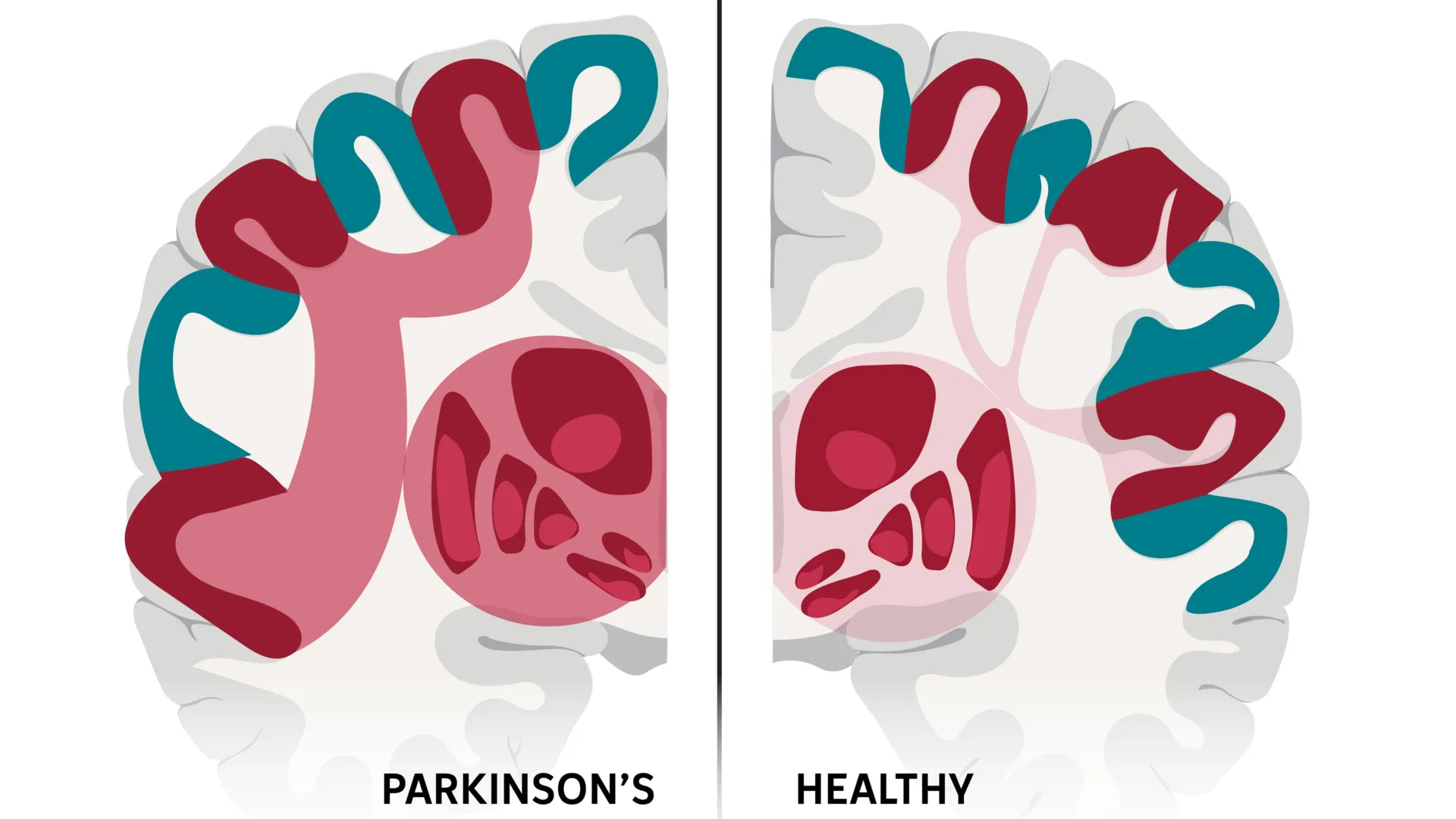
The meticulous analysis of this vast dataset unveiled a striking and consistent pattern: Parkinson’s disease was characterized by an anomalous, excessive functional connectivity between the SCAN and specific subcortical regions of the brain. The subcortex, a collection of structures located beneath the cerebral cortex, plays pivotal roles in emotion regulation, memory formation, and the fine-tuning of motor control, including the basal ganglia—a region historically implicated in Parkinson’s pathology. The researchers observed that across all four therapeutic modalities examined within the study, the most pronounced improvements in patient symptoms correlated directly with a reduction in this identified hyperconnection. Restoring a more balanced and regulated relationship between the SCAN and these subcortical areas appeared to normalize the activity within the broader neural circuitry responsible for planning, initiating, and executing actions, thus mitigating the debilitating effects of the disease.
Dr. Liu highlighted the paradigm shift this finding represents. "For many decades, the primary focus in Parkinson’s research has been on motor deficits and the basal ganglia," he explained. "Our work conclusively demonstrates that the disease’s roots lie in a far more pervasive network dysfunction. The SCAN exhibits hyperconnectivity with key brain regions associated with Parkinson’s, and this aberrant wiring disrupts not only motor control but also related cognitive and fundamental bodily functions, offering a comprehensive explanation for the disease’s diverse symptoms." This broader understanding moves beyond a localized lesion model to one of widespread, interconnected system dysregulation.
Building upon these foundational insights, the research team proceeded to develop and test a novel, precision-guided treatment system. This innovative approach leverages transcranial magnetic stimulation (TMS), a non-invasive technique that delivers precisely controlled magnetic pulses to targeted areas of the brain through a device positioned on the scalp. Unlike DBS, TMS does not require invasive surgery, offering a potentially safer and more accessible treatment option. The system was designed to target the SCAN with millimeter-level accuracy, ensuring that the therapeutic magnetic pulses were directed specifically to the identified dysfunctional network.
In an initial clinical trial, 18 patients who received TMS therapy precisely aimed at the SCAN demonstrated a remarkable 56% response rate after a two-week treatment period. In stark contrast, a control group of 18 patients who received stimulation to adjacent, non-SCAN brain regions experienced only a 22% improvement. This represents an extraordinary 2.5-fold increase in therapeutic effectiveness when the stimulation was precisely tailored to the newly identified network, underscoring the power of this targeted approach. The implications of non-invasive therapies are profound, as Dr. Dosenbach noted: "With non-invasive treatments, we could initiate neuromodulation much earlier in the disease course than is currently feasible with DBS, given that they bypass the need for brain surgery and its associated risks." This opens the door for interventions that could potentially slow disease progression before irreversible damage accumulates.
While these initial results are highly encouraging, the researchers emphasize that further foundational research is indispensable. A deeper understanding of how distinct sub-regions within the SCAN contribute to specific Parkinson’s symptoms—such as tremors, rigidity, or cognitive decline—is crucial for refining future treatment protocols and developing truly personalized interventions. This intricate mapping will allow for even more precise modulation of specific aspects of the network.
Looking ahead, Dr. Dosenbach is actively pursuing the translation of these discoveries into clinical practice. He plans to launch new clinical trials through Turing Medical, a startup he co-founded with affiliations to WashU Medicine. These upcoming studies will explore a novel non-invasive therapy utilizing surface electrode strips positioned over SCAN regions, specifically designed to address debilitating gait problems commonly experienced by individuals with Parkinson’s. Furthermore, he intends to investigate low-intensity focused ultrasound as another promising non-invasive modality for altering SCAN activity, leveraging acoustic energy to achieve therapeutic effects.
This collaborative international endeavor, supported by a multitude of funding bodies including the Changping Laboratory, the U.S. National Institutes of Health, and the National Natural Science Foundation of China, represents a significant leap forward in the quest to conquer Parkinson’s disease. By pinpointing a fundamental neural pathway and demonstrating the efficacy of precisely targeting it, this research offers a renewed sense of hope for the millions affected by this debilitating condition, moving the scientific community closer to the elusive goal of not just managing symptoms, but truly modifying the disease’s course.
About the Author