As individuals advance in age, maintaining robust physical function becomes increasingly paramount for preserving independence and quality of life. Among the most critical components of this physical well-being is hip strength, an often-underestimated factor influencing everything from steady walking to confident standing. For those navigating the challenges of aging, particularly beyond the age of sixty, a decline in hip musculature can lead to compromised stability, increased fall risk, and a general sense of unsteadiness in daily movements. Fortunately, an accessible and highly effective approach to fortifying these vital muscle groups exists: targeted chair-based exercises. These routines offer a unique blend of support, safety, and focused muscle activation, often proving more beneficial for seniors than traditional floor-based stretches or exercises which can present balance or flexibility hurdles.
The hip joint, a marvel of biomechanical engineering, plays an understated yet critical role in almost every lower body movement. It acts as the central pivot for ambulation, facilitates changes in direction, and is instrumental in maintaining upright balance. Without conscious thought, our hips engage to allow us to rise from a seated position, ascend stairs, navigate uneven terrain, and even shift our weight while standing. When the intricate network of muscles surrounding this joint—including the powerful gluteal muscles, hip flexors, and various stabilizing smaller muscles—begins to weaken, these once effortless actions can become challenging, laborious, or even perilous. This age-related muscular decline, medically termed sarcopenia, is a natural part of the aging process but can be significantly mitigated through consistent, appropriate strength training. Weak hips are a primary contributor to the loss of functional independence and, critically, an elevated risk of falls, which can have devastating consequences for older adults.
The genius of chair exercises lies in their inherent design to meet the body where it is, offering a supportive framework that eliminates many of the common barriers to exercise for seniors. The simple act of sitting provides an invaluable anchor, significantly reducing the cognitive load and physical strain associated with maintaining balance. This allows individuals to concentrate fully on the muscular engagement and proper form of each movement, rather than diverting attention to preventing a fall. This enhanced focus translates into more effective muscle activation and a deeper understanding of how the body moves. Furthermore, the accessibility of a chair means these exercises can be integrated seamlessly into daily life, whether performed during a coffee break, while watching television, or as part of a morning or evening routine. This ease of integration is a powerful catalyst for consistency, which, in the realm of strength building, often trumps sporadic, high-intensity workouts.
Herein lies a selection of four chair-based exercises, meticulously chosen for their capacity to rebuild and enhance hip strength, promoting greater stability, fluidity, and confidence in movement for individuals over sixty.
1. Seated Hip Abduction: Fortifying Lateral Stability
This exercise specifically targets the muscles located on the outer part of the hips, primarily the gluteus medius and minimus. These muscles are indispensable for stabilizing the pelvis during walking, preventing a characteristic "wobble" or Trendelenburg gait, and are crucial for side-to-side balance. A robust gluteus medius is a primary defense against lateral falls, which are particularly dangerous. By performing this movement while seated, individuals can isolate these critical stabilizers without the added challenge of standing balance, allowing for deeper muscle activation and improved neuromuscular control.
- Muscles Engaged: Gluteus medius, gluteus minimus, tensor fasciae latae, and other outer hip stabilizers.
- Execution Protocol: Position yourself firmly on the front edge of a sturdy chair, ensuring your feet are flat on the floor, hip-width apart, and your knees are bent at a 90-degree angle. Maintain an upright posture with your core gently engaged. Keeping your feet planted, deliberately press both knees outward, engaging the muscles on the sides of your hips. Hold this outward push for a brief moment, feeling the contraction, then slowly return your knees to the starting position. Avoid allowing your feet to slide or your upper body to lean significantly.
- Recommended Volume: Aim for three sets of 12 to 15 repetitions. Incorporate a 45-second recovery period between each set.
- Progression Options: To increase the challenge, consider placing a light resistance band around your knees. Alternatively, you can introduce longer isometric holds at the peak of the abduction, or focus on one leg at a time while stabilizing with the other.
- Form Focus: Emphasize keeping your torso erect and resisting any urge for your feet to move outwards as your knees separate.
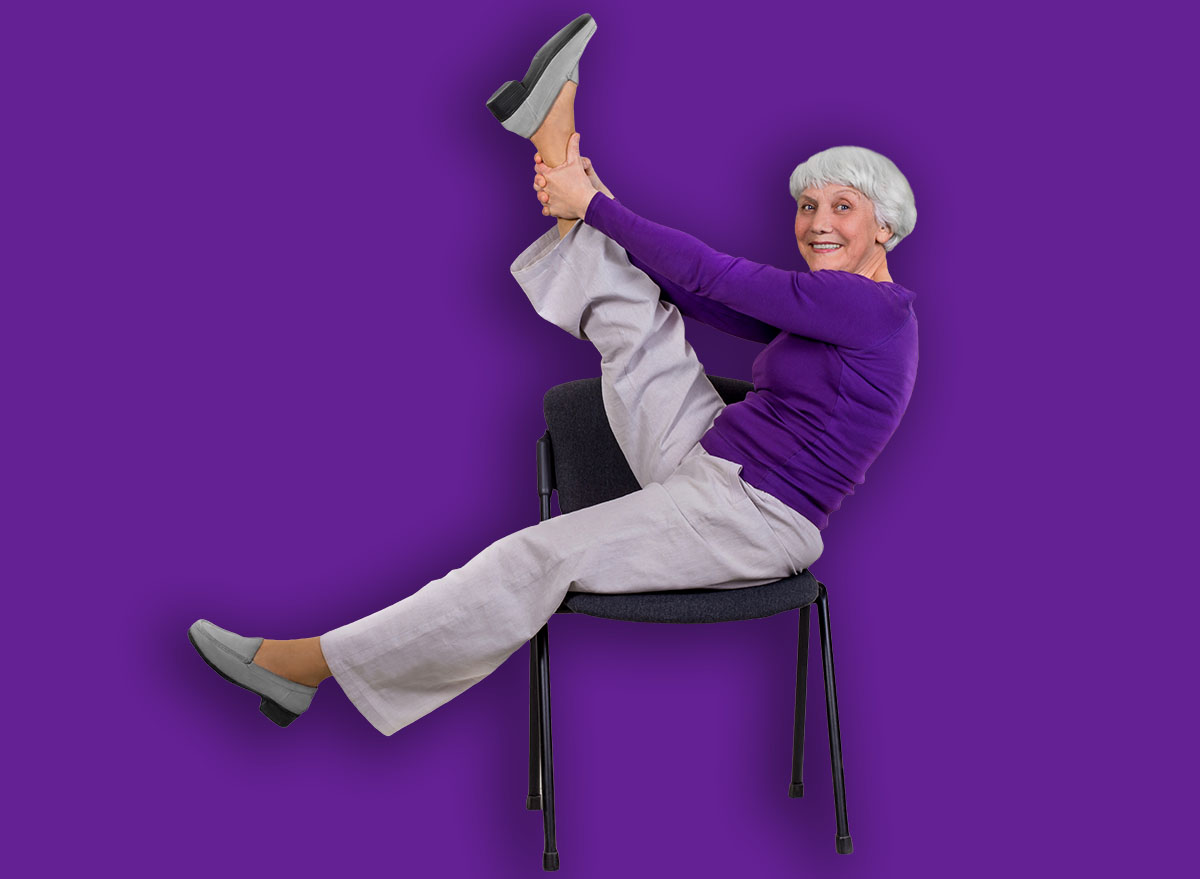
2. Seated Marches: Enhancing Hip Flexor Control and Gait Efficiency
The ability to smoothly lift and control the legs is fundamental for walking, navigating stairs, and avoiding the common "shuffling" gait that can precede falls. Seated marches specifically engage the hip flexor muscles at the front of the hip, along with the quadriceps and lower core stabilizers. Performing this exercise from a seated position allows for a concentrated effort on the mechanics of leg lift, fostering cleaner movement patterns without the distraction of balance requirements. This leads to more responsive and agile hips in daily life.
- Muscles Engaged: Hip flexors (iliopsoas, rectus femoris), quadriceps, and lower abdominal stabilizers.
- Execution Protocol: Sit upright in a stable chair, feet flat on the floor, shoulder-width apart. Begin by gently lifting one knee towards your chest, raising your foot off the floor. The goal is to lift the knee as high as comfortably possible without leaning back or using momentum from your upper body. Slowly lower the foot back to the floor with control. Alternate legs, performing the same motion with the opposite knee. Maintain a steady, controlled pace throughout the exercise.
- Recommended Volume: Complete three sets, aiming for 20 total repetitions (10 lifts per leg). Allow for a 30-second rest interval between sets.
- Progression Options: To deepen the challenge, adopt a slower tempo for each lift and lower, incorporating a brief pause at the apex of the lift. Light ankle weights can also be introduced to increase resistance.
- Form Focus: Consciously avoid using your back or upper body to generate momentum. The movement should originate primarily from the hip and leg.
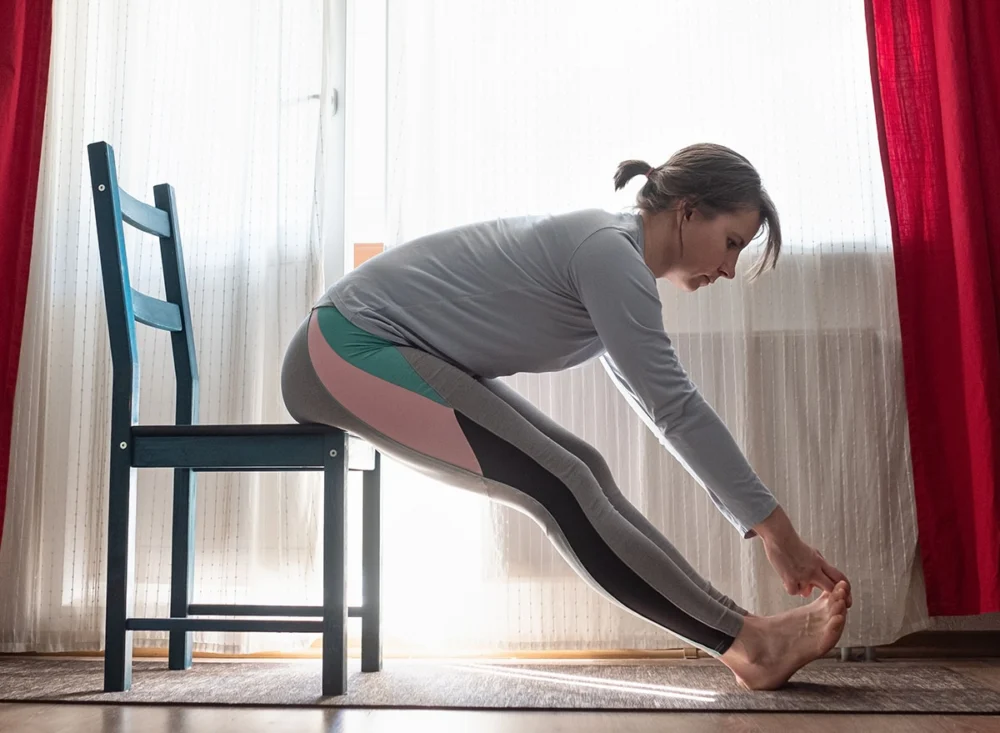
3. Seated Hip Hinge Reach: Cultivating Posterior Chain Strength and Safe Bending Mechanics
The hip hinge is a foundational movement pattern that involves bending forward from the hips while keeping the spine neutral, engaging the glutes and hamstrings. This action is critical for safely picking up objects, bending over, and even powering the extension phase of walking. Many individuals mistakenly bend from their lower back, which can lead to pain and injury. The seated hip hinge reach provides a controlled environment to re-educate the body on proper hinging mechanics, ensuring the powerful posterior chain (glutes and hamstrings) effectively shares the workload, rather than over-relying on the lower back.
- Muscles Engaged: Gluteus maximus, hamstrings, erector spinae (lower back stabilizers), and core musculature.
- Execution Protocol: Sit comfortably but actively on the edge of a chair, feet flat and knees bent. Place your hands lightly on your thighs or extend them forward. Maintaining a long, neutral spine (avoiding rounding your back), slowly hinge forward at your hips, allowing your chest to move towards your knees. As you hinge, imagine reaching your hands forward or towards the floor, extending the movement from your hips. Feel a stretch in your hamstrings and activation in your glutes. Reverse the motion by engaging your glutes and hamstrings to pull yourself back to an upright seated position, ensuring the movement initiates from the hips, not by rounding your back.
- Recommended Volume: Perform three sets of 10 to 12 repetitions. Rest for 45 seconds between sets.
- Progression Options: Increase the duration or extent of your forward reach. Experiment with a slower, more deliberate tempo. For added resistance, a light weight (e.g., a small dumbbell or water bottle) can be held at chest level during the movement.
- Form Focus: The key is to maintain a flat back throughout the hinge, feeling the stretch and engagement primarily in the back of your thighs and glutes, not in your lower back.
4. Sit-to-Stand: Mastering Functional Power and Independence
Perhaps the most universally recognized and vital functional movement, the sit-to-stand exercise directly translates to everyday independence. This movement is a comprehensive test of hip, leg, and core strength, requiring the coordinated effort of the glutes, quadriceps, and hamstrings to generate power and control. Practicing this movement from a chair reinforces the very action needed to stand up from any seated surface—a chair, a couch, or even a toilet. As proficiency in this exercise grows, individuals often experience a profound increase in confidence and ease in performing countless daily tasks.
- Muscles Engaged: Gluteus maximus, quadriceps, hamstrings, and hip stabilizers.
- Execution Protocol: Position yourself in a sturdy chair with your feet flat on the floor, about shoulder-width apart, and slightly tucked back so your shins are angled forward. Lean your torso slightly forward, shifting your weight over your feet. Initiate the movement by pushing through your heels and the entire sole of your foot, driving upwards and forward, engaging your glutes and quadriceps to rise smoothly to a full standing position. Avoid using your hands for support if possible, but use them if necessary for safety. Once standing tall, slowly and controllably lower yourself back to the chair, allowing your hips to hinge back as if reaching for the seat, until you gently touch down.
- Recommended Volume: Execute three sets of 8 to 12 repetitions. Take a 60-second rest period between sets.
- Progression Options: Challenge yourself by performing reps without using your hands. Slow down the lowering phase to enhance eccentric strength and control. Varying the height of the chair (e.g., using a slightly lower stool) can increase the difficulty.
- Form Focus: Imagine pushing the floor away with your feet as you stand. Ensure your knees track in line with your toes and do not collapse inward.
Integrating and Sustaining Your Hip Strength Regimen
The true efficacy of these chair exercises lies not in their complexity, but in their consistent application. Small, regular efforts accumulate significantly faster and yield more enduring results than sporadic, intense bursts of activity. Aim to incorporate these exercises into your daily routine, perhaps once or twice a day. Pairing them with existing habits, such as during your morning coffee, while watching the news, or as part of an evening wind-down, can greatly enhance adherence.
Beyond the specific movements, a holistic approach to hip health and overall well-being is crucial. This includes:
- Adequate Protein Intake: Essential for muscle repair and growth, especially as we age.
- Hydration: Proper hydration supports joint health and muscle function.
- Nutrient-Rich Diet: A balanced diet provides the necessary vitamins and minerals for optimal physical performance.
- Complementary Activities: Regular walking, light cardio, and gentle flexibility exercises can further support hip health and overall mobility.
- Listening to Your Body: Always prioritize pain-free movement. If any exercise causes discomfort, modify it or consult with a healthcare professional or physical therapist.
- Professional Guidance: For individuals with pre-existing conditions or significant mobility limitations, consulting a physical therapist can provide tailored guidance and ensure exercises are performed safely and effectively.
By embracing these accessible, chair-based exercises, older adults can proactively address the natural decline in hip strength, significantly enhancing their stability, mobility, and confidence. This commitment to strengthening the body’s foundational support system empowers a more active, independent, and fulfilling life journey beyond sixty.
About the Author