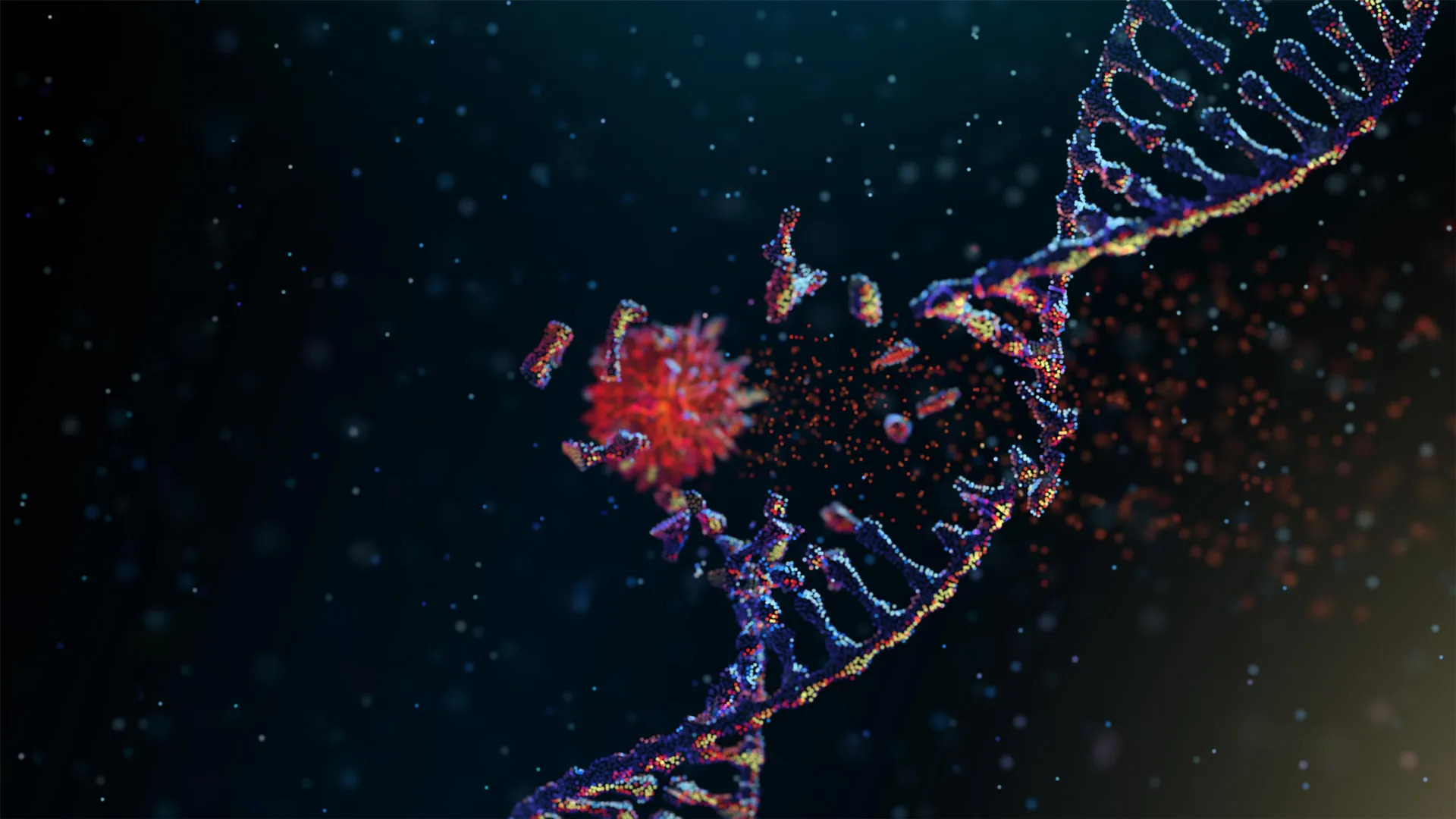
Cancer, a disease characterized by uncontrolled cellular proliferation, presents a formidable challenge to medical science, largely due to its remarkable capacity for adaptation. Tumors are not static entities; they continually evolve, acquiring new characteristics that enable them to resist treatments, grow aggressively, and metastasize. This dynamic nature has historically rendered cancer progression seemingly unpredictable, often appearing to follow a course dictated by random genetic mutations. However, groundbreaking research emanating from the Moffitt Cancer Center is fundamentally altering this perception, proposing that the evolutionary pathways of cancer cells, particularly those involving large-scale chromosomal alterations, adhere to discernible patterns rather than pure chance. This pioneering work, detailed in the esteemed journal Nature Communications, introduces a novel computational methodology that promises to usher in an era of more predictable and evolution-informed oncology.
The inherent unpredictability of cancer’s trajectory stems from its complex genetic instability. As malignant cells divide, their DNA replication machinery is prone to errors, leading to a myriad of genetic changes. While many of these are subtle, single-nucleotide variations, a highly significant class of alterations involves the acquisition or loss of entire chromosomes – a phenomenon known as aneuploidy. Each human cell typically contains 23 pairs of chromosomes, totaling 46. Deviations from this precise number can dramatically impact cellular function because chromosomes house hundreds or thousands of genes. Consequently, gaining or losing a whole chromosome simultaneously alters the dosage of a vast array of genes, profoundly reshaping cellular behavior. This chromosomal instability generates immense diversity within a tumor, creating a heterogeneous population of cells, each with a unique chromosomal blueprint. Prior to this research, scientists lacked a robust mechanism to discern which of these innumerable chromosomal combinations provided a survival advantage to cancer cells. The sheer scale of possible karyotypic states—the complete set of chromosomes in a cell—made comprehensive analysis intractable, often limiting investigations to mere snapshots in time or aggregated observations across broad cellular populations, thus obscuring the intricate, dynamic transitions that underpin tumor evolution.
Addressing this critical gap, Dr. Noemi Andor, a corresponding author and associate member in Moffitt’s Integrated Mathematical Oncology Program, spearheaded the development of a sophisticated computational algorithm named ALFA-K, an acronym for Algorithm for Longitudinal Fitness Analysis via Karyotype. This innovative analytical platform is designed to process time-series, single-cell genomic data, a sophisticated type of information that tracks individual cells over sequential time points. By analyzing how single cancer cells traverse different chromosomal configurations throughout their life cycle, ALFA-K can reconstruct the specific evolutionary trajectories adopted by tumors. Crucially, the system is adept at identifying which particular chromosomal compositions are consistently favored under the selective pressures encountered during neoplastic development. This capacity represents a monumental leap forward, moving beyond mere descriptive observations of tumor characteristics to a predictive understanding of their adaptive mechanisms. It fundamentally challenges the long-held assumption that cancer’s evolutionary path is predominantly stochastic, instead positing that quantifiable rules govern its progression.
The profound impact of chromosomal alterations on tumor growth and therapeutic response cannot be overstated. When a cancer cell gains or sheds a chromosome, it immediately reconfigures the expression levels of a multitude of genes. This wholesale genetic reorganization can instigate rapid shifts in fundamental cellular processes, including growth rates, division cycles, metabolic pathways, and responses to various forms of stress, such as nutrient deprivation or immune surveillance. Unlike point mutations, which typically confer small, incremental advantages, these large-scale chromosomal shifts enable cancer cells to make significant, abrupt adaptive leaps, accelerating their evolutionary trajectory. This ability to undergo "macroscopic" genetic restructuring is a key driver of intra-tumor heterogeneity, ensuring that within a given tumor, a diverse array of cellular subpopulations exists. Such diversity is a primary mechanism by which tumors hedge their bets against adverse conditions, significantly increasing the probability that at least some cells will possess the necessary genetic resilience to survive therapeutic interventions.
A pivotal insight yielded by ALFA-K’s analyses concerns the concept of "context dependence." The researchers demonstrated that the functional consequences of a specific chromosomal change are not fixed; rather, they are highly contingent upon the existing chromosomal makeup of the cell. For instance, the acquisition of an additional copy of chromosome 7 might be highly advantageous in one cellular environment but detrimental in another, depending on the cell’s baseline genomic architecture. This inherent contextuality has historically rendered cancer evolution exceedingly difficult to forecast, as a universal "beneficial" or "harmful" label could not be applied to specific chromosomal aberrations. ALFA-K circumvents this challenge by meticulously tracking thousands of individual cells across time, thereby mapping "local fitness landscapes." These landscapes are intricate computational representations that describe, with high precision, the adaptive advantage or disadvantage conferred by a particular chromosomal modification, given the cell’s current karyotypic state. This sophisticated approach moves beyond simplistic generalizations, providing a granular understanding of how specific genetic alterations interact with the prevailing cellular context to shape evolutionary outcomes.
Further expanding its analytical capabilities, ALFA-K also elucidated the critical role of the rate of chromosome mis-segregation – the erroneous distribution of chromosomes during cell division. The study revealed that when chemotherapeutic agents increase this rate of error, cancer cells are propelled more rapidly across these complex fitness landscapes. Depending on the specific contours of these landscapes, this accelerated movement can paradoxically guide tumors toward chromosomal configurations that are inherently more tolerant of ongoing genomic instability. This suggests a perilous feedback loop where therapies designed to disrupt cell division might inadvertently select for even more resilient, unstable tumor populations. The sheer analytical power of ALFA-K is underscored by its ability to evaluate the fitness implications of over 270,000 distinct chromosomal configurations, enabling researchers to explore previously inaccessible questions about cancer’s adaptive mechanisms.
Among the profound discoveries enabled by ALFA-K is a deeper understanding of whole-genome doubling (WGD). WGD is a dramatic event where a cell duplicates its entire complement of chromosomes, effectively becoming polyploid. While previous research had observed that WGD could enhance cancer cell survival, the precise extent of this protective effect remained unquantified. ALFA-K now provides a robust method to measure this "buffering capacity." The algorithm precisely quantifies how significantly more tolerant genome-doubled cells are to subsequent chromosomal errors compared to their non-doubled counterparts. This is not an all-or-nothing phenomenon; the researchers identified a quantifiable threshold at which WGD transitions from a potentially deleterious event to a distinctly advantageous one, conferring significant resilience against further genomic perturbations. By quantifying this threshold, ALFA-K transforms whole-genome doubling from a descriptive observation into a predictable evolutionary event, offering crucial insights into how tumors gain extraordinary robustness.
The implications of this research for the future of cancer treatment are substantial, signaling a fundamental shift in oncology from a reactive, descriptive paradigm to a proactive, predictive one. In a clinical context, the ALFA-K framework could empower oncologists to interpret serial biopsies with unprecedented insight, understanding not just the current state of a tumor but also its likely future evolutionary trajectory. This predictive capability could enable the identification of "dangerous evolutionary transitions" – moments when a tumor is poised to acquire characteristics that confer aggressive growth or treatment resistance – before they fully manifest. Armed with such foresight, clinicians could make more informed decisions about treatment selection, choosing therapies that not only target existing vulnerabilities but also actively limit cancer cells’ ability to explore and settle into highly aggressive or drug-resistant chromosomal configurations. The overarching ambition is to develop "evolution-aware cancer therapies" – therapeutic strategies designed to anticipate how tumors will adapt and pre-emptively counter those adaptations, rather than simply reacting after resistance has already emerged and clinical options have narrowed. This paradigm shift, supported by crucial funding from the National Cancer Institute (1R37CA266727-01A1, 1R21CA269415-01A1, 1R03CA259873-01A1), holds immense promise for revolutionizing patient care and ultimately improving outcomes for those battling this complex disease.
About the Author