Over two decades ago, a small cohort of women grappling with advanced stages of breast cancer embarked on an experimental journey, participating in a groundbreaking clinical trial designed to test a novel vaccine. In a remarkable testament to the enduring potential of this early immunological approach, every single participant in that pivotal study remains alive today. Such sustained survival rates are extraordinarily rare for individuals diagnosed with metastatic breast cancer, a condition typically associated with aggressive progression and limited long-term prognoses. This extraordinary outcome has naturally reignited considerable scientific interest and prompted a deep dive into the underlying biological mechanisms responsible for their continued health.
The initial clinical investigation, spearheaded by Dr. Herbert Kim Lyerly, a distinguished professor of immunology at Duke University School of Medicine, laid the groundwork for the current re-evaluation. Researchers at Duke Health recently undertook a comprehensive analysis of the immune systems of these surviving women, seeking to uncover the secrets behind their prolonged remission. What they unearthed during this meticulous examination proved profoundly insightful, revealing a persistent and robust immunological defense. Even after the passage of many years, these women’s bodies harbored potent immune cells specifically programmed to identify and target their cancer, a phenomenon rarely observed with such longevity in the context of metastatic disease.
Central to this enduring immune response was the discovery of a distinct molecular marker known as CD27, consistently present on these highly effective immune cells. CD27 is a critical co-stimulatory molecule, part of the tumor necrosis factor (TNF) receptor superfamily, which plays an indispensable role in the adaptive immune system. It acts as a key orchestrator in the maturation, survival, and differentiation of T lymphocytes, particularly in the formation of long-lived memory T cells. These memory cells are the immune system’s historical record-keepers, enabling it to recall past threats—whether viral infections or cancerous cells—and mount a swift, amplified counterattack upon re-encounter. The profound implications of these findings, detailed in a recent publication in the prestigious journal Science Immunology, strongly suggest that CD27 could represent a crucial leverage point for significantly enhancing the efficacy and durability of future cancer vaccines.
Dr. Zachary Hartman, the senior author of the seminal Duke study and an associate professor across the Departments of Surgery, Integrative Immunology, and Pathology at Duke University School of Medicine, expressed his astonishment at the findings. "The sheer durability of these immune responses, observed so many years after the initial intervention, truly stunned our team," Hartman commented. "It compelled us to ask a fundamental question: could we harness this natural mechanism and amplify this response even further to benefit more patients?" This inquiry propelled the research into preclinical models, aiming to translate the observed phenomenon into a replicable and controllable therapeutic strategy.
To rigorously investigate this hypothesis, Dr. Hartman’s research group embarked on a series of carefully designed experiments utilizing murine models. Their strategy involved combining a specific vaccine, engineered to target the HER2 protein, with an antibody designed to specifically activate the CD27 receptor. HER2, or Human Epidermal growth factor Receptor 2, is a protein found on the surface of some cells, including certain types of breast cancer cells, where its overexpression can drive aggressive tumor growth. HER2-positive breast cancer accounts for approximately 15-20% of all breast cancers and is known for its more aggressive nature, though it also benefits from targeted therapies like trastuzumab (Herceptin). The experimental vaccine aimed to train the immune system to recognize and attack cells expressing this HER2 protein.
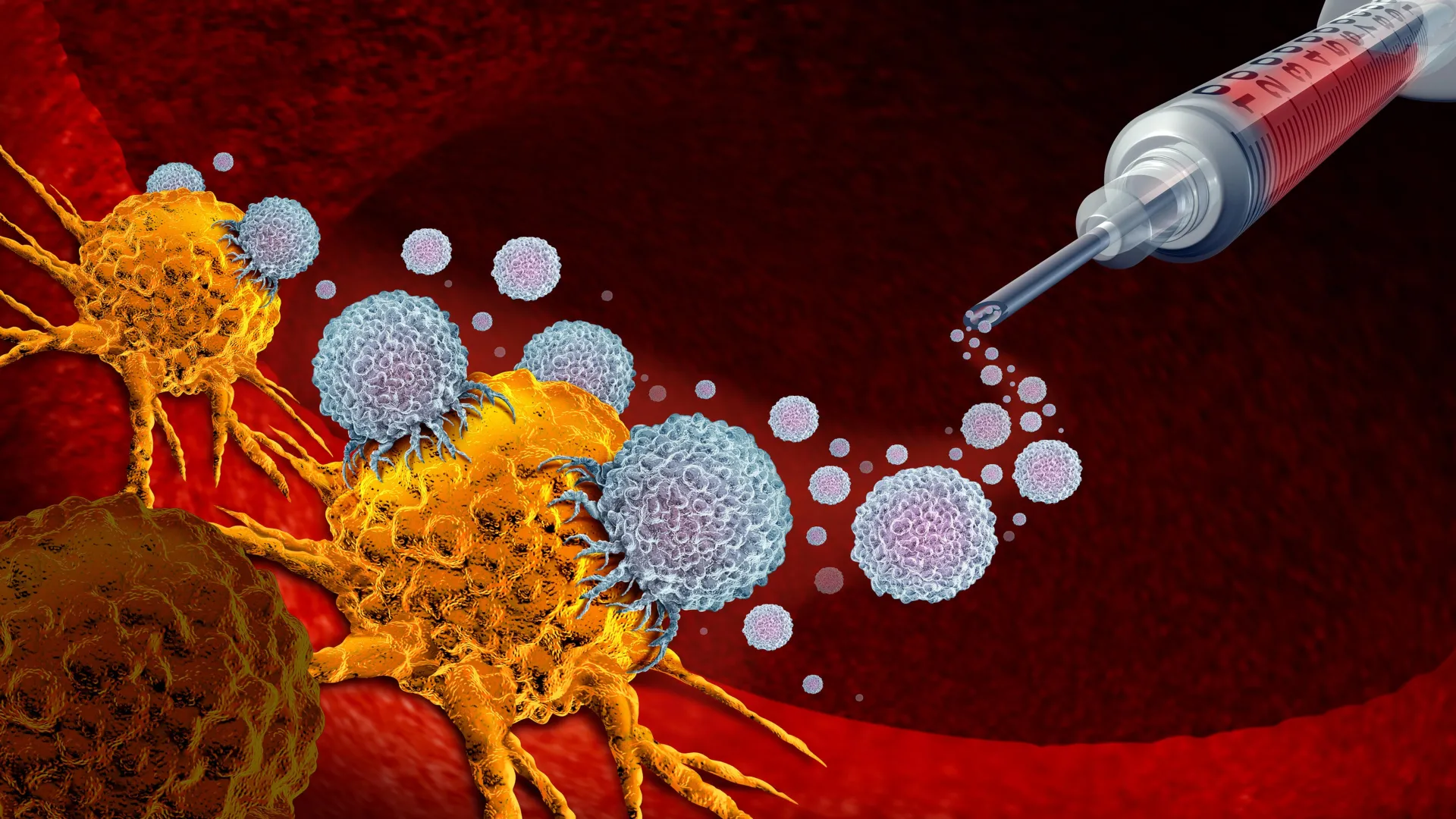
The results from the combined treatment in mice were remarkably compelling. Nearly 40% of the rodents that received both the HER2 vaccine and the CD27-activating antibody experienced complete regression of their tumors. This outcome stands in stark contrast to the control group, where only a meager 6% of mice treated solely with the vaccine achieved the same tumor disappearance. Further sophisticated immunological analyses revealed the precise mechanism underpinning this enhanced efficacy: the CD27 antibody significantly bolstered the activity and expansion of CD4+ T cells, a crucial subtype of immune cell.
Historically, CD4+ T cells, often colloquially referred to as "helper" T cells, have received considerably less attention in the realm of cancer research compared to their CD8+ counterparts. The scientific community has largely focused its efforts on CD8+ "killer" T cells, or cytotoxic T lymphocytes (CTLs), due to their direct capacity to identify and lyse (kill) tumor cells. However, this Duke study profoundly challenges that prevailing paradigm, underscoring the underappreciated yet critical role of CD4+ T cells in mediating effective anti-tumor immunity.
CD4+ T cells are far from mere supporting actors; they are master orchestrators of the adaptive immune response. They secrete a variety of cytokines that coordinate the activities of other immune cells, including B cells (which produce antibodies), macrophages, and crucially, CD8+ T cells. They are essential for the optimal priming, expansion, and long-term survival of CD8+ T cells, ensuring that the "killer" cells are not only numerous but also highly potent and long-lasting. This research strongly suggests that CD4+ T cells are not just important for immediate immune responses but are perhaps indispensable for driving the profound and lasting immune memory observed in the human survivors, providing sustained support that allows other immune cells to function with maximal efficiency.
The synergistic potential of this approach was further highlighted when researchers introduced an additional antibody designed to provide further support to CD8+ T cells in the mouse models. With this multi-pronged immunological strategy, the rates of tumor rejection in mice dramatically surged, reaching an impressive nearly 90%. This finding suggests that a comprehensive approach, simultaneously activating CD27 to enhance CD4+ T cell function and providing supplementary support for CD8+ T cells, could unlock unparalleled therapeutic efficacy.
"This investigation fundamentally reorients our understanding of anti-tumor immunity," Dr. Hartman articulated. "It definitively demonstrates that CD4+ T cells are not simply auxiliary components; they possess inherent and formidable cancer-fighting capabilities and are very likely essential for achieving truly robust and enduring anti-tumor responses." This paradigm shift could pave the way for novel therapeutic strategies that leverage the full spectrum of the immune system.
The practical implications for future cancer treatments arising from these discoveries are substantial. A key finding was the observation that the CD27-activating antibody needed only a single administration, delivered concurrently with the vaccine, to elicit these long-lasting immunological effects. This striking simplicity in dosing regimen is a significant advantage, potentially streamlining its integration into existing cancer treatment protocols. The ability to pair this approach with current standard-of-care therapies, such as immune checkpoint inhibitors and antibody-drug conjugates (ADCs), represents a particularly exciting prospect.
Immune checkpoint inhibitors, like those targeting PD-1 or CTLA-4, work by releasing the "brakes" on the immune system, allowing existing T cells to better attack cancer. However, their effectiveness often depends on the presence of a pre-existing anti-tumor immune response. A CD27-enhanced vaccine could generate a robust new pool of cancer-specific T cells, thereby making checkpoint inhibitors more effective in a broader range of patients or enhancing their impact in those who already respond. Similarly, antibody-drug conjugates deliver potent chemotherapy agents directly to cancer cells using an antibody as a targeting mechanism. While highly effective, they don’t typically induce a lasting immune response. Combining them with a CD27-activated vaccine could potentially create a dual-pronged attack: immediate tumor reduction from the ADC and long-term immune surveillance from the vaccine.
Dr. Hartman harbors significant optimism that these groundbreaking findings could finally enable cancer vaccines to fulfill their long-held promise in oncology. "For many years, we’ve understood the theoretical potential of vaccines in combating cancer, but their clinical impact has often fallen short of expectations," he reflected. "This novel insight into CD27 and CD4+ T cells may very well represent the crucial missing piece of the puzzle, unlocking a new era for vaccine-based cancer immunotherapies."
The journey from initial clinical observation to mechanistic understanding and preclinical validation underscores the iterative nature of scientific discovery. The foundational work from the original clinical trial, which demonstrated exceptional long-term survival for advanced breast cancer patients, provided the invaluable human data that spurred this renewed investigation. This extensive research effort was made possible through substantial financial backing from prominent funding bodies, including the National Institutes of Health (NIH), specifically grant 117 R01CA238217-01A1/02S1, and the Department of Defense (DoD), through grants W81XWH-20-1-034618 and W81XWH-21-2-0031, highlighting the collaborative investment in advancing cancer treatment. While further clinical trials are essential to validate these promising preclinical results in human patients, the profound implications of durable immune memory orchestrated by CD27 offer a beacon of hope for transforming the landscape of cancer therapy.
About the Author