
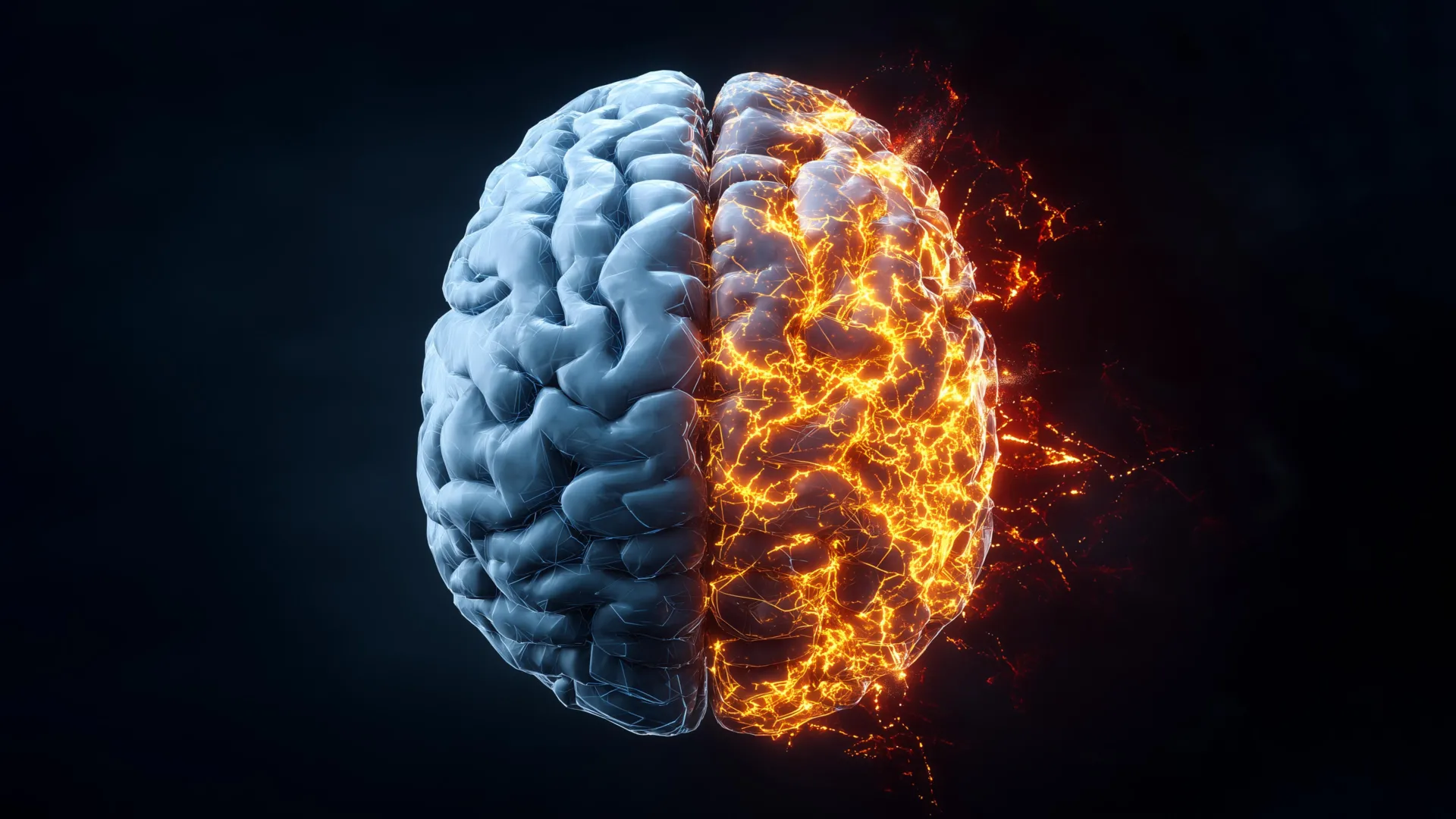
Researchers at Rice University have achieved a significant breakthrough in understanding Alzheimer’s disease by creating the inaugural, comprehensive, and label-free molecular atlas of the condition within an animal model, offering an unprecedentedly granular perspective on its initiation and dissemination. The profound impact of Alzheimer’s, claiming more lives annually than breast and prostate cancers combined, underscores the critical imperative to unravel its underlying mechanisms.
Employing a sophisticated combination of advanced light-based imaging techniques and cutting-edge machine learning algorithms, the research team meticulously examined brain tissue samples from both healthy control subjects and those exhibiting Alzheimer’s pathology. Their findings, detailed in the esteemed scientific journal ACS Applied Materials and Interfaces, challenge the prevailing notion that the chemical aberrations characteristic of Alzheimer’s are solely localized to amyloid plaques. Instead, the study reveals a far more intricate and diffused pattern of these alterations, manifesting across the entire brain in a complex and non-uniform distribution.
The cornerstone of this groundbreaking research lies in the utilization of hyperspectral Raman imaging, a highly advanced form of Raman spectroscopy. This technique leverages a laser to precisely identify and differentiate the unique molecular signatures, or "fingerprints," of various chemical compounds present within biological tissues. Unlike conventional Raman spectroscopy, which captures a single data point of chemical information at a specific molecular site, hyperspectral Raman imaging performs this analysis thousands of times across an entire tissue section. This iterative process effectively constructs a comprehensive map, vividly illustrating the variations in chemical composition across different anatomical regions of the brain.
To construct these high-resolution molecular atlases, the researchers meticulously scanned entire brain specimens, slice by painstaking slice. Thousands of overlapping measurements were aggregated, culminating in detailed visualizations of both healthy and diseased brain tissue. A crucial aspect of this methodology is its "label-free" nature, meaning the tissue samples were examined in their natural state, devoid of any artificial dyes, fluorescent proteins, or molecular tags. This unadulterated approach allows for the observation of the brain’s intrinsic chemical composition, providing an unbiased and complete portrait. This method is particularly valuable for uncovering novel disease-related changes that might otherwise be obscured by conventional labeling techniques.
The sheer volume of data generated by this high-throughput imaging process necessitated the application of sophisticated machine learning (ML) techniques for analysis. The team initially employed unsupervised ML algorithms, which were tasked with identifying inherent patterns within the chemical signals without any preconceived notions or prior assumptions. These algorithms effectively categorized tissue samples based purely on their distinct molecular characteristics. Subsequently, supervised ML models were trained to differentiate between samples exhibiting Alzheimer’s pathology and those from healthy controls. This crucial step enabled the researchers to quantify the extent to which specific brain regions reflected Alzheimer’s-associated chemistry.
The results from the ML analysis revealed a compelling insight: the pathological changes induced by Alzheimer’s disease do not manifest uniformly throughout the brain. Certain brain regions displayed pronounced chemical alterations, while others remained relatively unaffected. This heterogeneous distribution of damage provides a potential explanation for the gradual onset of Alzheimer’s symptoms and sheds light on why therapeutic strategies targeting isolated molecular issues have historically yielded limited success.
Beyond the well-documented accumulation of misfolded proteins, this comprehensive study has illuminated broader metabolic dysregulation within Alzheimer’s-affected brains. Significant variations in cholesterol and glycogen levels were observed across different brain regions, with the most striking discrepancies appearing in areas critical for memory formation, specifically the hippocampus and the cerebral cortex. Cholesterol plays a vital role in maintaining the structural integrity of brain cells, while glycogen serves as an readily accessible local energy reserve. The co-occurrence of altered levels of these essential molecules in memory-intensive regions strongly suggests that Alzheimer’s disease involves widespread disruptions in both brain structure and energy homeostasis, extending far beyond mere protein aggregation and misfolding.
The genesis of this ambitious project stemmed from ongoing deliberations regarding innovative approaches to investigate the complexities of the Alzheimer’s brain. Initially, the research focused on analyzing only small, localized areas of brain tissue. However, a visionary shift occurred, prompting the question of whether mapping the entire brain could provide a more expansive and holistic understanding. This endeavor required numerous iterations of rigorous testing and methodical trial-and-error to optimize both the data acquisition and analytical methodologies, ensuring their seamless integration.
Upon the successful compilation of the complete chemical map of the brain, the implications became immediately apparent. Previously unseen patterns and anomalies began to emerge, patterns that had remained invisible under conventional imaging techniques. The discovery of these hidden layers of information, present all along but awaiting the appropriate analytical tools for revelation, proved to be profoundly gratifying for the research team.
By providing the first detailed, dye-free chemical maps of the Alzheimer’s brain, this pioneering research offers an unprecedentedly holistic perspective on the disease’s multifaceted nature. The researchers express optimism that these findings will ultimately contribute to the development of earlier diagnostic methods and the formulation of more effective strategies to impede the progression of Alzheimer’s disease, offering renewed hope to millions affected by this devastating neurodegenerative condition. This work was generously supported by funding from the National Science Foundation (grants 2246564 and 1934977), the National Institutes of Health (grant 1R01AG077016), and the Welch Foundation (grant C2144).
About the Author












